|
|
| Asger Jorn: The Final Years 1965-1973 | |
| Authors | Guy Atkins & Troels Andersen |
|---|---|
| Publisher | Lund Humphries Publishers Ltd./Borgens Forlag |
| Publishing date | 1980 |
| Series | Asger Jorn Catalogue raisonné |
| Followed by | Asger Jorn - Supplement - Paintings 1930-1973 |
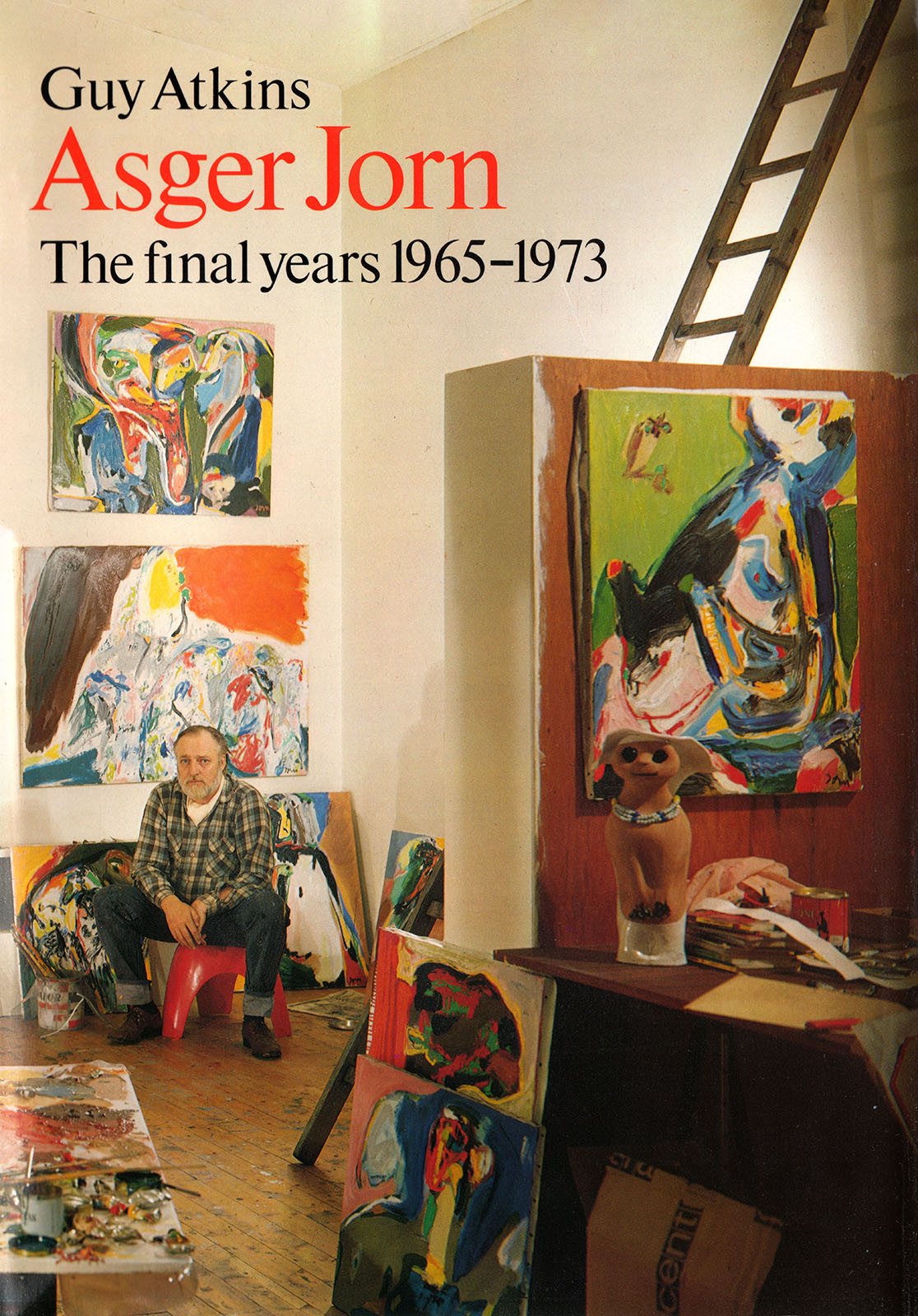
Asger Jorn - The Final Years 1965-1973 is the third book in a five-volume catalogue raisonné series on the Danish painter Asger Jorn by Guy Atkins and Troels Andersen. Completing the main trilogy begun almost twenty years earlier, it documents the final phase of Jorn’s career, including his return to painting in 1970 and his dramatic turn to sculpture in bronze and marble in 1972.
Background
This volume completes the trilogy on Jorn’s life and work. As Atkins writes in his introduction:
This volume completes the trilogy on Jorn’s life and work which was begun almost twenty years ago. Jorn in Scandinavia appeared in 1968, followed in 1977 by Asger Jorn: the crucial years.
The number of oil paintings recorded in the three volumes amounts to over 2,000. This includes the pictures listed in the appendices. Despite our efforts, some paintings will almost certainly have remained undiscovered. We hope in due course to publish a supplement to the œuvre catalogue.
- Guy Atkins, Introduction to The Final Years
The book describes the two most important creative phases that occurred near the end of Jorn’s life: the year 1970, which saw a renewal of his serious dedication to painting after the distractions of the previous years, resulting in works “comparable in quality with those of the mid- to late 1950s”; and 1972, when Jorn turned for the first time to sculpture in bronze and marble.
The Renaissance of 1970
By 1970, Jorn had installed himself in a spacious studio built to his own design in Colombes, about ten to fifteen minutes by train from Gare Saint-Lazare in Paris. The atmosphere and working conditions suited him extremely well. There he painted a number of masterpieces in large format, shown at the end of the year at Galerie Jeanne Bucher in an exhibition entitled La luxure de l’esthésie (The Luxury of Aestheticism).
As Atkins notes: “From this exhibition dates a renaissance of Jorn’s creative strength. The years 1956-9 and 1970-2 were the high points in his artistic career.”
The Sculptures of 1972
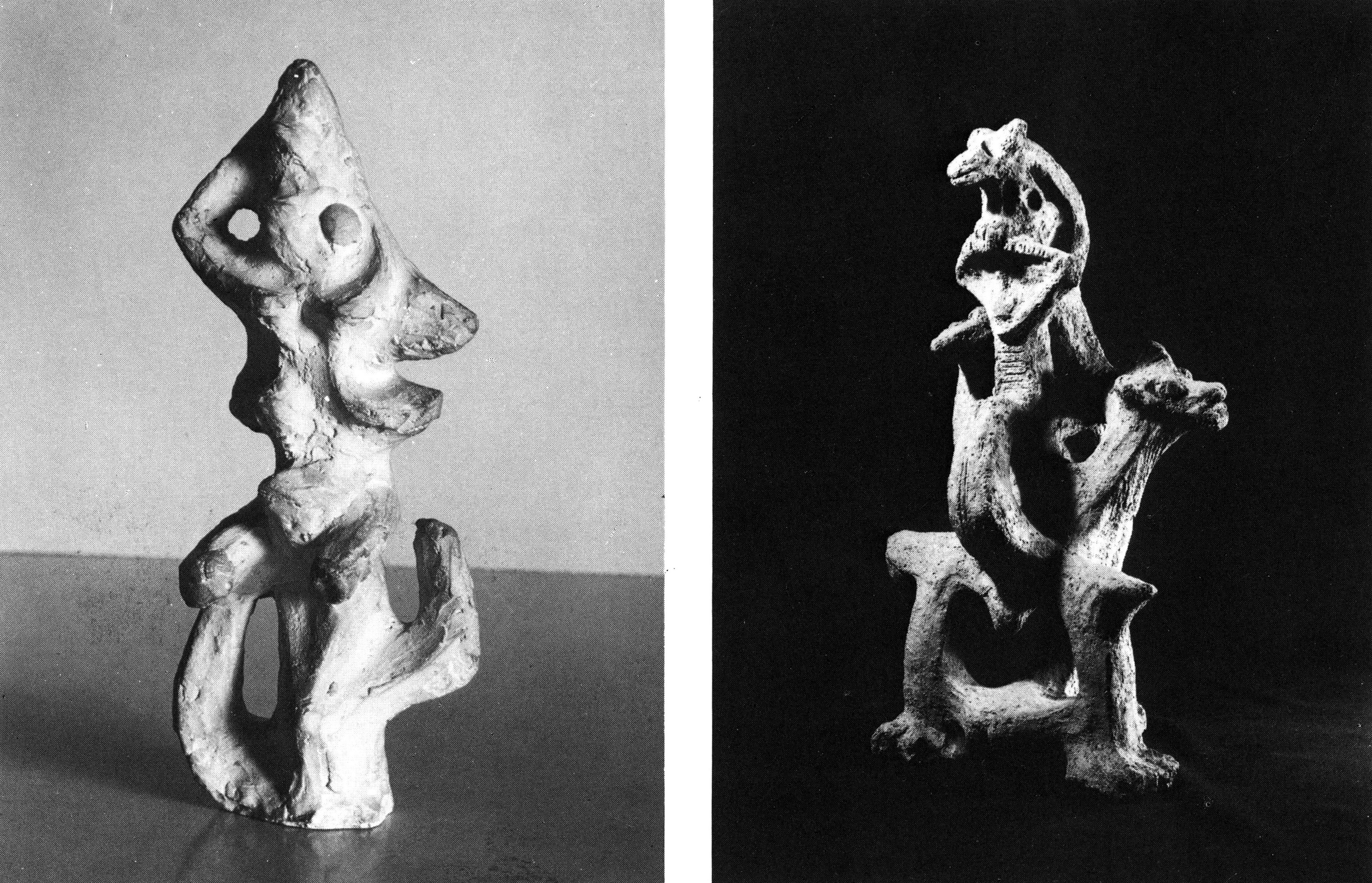
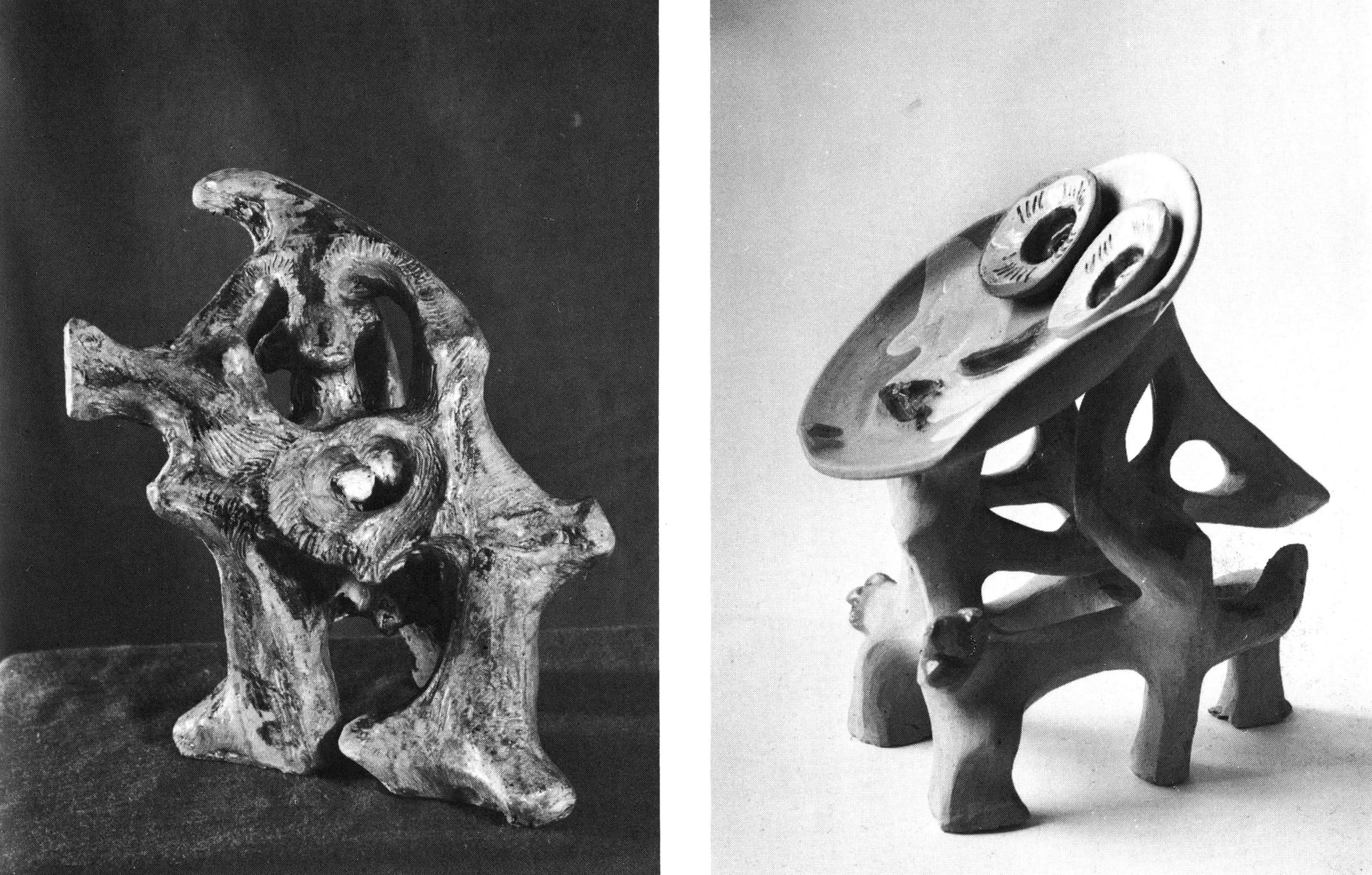
The book includes a major chapter by Ursula Lehmann-Brockhaus on Jorn’s remarkable final turn to sculpture. In 1972, Jorn executed thirty-one sculptures in bronze or marble-classical, time-honoured materials he had never used before. As Lehmann-Brockhaus writes:
In so doing he placed an entirely new and highly significant emphasis on the sculptural side of his art. For decades all his three-dimensional work had been in clay, a material entirely without pretensions; and he had made his sculptures in an apparently casual way against the craft background of small potteries… After the extended and frequently interrupted development of the three-dimensional work the climax of 1972 was like an eruption. Within the space of less than a year and with an amazing concentration of all his powers (already threatened by the illness that would end in his death) Jorn created twenty-three bronze and eight marble sculptures.
- Ursula Lehmann-Brockhaus, The Final Years
Jorn’s diary reveals the intensity of this period: between 9-15 March 1972 alone, he made five sculptures, none smaller than 60 cm high. When talking about these completed sculptures to his Italian dealer, Jorn said: “I feel I have concluded what I had to conclude.” The words, unfortunately, were prophetic.
Jorn’s Final Reflection
The volume quotes from Magi og skønne kunster (Magic and the Fine Arts), published by Jorn in 1971, which contains this passage:
Our life as individuals is short. It is no longer than the memory of our deeds, the immediate consequence of our existence. But if we look upon our life as a link in the long human chain, then it is as long as the life of art, and then the problem of life acquires a perspective, for we see life within the perspective of art. When we look for an answer to man’s eternal question: “What are we - where did we come from - where are we going?” we can appeal to art for the answer to the riddle of life, just as we look to life for the answer to the riddle of art.
- Asger Jorn, Magi og skønne kunster, 1971 (translated by Jytte Hardisty)
Jorn died of cancer in the Aarhus Municipal Hospital on 1 May 1973, after an illness lasting four months. The cremation took place in Silkeborg. His grave is on Gotland, the island he had visited several times to collect data for a book on Theodoric the Goth, which was almost complete at the time of his death.
Contents
Part One
- The final years
- Acrylics by Frank Whitford
- Collages and décollages by Frank Whitford
- Sculpture by Ursula Lehmann-Brockhaus
- Forgeries
Part Two
- Appendix to the catalogue of paintings from 1934-73
- Bibliography
Explore the Book
This is a preview only - view fullsize on archive.org
The Catalogue Raisonné Series
This volume is the third in a five-volume catalogue raisonné of Asger Jorn’s oil paintings by Guy Atkins and Troels Andersen. The series documents over 2,000 paintings spanning Jorn’s entire career from 1930 to 1973, representing 45 years of research. Other volumes in the series include:
- Jorn in Scandinavia 1930-1953 (1968) - 855 paintings from Jorn’s early career in Denmark
- Asger Jorn: The Crucial Years 1954-1964 (1977) - 751 paintings from the period of Jorn’s international breakthrough
- Asger Jorn: Supplement - Paintings 1930-1973 (1986) - 100 additional paintings discovered after the main volumes
- Asger Jorn: Revised Supplement (2006) - A further 123 paintings, concluding the registration of Jorn’s œuvre
By including chapters on acrylics and collages (contributed by Frank Whitford) alongside the sculpture chapter by Ursula Lehmann-Brockhaus, this volume sketches out a large part of Jorn’s œuvre in its astonishing variety-bearing in mind the chapters on ceramics, graphics, and tapestries in the preceding volume.