|
|
| La chevelure des choses | |
| Authors | Christian Dotremont & Asger Jorn |
|---|---|
| Publisher | Galerie Rive Gauche, Paris 1961 |
| Edition | 300 copies |
| Dimensions | 27.1 x 21.4 cm, 32 pages |
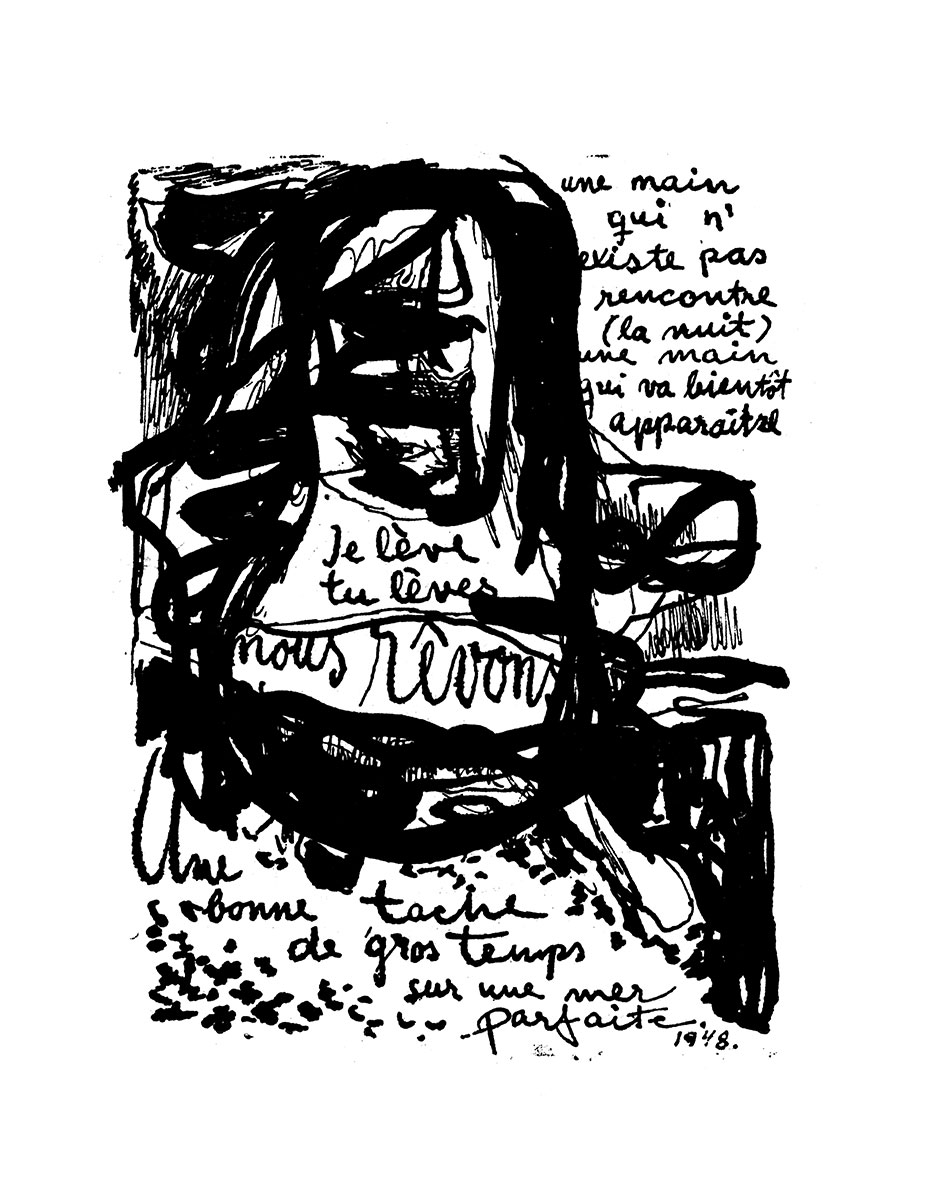
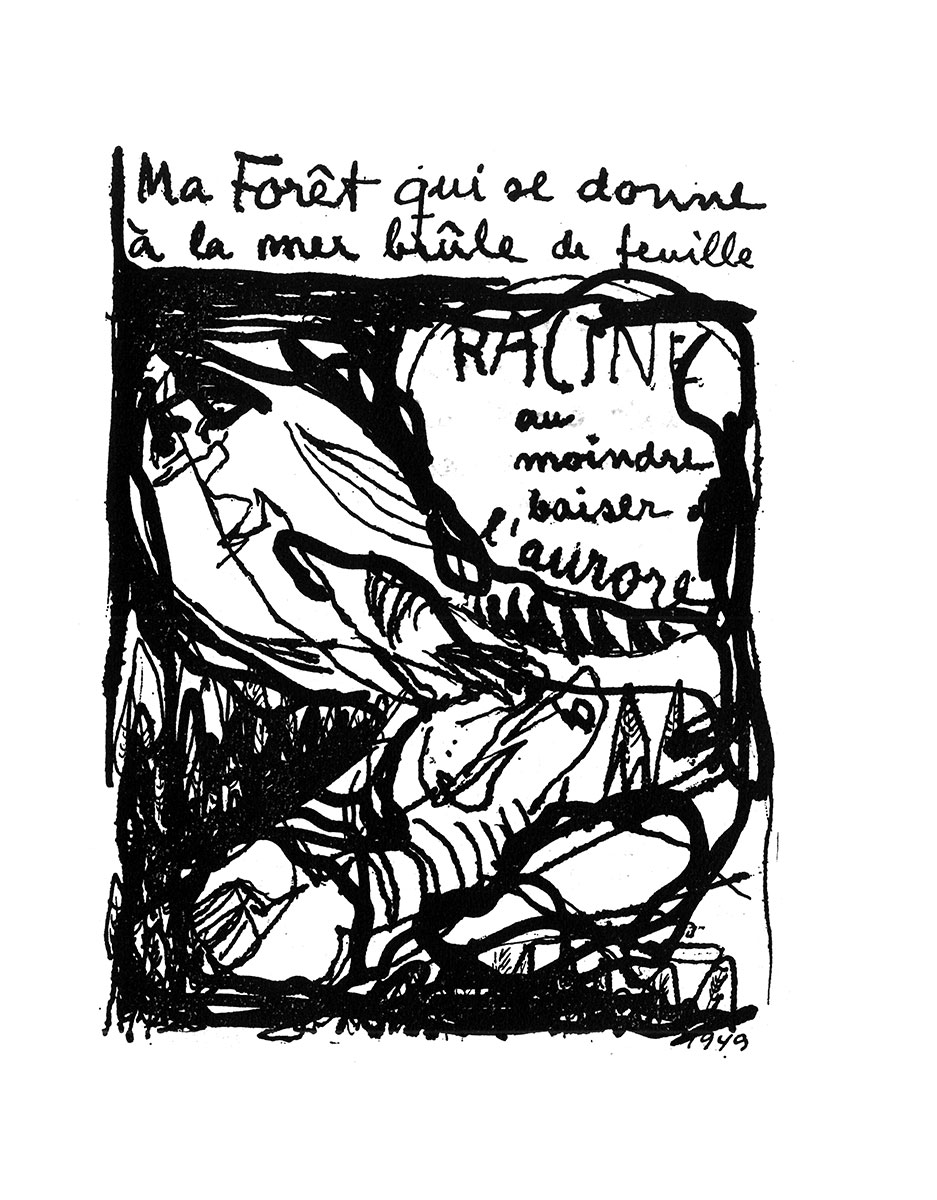
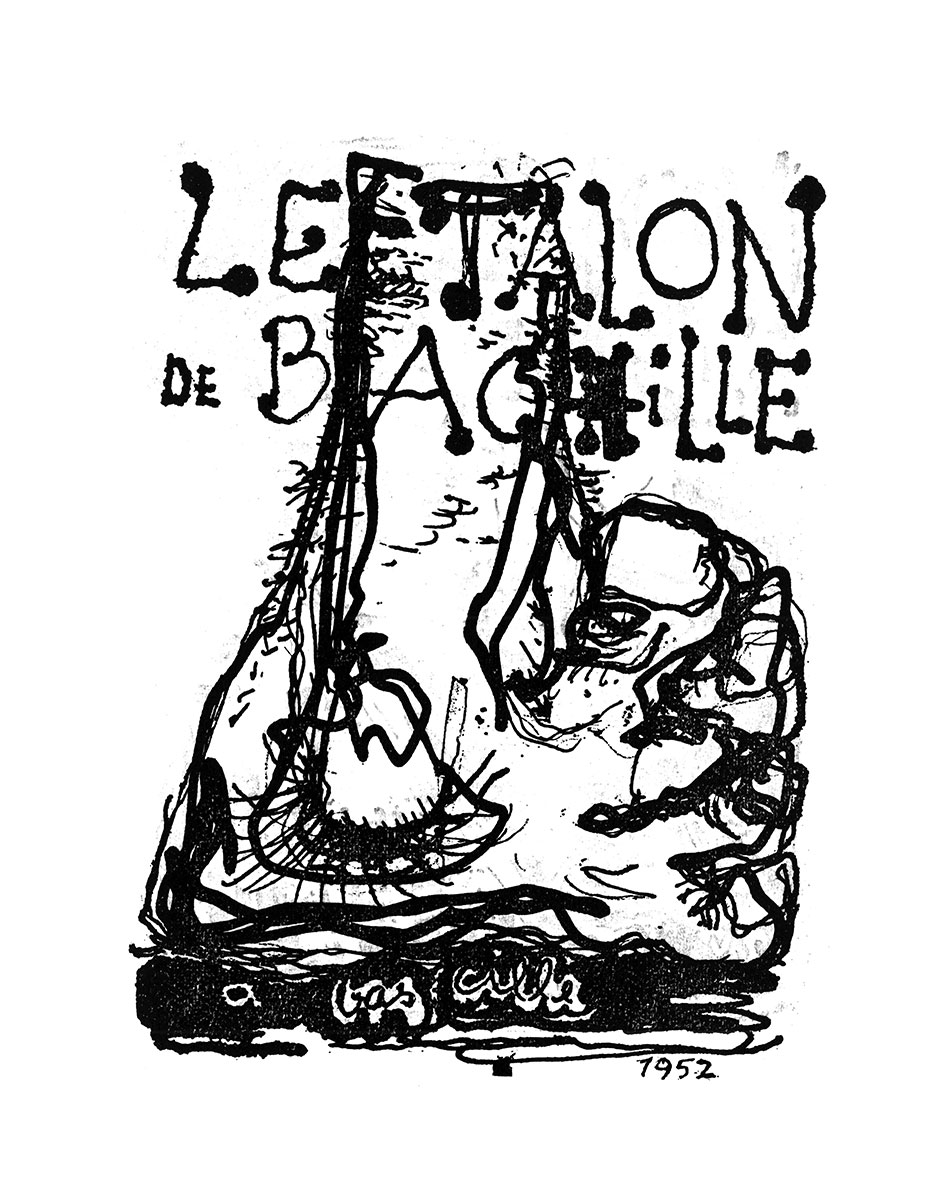
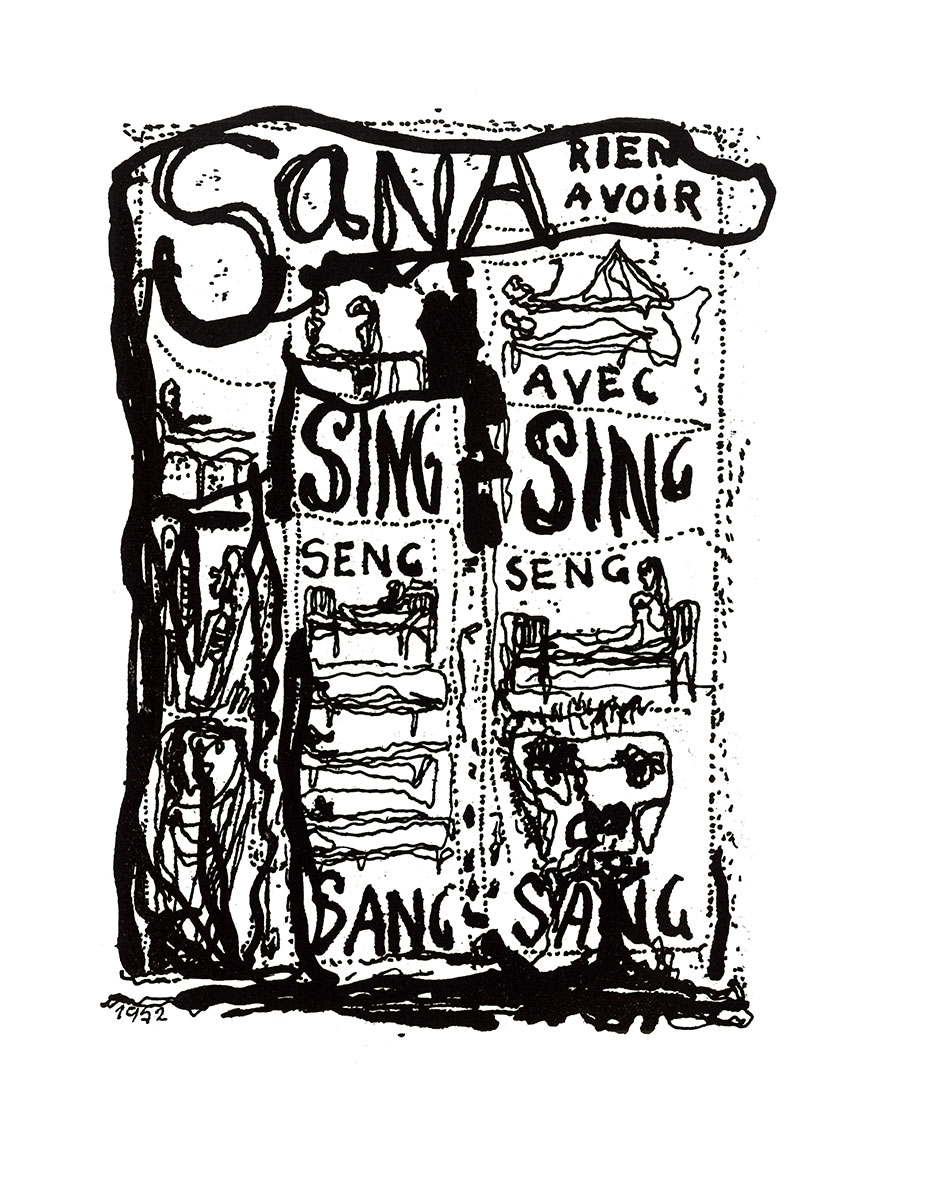
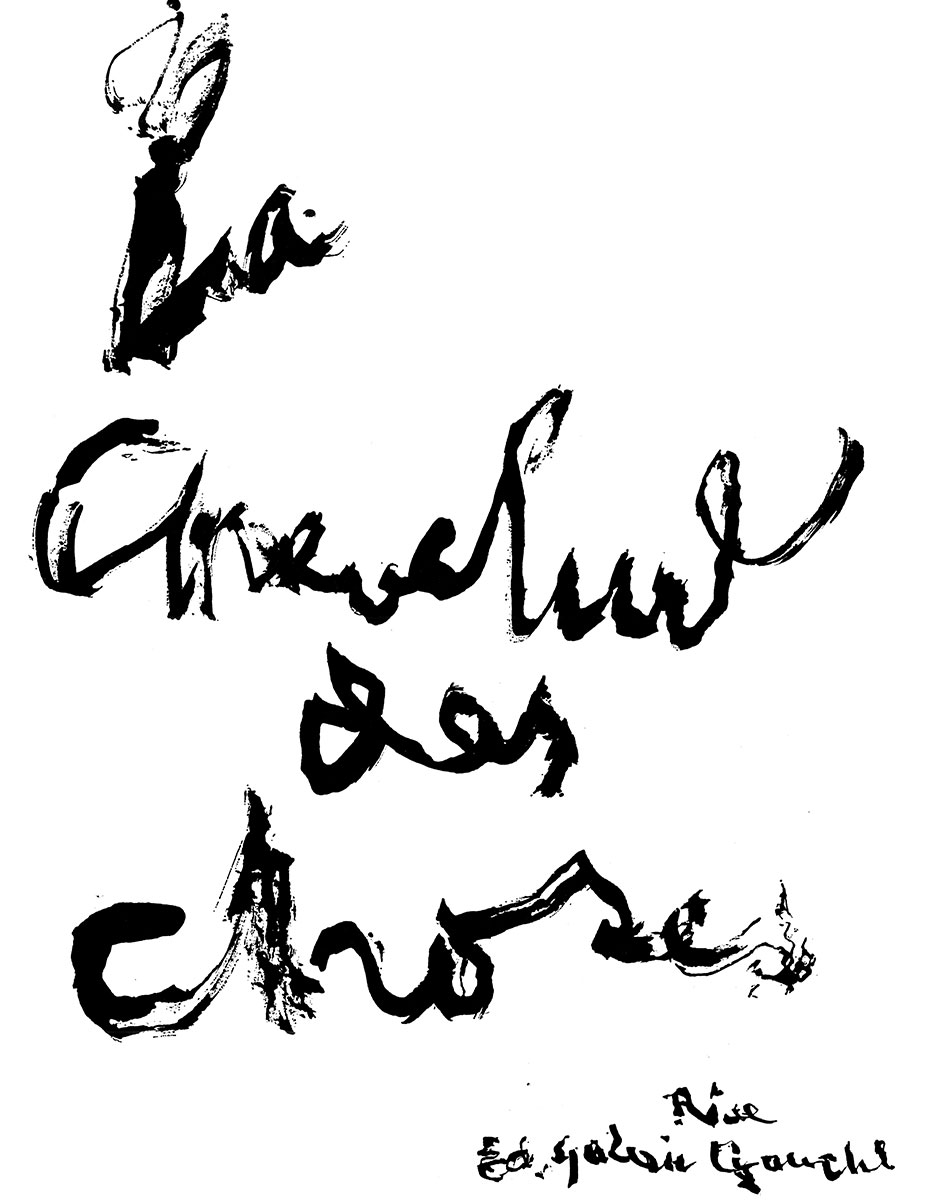
La chevelure des choses (The hair of things) is an exhibition catalogue by Belgian poet Christian Dotremont and Asger Jorn. The book is a catalogue from the pair’s exhibition at Galerie Rive Gauche in Paris in 1961 and is a reproduction of small word drawings made by Jorn and Dotremont from 1948 to 1953, and also specifically from when the pair shared a room at the tuberculosis sanatorium in Silkeborg from November 1951 to February 1952. The catalogue contains a preface by Pierre Alechinsky and an original poem, L’orthocatalographe by Dotremont. Presented in a green stiff card slipcase, it was printed in Paris in 1961 by GIL.
Jorn and Dotremont’s collaboration on La chevelure relates to the pair’s association with the Cobra, an experimental art movement active from 1948-1951 that focused on living creation and was a reaction to a perceived sterile and authoritarian atmosphere around modern art. Dotremont and Jorn were co-founders alongside Constant, Corneille, and Joseph Noiret. Their working method was based on spontaneity and experiment, and they drew their inspiration in particular from children’s drawings, from primitive art forms and from the work of Paul Klee and Joan Miró.COBRA (art movement). Wikipedia. Accessed 2022-02-05.
Prior to the publication and exhibition of La chevelure, the pair collaborated on a word-painting in 1948 titled Ici la chevelure des choses coiffée avec un doigt d’eau (Here the hair of things capped with a finger of water).
Texts
THE CAVES
What is it about? Of a healthy agitation. From the pillow to the stone, the holes of tuberculosis may be filled, the word cavern becomes a museum, it remains death. In medicine, in society, in language, everything is lived as if nothing were more difficult than to disappear.
Christian Dotremont and Asger Jorn have lived, have been living in a cave. But before being returned to normal life they scribbled these traces, grimaces, tender insults. Shrugs of shoulders and movements of panic? It is necessary to organize a little. For lack of applause or shouting, it was up to the feathered hands to find the new signs, and something to sink into.
These atheists’ ex-votos were wrapped up in a great laugh and tossed, in Brussels in 1949 and at the Silkeborg sanatorium in 1951, through the opening that leads to nothing (it being thought that nothing is already a formidable opening), while another agitation came to a standstill in Europe, and for good reason: Cobra. Readable paintings, visible words, here they are nevertheless gathered and offered in their state of project become memory, to the distracted eyes.
ALECHINSKY.
jamais je ne me rappelle j'appelle
par son nom ce que j'interpelle
jamais je ne me contiens je me contente
de ce qui constamment me tente
jamais je ne m'écorne ni l'œil ni l'oreille
je vote contre les corbeaux pour les corneilles
jamais je ne vais à la guerre
j'orne mon cœur de ma colère
jamais je ne donne de hennin à ma femme
j'aime sa chevelure comme une flamme
jamais je ne machine ni ne m'exquise
je ne m'allèche que si me grise
jamais je ne suis petit poucet
dans la douce forêt du passé
jamais je ne jette par la fenêtre
le tas gitbont de rires ou est maêtre
jamais je ne tombe dans la gueule du loup
je ne tombe jamais dans la gueule du goût
et je ne vais dans les musées que pour enlever les muselières.
— Dotremont
never do I recall I call
by its name what I hail
never do I contain myself I content myself
with what constantly tempts me
never do I blunt either eye or ear
I vote against the ravens for the crows
never do I go to war
I adorn my heart with my anger
never do I give a hennin to my wife
I love her hair like a flame
never do I scheme nor grow exquisite
I am only enticed if it intoxicates me
never am I Tom Thumb
in the sweet forest of the past
never do I throw out the window
the gitbont heap of laughter where one is maêtre
never do I fall into the wolf's jaws
I never fall into the jaws of taste
and I only go to museums to remove the muzzles.
— Dotremont
Editor's note: A few translation notes, since this poem is deeply rooted in French wordplay:
The poem's engine is internal word-splitting and sound-echoes — rappelle contains appelle, contiens contains contente's root, corbeaux/corneilles share cor-, musées morphs into muselières, and loup/goût rhyme. Much of this is untranslatable without inventing equivalent English puns, which would violate the meaning. I've kept the sense and structure intact instead.
gitbont and maêtre are not standard French - they appear to be deliberate coinages or misspellings consistent with the poem's title (an invented word about orthography). They've been left as they stand in the original, since they aren't "real" words to translate.
Explore the Catalogue
This is a preview only - view fullsize on archive.org
Gallery