|
|
| Drachenloch 1917–23 | |
| Authors | Peter Baumann |
|---|---|
| Publisher | Self-published |
| Publishing date | 2008 |
| Format | Book |
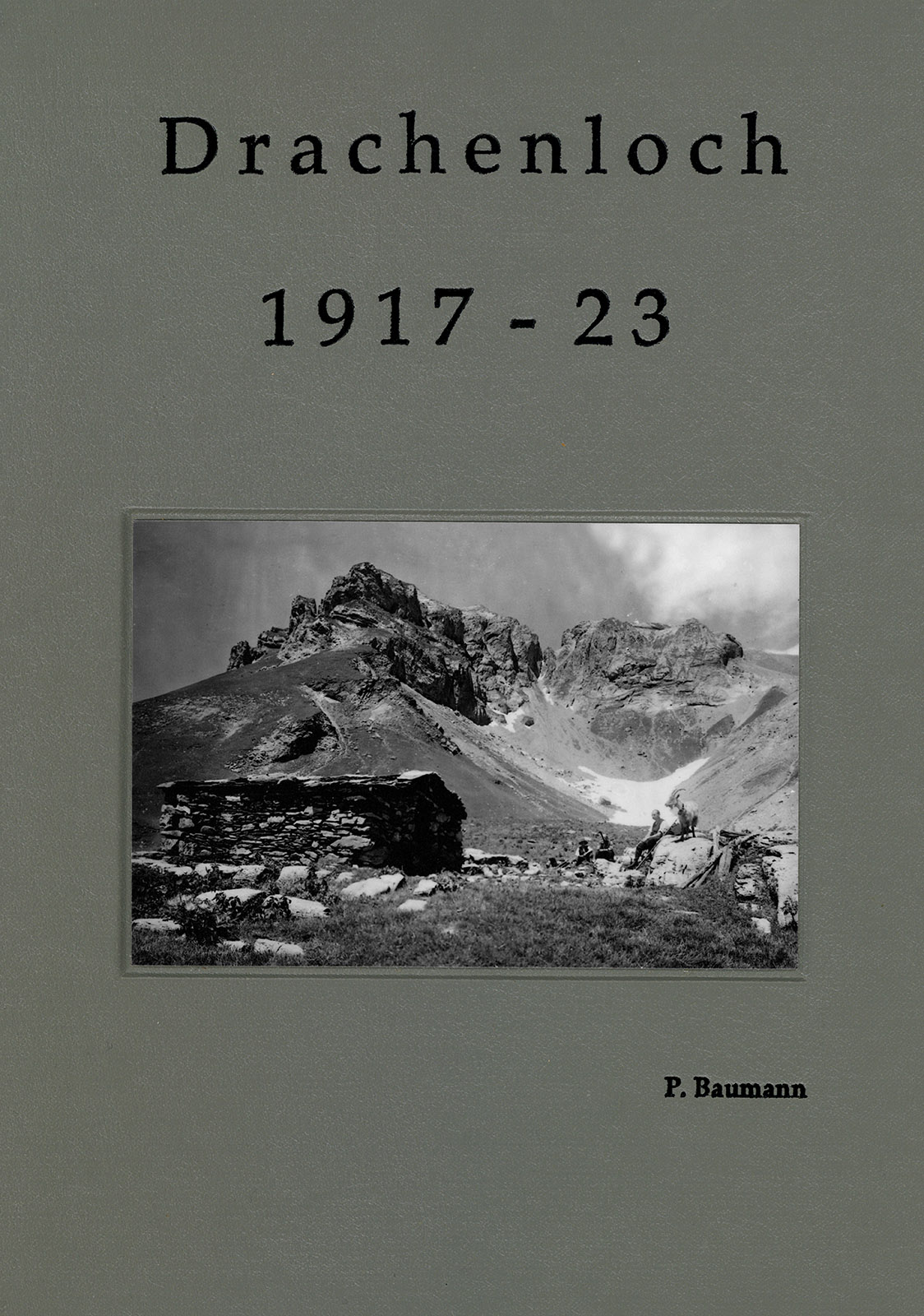
Drachenloch 1917–23 is a 2008 documentary chronicle by Peter Baumann reconstructing the full excavation record of the Drachenloch cave above Vättis, Switzerland, the highest-altitude Middle Palaeolithic site in Europe.
In the summer of 1917, Theophil Nigg, a schoolteacher from the Swiss village of Vättis, climbed to a cave some 2,400 metres above sea level on the flank of the Drachenberg in the Tamina Valley. He had known about the “Draggaloch” for years and carried with him, that Saturday afternoon of 7 July, a spade and the quiet suspicion that the cave floor might hold something worth reporting. What he dug up - bear teeth and bone fragments from beneath the soft cave sediment - turned out to be the beginning of a seven-year excavation that would become one of the most debated sites in European Palaeolithic research.
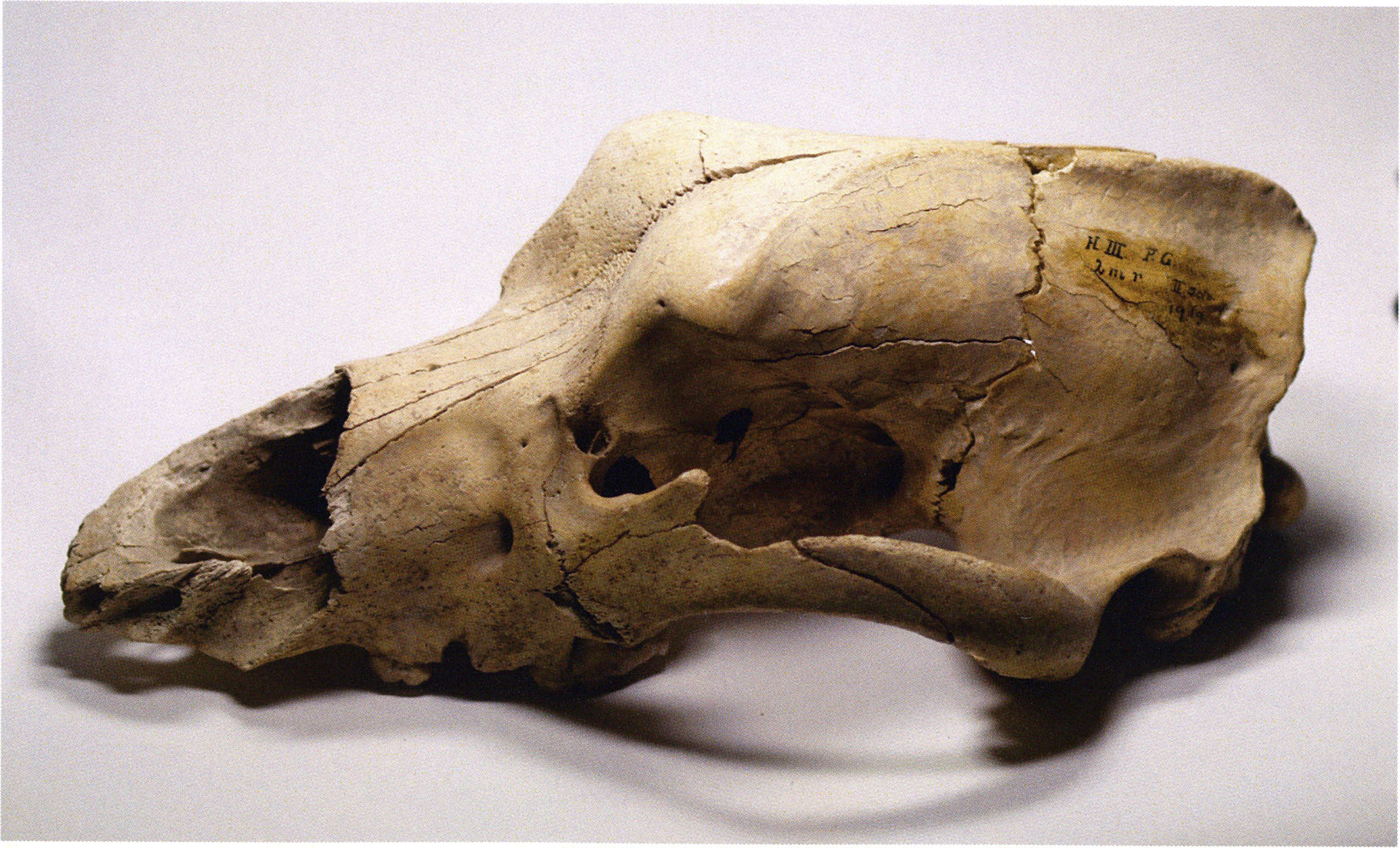
Published in 2008, Peter Baumann’s Drachenloch 1917–23 is the first complete reconstruction of that excavation’s documentary record: the daily cave diaries of Nigg and of Dr. Emil Bächler (the expedition’s scientific director), 86 letters from Bächler to Nigg and 16 in return, first publication notices, and photographs of skulls, bones, and stone artefacts still held in the Kirchhoferhaus in St. Gallen. The book arrives nearly a century after the first digging, and its purpose is largely corrective - not in the sense of overturning the site’s importance, but of recovering it from the distortions introduced by Bächler’s own published summaries.
The Cave and Its Excavators
Theophil Nigg (1860–1957) was a senior teacher and long-serving member of the cantonal parliament (Grossrat) in Vättis, whose interest in the cave predated the excavations by years — he had come to know it through his work as a local historian, and his first test dig on 7 July 1917 was the fulfilment of a long-held intention. In the field he proved meticulous: his eight numbered cave diaries, four sketchbooks of centimetre-accurate situation drawings, and profile cross-sections are now deposited in the State Archives of Graubünden in Chur, and form the primary factual record of what was actually found and where.
Dr. Emil Bächler (1868–1950) was a secondary school teacher and conservator at the St. Gallen Heimatmuseum who had already made his name excavating the Mousterian cave sites of Wildkirchli and Wildenmannlisloch. He received Nigg’s first letter and bone specimens with immediate excitement, took legal and institutional control of the project, and became its scientific director — though he was present at the cave for only 34 days in total across the six seasons, against Nigg’s 201. It was Bächler who named the layers, wrote the publications, and shaped how the Drachenloch was understood by the outside world.
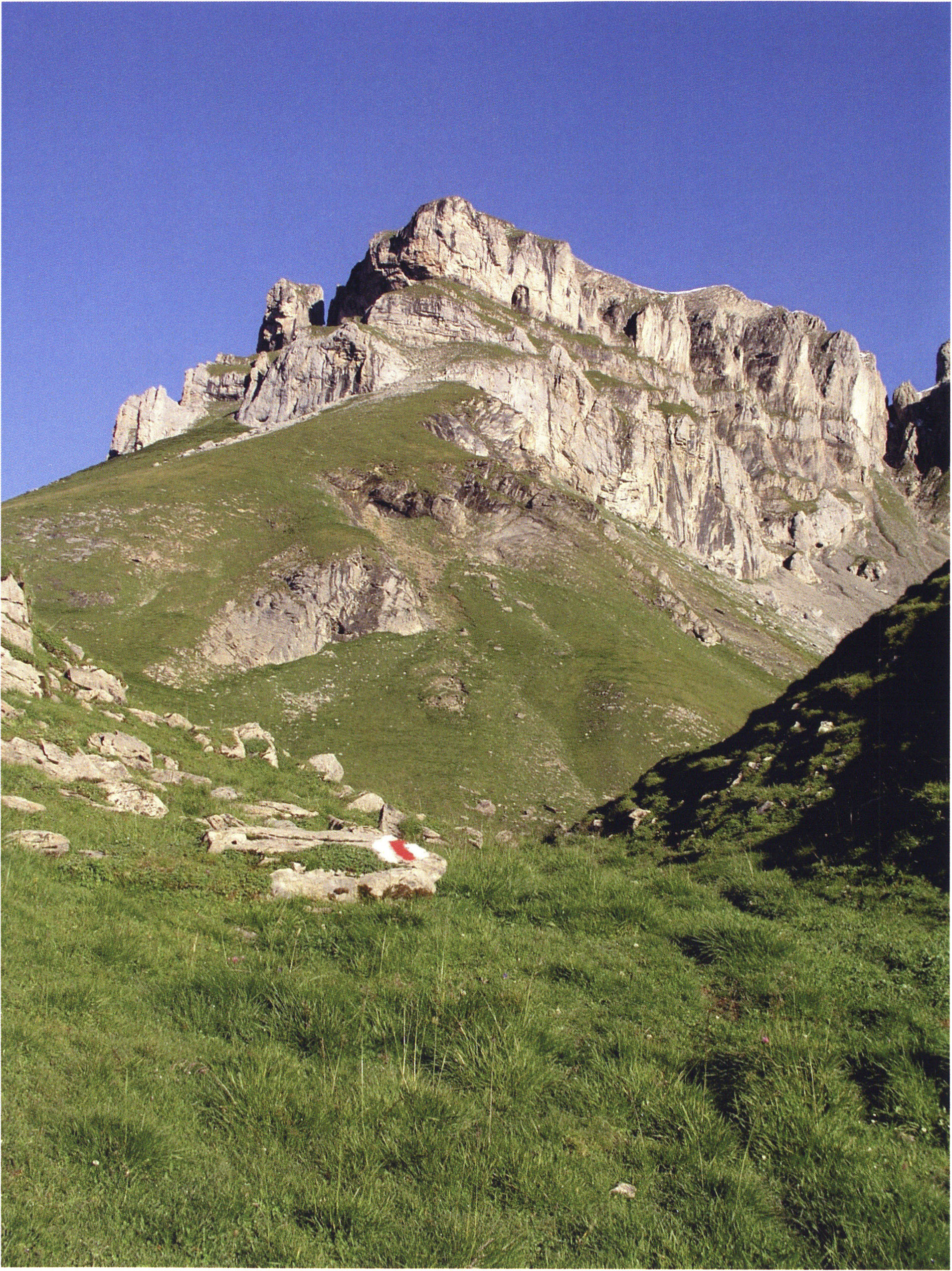
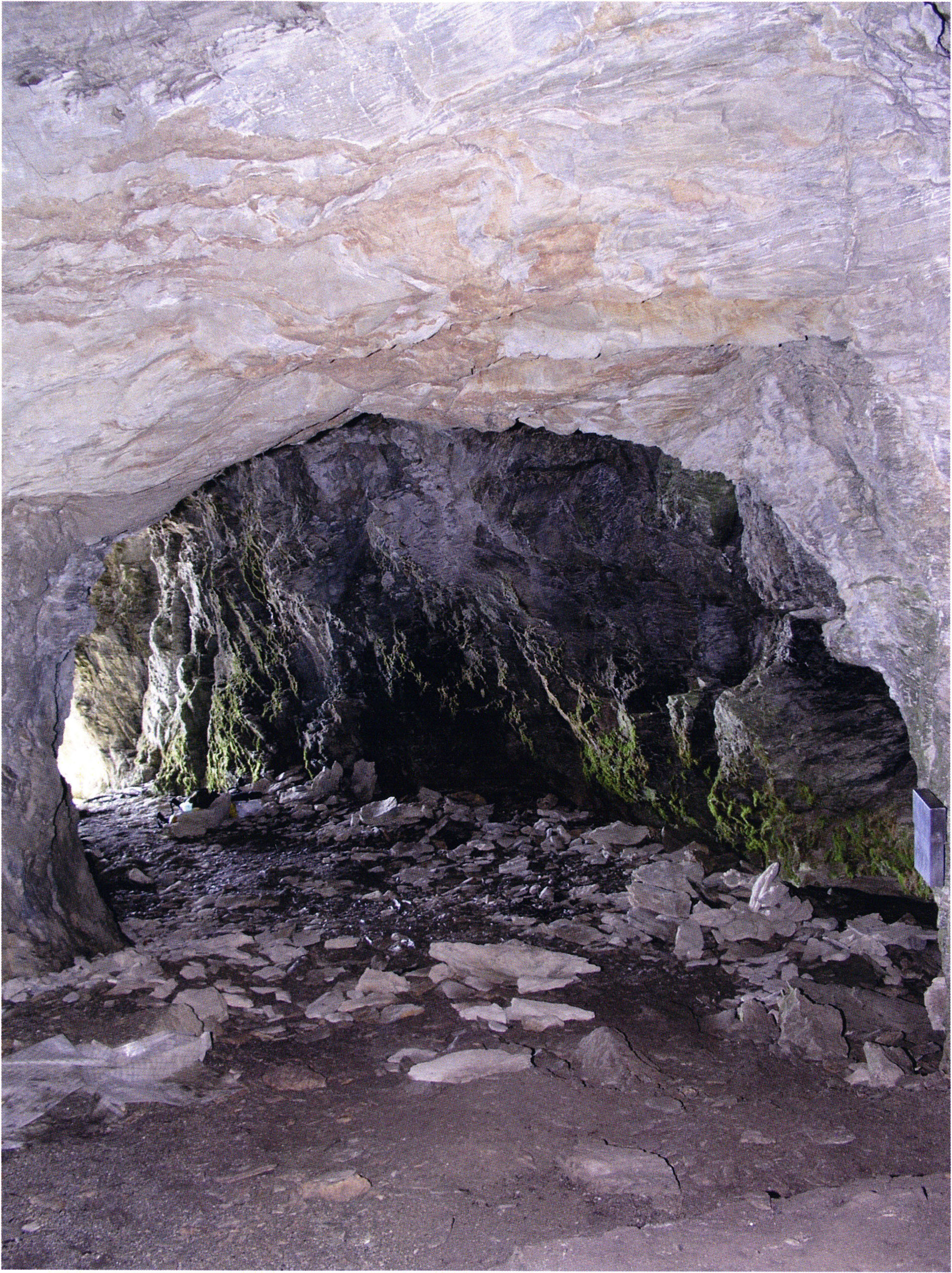
The Drachenloch itself — literally “dragon hole” — sits at 2,427 metres above sea level on the Gelbberg terrace above Vättis, in the canton of St. Gallen. Bächler had visited it during botanical fieldwork in the Calfeis Valley around 1903–04 and noted it on his cave map, suspecting it might contain bear bones; the priority of actual excavation, however, went to Nigg.Bächler’s letter to Nigg, 10 July 1917: “You have got there first, and that is right.” — from the Chronicle in Baumann 2008. The cave consists of three interconnected chambers (H I, H II, H III), accessible through a progressively narrower interior, with the critical Neanderthal-period material concentrated in layers III and IV of the second and third sections. Nigg worked with two assistants, Abraham Bonderer and Hermann Kressig, through conditions that were by any measure demanding: the cave sits above the snowline for much of the year, and finds had to be carried down to the Gelbberg hut some 500 metres below before onward transport to Vättis.
Bächler published his interpretation in 1921 in the Jahrbuch der St. Gallischen Naturwissenschaftlichen Gesellschaft, and in expanded form in Das alpine Paläolithikum der Schweiz (Birkhäuser Verlag, Basel, 1940). Both publications presented the Drachenloch as a high-alpine Mousterian settlement of Neanderthal man and cave-bear hunter — claims that drew considerable international attention. They also introduced claims not supported by the excavation records themselves, and it is here that the trouble began.
What Bächler’s Publications Did to the Record
Baumann’s introduction states the problem directly: Bächler “impermissibly and freely summarized the excavation results that would have followed from the excavation records meticulously written by Nigg and by himself, by passing over the individual findings or even partially combining them, thereby giving the findings an appearance that the excavators had never encountered - one newly created by Bächler himself.”Baumann, Drachenloch 1917–23, Introduction, p. 5. The editor also notes that Nigg’s son, Anton (Toni) Nigg, published his father’s records in 1978 (“Theophil Nigg, Meine Höhlen-Tagebücher v. Drachenloch 1917/1923,” Chur), which partially addressed the gap but left Bächler’s own notes almost entirely aside.
The most consequential fabrication was the “stone chest with 7 cave bear skulls.” In his publications, Bächler described a rectangular stone enclosure containing seven skulls oriented with their snouts toward the cave exit, which he interpreted as evidence of a sacrificial cult directed toward a Supreme Being - a reading shaped by his friendship with Father Wilhelm Schmidt and Schmidt’s theory of a primordial “Highest Being” religion.P. W. Schmidt, ethnologist and Catholic priest, was a prominent advocate of the Urmonotheismus (“primal monotheism”) theory. His influence on Bächler’s interpretive framework is noted explicitly in Baumann 2008, Prologue. The stone chest became the site’s most famous detail and, when subsequent researchers could find no clear documentation for it, a primary basis for dismissing the Drachenloch entirely.
What Bächler’s own 1920 notebook actually records at the relevant passage is something different: a bone deposit covered by a single large Seewerkalk slab (measuring roughly 90 × 60 × 5–8 cm), containing skull posterior sections and accompanying long bones - bone pit 1, in Baumann’s numbering. Bächler uses the word Steinkiste (“stone chest”) there, but means it in reference to the slab-covered pit itself, not a walled enclosure.Baumann 2008, p. 72: “Bächler uses in his excavation notes (1920, page 89) the word ‘Steinkiste’ - but means by it the aforementioned bone deposit covered with a stone slab. For the inventory of this deposit, Bächler lists a number of items, including the occurrence of skull posterior sections - but by no means 7 complete skulls.” The seven oriented skulls do not appear in the primary record.
This gap between record and publication caused lasting damage. When the stone chest could not be verified from the sources, researchers dismissed not just Bächler’s more speculative claims but the entire site’s archaeological credibility, including findings that the records genuinely do support - the sealed hearth, the patterned bone deposits, the stone tools in Seewerkalk. Baumann’s conclusion, after reviewing all material: “the Drachenloch again today - and rightfully so - merits the outstanding significance as a high-alpine, Middle Palaeolithic find site and action site of Neanderthal Man and cave bear hunter.”
The Book’s Structure
Drachenloch 1917–23 opens with a prologue on palaeoanthropology - a substantial essay situating the Drachenloch within debates about Neanderthal man and the origins of modern humans. Baumann surveys the long argument between the “Out of Africa” school (Klein, Stringer) and multiregionalism (Wolpoff), before establishing the key point: the Drachenloch’s charcoal, sampled from a sealed hearth in cave section H II, was dated by the C-14 laboratory at Groningen to “older than 53,000 years” (GRO 1477). The human present in the cave more than 50,000 years ago was, by any reckoning, the Neanderthal. Elisabeth Schmid, who conducted ground investigations at the site from 2 to 6 August 1954, placed the cave bear layers at the closing Riss/Würm interglacial or early Würm onset - a position the cave’s altitude (which halted sedimentation during glacial maximum) supports.Schmid, Höhlenforschung und Sedimentanalyse, Basel 1958, pp. 123–132, cited in Baumann 2008, p. 64.
The prologue also takes up the question of Neanderthal ritual and symbolic expression, arguing against the “Big Bang” theory of cognitive modernity attributed to Klein and others. Baumann traces a line of symbolic representation reaching back to the Berekhat Ram figurine (dated to between 233,000 and 800,000 BP) and the Mousterian “mask” from La Roche-Cotard, positioning the Drachenloch bone deposits not as offerings to a deity but as ritual disposals aimed at the rebirth of killed cave bears. This reading draws on ethnographic parallels with the Evenki of Eastern Siberia, whose bear burial practices - documented by an ethnoarchaeological expedition in 1984 and reported in Archäologie in Deutschland (AID 6/2003) - show structurally similar patterns: the bear buried on platforms comparable to those used for human dead, with the intention of securing the soul’s rebirth and the continuation of the hunt.Gron, Kuznetsov, and Klokkernes, “Begegnungen mit der Steinzeit,” Archäologie in Deutschland, 6 (Nov.–Dec. 2003), pp. 14–19, cited in Baumann 2008.
The prologue concludes with a discussion of a find made in 2004 from the excavation spoil of the cave: a Seewerkalk stone of roughly triangular form, now held in the local museum at Vättis, which Baumann interprets as a symbolic representation of female parturient fertility - a seated, slightly forward-inclined figure whose head is differentiated from the body by the rounding of the skull’s rear, and whose base carries a rectangular slot (approximately 20 × 5 mm) chiselled into the light limestone. Whether this constitutes intentional figural sculpture or a natural form selectively recognised remains arguable; what Baumann identifies as the unambiguous sign of human working is the rectangular slot itself, which he reads as a symbolic womb.Figs. 17a–d in Baumann 2008, pp. 24–26. The stone is exhibited in the local museum of Vättis alongside the permanent exhibition on the Drachenloch excavations, the only such exhibition still publicly accessible.
The Annotated Chronicle
The body of the book is the chronicle itself, running to several hundred pages and organised strictly by year from 1917 to 1923. Each year’s entry reproduces the excavation diary entries of Nigg - in italic type, following Baumann’s editorial convention - alongside Bächler’s own notebook passages (distinguished as bold italic where archaeologically significant), the letters between the two men, and first-publication notices from the period. Weather reports are always included; air pressure and temperature readings appear selectively. Editorial commentary appears in roman type and is precisely delimited from the primary sources.
The editorial conventions are stated clearly in a prefatory note: underlinings follow the originals; orthography has been lightly modernised; the double slash (//) marks a page break in the manuscript. Bächler’s records were written predominantly in German cursive script and required full transcription. Of the original correspondence, Bächler’s 86 letters (including telegrams) to Nigg survive in private possession in Chur, while only 16 of Nigg’s replies to Bächler are preserved, held in box 32 of the Bächler Archive at the Vadiana in St. Gallen. A “Neumann” - a pseudonym for a figure who repeatedly disrupted the excavations - appears across several years of correspondence without further identification.
The chronicle reveals, among much else, the immediate excitement of key discoveries. On 23 August 1920, at the moment of uncovering the second hearth in cave section H II, Bächler writes: “Hurrah! - Discovery of the 2nd hearth in front of the entrance to Cave III, to the left of the cave axis… a typical hearth with excellently preserved coals (wood) + ash.” The hearth - a pit protected by stone courses and sealed by two Seewerkalk slabs measuring 30 × 25 cm - contained charcoal pieces from mountain pine (Pinus mugo), still found a few hundred metres below the Drachenloch today. These were the pieces later sent to Groningen for C-14 analysis.Bächler’s 1920 notebook, pp. 74–79, reproduced in Baumann 2008, p. 60.
The chronicle also documents the correspondence’s more private dimensions: Bächler’s early letter of 17 July 1917 - marked “Confidential! Please keep this letter!” - advising Nigg to tell locals he is looking for minerals (“calcite”) and to pass bone finds off as those of domestic animals dragged in by foxes, “First dig it out, then spread the word,” he quotes his geologist friend Eduard Fraas. This combination of scholarly urgency and tactical concealment runs through the early years of the project and is presented without editorial moralising.
The eight bone deposits (bone pits 1–8) in cave sections H II and H III are documented in detail across the 1920 and later seasons. Across these pits, Nigg’s centimetre-accurate situation sketches record the position of individual skulls, the stone slabs placed over them, and the accompanying bone material. The editor tracks each numbered skull (D 1 through D 45 in the Drachenloch catalogue, with 79 skull fragments recorded in total) against the provenance slips surviving in the St. Gallen depot, identifying discrepancies between Bächler’s published account and the primary record. One recurring observation: the deposited animals are exclusively juvenile - rarely more than 1½ to 2 years old at death, based on molar wear analysis by Heinz Bächler - and include cut marks consistent with systematic defleshing with stone tools.Cut marks documented in Figs. 12–14 in Baumann 2008, pp. 21–22; age class analysis draws on Heinz Bächler, “Die Höhlenbärenschädel vom Drachenloch,” in Emil Bächler, Das alpine Paläolithikum der Schweiz, Basel 1940, pp. 188–201.
The Appendix and Koby’s Theory
An appendix addresses what is presented as a persistent alternative explanation for the bone accumulations: F.-Ed. Koby’s theory of charriage à sec par l’ours des cavernes (dry dragging by cave bears), under which the bone deposits are attributed to bears themselves moving bones during winter hibernation. Koby’s argument gained traction precisely because Bächler’s published account of the stone chest was suspect, and critics who rejected the stone chest sometimes rejected the site’s Neanderthal associations altogether.
The appendix closes with a note written by Nigg in 1956, the year before his death, in which he systematically refutes Koby: bones suited to tools always appear reworked in consistent ways, and the skull deposits in cave section H III - still intact after millennia - cannot be explained by the rummaging of hibernating bears. Nigg’s final sentence reads: “We find it genuinely difficult to be convinced that a ‘charriage à sec’ ever existed anywhere at any time.”Nigg’s note of 1956, preserved via his son Toni Nigg; cited in Baumann 2008, Appendix, p. 5646.
The Sources and the Archive
The photographs in the book - of cave bear skulls, bone tools, Seewerkalk artefacts, notebook pages, and drawings - are Baumann’s own, taken between December 2005 and November 2006 in the Kirchhoferhaus, St. Gallen, where the main Drachenloch depot remains closed to the public. A smaller portion of the find material is exhibited in the local museum of Vättis, whose permanent Drachenloch exhibition was designed by Toni (Anton) Nigg and opened in 1987. Baumann’s acknowledgements identify Jean-Dominique Lajoux - ethnologist and former CNRS research fellow, author of L’homme et l’ours (Glénat, 1996) - as the person who encouraged the project, and Doris Wobmann of the Vättis museum as a central collaborator.
Significance
Bächler’s 1921 monograph established the Drachenloch in the literature of European prehistory. Its claims were bold enough to become famous and flawed enough to be systematically discredited. For much of the second half of the twentieth century the site occupied a peculiar position - widely cited, widely doubted. Baumann’s 2008 book is the documentary foundation that the excavation always required: a complete, annotated transcription of the primary sources, with photographic documentation of the surviving material, that permits independent assessment of both the genuine findings and the distortions introduced in publication.
As a book object, Drachenloch 1917–23 belongs to a category that rarely generates much secondary attention - thorough but unglamorous scholarly reconstruction. Its value is precisely in the detail: the centimetre measurements, the provenance slips, the skull by skull accounting, the unguarded lines in the correspondence. The Drachenloch cave remains, on the evidence laid out here, what Bächler originally claimed - a Middle Palaeolithic site at extraordinary altitude, where Neanderthal man hunted the cave bear and treated its remains with a care that the excavation records document and that Baumann’s book, for the first time, makes fully available.
Explore the Book
This is a preview only - view fullsize on archive.org
Gallery