|
|
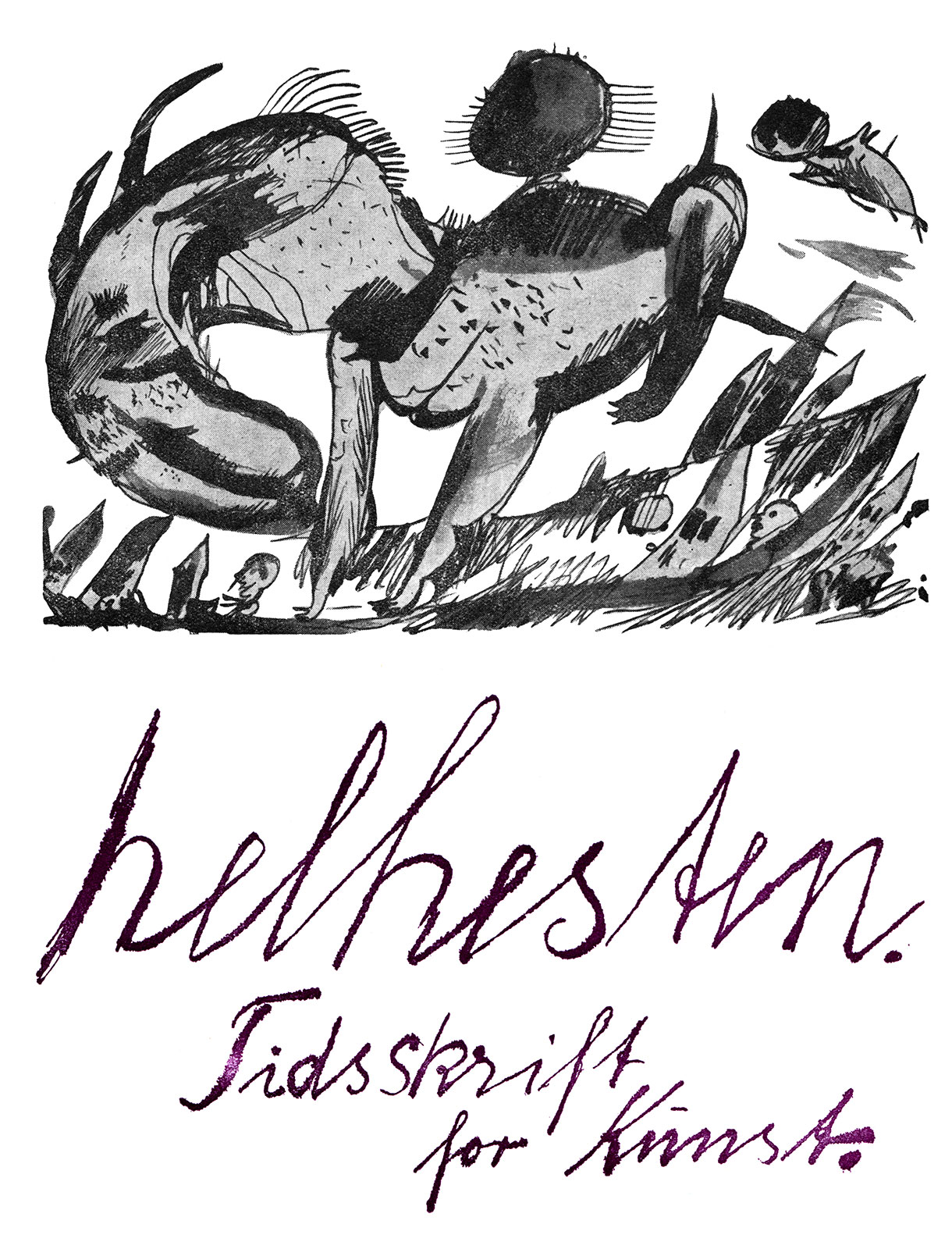
| Helhesten (Year 2, Booklets 5 & 6) | |
| Editor | Robert Dahlmann Olsen |
|---|---|
| Issue date | November 11, 1944 |
| Cover design | Carl-Henning Pedersen |
Helhesten (Year 2, Booklets 5 & 6) is the final issue of the Danish art journal Helhesten, edited by Danish architect Robert Dahlmann Olsen. Published in November 1944, it concluded the journal’s remarkable three-and-a-half-year run during the German occupation of Denmark.
This article is part of the Helhesten collection.
Background
The final double issue of Helhesten appeared in November 1944, less than six months before Denmark’s liberation on May 5, 1945. The journal ended not because of German censorship but due to accumulated financial debt from its ambitious colour printing during wartime conditions.
As Kerry Greaves notes:
It was Helhesten’s growing financial debt, in fact, and not censorship by the Germans, that led to its closure in 1944. The financial problems led to uneven publication, so that while six issues came out in 1941, just one issue was produced in 1942, three in 1943, and two in 1944.
- Kerry Greaves, “Hell-Horse: Radical Art and Resistance in Nazi-Occupied Denmark”
Cover Design
Carl-Henning Pedersen (1913–2007) designed the cover for this final issue, bringing the series full circle-he had also designed the cover for the bound Year 1 collection. Pedersen was one of the core Helhesten artists, known for his fantastical imagery populated by birds, suns, and mythological creatures rendered in bright, spontaneous colours. His work exemplified the “fantasy art” approach he had theorized in earlier issues.
Key Contents
“The Prophetic Harps” (De profetiske harper) by Asger Jorn
Jorn contributed a substantial theoretical essay exploring the relationship between visual art and writing, continuing the journal’s investigation of symbolic expression:
Visual art and writing are the same. A picture is written, and writing is pictures. Just as the fullness of a violin’s tone depends on the multitude of overtones that lie behind the actual tone we hear, so the whole range of unconscious associations we have with a sign is the cause of its power.
- Asger Jorn, “The Prophetic Harps,” Helhesten 2, nos. 5-6 (1944)
“Medieval Wall Paintings” (Middelalderens kalkmalerier) by Carl-Henning Pedersen
Pedersen contributed an essay on Danish medieval church frescoes, connecting the journal’s interest in contemporary fantasy art to historical precedents in Nordic folk tradition. This continued Helhesten’s sustained engagement with prehistoric and medieval Scandinavian visual culture as sources of inspiration for modern art.
“All Art Should Be Popular” (Al kunst bør være folkelig) by Henry Heerup
Heerup’s essay articulated the journal’s populist ethos, arguing that art should be accessible and meaningful to ordinary people-a position that aligned with the Danish tradition of folkelighed (popular belonging) while challenging both academic elitism and Nazi cultural propaganda.
“Folk Poetry” (Almuepoesi) by Jens Sigsgaard
Sigsgaard contributed an essay on vernacular poetry, extending the journal’s investigation of popular culture and folk traditions as vital sources for contemporary artistic practice.
Children’s Drawings
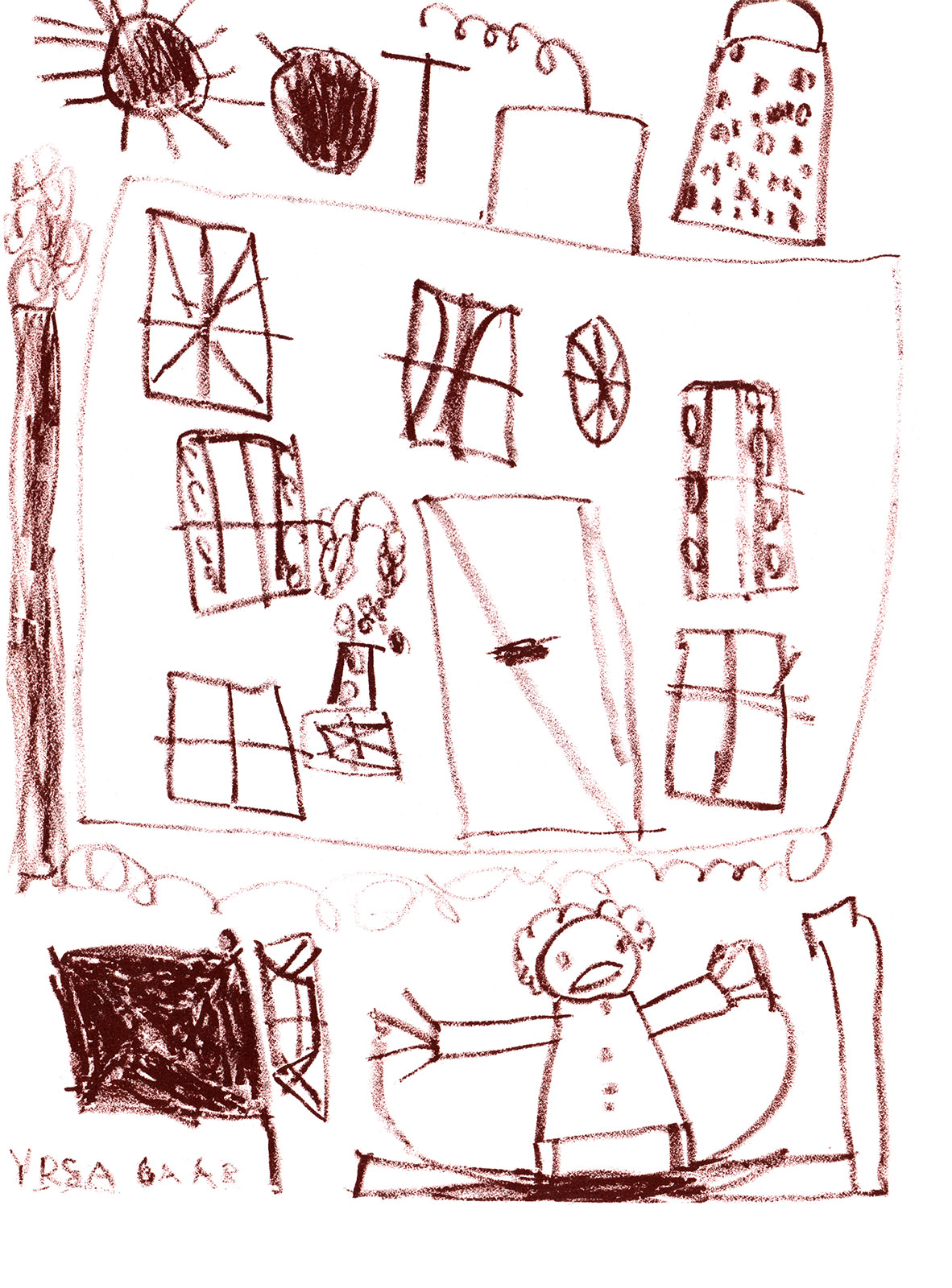
The final issue included children’s drawings as print inserts, demonstrating the group’s continued commitment to celebrating uninhibited creativity as a model for authentic artistic expression.
Legacy
Though Helhesten ended in 1944, its influence extended far beyond the war years. Many of its core artists-including Jorn, Pedersen, Bille, and Jacobsen-became founding members of the international Cobra movement (1948–1951), which carried forward Helhesten’s emphasis on spontaneity, fantasy, and the integration of art with everyday life. The journal’s editor, Robert Dahlmann Olsen, edited the first issue of Cobra in a format virtually identical to Helhesten.
As Guy Atkins writes:
It is now generally recognized that the artists of the war years were by far the most talented generation of painters and sculptors that Denmark has ever produced.
- Guy Atkins, Jorn in Scandinavia 1930-1953
The Helhesten Series
Helhesten was published over nine issues from April 1941 to November 1944. The journal was illustrated with over fifty original, mostly colour graphic works, and printed in editions of 800. It was affordable to the general public; a full set of all issues cost twelve kroner, or the equivalent of $2.30 in 1944. Year 2 was available in a bound hardcover edition with a cover design by Asger Jorn.
Other issues in the series include:
- Helhesten Year 1, Booklet 1 (April 13, 1941) - Cover by Henry Heerup
- Helhesten Year 1, Booklet 2 (May 10, 1941) - Cover by Egon Mathiesen
- Helhesten Year 1, Booklet 3 (September 17, 1941) - Cover by Jens Søndergaard
- Helhesten Year 1, Booklet 4 (October 18, 1941) - Cover by Hans Scherfig
- Helhesten Year 1, Booklets 5 & 6 (November 18, 1941) - Cover by Axel Salto
- Helhesten Year 2, Booklet 1 (October 30, 1942) - Cover by Niels Lergaard
- Helhesten Year 2, Booklets 2 & 3 (March 10, 1943) - Cover by Storm Petersen
- Helhesten Year 2, Booklet 4 (December 24, 1943) - Cover by Ejler Bille