La langue verte et la cuite
La langue verte et la cuite
Tout homme d’esprit qui bâtit commence sagement par fonder la cuisine.
RABELAIS
LA LANGUE VERTE ET LA CUITE
ÉTUDE GASTROPHONIQUE SUR LA MARMYTHOLOGIE MUSICULINAIRE
linguophilée par
ASGER JORN
Directeur de l’institut Scandinave de Vandalisme Comparé
linguophagée et postpharyngée par
NOËL ARNAUD
Régent de ‘Pataphysique Générale
et de Clinique de Rhétoriconose au Collège de ‘Pataphysique
JEAN-JACQUES PAUVERT ÉDITEUR - 1968
Linguista sum :
linguistici nihil
a me alienum puto
ROMAN JAKOBSON
Prélude aux fines herbes
O my little nothing pretty little nothing
I love nothing better then my life.
I have nothing.
I can spend nothing.
and I take nothing
home to my wife.
(« Air de rien » à l’anglaise)
Hommage à l’Americaine
Le livre que vous allez déguster ici sur la cuisine des langues est le premier du genre. Ce fait surprenant trouve son explication dans l’obstacle, jusqu’à nos jours infranchissable, que dressait l’énigme cultelique de la personnalité. Strictement personnel, ce livre évidemment n’existe pas, puisque par définition ce qui n’existe pas n’est personne et que personne ne peut exister à l’heure présente.
Pourtant, les progrès fulgurants de la nouvelle zéromorphie scientifique nous ont permis de recoudre ce problème délicat grâce à la mise en œuvre d’une néan-technique largement computaine, nécessaire à la struction glutosonore de notre dia-marche ethnogastrique.
Pour avoir ainsi amplement satisfait notre soif auditive aux bonnes sources coulant de la source perdue, et heureusement retrouvée par les hommes de science d’aujourd’hui, nous avons saisi l’occasion de puiser dans des sources de premier cru déjà cuitées de l’art de demain.
Nous ne pouvons qu’imprimer notre plus vive reconnaissance et notre gratitude envers tous ceux qui ont montré une attitude mythophonique gracieuse, et de plus gratuite, d’une fécondité savoureusement poétique, humaine et savante.
Nous remerdions particulinairement la Gotiska Gastrophilselskabets Generalurskottet de Stockholm, la Bibliothèque Nationale à Paris, la Cave Coopérative de Vinification de Labastide-de-Lévis (Tarn), le Département des Arts Culinaires du Museum of Modem Art de New York, le W.Z.T.X. de Cambera, MM. Le Bide-Oie et Gréviste, le Genièvre de Wambrechies, la M.P. de Naples, le Groupement autonome des cuisiniers radicaux-socialistes de la Guadeloupe, le D.D.T. de Lausanne, et surtout le Docteur Umberto Gambetta, Facteur ès Lettres et titulaire de la Chaire de Barcelettologie de l’Université Brucciato d’Albisola, qui a bien voulu nous autoriser à parcourir ses riches collections de légendes populaires de tradition orale. Nous déplorons que le F.N.C.O.P. de Chicago ait refusé sa collaboration, pour des motifs que la science, autant que la morale, réprouve. Fort heureusement, le Pomiane College du Nebraska a compensé — et au-delà — cette défaillance inexplicable.
Sermon fumé
La Science des Marmythes culiphoniques, tel eût pu être le titre de ce livre, si nous n’avions été ramenés à des ambitions plus modestes par le sentiment amplement justifié que, sur la voix que nous essayons d’ouvrir, tout ou presque tout reste à dire, avant qu’on ait le droit de parler de marmythes véritables. En effet, si, comme nous l’espérons, l’homoconie sur la naissance de l’homme marque ici quelques points fumants, ceux-ci ne tiennent à rien autre qu’à une attitude résolue d’illuminé devant l’objet obscur qui, pour la première fois peut-être, nous autorise à considérer les marmythes d’un point de vue complètement chromique.
Les sciences pfuisiques de notre époque évoluent arbitrairement parmi les connaissances des œuvres d’une Nature qui, aux dires des savants, n’existe plus. L’homme lui-même et sa langue doivent sans conteste passer à la même marmythe et être servis un jour en tant qu’objet de connaissance scientifique, eux aussi. Cette connaissance démontrera inéluctablement le pouvoir de la liberté dans les jeux arbitraires de l’esprit, laquelle fait que l’homme est une langue et que la langue est, pour ainsi dire, un homme, ce qui n’est qu’une façon de parler et de se rendre intéressant, comme on peut toujours prétendre que l’art d’aujourd’hui demeure le futur antérieur à l’infinitif présent de la science d’aujourd’hui.
Ouverture gastrophonique
Si un morceau de suie tombe dans la soupe, et qu’il ne soit pas commode de l’en retirer, mêlez-la bien ; cela lui donnera un haut goût français.
Jonathan Swift,
Instructions aux domestiques.
Soupe au laiton
Le génial maître-queux Escoffier ne manquait jamais, dans ses hautes leçons, de mentionner et déplorer la disparition de la langue humaine.
Inventée il y a des milliers d’années, la langue humaine n’existe plus depuis vingt siècles, sauf peut-être à titre de curiosité folklorique dans quelqu’es groupes ethniques isolés de la civilisation moderne.
Admis que l’homme lui-même est d’invention toute récente, puisqu’il date de la grande Révolution française, il est intéressant d’observer que la langue humaine avait disparu plusieurs millénaires avant que l’homme entier ne devienne le plat de résistance. On distingue là une de ces multiples contradictions entre nature et culture qui caractérisent la science culinaire.
Nous ne pouvons qu’imaginer ce que fut la langue humaine cuisinée de mille façons savoureuses. Nous n’en restons pas moins au point zéro de la langue humaine, ce qui est, après tout, fort encourageant puisqu’une langue zéro a précisément pour fonction propre de s’opposer à l’absence de langue. L’infinité des zéros se répétant rend la langue possible. A condition de n’être point trop gourmand, on peut déjà, pour l’instant, se contenter de demi-portions. Ce ne sont pas les méta-langues qui manquent.
De nos jours, alors que l’homme est en voie de disparition, l’absence nomique de sa langue se fait de plus en plus sentir, surtout dans la. cuisine où l’absence de langues humaines laisse présager les pires catastrophes, puisqu’une cuisine alanguie n’est pas de la cuisine: c’est un échec, du point de vue tant culinaire que stronomique.
Ce livre gastronomique est écrit pour prévenir un tel désastre en remettant la langue à sa place astronomique, c’est-à-dire visuelle, comme fondement même de la cuisine.
Une cuisine qui ne se fonde pas sur la langue et ne fond pas sur la langue ne relève pas du code gustatif de l’anthropophagie structuralinguistique.
Potage sonhorrifique
Avec la linguistation culitonique, nous sommes - ainsi que nous l’avons précisé - passés dans le vide, ce qui exige une explication impliquée sur l’évidence avide antagonisante sous l’avidité évidente de la vidomorphie glossorielle.
Ici nous nous appuyons sur la mythification de la néantismogenèse nullogique exhaustive, exposée par l’éminent vidéologue Thomas v. Lehrstuhl, de l’Université de Nichtenheim dans son grand oeuvre (13 volumes): Eine kleine Nichtigkeit (« Un petit rien ») ou, au passage (vol. VI, pp. 179 sq.), il passe au passé de l’antique antitèse pour arriver au futur de la futèse, logiquement téléguidée par ce qui fut antérieur à l’antitèse, aujourd’hui démoderne.
Par une diavision dividuelle, il établit l’identité absolue entre le vide en tant qu’être et la vision en tant que devenir vidique. C’est ainsi que le devenir futuriste de la visionibilité glossorielle appartient à ce qui fut, et que la feue bonne cuisine est un mythe, ce qui, dans l’aspect culinographique, identifie le mythe avec le feu puisque le feu fut feu et la bonne cuisine fut. Cette mise au point fonde la diastructure de base, vidicule de notre futèse mythogastrique.
Après ce diapassement élastique du feu visionnaire dans le vide, envidé d’une vision auditive et vidiphile, nous pouvons dès maintenant nous installer dans la triple signividence scholastique, celle du vide, en soi vidu, du vidence, en soi dense, et du videur, en soi vidé, englobée par l’évidence dividée par le vidair (all.: lehrer).
Trombone in brodo
L’heureusologie scolairisée de la futuration futétique implique un problématisme étrologique inévitable pour la diamarche glossoculinaire. Sa nullité étronomique ne s’applique ni au cultificiel ni au naturafficiel puisque, artificielle, la glossificassité de sa naturalisation gastreuse s’achève par la culination de sa t:ulstructabilité nationale qui trouve son originalité dans la formule logique qui-sine, qua-non.
Une nouvelle détermométrie détermythique récemment déterrée par la computologie diatermostatistique révèle ici un mouvement qui va de mal en pire - en termes pirométriques - vers le déculte dénaturé, donc artificiel.
Rigaudon au tord-boyau
Cette dramatomorphie désastrologique émane plus précisément du mal immanuel vers le pire transcendié qui est la transpiration de l’inspiration expirée, comme le voudrait la formule à descarter: « Je pense, donc je sue ».
Ayant descarté tout ce qui sent suie, nous pouvons aussitôt. consacrifier notre force majeure, entière et sangsueur à la paradisologie sangsaucissonore, harmonimétrique et assauciale des défutées possédérées par l’heureusonomie id~~llusive ce qui permet d’entreprendre notre tachisme avec un optimysticisme largement pissimissible que soustend le mythe hellénique rappelé par Tonplat dans son dialogue sur l’origine du pissimisme:
Mm 1
Agamemnon et Alcibiade se promènent en devisant dans la cour du gymnase à l’ombre des cyprès proches. A brûle-pourpoint, Agamemnon demande à son compagnon: “ Alcibiade mon ami, ne serais-tu pas un spiritiste par hasard? » A quoi Alcibiade répond par une autre question: « Pourquoi cela? »
- Parce que, répond Agamemnon, tu pues fort les spiritueux.
Cette remarque spirituelle fut l’objet d’une longue suite de méditation? et de réflexions. Après quoi, Alcibiade demanda à son compagnon: « Agamemnon mon ami, ne serais-tu point par hasard un pissimiste ? »
Il est difficile d’analyser ce mythe à cause de la triple incertitude qui règne ici au sujet de la dévisagesse transludique du dialogue au bois templier des deux héros classiques. Encore qu’ils soient des spirites spectraux à l’aspectre spiritueux, on reconnait quand même en eux des êtres d’une versionomie purement olfactive.
Chiantinata
Mais il y a plus. L’olfaction spectrologique de la boissonnerie liquide des cypressions gymnasticulaires à brûle-pourpoint (par conséquent mise à feu et en cendres) dégage, d’une façon définitifervente, la puanteur des héros spectroculinaires de la cruauté pourrielle, en rattachant justement l’odoronomie corpusculaire à la cuite boirocratique, fondée sur la linguophagie boitelle des bouteilles boiteuses qui sont à la base même de l’eau de feu (donc de la boisson brûlante à laquelle on se chauffe), comme il est mentionné dans plusieurs marmythes d’une transparenté assez nébuleuse sur l’origine exstatistique de l’ivressemblance compénétrante de l’esprit alcoolastique chez les sauvages hyperbucoliques.
La busivation butologique, en contrastructuration à la débutation abusive, nous amène au but de notre effort, quand nous avons assez bu. Comme le spiritiste a bu, l’abus appartient au règne de l’esprit. C’est là que les disbutants finissent par buter l’un contre l’autre par fission d’emboissonnement. C’est net et clair.
Nous avons alors établi que, par les codages olfactomorphes, s’exprime la même opposition impertinente, de nature culinaire, entre la boisserie d’une cuite et le crustacé pourléché. Ensuite et surtout - du fait que nous disposons d’une preuve supplémentaire à l’appui de nos interprétations - nous allons établir qu’il existe aussi des preuves, dans le domaine puanthologique, de l’existence d’un incertificat méthodoratif qui exige qu’on se borne, pour le moment, à la soulignification de l’aspect transpiromorphe des émanations volatiles que nous dévulgariserons avec pudeur dans les pages suivantes.
Sonate en sole meunière
Auf seinen Nasen schreitet
einher das Nasobem
von seinem Kind begleitet.
Es steht noch nicht im Brehm.
Es steht noch nicht im Meyer,
und auch im Brockhaus nicht.
Es trat aus meiner Leyer
zum ersten Mal ans Licht.
Auf seinen Nasen schreitet
(wie schon gesagt) seitdem,
von seinen Kind begleitet,
einher das Nasobem.
Chr. Morgenstern.
Pupitre à concombres
Contrairement à toutes les prev1s1ons pissimistes, nous sommes parvenus à découvrir deux tribus sauvages qui apprécient hautement la langue et la recherchent avec ardeur. Ces tribus sont établies sur deux domaines mitoyens, à l’intérieur de l’agglomération parisienne; le premier de ces domaines se nomme Montparnasse et l’autre XIVe arrondissement. C’est là que nous avons recueilli les données de base de notre mémoire sur la langue crue et cuite, ses mythes et ses rites. Pour la commodité de l’exposé, nous désignerons désormais la tribu du Montparnasse par M et la tribu du XIVe arrondissement par 14 A.
La géographologie métrique qui déterme la doublùre diamétronomique des deux tribus étudiées établit la distincture de leur situlogement, suivant une méthode nettement spaciomorphe et superficile. Ce fait d’évidence n’empêche pas que les deux tribus cherchent à nous faire des histoires, abusives et imbuvables, au sujet de ce qu’il leur est advenu dans le passé.
Nous ne voulons pas d’histoires ! Et les libertés ainsi prises avec un texte mythique créent souvent des histoires fâcheuses, un mythe pouvant parfaitement contredire la réalité ethnogastrique à laquelle il prétend se référer. Cette distorsion - qui fait partie de sa structure - est toujours brouillée par l’histoiration dismythique qui, par là même, doit être exclue.
La raison pour laquelle nous dismythons les mythologies M et 14 A se voit confirmée par la comparaison des histoires qui se sont produites à cause des histoires que les deux tribus prétendent être leurs mythes d’origine, mais qui ne sont en réalité que ,des dismythes.
Le dismythe sur l’origine de la tribu M affirme:
Dm 1
C’est un pur hasard si notre tribu s’est localisée à Montparnasse. A l’origine, elle était migratrice, sans stationnement stable. Les annales de la légion romaine nous appelaient la tribu GLOUTONIQUE, et on nous craignait fort, et même outre mesure, à cause de notre courage fabuleux. Nous n’étions que des guerriers et cambrioleurs très paisibles.
Il est patent que les chromonotonies de ces histoires annales ne sont nullement mythiques, ce qui met en lumière la comparaison avec les histoires délyreuses de la tribu 14 A quant à son origine:
Dm 2
Notre tribu est d’origine alésiatique et occasionnellement sédentaire à ses moments de repos. Depuis son origine, elle s’est appelée la tribu GLOU-GLOU, et notre plus grande fête sacrée - qui durait toute l’année - consistait en la commémoration de la Prise de la Bouteille, au cours de laquelle notre peuple avait, avec ferveur, supporté les dures durées de la longue chaise d’Alésia. Nous n’avons jamais été des cambrioleurs, mais au contraire de braves pillards, ni courageux ni paisibles, mais héroïques et dignes de méfiance.
Il y a une contradiction diasensée entre ces deux dinamythes, contradiction creusée par la prétention des membres de la tribu M à une similituration entre le ton gloutonique et le bruit glou-glou d’un côté, de l’autre entre le ton culturomorphe et le bruit naturomorphe. Selon cette théorie, la tribu M devrait s’opposer à la tribu 14 A.
C’est en vain qu’une quantité d’ethnologues se sont penchés sur ce problême de la relation d’origine des deux tribus. Il s’impose pourtant de mentionner ici la fameuse hyperthèse, largement discutée, risquée par le sociologue italien Vitello Macchiato, suivant laquelle le mythe gloutonique et le mythe glou-glou n’étaient qu’une seule totalité holistique en diaversion tonique et bruitique, émanant à l’origine d’un unique peuple BRUITONIQUE. Cette proposition est tellement aberrante qu’elle a le mérite premier d’éluder tout commentaire extellecturel à son sujet.
Mais la triplicité de l’abus tributaire de ces dismythes imbuvables dépasse le manque de struction archilogique de leurs histoires, les oppositionnels en cause n’ayant rien vu ni rien compris pour la raison qu’ils étaient nettement entéressés dans cette affreuse confrontologie unilatérale et enterrible.
Soulignons que pour la réussite de notre diamarche éminemment scientifique il est de notre intérêt fondamental de rester entièrement désintéressés conformément à la loi qui veut que seul le non-intérêt peut avoir de l’intérêt puisque l’intérêt est sans intérêt au point de vue scientifique. Ainsi nous sommes sans intérêt, ce qui nous permet justement de nous intéresser, en vertu de la règle culimorphe: « on ne peut pas manger quand on a mangé ».
L’occasion nous est ainsi offerte de bondir immédiatement sur l’érotisme qui, avec raison, passionne nos lecteurs et les autres.
Omelette au bugle en chaleur
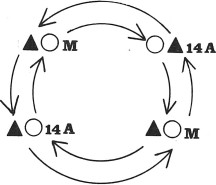
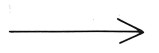
La structuration excitante des rapports sexuels entre les deux groupes M et 14 A s’appuie sur des règles très précises. Les hommes de la tribu M vont chercher des femmes dans la tribu 14 A, ce qui fait apparaître clairement une exogamie, laquelle se trouve dédoublée par une démarche bilatérale puisque les hommes de la tribu 14 A vont chercher des femmes de la tribu M, d’où le schéma suivant :
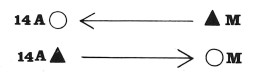
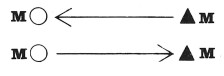
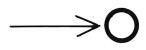
à quoi s’ajoute le fait que les hommes de la tribu M ne s’interdisent pas de chasser les femmes de la même tribu M et que les femmes de ladite tribu M partent volontiers à la chasse des hommes de leur propre tribu M, ce qui s’inscrit dans le schéma :
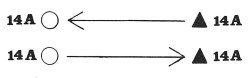
Pareillement, les hommes de la tribu 14 A courent après les femmes de la tribu 14 A et les femmes de la tribu 14 A après les hommes de la tribu 14 A, ce dont rend compte le schéma :
Ainsi l’exogamie observée au début de nos travaux se double d’une endogamie assez confortable, qui se définit par le schéma :
Il est fréquent que les hommes habitant le secteur 14 A passent le plus clair de leur temps en M. Le même phénomène s’observe pour les femmes de 14 A. Et le cas inverse n’est pas rare. Il arrive aussi qu’un homme ou une femme quitte le secteur 14 A et s’installe en M et vice-versa, ce qui implique un retour à la tribu abandonnée en vue des divertissements érotiques.
Enfin, une règle importante que nous avons pu dégager veut que, dans un nombre de cas non-négligeable, un homme de la tribu M, au lieu de courir derrière une femme, court derrière le derrière d’un homme, qu’il soit de la tribu M ou de la tribu 14 A. Il va sans dire qu’un homme de la tribu 14 A peut agir identiquement. Les femmes de la tribu M, comme celles de la tribu 14 A, se prennent aussi à courir derrière les femmes de M ou de 14 A. Ainsi se dessine le schéma :
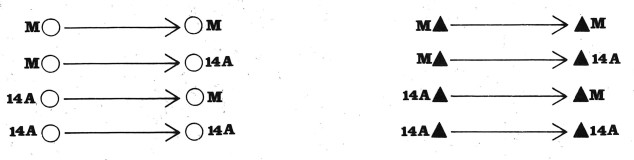
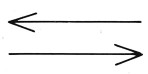
Ce schéma se complète d’une flèche bilatérale pour indiquer le fait que deux hommes ou deux femmes peuvent se chercher réciproquement :

Mais il se produit aussi qu’un homme a part à la chasse d’un homme b qui est en chasse d’une femme c, d’où le schéma :

Cette femme c peut être en chasse d’un homme d, lui-même en chasse d’une femme e, et ainsi de suite, ce qui nous donne le schéma :

D’une grande fréquence est la chasse bilatérale, faussement définie comme le triangle érotomorphe. En effet, un homme a peut chasser deux femmes b et c en même temps :
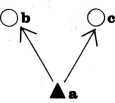
Ces deux femmes peuvent de leur côté partager leur intérêt entre deux hommes, ce qui nous donne trois hommes (a; d; e) et le schéma :
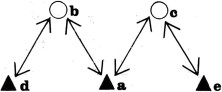
Cette structure s’amplifie selon le nombre des hommes et des femmes impliquées, en sorte qu’on peut parfois la figurer ainsi :

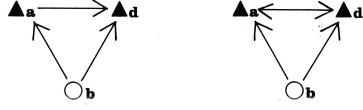
Le fameux triangle érotomorphe ne se ferme que si l’homme a est attaché à deux femmes dont l’une (b) ou les deux (b, c) sont lesbiennes, ce qui donne les deux triangles :
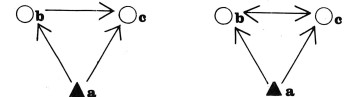
ou encore, dans l’hypothèse de deux hommes (a, d) et d’une femme b, si l’un des hommes (a) est pédéraste et se passionne pour l’autre homme d ou si les deux hommes se passionnent l’un pour l’autre et vice versa :
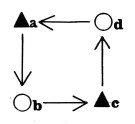
Qu’un homme a chasse une femme b qui chasse un homme c qui chasse une femme d n’exclut pas l’hypothèse de la femme d chassant l’homme a. Il en résulte une circulation en carré — jugée à tort impossible — qui apparaît dans le schéma :
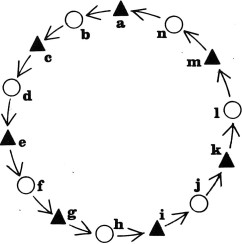
La pluralité des chasseurs et l’enchaînement de leurs volitions engendrent une structure circulaire connue sous le nom de cercle vicieux :
Les autres combinaisons découlant de ce système sévèrement structuré sont aisément prévisibles. Les hommes et les femmes qui ne respectent pas ces règles de rapports sexuels sont condamnés à vivre dans l’abstinence complète, à moins d’élargir leur domaine de chasse à l’extérieur des territoires des deux tribus, ce que font normalement la quasi-totalité des hommes et des femmes des deux tribus M et 14 A.
Contester la relation entre cette vue générale de l’érotisme de M et 14 A et la langue crue et cuite serait manifester un mépris total pour la bagatelle et les distractions.
Salome en tranches
C’est seulement à partir de la domestication zoologique et botanologique . que .la diamétrie linguophonique e.ntre les deux tribus se fait remarquer. Un mythe zoodomestique de la tribu 14 A nous éclaire en partie sur la zoodomythologie de l’origine cocurielle de la gallonomie en basse-cour:
Mm 2
Un grand coq très âgé est las de son parcours journalier qui lui fait courir toutes les poules en nombre grandissant et l’oblige à des efforts érotologiques et perpéturbatifs considérables. Le propriétaire de la basse-cour, qui, lui aussi, est un grand coureur à bout de souffle, comprend la situation, se procure un jeune coq de bonne race et l’introduit dans le poulailler.
Le vieux coq apprécie la relève, salue le jeune fervent et lui propose fraternellement de diviser le lot en parts égales. Ainsi chacun aurait sa dosé de plaisir. Mais le jeune coq ne veut rien savoir d’un compromis égallistique. Il se veut le dominateur poulistique de l’ensemble entier.
Comme if n’y a aucune possibilité de trahison, le vieux coq se voit contraint de trouver une solution définitive au problème et, à regret, il invite le jeune coq à une concurrence sportive: « Puisque nous sommes des coureurs, lui dit-il, nous allons trancher entre nous, par une course en cour, de qui aura l’empire de la bassecour. Nous allons faire la .course du parcours de la cour dix fois de suite, et le plus rapide gagnera. » Le jeune èoq, sûr de sa couragibilité, accepte immédiatement et ne refuse même pas de concéder au vieux coq quelques mètres d’avance, en considération de son âge avancé et de son long stage dans la cour. Sur ce, ils se mettent en route.
Le propriétaire suit avec intérêt la compétition, espérant assister à une vraie bataille de coqs. La tournure des événements le plonge dans une stupéfaction béate. Comme pour lui un vrai coq est essentiellement un coureur de poules, et non un coureur de coq dans une course de cour, et que le jeune coq, tout à son idée de rattraper le vieux coq, se désintéresse totalement des poules, le propriétaire retire à son nouveau pensionnaire toute son estime au fur et à mesure qu’il s’obstine dans sa chasse. Et soudain il sort de son ahurissement, prend son fusil et, d’un coup bien ajusté, l’abat avant que celui-ci ait réussi à le démoraliser et à démoraliser le vieux coq. « C’est un peu fort, s’exclame le propriétaire, voilà le troisième coq pédéraste qu’on me vend! ». Alors le vieux coq se remet à son labeur érotologique, tout en déplorant l’impulsivation de la jeunesse immunologue, expultante au fait qu’il y en avait assez pour tout le monde.
Après avoir pouliment fait la cour tout entière, à la grande satisfaction poulinaire de la poularité courante, le vieux coq se transforme en homme courtois et s’envole dans les plumes, légèrement poulettristé par son sort, cependant que le jeune coq se prend à bouillir de joie dans sa marmythe, avec des poireaux et des carottes.
Cette marmythe de la tribu 14 A pose un problème que nous n’avons pas encore résolu: quel sens faut-il attacher à la gallopade bizarre de ces deux gallantins en coquetence cocaire? Nous ne le résoudrons pas avant d’avoir approfondi la sensualité de la voix érotodoxe dans le prochain chapitre sur le rôt meunière. Il faut donc s’armer d’un peu de patience.
Si le coq se transforme, par métamorphosologie, en un homme, le contraire est évidemment succédé par bruitonomorphie gauloiserielle. Comme on sait qu’un bon coq est nécessaire pour faire une bonne cuisine coculinaire, de même il faut un bon homme pour faire le coq. Cette évidencerie n’entache en rien l’aspect coquentinal qui perspectivera notre suivante enquêtude.
Rôt meunière
Par conséquent, dans une culture qui s’adonne à l’érotomie, les rapports entre homme et femme prennent un sens ambigu et équivoque. Considérée à l’état brut, toute chaîne syntagmatique doit être tenue pour privée de sens, soit qu’aucune signification n’apparaisse de prime abord, soit que l’on croie croire percevoir un sens mais sans discerner si ce sens est le bon. L’érotomisme insensé n’a pas de sens. Pourtant l’érotomisme doit être senti et le sexualisme compris et étudié. Pour surmonter cette difficulté, nous procédons à une sensuration érotomatique.
Le problème sensomorphe est difficile à résoudre. Il impose une structuration de l’orientalisation se_nsationnelle pour ne pas choir dans l’arbitraire occidentel. On doit aussi retenir que les règles diasensuelles de l’érotonomie consensuelle sont contraires au dé-sens érotonomique démenti, cependant que l’insensé de l’érotomorphie mentie se présente dans la coulée d’un sensibitionnisme mathématico-logique élucidé dans ses variabilités positionnelles par Van de Velde dans son ouvrage enculinaire L’angue de 1.000 façons.
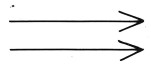
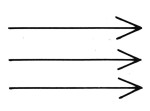
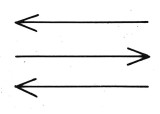
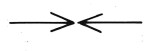
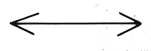
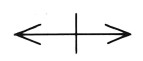
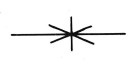
Ces réserves faites, nous nous hasarderons à suggérer la table immensionnellement sym-et-dia-bolique, que voici:
Struction des symboles sensuels
 |
Sens |  |
Sens de traverse (descente) |
 |
Sens unique |  |
Sens de travers indescent et ascendant |
 |
Consens |  |
Sens indescent |
 |
Contresens |  |
Sens caché |
 |
Triple consens |  |
Sens de biais (ascendant et descendant) |
 |
Triple contresens |  |
Absens |
 |
Sens adverse |  |
Non-sens (insensé) |
 |
Sens deverse | 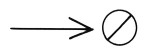 |
Mauvais sens |
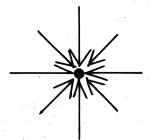 |
Sens conversé | 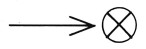 |
Sens interdit |
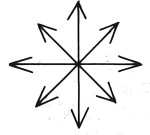 |
Diasens (ou sens diverse) | 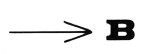 |
Bon sens |
 |
Sens opposé (horizontal et devers) | ||
 |
Sens vers et antagoniste |
Rilettes Roméo
Après cette systématogenèse méthodotautologique, nous pouvons reprendre avec plus de sécurité la comparaison des couj:umes qu’on nomme respectivement l’érotomisme primitif et traditionnel et l’érotomie naturelle et culturelle. Ne craignons pas de regarder en face la difficulté que nous rencontrerons par la suite q’uand nous buterons contre le sens poético-artistique inclus dans le cadre mystique de la mythologie sensorifiée. Opposé au revers, le sens poétique est le sens des vers, extroverti aussi bien qu’introverti, perverti aussi bien que converti, et la notion du sens vers où il faut verser les vers forme ainsi un sujet de contraversion.
Comment qualifier alors la langue universelle? C’est un problème sur lequel nous nous pencherons quand nous en aurons le temps. Toutefois on doit déjà distinguer logiquement les nombreuses universalités en transversalisme polyversel. Nous constatons que l’univers est unique et uniquement vers, comme le veut la version sauvage de la tribu 14 A, tandis que ceux de la tribu M voient dans la polyversalité l’unique univers dans lequel on peut verser les innombrables univers de terre, d’air, de mer, etc.
Dès lors on comprend le sens très précis qu’il convient d’accorder au voca, lisme sensuel de la codachromie des vers. Nous retournons de la sorte à cet.te confrontologie diagrammatique. Mais il s’impose d’examiner au passage la question de la rhinogradation nasobémathique avant de conclure à la versificassité unistrielle, en vertu de la démarche glossopédantique sur le bout de la langue.
Abeilard fumé
Dans la version mythique des indigènes de 14 A, le sens poétique est uniquement une question de nez d’où on tire les vers. L’auditure gastrophonique, inverse de cette versionomie nasoïde, a été excellemment et suffisamment étudiée dans le traité nasomorphologique des nasobèmes intitulé Anatomie ef Biologie des Rhinogrades par le Professeur Dr Harald Stümpke (Masson et Cie, éditeur, 1962. Préface de P.P. Grassé, membre de l’Institut.) qui a décrit, parmi de nombreuses espèces, un nasobème latéral et des nasobèmes bilatéraux découverts dans l’archipel des Aïeaïeaïe il y a peu d’années, mais l’existence de deux spécimens de ces rhinogrades est attestée dans la France médiévale.
La spécialité musiculinaire commune à tous les nasobèmes de l’espèce nasotonique est leur aptitude à jouer de la langue au cornet. Le cornet linguiste est nasobémé au museau dont les lèvres sont formées de telle sorte qu’il est parfaitement cornemusical au point d’ouïe castrophilippe (lèvre, en anglais = lipp). Ce disparallélisme museaumorphe engendre un problème qui pend au nez: celui des langues-mouchoirs dia polarisées selon qu’elles rentrent dans le nez ou en sortent. Nous reviendrons sur ce sujet une autre fois.
Symphonie aux poireaux râpés
Pruneaux cuits
Pruneaux crus
Pruneaux cuits
Pruneaux crus
Pruneaux cuits
Pruneaux crus
Pruneaux cuits
Pruneaux crus
(… et ainsi de suite)
Exercice d’élocution.
Hareng rouge transistor
La langue étant perdue, il convient d’en tirer les conséquences. D’après le mythe de la tribu M, la langue est un mot, donc une chose pàrce qu’une chose ne saurait être une chose sans être un mot. D’après le mythe 14 A, la langue est au contraire une chose, donc un mot. A la fois institution sociale et système de valeur, puisqu’elle est l’organe privilégié du goût et concourt à la déglutition et à la parole, la langue se présente normalement comme une partie charnue et mobile suspendue dans la bouche.
Tout se passe donc comme si les mots n’avaient à leur disproportion d’autre choix que celui de signifier les choses, ou - au contraire - comme si les choses n’avaient à leur disproportion d’autre choix que celui de signifier les mots en les incorporant à leurs entreprises louches. La suspension optative entre ces deux solutions contradictionnaires ouvre entre les deux tribus M et 14 A un abîme de mots et de choses. Il nous semble que cet asservissement congénital des mots aux choses ou des choses aux mots au sein de l’entreprise seindoux et ciblée s’est emprosée artificiellement en articulination réciprocéxuelle au niveau d’un nouveau nivellement néoplastique.
De l’avis des archithéologues verballistiques et des motologues avisuels, la chose détermine d’abord le mot par l’articulination du réel, soit un premier niveau linguophonique; ensuite, le mot détermine la chose par symbolition du réel au deuxième niveau glossonore où la sensualité semée fait place à la technique sensée et piluloroïde d’un sensibitionnisme intellectaire. C’est ce qu’on nomme la loi d’urbanismologie bâtimentale de la diffusion confuse des fissionomies divisionnelles du temps perdu.
Sourdine à l’huile
Le rapport entre la,1gue et langage mérite examen. La langue c’est le langage moins la parole. Pour dégager la langue, il y a donc nécessité de lui couper la parole, ce qu’on obtient de manière radicale en coupant la langue tout entière. Ce carnage de la langue s’appelle le langage. L’opération elle-même a pour nom langagement.
Pour faire la cuisine, il suffit de suivre les bonnes recettes. A bonne recette bonne cuisine. Tout est là. Les bonnes choses se font au moyen de bons mots. Mieux qu’à une simple constatation, nous avons affaire ici à la recette méthodologique de la structuration des recettes culinaires. La cuisine scientifiquement gastronomique est une cuisine parlée. On cause la recette et on s’en gave. La bonne cuisine est un mythe. Un bon dîner se lit à haute voix. Ceux qui imaginent suffisante la distribution d’un menu scripturaire se trompent : ce n’est que lettre morte et noncomestible. « Les animaux se repaissent, l’homme mange, l’homme d’esprit seul sait manger ». Ce savoir lui suffit en tant que nourriture, puisque ce savoir lui bouche les oreilles. La boucherie oràle de l’intellect est un élément premier de la cuisine. En effet, les deux bouche-oreilles participantes établissent un système bilatéral indispensable à la structu-ration culinaire: elles sont simultanément deux (boucheoreilles) et synchroniquement bouche et oreilles.
« C’est parce qu’une langue suppose une suite de pensées que les animaux n’en ont aucune », disait déjà Buffon. Le fait que les animaux n’aient pas de langue est, de prime abord, un peu déconcertant pour la cuisine, mais il convient de se remémorer que « toutes les langues sont à la mesure des hommes », ainsi que l’attestait Turgot, même si elles sont petites. C’est que toutes les langues au monde appartiennent à l’homme: une langue de boeuf ou une langue de chat, d’oiseau ou de morue sont, suivant les mythes, des langues qui appartiennent à l’homme, donc des langues d’homme qui remplacent la langue d’homme, déjà disparue avec l’homme.
Couleuvres hors saison
Quoi qu’il en soit, si la bonne cuisine est aujourd’hui un mythe hors de vue, c’est grâce à l’industrifricassité scientifigée qui a su le conserver. La motophonie structiste de la logique boiteuse nous réserve encore des surprises motomythiques de tous les mots qui motorisent la chose. Toutes les choses marrantes démarrent en logomotion motorisée; il en résulte que le mot arrive à motoriser des choses par leur originalité motrice.
La victoire de la cuisine motologique par le logement verbalistique du vocabulateur motomotivé par la vocation commotionnelle du nez à la moutarde nous offre une nouvelle entrée au plat mot-dit du jour conformément aux règles des motulations corbuscolaires.
Il est à retenir que ce point de départ motoculinaire de la science cu1smologique est marqué par l’établissement lessinguistique d’une laoconnerie lacomique dans le hors d’oeuvre motomythique de Gotthold Ephraïm Lessing: Laocoon oder über die Grenzen der Malerei und Poesie, Berlin, 1766.
Ecrevisses aux ecrous
Nous pouvons donc avancer, sur un accord général, que c’est la causerie qui effectue la cuisine effective. La cuisine marmythique et causale étant infective, la cuisine non-parlée est non-causale et défective. Allant ainsi en ligne droite de càuse à effet bavardigmatique, nous pouvons constater qu’il n’y aura jamais d’effet sans cause, ce qui légitime que la cuisine soit sacriléchifiée pour la bonne cause affective de la causine causée.
Quoi qu’il en soit, l’écriture reste zéro, et si on applique ici ses formules symboloïdes à l’imprimerie pour vulgariser nos pensées, c’est uniquement pour la raison princière qu’ils existent déjà en typographie. La bouphonologie scientifique dans son aspect gastrophonique est donc, théoriquement aussi bien que pratiquement, logique. Elle établit des diamensions symétriques et s’affirme conglomérationnellement participielle à la GASTROLOGIE GENERALE, au niveau superailleur de la gastrographie vicielle, confirmationnelle de la logique scientifique de la langue avant la lettre.
Comme la cuisine est faite pour satisfaire la langue, la langue est faite pour être cuisinée. A. Martinet, dans ses Eléments de Linguistique s’exprime clairement à ce sujet: « Une langue est un outil dont l’organisation révèle qu’il s’est formé à travers le temps pour satisfaire ses fins et que c’est son emploi à ces fins qui garantit la perpétition de son fonctionnement. » Ainsi la langue reste toujours un organe dont l’utilisation culinaire révèle le fonctionnement employonnaire, d’une finesse révélatrice pour la satisfaction temporaire et séculière et que garantit, à travers le code gustatif, une succession perpétuelle et transistorielle qui termine la fin de la langue.
Nouveau diapoisson cru
L’homme moderne, qui cherche le but de tout, sait que ce but est la langue. Il sait aussi que tout se fait à la mesure de la langue, que toute cuisine est langagement et que nous vivons dans urie époque-langue.
Si l’apport des savants danois à cette sympathèse holinguistique est remarquable, nous ne croyons pas mésestimer leur effort en appelant l’attention sur les antiques traditions de la langue danoise qui opère, depuis toujours, cette identité en se servant du même mot pour exprimer le langage (en danois : maal), le but (en danois : maal), la mesure (en danois : maal) et le repas (en .danois : maaltid), comme on le constate dans la formule intraduisible : « I vor tungemaaltid er vor maal at maale landets maal i maaltider ». Ce qui, en français, relie le mets (culinaire) à la méthode et à la mesure métrique. C’est un bel exemple à suivre au cours de notre prochain voyage au bout de la langue.
Ainsi commençons-nous à comprendre que la langue en soi est une cuisine parce que la cuisine ne peut être qu’une langue, et la cuisine de la langue une langue de cuisine.
Pathétique surgelée
Arrêtons-nous un instant sur cette conception de la langue. La tribu M partage la conviction qu’une langue est une langue et que toutes les langues sont des langues, alors que la tribu 14 A prétend qu’il n’existe qu’une seule et même langue nommée la langue, ou, mieux, la langue des langues. Chaque fois que les indigènes de la tribu 14 A tombent sur une langue, ils s’écrient: « Voici la langue! », ce qui présuppose que pour la tribu 14 A la langue est multiple et polymorphe.
Nous touchons ici à deux caractères fondamentaux de la pensée linguisticoculinaire. La langue, tenue pour la somme de toutes les langues existantes, serait là - et même un peu là - dès lors que l’on aurait réuni toutes les langues du monde en une seule langue. Ce serait un fameux morceau, mais difficile à cuisiner.
Les sauvages de la tribu M soutiennent au contraire que cet effort est inutile et vain puisque la somme de toutes les langues n’est pas différente d’une seule des langues, ce qui n’empêche pas une langue d’être différente d’une autre langue, et même de toutes les autres langues au monde. On en infère que toutes les langues sont une seule langue en vertu précisément de leurs différences linguistiques.
On voudra bien réfléchir un instant sur cette altérité identique qui n’entre pas immédiatement dans notre démonstration mais qu’il est utile pourtant d’élucider pour souligner la position centrale qu’occupe la langue dans la cuisine des tribus M et 14 A, ce par quoi se justifie notre labeur.
Pâté de klacson
L’établissement d’une communauté glotique autour d’une seule langue universelle est d’un avortage individuctiblement évidencible. Cela exige la disposification d’une récipuanteur à la taille glossoculinaire de l’unicuisson d’une même langue individée.
L’écologie productologique d’une entreprise semblable serait énormythique, puisqu’il faudrait cuisiner cette langue en une foi. Le feu étant un mythe ne pose aucun problème. C’est exclusivement la distributation démographologique qui est en cause. Mais les moyennances de transportabilité et les menstruations exactitudiques dont dispose la technocrassivité moderne devraient, avec facilitation, assurer la recévération portionnelle par chacun d’un glossaire comestipulé au bon moment et à l’endroit désiré.
Il est donc à comprendifier que l’enthousiasmologie avec laquelle la tribu M fête l’origine du culte communautaire de l’individu glossiversel d’après l’ancienne mythographie corrélative de tous les aspects linguistophoniques reste incorromplative.
Lard du rein
Mais voici qu’à présent le problème s’élargit puisque nous sommes confrontés, par la mythomorphie de la tribu 14 A, à d’autres aspects distinguatifs des glossotonalités divisoirées.
L’inconvénienciation de la langue commune et individuelle avancée par la tribu 14 A vient du fait que cette langue est attachée à une tête, ce qui suppose une seule tête commune et individuelle universalement glosséphalomorphe et multicorpusculaire, avec cette conséquence que les nombreux corps doivent s’attacher, en participhonie cibouloïde, à la langue d’une tête communiaire. L’affortation biologorythmique d’une telle syntesticularité semblait insurmonterrible. Les tentativations compositoires d’une seule tête et langue commune à deux ou plusieurs corps ne connurent pas en effet de successions appréciaires et méritionales. Il y a donc du poids dans la protèse objectivocabulée par les membres de la tribu 14 A.
Mais il y a mieux. Bien que la langue et tête universalement individualistique soit économique, sa phrasomorphie nombrématique est en même temps d’une extrême pauvreté langoureuse dans la variabilition multitudologique.
Andouille en accordéon
Le lecteur risque d’être déconcerté par cette discussion sur l’unité et la multiplicité divisionnelle de la langue qui passionne les deux tribus examinées. Nous la justifions par lè projet que nous avons formé de traiter les séquences de chaque langue sectionnée et les langues elles-mêmes dans leurs relations réciproques comme des parties instrumentales d’une oeuvre musiculinaire et d’assimiler leur étude à celle d’une symphonie diaphone. Pour réaliser notre objectif, nous nous appuyons donc sur le monoglossaire polycéphale élaboré par l’Institut babylonaire en conclusion de ses expériences de sectionnement des individus polymonaires. Leur réussitation d’une ·seule langue communiée à deux et même trois têtes est apprécituelle, même si elle se heurte actuellement à la confrontation polycéphale qui nécessite une affrontation communautaire des têtes implicassionnées constituant un seul front à plusieurs visages dont un seul reste glossoire.
Les artisans du front commun étant multiples peuvent théologiquement se multiplier à l’infini, pourvu que le front s’agrandisse au furieumesure que les visas s’ajoutent.
L’exigation de l’égalibilité d’avis n’a pourtant pas envisagé l’agrandissement nécessif de l’objet glossocommun çlévisageant le visage particulinaire à la queue englossaire. Dans la monoglossologie polycéphale, il devient donc extrémistiquement difficiliaire, au-dessus d’un certain nombre assez restreint, d’envisager la langue commune en agrandissolution proportionistique àux nombres envisagés. D’où il appert qu’il est de nouveau nécessaire de prendre en considérabilité l’hostilitation incarnivorace dans le mouvement polyglossophile de la tribu 14 A. Celle-ci voit justement dans le nombre et la différencibilité des langues la richardise même, innée dans l’être languicionné.
Pâté de crâne
Il est clair qu’une langue étant une langue est, par ce fait, en même temps différente de et égale aux autres langues. Cette différence-égalité peut être acceptée suivant une convention purement quantitative, ou encore selon une convention de valeur à la fois quantitative et qualitative.
Après cette mise en forme, nous pourrions regarder notre tâche comme terminée, si deux difficultés ne subsistaient.
En premier lieu, deux ou plusieurs langues de boeuf, de même poids et âge, exposées chez le boucher sont considérées comme égales au point de vue de la qualité. La différence réside uniquement dans le fait qu’elles sont deux ou plusieurs au lieu d’une seule. On peut les mettre l’une à côté de l’autre ou l’une sur l’autre, en les comptant suivant la convention de parité. Mais une fois rentré chez moi avec la langue que j’ai achetée, cette langue changera selon la recette de cuisine que j’emploierai, et pendant la cuisson elle restera pourtant la même langue. Cette langue crue, cuite, fumée, pourrie est toujours identique à elle-même d’après le mythe M.
En second lieu, les indigènes 14 A traitent avec le plus profond mépris cette constatation. Ils affirment qu’une langue crue n’est pas identique à une langue bouillie, cependant qu’une langue crue peut être identique à une autre langue crue, justement parce qu’elles sont différentes.
Saucisson pick-up
Les deux problèmes ci-dessus énoncés n’en font en réalité qu’un seul, et dès qu’on s’en aperçoit la solution apparaît. Il faut inventer des signes:
 |
parallélogisme ou égalité symétrique, |
 |
inégalité ou asymétrie, |
 |
identité homéomorphe, |
 |
identité et égalité, |
 |
identité et différence. |
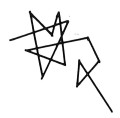
Cette série peut être exprimée aussi tigurati vemen par un graphe carré, où les permutations précédentes se présentent sous forme de 24 parcours orientés et classés en ordre :
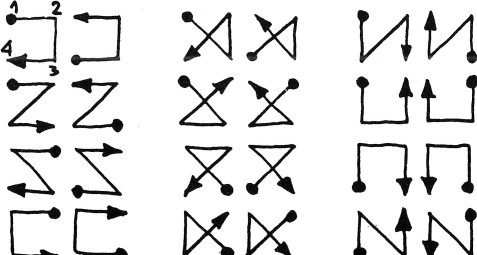
Aussitôt l’on comprend le sens très précis qu’il convient de donner au vocalisme diastructural des langues et de la langue des langues. Mais les problèmes ne sont pas résolus pour autant. Il est donc normal que nous cherchions à cerner les notions de plus près en démontrant le rapport entre les langues vivantes et les langues pourries. Un examen du mythe sur l’origine de la langue pourrie, en honneur dans la tribu 14 A, nous sera particulièrement précieux à cet égard.
Mm 3
Au commencement, une langue très vivante se promenait partout, bien pendue et attachée au gosier. Un jour, un piqueur de langues réussit à la dénicher avec un bâton férré. [En anglais, bâton se dit « stick », d’où vient le mot « linguistick », en français « linguistique ».] Par cette opération, la langue était devenue crue. On l’avait bouillie et salée, et mise en conserve. Puis on l’avait tranchée et grillée, et remise en conserve. Après quoi on l’avait oubliée. A cause de cet oubli, la langue avait pourri. Quand enfin on pensa à l’extraire de la réserve, on fit sécher à l’air chaud la langue pourrie et on la pila jusqu’à obtenir une poudre sèche de langue pourrie diluable dans l’eau. Ce mets était le préféré des poulets, mais les chiens le leur disputaient.
Ce mythe nous retiendra longtemps. Il est aveuglant, au premier coup d’oeil, qu’il nous restitue fidèlement, au prix d’un certain nombre de transformations, le mythe M du dénicheur de langues.
Remarquons d’abord la pluralité des niveaux qui se montre dans la démarche unilatérale de cette langue mythique, constituant un rite d’initiation à partir de l’état vivant et naturel en passant par la marmythe à l’état grillé et écrasé pour finir en langue pulvérisée diluée, en gravissant tous les échelons de la hiérarchie.
Par conséquent, on vérifie l’ensemble des transformations suivantes:
Chez les M une langue crue peut devenir une langue pourrie, une langue cuite aussi. Une langue crue peut être cuite, mais l’inverse est tabou. On peut sécher une langue crue, cuite ou pourrie. Et l’on obtient les combinaisons ci-après:
| sec | ||
| cru | 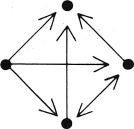 |
cuit |
| pourri |
A. La langue vivante et gaie
B. La langue crue et humide
C. La langue crue et sèche
D. La langue cuite et humide
E. La langue cuite et sèche
F. La langue pourrie et humide
G. La langue pourrie et sèche
H. La langue crue et écrasée
I. La langue cuite et écrasée
J. La langue pourrie et écrasée
K. La langue en poudre sèche
L. La langue en poudre diluée
M. La langue crue chaude pourrie
N. La langue crue froide pourrie
O. La langue cuite chaude pourrie
P. La langue cuite froide pourrie
Q. La langue crue chaude pourrie sèche
R. La langue crue froide pourrie humide
S. La langue cuite chaude pourrie sèche
T. La langue cuite froide pourrie humide
U. La langue crue chaudè pourrie sèche écrasée
V. La langue crue froide pourrie humide écrasée
W. La langue cuite chaude pourrie sèche écrasée
X. La langue cuite froide pourrie sèche écrasée
Y. La langue goûtant
Z. La langue dégoûtante
Z’ La langue goûtée
Z” La langue dégoûtée
Etc.
Cette recherche nous entraînerait au-delà des limites que nous nous sommes assignés et nous préférons donc revenir au mythe M sur l’origine de la langue pourrie.
Ici apparaît le miteux héros-dénicheur à la recherche des langues perdues. On ne s’étonnera pas de son apparition dans le récit de la 14 A. Le texte est clair sur ce point. Il appert à l’évidence qu’une langue ne peut être dénichée sans un dénicheur. Il faut donc qu’il se manifeste pour déclencher les événements. Le héros, parti à la recherche des langues perdues, néanmoins ne perd pas le nord.
On notera enfin et surtout que la langue en poudre est une langue multiple, ou - plus exactement - une langue multipliée par division, vu qu’un petit paquet de langues représente, dans les conceptions magiques de la tribu 14 A, la langue tout entière, laquelle est la somme de toutes les langues existant au monde.
Opéra buffet
Jay menge un œuf
La lange d’un bœuf
Quatre vingt moutons
Autant de chappons
Vingt cougnons de pain
Ancore ay ge fain.
Comptine (dans « la Friquassée crotestyllonnée », Rouen, 1552)
Langouline frite
Prenant une vue rétrospective de notre démarche, nous pouvons dire qu’elle commence avec des mythes dont le héros est un dénicheur de langues. Cela rappelé, il n’en est que plus saisissant de constater que les mythes juxtaposent abruptement le motif du dénicheur et celui de la langue, aussi bien que le motif de la langue des langues et celui des langues de la langue.
On retombe ici, une nouvelle fois, dans l’hostilité incarnée par le mouvement polyglossophile de la tribu 14 A, laquelle, en voyant dans le nombre et la différenciation des langues la richesse même de l’être, postule que chacun tient à sa disproportion personnelle plusieurs langues. L’exigence la plus modeste et en même temps la plus réaliste suppose au moins une double langue, cependant que le mouvement prenait toute son ampleur - en dehors de la tribu 14 A - en Allemagne, au XVIIe siècle, avec le voeu sacré: « Je voudrais avoir mille langues. »
Il est patent que la parole sloganlaïquifiante qui meut les adversaires monolinguistophoniques de cette abondentification nombrematique, savoir les indigènes de la tribu M qui affirment: « Langues de tous les pays unissez-vous! », crée une tension contrastructurielle génératrice d’une fugue se doublant d’une contre-fugue résuractionnaire assez doubitologique sur le plan ethnomorphe.
Récemment, la révolte étudiée, infernanterrible et ressorbonasse, a bouillonné à forte température dans les marmythes univagitées contre cette double injustice opprimaire de l’exploitation inhumaine et de l’indignacité universitaire, en prenant pour mot d’ordre: « A chacun sa langue! » L’argumentalité de ces encagés ne manquait pas de portée éviduelle. Songeons en effet que si quelqu’un s’empare de trois langues, trois autres personnes se voient contraintes de se partager une langue. Ainsi la communauté d’une seule langue est due à l’avidité collectivisieuse des possédentaires polylangoureux, ce qui trouble notre raison.
Clé de sole en filets
Après ces explications préliminaires, on admettra plus volontiers l’utilité d’un retour aux sources mythiques de l’origine perditionnelle de la langue au moyen d’une comparenté diaversionnelle entre les tribus M et 14 A. L’origine de l’origine coule toujours d’une,source assez originale : la langue, origine sourcière de n’importe quoi et de tout, comme les grandes choses proviennent toujours, par extraction mythologique, de la petite origine verbalistique du monde entier.
On pourrait nous accuser, il est vrai, de nous rendre ici coupable d’une pétition de principe originatale, puisque nous semblons postuler l’origine linguomythique des choses, ce qui devrait faire au contraire l’objet de otre démonstradation. Or, rien n’est plus dangereux, du point de vue d’une saine méthode de recherche dénichiaire, que d’adopter, d’une institution en cours d’examen, une définition qu’on a du mal ensuite à ne pas retrouver partout. Vu qu’on pourrait courir ce risque avec la langue et les langues, il est indiqué de s’appuyer définitivement sur leur perdition.
Voici la raison pour laquelle il nous faut ici profiter de l’élémentalité perditionnelle de notre scolasticion élastique : elle nous offre la possibilité d’une introduction parodigmatique au royaume bétisomorphe de la naissance principale d’une connaissance ·concurrentielle assez courante, selon quoi la démonstratification dispariétale de la langue coïncide avec la comparition d’un mythisme pariétal et logique.
Dès lors on comprend la parenté apparente de la réciprocité paralogique de notre parentèse parabolique. Pareille au parachronisme paradoxal d’une parallélité de paresse, réceptionnellement pardonnable suivànt la paraphrase parasitaire, elle est parfaitement située sur une parabase de tonnerre, solide et paradisiologique.
Ré au beurre noir
Essayons maintenant d’arriver à l’alternative interne d’une adversité réversible de la diamétrie inverse entre le récipient de la parasymphonie de rechange marmythique et le reçu de son récipié récidiviste. Il serait ainsi possible, conformément au variétablissement dispariétal, d’engendrer tout leur contenu empiré et contenanciel au moyen d’une compartition disparate fondée sur l’algorythme saccadélique de la marmythe parabouillante. La comparaison parégorique entre deux marmythes, dont l’une de la tribu 14 A traite de l’origine de la carpe muette, nous démontre l’opération mythomatique d’une disjonction entre l’homme et la langue paragorique:
Mm 4
A l’origine vivaient deux frères jumeaux qui se ressemblaient trait pour trait. Mais l’un des deux n’avait jamais émis ni un son ni un mot. Le père s’était ruiné à payer les médecins les plus habiles afin de lui donner la parole car il savait qu’alors seulement son fils pourrait penser. Mais nul remède ni traitement n’avait pu guérir de son mutisme absolu le malheureux enfant. Ses parents étaient au bord du désespoir.
Un jour la mère rentre à la maison après avoir appris qu’il existe une source sacrée à côté d’un rocher dans un pays éloigné. Cette source guérit toutes les maladies. Elle supplie le père de lui donner les moyens d’entreprendre le coûteux voyage avec l’enfant muet.
Comme c’est l’ultime espoir, le père accepte. Il vend tous les meubles de la maison, et jusqu’aux ustensiles de cuisine, et la mère peut ainsi emmener son fils à la source.
Après un long voyage, elle arrive devant le bassin qui retient l’eau froide de la source. Le coeur battant, elle y jette son fils, qui est aussitôt pris de fureur et se débat comme un diable dans un bénitier.
Remonté à la surface, l’enfant se met à hurler à l’adresse de sa mère: « Sale putain de garce, qu’est-ce que tu m’as fait, ignoble salope? Sors-moi de là, infecte ordure et plus vite que ça! »
Au comble de la joie, la mère retire son enfant du bassin et l’embrasse avec transports, éblouie du miracle qui lui fait entendre le splendide flot d’injures répugnantes dont son fils l’abreuve. Pleine de gratitude, elle revient au pays et à peine voit-elle la maison qu’elle crie: « Miracle! Miracle! Mon fils parle! »
Le père accouru à sa rencontre lui demande:
- Que t’a-t-il dit?
- Peu importe, répond la mère, puisqu’il parle.
- Sinistre idiote, dit le père, je sais bien qu’il parle puisque tu t’es trompée de gosse!
Il n’en organise pas moins un grand festin pour fêter le retour de son imbécile de femme et de son fils parleur, et surtout pour consoler, en le gavant de nourriture, son fils muet dont la langue ne peut servir qu’à lécher les plats. A ce festin, il invite la tante des deux gosses.
On entame en silence une magnifique langue de boeuf écarlate, accompagnée de cornichons, quand on entend distinctement ces mùts:
- Con, maman!
Chacun se demande d’où sort cette parole grossièrement affectueuse. On ne tarde pas à s’apercevoir que c’est le gosse muet qui l’a émise.
Nouveau miracle? La crétine épouse commence à se trémousser d’aise, mais la tante, ancienne femme de ménage au Couvent dès Oiseaux, proteste:
- En voilà une façon de parler!
Alors la mère - qui ne veut pas être accusée d’avoir mal élevé ses enfants, gifle vigoureusement le muet, en criant:
- Où as-tu appris ça, vaurien?
Comme c’est la première claque reçue de toute sa vie, le muet ne pleure pas. Bien au contraire, il est pris d’une intense hilarité.
- Où il a appris ça? dit la tante. Il pourrait en raconter sur vos moeurs intimes. On ne se méfie jamais des bébés.
Le père, plein comme une outre, met les pieds dans le plat et se précipite sur la tante pour lui arracher sa langue de vipère. Le fils parleur mord au mollet le muet qui hurle comme un sourd. La vaisselle s’écroule avec toute la famille. Alors le fils muet dit, avant de se renfermer dans son silence opiniâtre:
- Con, tante?
Atterrée, la mère refuse désormais de prononcer la moindre parole. Elle se transforme en carpe et s’envole dans les airs pour se percher sur un arbre au som’met d’une montagne inaccessible. Et voilà pourquoi les carpes sont muettes.
Cette marmythe sur l’origine des carpes volantes mérite à plusieurs titres de retenir notre attention.
Elle est d’abord étroitement apparentée à une autre marmythe de la tribu M que nous allons citer et qui traite de l’origine de la recherche des langues perdues.
Mm 5
Le héros de la tribu M s’apprête à partir en croisade pour dénicher des langues étrangères. Pendant son absence sa femme sera tabou. Elle doit être protégée par une ceinture de chasteté. Le héros va chez le forgeron et commande une ceinture en fer. Quand, quelques jours plus tard, le dénicheur vient pour prendre livraison de l’appareil, il le refuse parce qu’en son milieu a été ménagé un trou sexomorphe assez grand pour satisfaire toutes les exigences raisonnables. Le forgeron tend alors une carotte au héros et l’invite à introduire cette carotte dans le trou, ce que fait le héros, et aussitôt la carotte tombe, coupée en deux par le mécanisme. Enthousiaste, le héros emporte l’appareil et l’ajuste à sa femme avant de partir.
De longues annëes après, le héros revient en son castel; il réunit tous les chevaliers, pages et domestiques de sa cour de sexe masculin et les prie d’enlever leur pantalon. Il procède à l’examen des parties nobles et constate que tous les hommes restés au château durant son absence ont le pénis sectionné, sauf un, son vieil ami Lancelot.
Il embrasse l’ami avec effusion et le glorifie en ces termes: « Mon cher ami Lancelot, tu es toujours mon serviteur fidèle et incorruptible. Quel bonheur! »
Emu et quasiment foudroyé en entendant cet éloge, Lancelot est incapable de prononcer la moindre parole intelligible, on entend seulement sortir de sa bouche des borborygmes joyeux. Et ce triste état persistera. Lancelot a perdu sa langue pour toujours et c’est en vain qu’il la recherchera tout le reste de ses jours.
L’intérêt particulier de ce mythe est qu’il se fonde sur l’antagonisme entre le fer et la carotte; donc entre le minéral et le végétal.
C’est un fait admis par la tribu 14 A qu’ « à mesure que les moeurs d’un peuple deviennent chastes, sa langue se corrompt »; ainsi la boucle ceinturée se referme sur la langue corrompue.
Fugue aux figues à la gomme chromosommaire
La vérité ne se mange pas ?
La musique non plus.
Mais je dis moi
que la poésie se mange.
Qui mange le vent
de sa cornemuse
n’a que musique en sa panse.
Déjà, ce n’est pas si peu.
Norge, La Langue verte.
Valse comestible
Un point important reste pourtant à élucider. Posons que le sens est purement verbal et logique puisqu’il est de signification vocale. De ce fait nous sommes contraints par articollision d’identifier le sens avec la voix latérale et bilatérale.
Si la notion de voix est préférable à celle de sens, c’est qu’elle permet d’établir la notion de supériorité et d’infériorité hiérarchitecturale à haute voix et voix basse, ce qui n’a pas de sens, de même qu’il n’y a pas de hauteur sans bassesse, comme le signifie le fléchémantisme suivant:
 |
 |
||
| Haute voix | Voix basse |
Il est donc clair qu’il sera préférable de remplacer le sens par la voix dans la table sym-et-diabolique:
| voix | 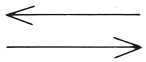 |
| voix unique | |
| convoix (ou voixcon) | |
| contrevoix (interdite) | |
| etc… |
Orgue de barbare à Rome
C’est l’éminent vidéologue Thomas v. Lehrstuhl qui, encore une fois, nous met dans la nécessité évidamentale de voir avec la voix linguophonique, si nous voulons voir assez clair pour rester sur la bonne voix du bon temps, en reconnaissant la vidité visuelle que nous avons déjà distinctement confusionalisée dans les pages suivantes. Avec une sensualité voisive, largement étroite, il nous envoix sur la voix des faits salutaires et sensés, sans visions ni divisions ou autres devoirs vides. 11 nous envoix à la sécheresse de la voix de terre, à l’humidité de la voix de mère, à la voix fumante de l’air et nous indique la luminosité de la voix lactée du ciel solaire pour, de nouveau, retourner sa voix au sol mineur, en transfusion avec la vicieusité visorielle des voyoux voyageurs.
Avant de reprendre notre voix de fer et de bois, il serait peut-être utile de retourner sur la voix fumante de la codifigue olfactimide pour préciser que son arôme nous envoix à Rome, ce qui n’est pas étonnant puisque la culture est née à Rome et que la voix fumante, étant culturelle (comme toutes les voix, du reste) nous y amène. Donc l’illustre Code Romain est le Code Olfactif par excellence.
Contrecôte de danse
Notre recherche scientifique d’une voix moyenne entre l’exercice de la pensée archilogique et la perception dia-culinaire devait tout naturellement et culturellement s’inspirer de l’exemple de la musique qui a, depuis toujours, emprunté cette voix. L’impressionnant effet déglutico-auditif de l’avalage d’une entrecôte sonorisée en témoigne amplement.
Il est aisé de comprendre que la cote astronomique de la peinture est, sous cet aspect, complètement décotée. Il manque aux èouleurs toute l’auditorité relevée au niveau culturel. Les oppositions de couleurs sont purement naturelles, ce qui n’est pas le cas dans la musique où ne se montre aucun contraste naturel des tons. Ainsi les différences entre les couleurs à tendances peinturoïdes relèvent d’un mode de la matière, tandis que la tonalité musiculinaire d’une langue dépend d’une mode de la société, ce qui est attesté même chez les oiseaux, les chattes et les moustiques.
Bolerigor mortis
La bonne c.ouleur est naturelle et le bon ton est culturel. La langue colorée: verte, écarlate, etc., est naturelle quand elle est peinte au pinceau, et si l’on préfère l’entrecôte bleue à l’entrecôte à point, cela n’a rien à voir avec la Côte d’Azur, ce que met en lumière le mythe de la tribu M sur l’origine du rousseau langoustine:
Mm 6
Le chef de la tribu a invité des amis à un grand dîner. Il a décidé de leur servir un homard. Mais la jolie servante chargée de la cuisine n’a jamais cuit de homard. Elle demande au chef comment elle doit p’y prendre.
« C’est très simple, répond le chef. Tu mets le homard dans l’eau bouillante et tu l’y laisses 35 minutes. Et alors, de deux choses l’une: ou bien le homard reste bleu, tel qu’il est maintenant, et tu es une femme fidèle; ou bien il devient rouge et tu as trompé ton mari. »
Au dîner, en attendant le homard, on fait un sort à de somptueux horsd’oeuvre. Ceux-ci terminés, le chef ne voit pas arriver son homard. Il s’impatiente et hurle d’un ton violent et courtois: « Qu’on nous serve le homard! » Alors la petite bonne arrive et apporte une bête magnifique d’un rouge aussi écarlate que sa figure.
Elle dépose rageusement le plat sur la table et, regardant le crustacé avec un profond mépris, elle lui jette: « Sale bête, pour une toute petite fois! »
C’est depuis ce temps-là que tous les homards deviennent rouges quand on les met dans l’eau bouillante.
Il est évidenciel que la bonne était un peu trop bleue pour comprendre qu’elle aurait pu fournir un hômard ‘d’un bleu naturel grâce à un petit coup de pinceau; Ce qui nous édifie sur la nature des couleurs aussi bien que sur la nature des femmes.
Mazurka in pentola
La démonstratification peut être poussée encore plus loin. Entendue comme nous l’avons entendue, la marmythologie culinomorphe de la cuisine des langues est celle qui manifeste le plus grand nombre de traits communs avec la marmythologie de la musique gastrophonique.
Les phonatiques de la peinture auditive protesteront sans doute à haute et large voie contre la place privilégumène que nous accordons aux museaugemques, ou à tout le moins revendiqueront-ils la même faveur au profit des arts graphoraux et plastifiés.
Nous répondrons qu’on ne trouve à table ni vérité paritable ni parité véritable entre la musique sphérique et la peinture aquatique ou huiléuse.
La peinture existe seulement parce qu’il y a déjà des objets comme la langue - et quelques autres choses à colorier.
Rien donc, ne permet d’identifier la couleur d’une langue avec la langue comme forme élémentaire ou rudementaire. Il s’agit en fait de simples créatures de capriciographie, grâce auxquelles on se livre à une parodie combinatoire ridiculinaire avec des entités phantasmorphiques absensées.
Plusieurs marmythes congestionnées communes aux tribus M et 14 A élèvent une contestation convenablement confortée par l’aérolinguistique du tripubu royal et la conclusion, conforme aux conventions connotées, qui suinte de cet ensemble, confirme que la peinture des couleurs est soumise aux rapports supérieurs de la contrastionomie crue et cuite suivant l’ordre d’isomorphie du bon et du mauvais.
Lesso eroico
Nous devons à Jean-Jacques Rousseau une découverte d’importance, savoir que la couleur se dit en grec chrome (Dictionnaire de Musique, art. « Chromatique »). Nous possédons ainsi la preuve péremptoire de l’infériorité de la couleur par rapport au ton dans la hiérarchie intervalable.
Avec cette dernière information, le cercle se referme. Si on compare les chaînes syntagmatiques, on constate que les échelles intervalables diachromatiques sont minuscules en face des échelles d’une intervalabilité tonatique. Il en résulte que l’équation entre musique et peinture est pure anachromisation puisque le ton chromatisé n’est rien que du vent qui souffle son air poumonopolisé et culture.
On sait déjà que la couleur de chrome est d’ordre chimico-idéologique et qu’une diachrome est petite tandis que le diathon est un grand poisson. Ainsi s’explique la grandeur diathonique de la musique chromatisée comparée à l’art monochrome qui est plutôt petit (allemand : Klein) et chromignon.
Il est à peine besoin de souligner que, dans le sillage du chromosophe G. Chromwell (qui a chromatiquement énoncé le problème du chromique primitif dans un mémoire récent), nous prenons le terme de diachromisme dans son intervalutation très générale d’emploi de petits intervalles chromosoniques et musiculinaires, intervalutation qui recouvre le sens grec et le sens modéré de la chromosophie générale et chromosommaire.
Récemment on a tenté de faire du bruit au sujet de la lumière sonore de la cinécité parlante, en prétendant brùyante la lumière et toniques les couleurs. C’est une erreur à rejeter car - n’étant pas un mythe - elle nuirait à l’obscurifricassité journalière de la bollition marmythique.
Mendelsohn cochère
Dans son traité auditorial sur la Diastructure tonique du Beau Danube Bleu, le chancellairier bavardois Joseph Strauss démontre comment la science linguistique doit, en toute logique, reconnaître l’antagonisme entre l’insigne et le dé-signe.
Pour rendre sensible ce contraste, il convient de préciser que l’acte de priver la sémantique de ses signes s’appelle « dé-signer » et l’acte d’inculquer des significations se nomme l’ « ensignement » (*) (ou encore l’ « insignement »). Ainsi l’insignification est structive et la désignification est destructive. L’instruction est significative, alors que la peinture - qui est destruction - est désignificative.
Il nous faut revenir ici sur un détail qui a son importance. Il n’y a pas de peinture sans « dé-signe » sauf dans un cas particulier, celui de la peinture en bâtiment qui est « indésigne » et musicale, formant la batterie pour battements de choeur de l’orchestration culisonique. La peinture battante fait corps avec l’architecturologie et justement son caractère « indésigne » confirme la règle des signes, confirmation par négation d’une négation. Etant l’inverse de l’inverse du signe, elle redevient ellemême signifiante, par la voie scientifique. Ainsi la peinture en bâtiment nous fournit la clé de l’archivolture de base de l’archilogie linguistique.
(*) On a étendu à d’autres matières la formule originelle « ensigner une langue », « ensignement d’une langue ». Ainsi on dit aujourd’hui, par extension « ensigner la gymnastique » (ou la philosophie, ou l’œnologie, etc.).
Minuetto po lenta
Par la voie d’illuminations photophoniques, nous présentons un petit menu, distribué par-ci par-là dans le présent texte, à seule fin de confirmer cette vision orale de bouche à oreille qui permet d’arracher l’oeil à l’extelligence phonomorphe.
Il ne faut donc pas s’étonner de voir cette version attestée par un mythe inverse sur l’origine du gueuleton, provenant de la tribu 14 A et qu’il est opportun d’introduire dès maintenant dans notre exposé:
Mm 7
Une fois une gueule émettait un ton. Ainsi fut créé le gueuleton. Ainsi soit-il parce que c’est.
Même dans son état actuel, fort rudimentaire, cet ancien mythe déborde de significations.
Amusegueule de bois
« Faire la cuisine, c’est bien entendre l’appel du bois pourri. » Cette vérité souple et détendue est illustrée d’une façon cruellérrientaire par la marmythe de la langue à la gueule de bois, accompagnement obligé d’une cuite.
Pour remettre leur langue pourrie en pleine forme, les indigènes de la tribu 14 A procèdent à une cérémonie traduissionnelle hostile à la langue:
Recettation R 1
En premier lieu, on trempe sa langue dans l’eau froide pendant une journée.
Ensuite on la brosse vigoureusement avec une brosse à chiendent.
Puis on fait tremper sa langue dans l’eau bouillante pendant vingt minutes et on la passe, aussitôt après, à l’eau froide.
Enfin, on enlève aisément la peau rugueuse et gênante, y compris le cornet, et la langue est de nouveau à vif.
Pizzicato al pommo d’oro
Il est naturel de faire du bruit, mais il est cultivé de n’en point faire (*). D’un point de vue auditurne, il est de bon ton de faire de la musique sans bruit. L’antagonisme entre bruit et ton constitue ainsi la musique, suivant la corrélation oppositionnelle entre gueule et ton. Cette extrapolarisation à signification gueuletonique met en opposition mythique les deux tribus, selon l’orientation endogueuloise de la tribu M qui considère comme de bon ton d’engueuler, contrairement à l’orientation extragueuloise de 14 A qui considère comme de bon ton de dégueuler.
Cette infrapolarisation est due à l’accord réciproque sur la ternité incolore du bon ton, le terne étant interne dans le groupe M et externe dans le groupe 14 A.
Tout se tient donc dans un bon équilibre symétrique isomorphe.
L’origine de l’animosité entre langues et couleurs est explicitée dans la marmythe qui développe ce thème chez les indigènes M:
Mm 8
Après que toutes les flores et toutes les. faunes eurent été extraites des entrailles de la terre, la langue et les couleurs cheminaient de concert. A l’origine le Caméléon, doué de la langue la plus longue qui à chaque coup fait mouche, possédait aussi l’aptitude à prendre toutes les couleurs.
Un jour, cette unité heureuse est brusquement rompue par un chasseur écossais. Il parvient à saisir le Caméléon et, fier de sa proie, il la pose sur son kilt multicolore. C’est trop pour le Caméléon qui éclate en mille morceaux. Cet éclatement fait éclater de rire l’Ecossais, ce qui offense le Caméléon en mille morceaux qui ne voit rien de risible dans sa situation. Alors le Caméléon se mue en un drôle d’oiseau et s’envole, fâché contre les couleurs, avant que l’Ecossais ait compris quoi que ce soit. L’Ecossais sort un flacon de whisky de sa poche culière et, dégoûté par sa malchance, il se remonte le moral en dégustant un bon coup. Puis il remet le flacon à sa place car il se fait tard et il lui faut parcourir encore un long chemin à travers les montagnes. Il reprend la route et soudain ses pieds glissent dans la nuit noire et il se retrouve au pied d’une falaise après avoir effectué toute la descente sur le cul. Il met la main à son cul douloureux et la retire toute mouillée, la regarde et comme il ne voit rien dans l’obscurité épaisse, songeant à sa bouteille de whisky, il élève cette prière: « Dieu faites que ce soit du sang! »
Il est difficile de décider si le motif central est ici la rupture de l’harmonie entre la langue et les couleurs ou entre l’éclat et le rire. Le microjupologue Mac Croop, de l’Université d’Edinbourg, qui a voué sa science à l’examen de ce problème, attire l’attention sur un mythe de la tribu Voyou gîtant dans les montagnes SainteGeneviève. Dans son livre: Pictographic view upon the clan - destinity of kilt in the Eyrish part of Scotland, London, 1969, il raconte la marmythe Voyou sur l’origine de la fracturation sérielle:
Mm 9
Deux frères se promènent dans la forêt avec leur mère ; ils admirent le paysage et récitent des poèmes bucoliques. Ils arrivent tous trois au bord d’un précipice. La mère commence à exprimer son enthousiasme pour le panorama en termes fort lyriques. Alors, l’un de ses fils lui donne un puissant coup d’épaule dans le dos et la mère tombe dans le gouffre en hurlant sur un ton très aigu qui se perd dans les lointains et la chute s’achève sur un bruit sec. Le second fils se tourne indigné, vers son frère et lui dit : « Ne me fais pas rire, j’ai les lèvres gercées. »
Même si l’éclat des lèvres n’est pas ici expressément mentionné, il est indubitable que le rire est défendu parce qu’il fait éclater les lèvres. Le rapport étroit entre éclat et rire est de la sorte bien établi ainsi que sa liaison avec la corrélation entre l’aigu du ton et la sécheresse du bruit. Ainsi le rire est éclat, cause d’éclat, ou encore l’éclat lui-même apparaît comme une variante combinatoire comicomorphe du rire fracturationnel opposant le sérieux au sériel.
(*) Sur son lit de mort, les dernières Collège de Pataphysique, homme d’une haute paroles de Sa Magnificence I.L. Sandomir, fondateur du culture, furent : « Qu’est-ce qui fait du bruit ? »
Corne de beef
Les sauvages de la tribu 14 A prétendent que les savants ne sont vraiment pas drôles quand on les prend au sérieux.
Voici la vérité scientifique dans son identité avec le sérieux. Comme la problémotologie scientifique postule de ne pas rire, le développement scientifique se voit entouré d’un succès des plus sérieux après ses victoires sérielles, et ainsi s’illumine une marmythe de la tribu 14 A sur l’origine du rapport entre le parapluie et le coup sûr de l’insémination culturelle:
Mm 10
Un héros scientifique très estimé se marie à l’âge de 75 ans avec une jeune femme exhibituellement sexomorphe. L’année d’après, il devient père. Ses anciens élèves viennent lui rendre hommage pour sa virilité créative. Ils ‘ui demandent comment il a pu se mainten ir en pareille vigueur, et il répond: « Ce n’est pas difficile. Je profite seulement de mes expériences de l’époque où j’allais à la chasse aux grands fauves en Afrique. La méthode est exactement celle que j’employai le jour où j’abattis d’un coup de parapluie un lion qui voulait m’attaquer.
- Comment cela s’est-il passé? interrogent les élèves pleins d’admiration.
- Eh bien, j’ai pointé mon parapluie avec précision sur le front du lion et d’une voix forte j’ai crié « Boum! », et le lion est tombé à mes pieds avec une balle dans la tête.
- Mais il n’y a pas de balles dans un parapluie, s’étonnent les élèves.
- Non, évidemment, répond le savant, mais il se trouve qu’à chaque fois que je vais à la chasse il y a toujours un jeune homme derrière moi avec un fusil.
C’est depuis ce temps que les savants portent toujours des parapluies quand ils vont à la chasse.
Cette marmythe appelle deux ordres de considérations. D’abord, et comme nous l’avons indiqué ci-dessus, la rigolométrie codasionnelle du parapluie noùs place dans le domaine hydrologique, cependant que le rire n’est nullement mentionné d’une façon explicite dans la comicologie du mythe précédentaire. Ensuite, le coup de feu par le canon s’identifie au fèu de la cuisine, ce qui nous offre une garantie supplémentaire qu’en nous attardant sur le thème du parapluie qu’on retrouvera plus loin dans la marmythe 21 nous ne nous éloignons pas de la cuisine.
Cantate quantique au plat réchauffé
Bro, bro brille
klokken ringer elve.
Kejseren staar
paa sit höje hvide slot,
saa hvidt som kridt
saa sort som kul
Fare, fare krigsmand
döden skal du lide.
Den der kommer allersidst
skal i den sorte gryde.
Förste gang saa lad ham gaa
anden gang ligesaa.
Tredie gang saa tar vi ham
og putter ham i gryden.
Chanson d’un jeu cannibale
chez les enfants au Danemark.
Chanson au feu de bois
Nulle part l’identité linguistique de la musique et de la cuisson n’est aussi manifeste que dans la chanson de la cuisine indolinguistique. Quittons donc pour un instant la cuisson exolinguistifiée et penchons-nous, pendant ce même instant, sur l’origine musiculinaire de la cuisson prélinguistique de l’indolangue attachée à l’être et qui doit être cuisinée pour le faire chanter.
La gastronomie chantifique de la cuisson indolinguistique est d’une grande recettation, mais on peut arriver au même but interrogastrique par différentes voix conatives. Cette gastrophonie a pourtant un dénominateur commun, puisque le chant diffère de la langue parlée en ceci qu’il exige la participation du corps tout entier, ce qui l’empêche d’être détaché du corps pend~nt la cuisson chantistique, raison pour laquelle l’indication « indolangue » est significasse.
La cruauté de cette cuisination est patente. Qu’elle s’exerce par pilonage sec et froid du genre steak tartare, ou par pincement sec, grillade sèche, rôtisation ou bouillon humide et chaud, ou par noyade froide et humide, ou par n’importe lequel des moyens d’une riche variabilisation qu’offre la cuisine à la chanson, il n’est pas douteux que nous restons toujours dans le domaine des cruautés. Il est en outre indispensable d’apporter son grain de sel à toutes ces recettations de bon ton aigu et pénétraditionnel.
Cruautés à la boissellerie
La hiérarchisation de la cuisson indolinguistique s’échelonne normalement par degrés quantiques, qui vont du premier au troisième degré, soit du bleu au saignant puis au poing, sous cètte réserve qu’au poing on attrape souvent des bleus. Si on dépasse le troisième degré, la brûlure risque de se carboniser en désacoustication incantabilistique. Si on dépasse le quatrième degré pour atteindre le cinquième, une inflammation générale apparait. Cette gradification numérologique appartient évidemment à une symbolorification d’une algébracité logico-mathématique qu’on aurait tort de prendre trop au sérieux puisque la sonhorribilité superchromatique est saturée d’une torturapidité efficace de la fracturupture réceptionnelle.
Comme le but de la cuisson indolinguistique n’est atteint que si le chanteur crache le morceau, le rapport de cause à effet est ici remplacé par le rapport du chant au crachat qui découle du fait que la cuisson indolinguistique s’accompagne de certaines réactions émotivationnelles entre le metteur prévu et l’émetteur imprévu, caractéristiques du chant prélinguistique.
Recettation du coup de seringue (R 2)
Sur le plan de la cuisination chiantifique, un bon coup de seringue peut avoir un effet boeuf. On la nomme la « cantate aux seringues », très appréciée du point de vue alimental et morphinologique pour la table d’écoute.
Recettation pédalogique du miel au tabac (R 3)
Comme la participation du corps entier est implicitée dans le chantage cuisinologique, on s’assure d’abord que le plat du pied se met à table, soit par traitement risibiliaire et doux à la gaité, suivant la méthode lèchepiédaire du miel au plat de pied, soit par traitement tristiculaire à la mélancolération, suivant la méthode tabacielle de la brûlure de cigarette. La première méthode exige la collaboration d’un lèche-pied friand du miel au champignon de pied, donc ou un lion ou un chien. Comme le chien est le plus courant, on nomme aussi cette méthode la méthode du « chant cynique », cependant que le passage à tabac se fait « à la gauloise », « à la gitane » ou « à la celtique », si on ne le puritanise pas au stade du tabac virginiaire. Le danger de l’utilisation des lèche-pieds n’est pas négligeable; on risque, s’ils y prennent goût, de se faire bouffer la jambe tout entière, ce qui arrive assez fréquemment. C’est pourquoi il est recommandé de la remplacer par une jambe de bois.
Recettation du plat au pied grillé (R 4)
L’avantage du plat au pied grillé, qui en fait le mets préféré du genre, c’est que le chant s’accompagne ici de la danse, ce qui provoque une augmentation de l’esthétificassité affective. Comme il ne sait pas sur quel pied danser, le chanteur, mis sur pied au gril, exécute une danse de plus en plus frivole et enragée au fur et à mesure que le gril chauffe, agrémentant ses postures d’une chantacion délicieusement fougueuse et passionnée.
Recettation du plat au pied bouilli (R 5)
Si le pied grillé est regardé comme un plat plein de noblesse, le pied bouilli est au contraire tenu pour un plat aristocratique. Une synthèse remarquable et assez particulinaire de la grillade bouillie, empreinte d’une noble aristocratie, s’opère dans le pied au plat bourguignon. Ici on ajoute normalement des carottes et des pommes de terre à la sauce de champignons à la grecque.
Recettation de la patte au four (R 6)
Cette fameuse recettation de patte graissée, à la sauce crématoire, récemment invitée par le grand patologue musiculinaire Schnulze van Schmalzhaxe, est d’une délicatesse exéquittaire extermément chantille.
Normalement, elle se fait à quatre pattes, soit deux langues à bras et deux à pied par personne. On commence par mettre la patte à la pâte en prenant garde qu’il en demeure quelque chose aux doigts, ce qui suppose un certain doigté. Ensuite on met le doigt (de préférence le pouce) dans la bouche, à la recherche de la languette au pied levé. Une fois qu’on a pris pied, on met un pied devant l’autre, pour refaire quelques pas: ainsi le repas est fait.
Une bonne pâte de femme enrichit ce pâturage patriarcal, mais si on met le pied dans le plat sans disposer d’une partie pareille, on peut mettre la main au feu, au pied d’une marmythe d’homme sage, tant il est vrai que c’est au pied du savoir qu’on mesure les hommes. Ainsi on aura un pédane à deux syllabes de spaghetti chiatique, à une tagliatelle que n’importe quel gourmet en sera enchanté.
Recettation du rôti de voix grasse au citron (R 7)
La signification chiarïtifique de la rôtification aux voix grasses et au sein doux (all.: brat-schmalstimme), qui va de la tête au pied, est considérée comme le chant du signe harponné; elle est agréée par l’accompagnement d’une harpe au sucre de Salzburg.
Elle peut être grillée, ou rôtie au four; d’après deux recettations en harphonie musiculinaire. Le chantre chantourné devient avec le chauffage charnel une charmante charcuterie sémentielle en arrosant le citron avec du jus Qe patate au pied de nez.
Recettation de la cuisson à bouche cousue (R 8)
La cuisson gastrocantique exige une recettation en opposituation inconfortable: la cuisson à bouche cousue et amorphonique, selon que le sujet a l’eau à la bouche ou la bouche sèche. Une certaine linguophobie est ici contrenoncée par la méthodocricité à fermeture éclair qui clôt d’un coup de foudre le mutisme mutinutile. Il s’agit foncièrement de l’hérologie du plat résistanciel de la cuisine à l’étouffée, en contrastruction avec le don de la langue et la prise de parole. Contrairement à la langue externutatoire, la langue internatatoire témoigne d’une délicatesse confiturielle et courcoise comparable à la rectitude chevaleresque de la langue hippophalUque qui se donne vigoureusement au chat.
Pathétique faisandée
Nous n’entreprenons pas une clichématisation complète des innombrables recettations glossocantiques dont nous n’avons donné qu’une exemplification très succinte. Ce qui nous intéresse surtout en elles, c’est qu’elles sont en quelque sorte la clé en main, détachée de la cuisinologie musiculinaire, qui nous mène à la source même de l’originalité structive des marmythes originalistiques, laquelle trace la culturation coulée par ses empreintes bienfaisandées sur l’osmose linguistique.
Dans son livre L’origine de l’origine le philosoplologue groënlandais Abraham Isaac Jacobson, tirant les conclusions de ses expériences en milieu missionairiel, nous démontre que l’original est initial, comme la désorigine est dénichiale, ce qui explique que la dénichisiation est précédée de l’initiation. Il confirme sa thèse par une marmythe de l’origine du pied dans le plat, en faveur dans une tribu thulée de son pays:
Mm 11
Les femmes de la tribu thulée étaient depuis longtemps genees par des troupeaux d’éléphants qui, durant les saisons chaudes, calmaient leurs ardeurs en se promenant dans les frigos de leurs cuisines. Les femmes n’arrivaient pourtant jamais à les dénicher ni à découvrir comment ils s’inichaient dans les frigos. C’est pourquoi elle décidèrent de s’adresser à un héros dénicheur et lui dirent:
« Puisque tu sais dénicher les langues, tu devrais être capable aussi de dénicher un troupeau d’éléphants dans un frigidaire, et nous initier dans l’art de savoir s’ils y sont passés ou non car nous n’avons pas envie de les rencontrer. »
Le héros se met à la trace des éléphants et, après quelques jours d’exploration dans les frigos, il retourne auprès des femmes et leur explique:
« Si vous trouvez des empreintes de pieds d’éléphants dans le beurre, vous pouvez être sûres qu’ils sont passés par là, c’est sémantique, sinon vous serez toujours exposées au doute. »
C’est l’origine du pied dans le plat et la raison pour laquelle on met le beurre dans un plat afin de dénicher le pied au beurre.
On se trouve ici devant une marmythe voyageuse, dont l’exacte similaire fleurit dans la tribu Giou-Giou du 14 A, à ceci près qu’au lieu des éléphants on y parle d’un troupeau de phoques; qu’ils se promènent, non dans les frigidaires, mais dans les lits; que ce n’est pas de beurre qu’il s’agit, mais de polochons; et qu’à la place des empreintes de pieds il y a des poils de phoques, ce qui signifie que le pied beurré est à poil.
C’est pourquoi les femmes de 14 A refusent de se faire peindre à l’huile, sous prétexte que, dans leur tribu, on fait tout au beurre.
Toccata au foie gras en caisse
Il était une fois
Une marchande de foie
Qui vendait du foie
Dans la ville de Foix.
Elle me dit une fois :
C’est la dernière fois
Que je vends du foie
Dans la ville de Foix,
Car les gens de Foix
N’achètent pas de foie.
Comptine française
Pastorale rissolée
Plaçons-nous maintenant dans une autre perspective, en posant la question de l’apport supplémentaire de la chromotification au sémantisme diapositif entre le cru et la cuite. Ici les exformations importantes peuvent être extraites de la marmythe M 6 sur l’origine du rousseau langoustine où la fonction sémantique est démoralistique, diamétropolisée entre la bonne et le mâle, donc entre le féminin et le masculin, en tant que contrastruction éthicologique qui, en dépit de sa simplicité apparente, exploite un nombre considérable de croyances de bonne foie autant que de mauvaise dont le structisme affrontai mérite une sérialisation sérieuse que nous allons étudier.
Dans la tribu M une bonne cuite correspond à un mauvais cru. Le bon cru, en 14 A, provoque inversement une mauvaise cuite. La sémantique coloriée, qui reflète cette juxtaposition, nous réserve une double surprise. La bonne cuite due au mauvais cru rend noirs les membres de la tribu M, cependant que les membres de la tribu 14 A sont grisés par la mauvaise cuite du bon cru, au point de devenir complètement ronds quand les membres de la tribu M sont carrément noirs.
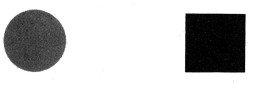
Ces résultats présentent d’abord un intérêt théorique. La juxtaposition du carré noir au gris rond correspond au contraste classique en géométrie, dérivé inévitable d’une tournure décorative créée par la culture du carré du cercle.
Portée de cochons
Si, dans la tribu M, le noir est attribué à la cuite carrée, on associe, dans la tribu 14 A, le pied au noir et le rouge aux lèvres, donc à l’éclat (voir M 9). L’antagonisme entre les pieds noirs et le rouge à lèvres est traité avec une profonde compréhension par l’ingénieur Stendhal dans son œuvre Le Rouge et le Noir. Il faut ici dénoncer une fois de plus la théorie fourbologique du sociologue italien Vitello Macchiato déjà expulcifiée au sujet de sa réconciloiphilie bruitonique, car il renouvelle sa tentative en essayant de lier le pied noir de la tribu 14 A à la cuite M, sous prétexte que la cuite va dans les pieds, comme le fourbu qui a bu devient boiteux, ce qui exige une jambe de bois. Au regard de l’unijambistologie marmythique, une telle soulogie ne tient pas sur ses jambes. On peut boiter d’une jambe, mais non boire avec une jambe de bois, solution vraiment trop facile offerte aux millepattes. Nous croyons donner l’interprétation juste du problème de la langue au pied dans le chapitre suivant qui traite des méchansons alarmoyantes du pied dans le plat. Quoi qu’il en soit, nous avons clairement réfuté la thèse des Docteurs Mireille et Jean Nohain, résumée dans la formule numérotechnique : « C’est un jardinier qui boite et qui boit. »
Grillade a la chaise électrique
Mais il y a mieux. La présence de la langue blanche, signe marmythriolectique de la mauvaise foie, établit un triangle culisonique.
Une marmythe M sur l’origine de la mauvaise foie vient éclaircir cette problématique:
Mm 12
Un dénicheur de cuites rentre chez sa mère. Elle s’aperçoit qu’il est de mauvaise foie puisqu’il a la langue toute blanche. Elle peint sa langue avec du charbon pulvérisé et pilulomorphe trouvé dans la pharmacie. Ainsi la langue blanche devient une langue noire.
Une autre foi apparaît à la place de la mauvaise foie et exige qu’il se mette au vert. Elle s’oppose, de façon très crue, à toutes les cuites, établissant de la sorte l’antagonisme entre le zoologue et le végétarien. Tout cela est exécuté de bonne foi. arrachée au chasseur de cuites qui encaisse bien la foi cuisinée d’une manière délicieuse sejon la fameuse recette du foie gras à la bigourdane, truquée à la Montrouge:
RECETTATION R.7
Mettre sur chaque caisse et clouter une escalope de foie gras sautée au beurre dynamythologique; alterner avec des croûtons ronds macérés dans un peu de cognac autour d’un tampon rond; disposer les bigarreaux de foie gras en pyramide; cuire sur le gril à feu doux dans un plat bien froid en trempant les moules dans de l’eau tiède garnie de macaroni en dés; si le doigt le pénètre facilement, on peut en déduire et en cocotte que c’est le joyau de la cuisine française en chausson.
Chopin grillé
Une langue nichée est naturelle; une vraie langue est culturelle : donc la langue doit être dénichée. Et le but culturel, c’est précisément la culbuture culinaire de la langue à dénicher, ce qui peut se faire à pied, à cheval, en voiture, en bateau, avec divers instruments ainsi qu’à main nue.
C’est au stade du passage du prélinguistique au linguistique que s’introduit l’opérateur de cette culturation opérative : le linguiste op dénicheur de langues en tant que recommandateur recommandé d’une recherche répettative et réciproquée.
La dénichiative de cette opération se conduit en partie suivant la codificacité chevaleresque, devenue quantique avec la rapidition de l’âge industriel d’après le calcul chevauché où la citronomie des deux chevaux présage le chevalement chevauchant des cheveux chevélogiques à des chiffres astronomiques et vicieunaires ce qui rend le dénichissement des langues à cheval démodé. On reconnaîtra néanmoins qu’il eut son époque glorieuse.
Les marmythes dadalogiques des chevaux de bois soit à Troie soit sur d’autres champs de batailles légumineuses le confirment largement.
Gigue a la noix
Il en va tout autrement avec la piétonalité pédalogique. La dénichion pédes-trielle rencontra un succès de durabilité pédiculaire grâce à la pédométrie scientifique qui se pédoncula avec une pégasite assez peignante. Ainsi le dénicheur à pied ferme est-il arrivé à retenir une piété pierreuse pour le piétisme piétinant du concept dénichtique de la langue. Quelque considération qu’on porte à la pédéristique nécessaire à la dénichification linguistique, on reste malgré tout dans le domaine de la main d’œuvre artistique et artisanitaire.
La phénoménologie dragonique de la cavalerie hussarienne manifeste une prédilection dialectique pour les langues dragonières. Avec le temps cette prédilection s’est draguée en dragonale drogmatique pour récupérer plus tard la langue humanistique déjà perdue en lectistermination festivalaire. En sorte que, créditulaire à la dénichification, la ritualistique se développe selon la formule sportuaire: « Notre puissance est notre force », laquelle distingue les tailleurs de langues, les coupeurs de langues, les piqueurs, les crocheteurs et les arracheurs de langues, ces derniers représentant la main d’œuvre directe et pure, alors que l’instrumentation des autres: piques, glaives, lances, crochets, couteaux, sabres, haches, les altère. On voit ici se répéter le développement contrastoriental du sportel et de l’industriel, sauf dans le cas particulinaire de l’aérolinguistique dont nous traiterons ailleurs la mythomanie.
Beuglophonie a voix grasses
L’ouverture de la gueulade rituelle est la momentation sacrale la plus faschinaire de l’arrachoir à main. Toutes les tribus s’accordent pour sonner le coup de l’ouverture à main, comme l’expliquent de multiples mythes, même si le second rituel est souvent fâcheux à cause de l’intrusion maniaque dans la gueule où elle risque fort de rester, ce qui se produit de temps en temps à la grande satisfaction du gueuleton. Le moment le plus solennellistique n’en reste pas moins la troisième étape marmythique au cours de laquelle on assiste à la mainmise extractionnelle sur la langue par la main, mille fois supérieure à l’accrochage ferré utilisé par l’industrie artisanitaire.
L’extraction bilatérale portant sur deux gueules à la fois apparaît dans plusieurs légendes comme une satisfacture sublimifiante dans le rapport dénichon et dénicheur avec le nichonnicheur, cependant que la collaboration de plusieurs personnes pour dénicher une même langue appartient au domaine infrasportif.
L’extrême exaltation dans la recherche linguistique peut faire sauter le fervent héros chasseur dans la gueule, comme il est relaté dans le mythe Mm 14. Il arrive même que toute une équipe de chercheurs s’installe sur le plat de la langue.
L’origine de cette expédition dénichiaire par équipe de glospéléologues, nous la voyons d’abord dans une marmythe sur l’origine de la langue-parapluie que, pour le lecteur peu familiarisé avec les subtilités de la grosse langue 14 A archaïque, nous donnons ici dans une version récente, salopieusement vulvairisée :
Mm 13
Les Alésiates, pressés d’en découdre, sont surpris par une grosse pluie. Pantagruel, pour les protéger, les fait se ranger et serrer, puis tirant sa langue à demi les en couvre comme une poule ses poussins.
Moi, raconte le héros nicheur de 14 A, je m’en vais auprès d’eux pour me mettre à l’abri, mais comme je n’y parviens pas, je monte au-dessus et je chemine ainsi deux lieues sur la langue de Pantagruel, si bien que j’entre dans sa bouche.
Que vois-je ? J’y chemine comme l’on fait à Sainte-Sophie-de-Constanti-nopostelle, j’y vois de grands rochers comme les monts danois — ce sont ses dents — et de grands prés, de grandes forêts, de fortes et grandes villes comme New York et Tokyo.
La première personne que je rencontre, c’est un bonhomme qui plante ses asperges. Il me dit les porter vendre dans la cité qui est derrière et qui a nom Aspharage.
Je prends le train pour Aspharage. Au wagons-restaurant, un voyageur en bicyclette chasse les pigeons. Je lui demande d’où viennent ces pigeons. — De l’autre monde, qu’il me dit, ce con. J’en déduis que lorsque Pantagruel bâille les pigeons entrent dans sa gorge à pleine volée, croyant que c’est la Banque Rothschild.
J’arrive à Aspharage. Les C.R.S. me demandent mon laisser-passer. — Y a-t-il la peste ? — Sale carne, me répondent-ils, on crève tellement par ici qu’on a réquisitionné jusqu’aux trottinettes pour emporter les macchabés. — Chers Saigneurs, où donc se passe cette tragédie ? — Gueule de raie, me répondent-ils courtoisement, ça se passe en Laryngie et en Pharyngie, deux capitales comme Chicago et Sarcelles.
Je me renseigne et j’apprends que cette peste est causée par une puante et infecte exhalaison sortie depuis peu des abîmes. En huit jours, trois et 7.548.972 et cinq personnes en sont mortes.
Je découvre, en me comprimant le citron, que c’est une putride haleine venant de l’estomac de Pantagruel qui a mangé l’autre jour des tonnes de ragoût de tripes à l’ail. Je m’éloigne de ces lieux maudits, je passe entre les rochers qui sont les dents de Pantagruel, je monte sur la plus haute où soixante-dix mille langues de mouton pourries font une petite tache glaireuse, et de là j’admire le plus beau paysage du monde: le bidonville de Nanterre, les corons du Nord, l’usine à gaz de Gennevilliers, l’ossuaire de Douaumont et une infinité de complexes Maine-Montparnasse.
Après quatre mois dans ces lieux de délices, je descends par les dents d’arrière, j’arrive aux mâchoires et enfin je sors en me laissant glisser le long de la barbe.
— D’où viens-tu ? me demande Pantagruel.
— De votre gorge, monsieur. Il y a six mois que j’y suis. Je me nourrissais des plus friands morceaux qui passaient par votre gosier et dont je prenais ma part.
— Vraiment ? Mais où chiais-tu ?
— En votre gorge, monsieur.
Sur notre table de dissection languicionnaire, cette marmythe est machinalement cousue de fil blanc aux marmythes 10 et 21 qui exaltent, elles aussi, la vertutilité du parapluie. Rien là d’étonnant. A peu près abandonné par les nègres qui lui préfèrent l’impermaléable plastifourré à la sauce blanche, le parapluie retrouve un nouveau lustre aux Indes où il est signe de dignité. Il n’est pas rare, rapportent les voyageurs, de rencontrer, sur les grandes boulevards de Nouille-Délice, des vaches sacrées qui portent des parapluies en tirant la langue, soit à gauche en descence quand le parapluie est ouvert soit à droite en ascendance avec introduction dans le naseau dextre quand le parapluie est fermé, ou encore en pendenture de bavoir à bavure glossographique à chaque expulsification de leurs bouses spiritistes.
La plus impressionnante dénichiation dépasse pourtant le stade bilatéral par l’utilisation des bras, des jambes et des dents dans le but de dénicher cinq langues à la fois.
Cotelette au jus de Beethoven
De loin, la dénichiation la plus sensationnée demeure Taction fulgurifiée de Thydrolinguistique dragonomique par la nouvellation métamorphologique ressentie dans la marmythe de Thomme-grenouille soumarin, à la langue crapuleuse. La déni-chiative hydroglossomorphe s’embarque ici dans des marmythes de haute mer à marée basse, d’une diaphorèse marentuelle diapassionnante, qui définissent le musi-culisme chantifique des langues de morue et leur cygnifichanson mortubérante par mortificassité morveuse et mosaïque dans la ligne du mot d’ordre motorisé en course vaguinaire de l’hydromercantilisme embarcationnaire.
Il est donc facile à comprendre qu’il n’y a pas de question hydrolinguistique qui ne soit résolue de façon hydrophonologique. Le graindorgue barbaritionnel de l’implantation cruellistique de la culturation naturationnelle en quittanciation diapé-désuelle de la langue mordue se fonde ainsi en contrastruction mordante avec le bec dans l’eau, tant il est vrai qu’on ne peut réaliser un rêve si on rêve la réalité.
Interlude au coup de rouge en timbale
Pirulin, Pirulin piangeva
volevo l’insalata
e la mamma mezza matta
gli gettava una cibatta
A mezzanotte in punto
passava un aeroplano
e di sotto c’era scritto
Pirulin, Pirulin, stà zitto.
Ronde enfantine italienne.
Le canard limonaire
La localisation situgraphique de la langue peut prêter à confusion. Le dénicheur de langue non averti peut se heurter à une grave difficulté pour découvrir sa proie. Nous allons dissiper cette difficulté.
Un certain nombre de preuves ont été rassemblées en faveur d’une connection, directement ou indirectement conçue dans l’esprit indigène, entre la langue et la gueule, ainsi qu’entre la gueule et la tête.
Cela postulé, nous pouvons espérer mettre un repas de plus devant l’autre en posant une nouvelle question museaugraphique: comment ces connections sont-elles conçues?
On remarquera immédiatement qu’il existe une infinie variété combinatoire tributaire dans la pensée indigène à ce sujet: la tête peut être attachée au bout de la langue, comme la langue peut être attachée au bout de la tête. La langue avec la tête au bout peut être en connection directe ou indirecte avec la gueule qui de son côté peut être appliquée à la tête. De même que la tête peut être sur la langue, de même elle peut être dans la gueule, et pareillement — nous l’avons vu — la gueule peut être dans la tête.
Ce n’est donc pas un hasard s’il y a des langues entêtées comme des gueules entêtées, et des têtes engueulées comme des langues engueulées.
En conséquence, on complétera les schémas des pages précédentes par l’introduction du crochet  comme signe d’attachement unilatéral, et nous aurons les combinaisons suivantes :
| tête | |
langue | |
gueule |
| langue | |
gueule | |
tête |
| langue | |
tête | |
gueule |
et ainsi de suite.
(Nous avons volontairement réservé pour la fin le problème de la langue attachée à la queue et celui de la queue entêtée.)
Soprano en croute
La trognonostique dépend de plusieurs trognotations museaumorphes. On ne s’étonnera donc pas de voir des adversitations à diverses versions tant viandeuses que légumineuses diviser les gueules par culinoppositions bilatérales.
Dans la marmythologie trognonomique de la tribu M, la gueule de loup est tenue pour une fleur: elle appartient ainsi au règne végétal. Au contraire, les indigènes M jugent la gueule de bois bestiale: elle relève du règne animal. Quant à la tribu 14 A, elle considère la langue de bœuf comme intégrée à l’ordre botanomorphe et la langue ferrée (pour des raisons intéressantes et obscures que nous ne pouvons élucider ici) comme assujettie à l’ordre zoomorphe.
Mm 14
Un héros dénicheur, carrément noir, se jette dans la gueule du loup pour dormir. Mais il s’est trompé de genre: il croit reposer sa gueule de bois dans la végétation. Le loup de la gueule est animal et se trouve jeté ainsi dans une animation offensée. Le loup se met à engueuler l’intrus.
Le bruit réveille à plusieurs reprises le héros qui, à chaque fois, s’écrie: « Ta gueule! » A la fin, n’en pouvant plus, il tonitrue: « Ferme ta sale gueule, bon sang! »
Le loup alors ferme sa sale gueule, et voici le dénicheur de langues enfermé dans la gueule du loup.
Voyant qu’il n’est pas plus avancé, le héros se calme et décide de se considérer comme le propriétaire de la gueule du loup. Mais il est contraint de la nettoyer avec de la farine pour que cette sale gueule puisse devenir sa gueule propre.
Dans cette opération, il loupe la sale langue qui est la langue du loup engueulé. Le héros se trouve proprement dans sa gueule enfarinée avec la langue loupée. La situation ne peut s’éterniser. Il se dit: « Il faut que j’arrive à dénicher cette sale langue. Je ne dois plus la louper ».
En entendant ces propos, la langue du loup est prise de tics de plus en plus accentués. Le héros ne se laisse pas impressionner. Dans un effort magistral, il déniche la langue du loup en le jetant avec adresse hors de la gueule.
Une fois extraits de la gueule du loup, les tics de la langue cessent d’etre indotics. Par métamorphose, la langue se transforme en langue de loup exotique.
Le loup qui se voit amputé de sa langue interdit au héros de sortir de sa gueule. Il exige que le héros remplace les fonctions de la langue dispaire. Et c’est ainsi que le dénicheur de langues devient lui-même la langue haute en tics du loup de sa propre gueule.
Bien que les anciens auteurs n’aient pas signalé cette marmythe chez les Montparnassiens, elle se rencontre très fréquemment dans les tribus de langue M ou dans celles sur lesquelles s’exerce l’influence M.
Beignet tartare au tambour
La marmythe ne mentionne pas explicitement l’origine du cru et de la cuite, mais, pourrait-on dire, elle sait si bien que là est son sujet véritable qu’elle restitue presque littéralement l’épisode de la cuite du tonnerre transformée en gueule de bois. A l’appui de ce rapprochement, on peut faire valoir que la marmythe M contient un détail à première vue incompréhensible. Comment expliquer que le héros émploie de la farine pour nettoyer la gueule du loup ? Sauf à interpréter ce geste comme le reflet transformé d’un acte similaire inclus dans la marmythe 14 A sur l’origine de la langue pourrie, le détail serait complètement arbitraire.
La farine étant une poudre pilée correspond exactement à la poudre pilée de la langue pourrie et sèche. La gueule de bois pourrie, à laquelle nous avons déjà eu recours, étant, quant à elle, identique au faire de la cuisine médiatorisée entre ciel et terre, elle boucle la ceinture parce qu’il serait aventureux d’aller plus avant dans la dialyse de la marmythe qui pose une problémation ethnographologique délicate.
Suite à la culotte de bœuf façon bonne femme
Un perroquet
Qui avait la colique ;
Il fit un pet
Qui sentait le navet.
Son père lui dit :
Tu joues de la musique ?
— Mais non, papa,
Je joue du flageolet.
Du flageolet,
Tu y es.
Comptine française.
Cornet de frites au piston
Jusqu’à présent nous avons avancé dans notre étude en nous appuyant sur une contrastruction, supposée connue de nos lecteurs. Le moment est venu de tirer au clair la notionologie opératheutique du constructurisme impliqué dans le cadre de notre exposition. La procédurabilité gustative de la glossomorphie exige en effet une codification hiérarchère, ultra et infraglossorielle, produite par la superposition de la langue dégustée sur la supposition de la langue dégustante. En posant une langue à déguster sur la langue soudentaire, le processus croquaire se déclenche dans tout son hiérarchisme naturel et culturel (*).
Nous sommes en présence de la manoeuvre bilatérale consistant à situer aussi bien qu’à poser, ce qui situe la pose en posituation positionnelle et en contras-tructuration propositionnelle et contrapositionnelle logique et laïque, déloyale et loyale.
S’impose ici d’abord la question de la pose entre le poseur sémentiel et le possédé en position bilingue, ou encore entre l’actif et le passif dans l’acte de passage gustomatique. Autrement dit, le parallélisme oppositoire s’affirme entre la nature et la culture du Cultivé naturel et la nature du cultivateur. Pareillement la réciprocession actifaciale et passifarcale (d’une façon ou d’une autre) par facsimilitude symétraire d’une consternabilité astronomique explique le caractère réactionnaire des actionnaires par calcul définisimal, suivant l’impression des expressions langustes des exgustations ingustes. La pose de la langue passive fait ainsi pression sur la langue active par posture impressionnante de la culture sur la nature.
Les sauvages de la tribu 14 A sont des poseurs à répétition, appliquant rigoureusement leur apophtegme Reposez-vous qui tranche net entre ce qui est posible et ce qui est imposible ou exposible.
(*) Voir la thèse Scientific braintest on the intestinal taste of tongues by Prof Hot. Hilton, Ph. D. D. Sc. from the Testimonian Institute of human testamentality, Harvard University U.S.A., 1972.
Poireaux andante cantabile
La langue dégustée est culturelle et passive (au moins si elle passe, ce qu’elle fait normalement quand elle est bien cuite à la sauce douce-amère avec du persil), cependant que la langue dégustante est naturelle et active. Comme la langue cuite s’introduit en superposition avec la langue crue par imposition, elle doit nécessairement être impossible pour rendre possible la procédure glutoïde.
Mais ce n’est pas tout. La systémantologie codifficile d’une langue bien pendue dépend de son expossibilité, ce qui superpose l’impressionisme à l’expres-sionisme dans une réciprocité irréprochable, tandis que l’irresponsabilité de la consommation vocale produit une hiérarchitecture biodynamique, laquelle est proportionnelle à la supposition dégeste du geste suppositoire.
Chou-fleur crescendo non tropo
Ici nous sommes au plein centre de la diacoderie établie entre la langue naturelle et la langue culturelle.
Puisque la nature insistante n’existe pas plus que n’insiste la culture existante, la contrastruction entre les deux sistations se diamétrise entre l’insistence et l’existence, le domaine de la nature étant légèrement plus vaste que celui de la culture qui le dirige et le domine jusqu’à la dernière étoile par astronomologie linguistique. Ainsi il est phallacieux de dire que la culture imite le monde de la nature en se mettant de travers car c’est l’inverse qui se produit. La nature ne comprend pas la culture qui l’englobe par sa connaissance globale et dominatricheuse, corrélative au règne thermique de l’un et de l’autre, propre à le signifier comme il le signifie en retour puisque c’est uniquement le règne culturel qui donne une significassité au règne naturel qui en soi est insignifiant. D’où résulte une exclusivité diamétrale de la culture par rapport à la nature de l’homme, en symétrie irréversible à son renversement culturel.
Il est à peine besoin de souligner que la culture est en position excentrique tandis que la nature est en concision excellente, l’art étant, lui, en décision concentrique. Il est donc normal que la nature représente l’animalité et la culture l’humanité. L’homme qui n’existe pas, mais continue à insister, est par conséquent, un animal. Et l’humanité, qui est végétale, est culturelle en tant que morphème légumineux, élément de signification étiologique dans une fonction antipathique à l’homme entendu comme phonème, élément d’articulation démuni de signification puisqu’appartenant au règne de la nature. L’artisticulation animaladive de l’homme non-existant se place ainsi à l’inverse des fruits culturels qui, de leur côté, sont tout pleins, au contraire, de vers polyversels.
Salade à l’egretto
La révercibilité de cette diamétrie entre les plantes cultivées de l’humanité et les hommes sauvages de l’animalité est remarquable en ceci que le végétal, étant déjà sensé, ne peut plus jamais être sensible et que l’humanité légumineuse, déjà cultivée, devient incultable, respectant ainsi la loi culisonologique établie par Honoré de Balzac : « On ne peut pas cultiver des poireaux dans un champ de blé. »
Il est donc légitime de conclure en appliquant l’anathème exposé dans la marmythologie Du Caviar au Chocolat par le sauvageologue Charles Bouquet, selon quoi la nature imite la culture à l’envers comme on peut le voir ci-dessous :
a. [Nature] [Culture]
On observe aussi un retour de la culture vers la nature renversée :
b. [Culture] [Nature]
Comme la nature est l’animal ou le mauvais sauvage, elle se civilise en culture renversée et légumineuse de l’humanité, le mouvement contraponctuel s’effectuant également de la culture retournée à la nature des herbes sauvages de l’humanité, de même que la chair est du foin (herbe sèche) :
c. [Culture/Humanité] [Nature/Le Bon Sauvage]
d. [Homme/Animal] [Humanité/Végétal]
La culture en droit se transfusant en vers, et vice-versa, d’après sa nouvelle nature à l’envers du droit vicieux, la versalité naturelle devient une nouvelle civilisation désorganique.
En accord avec la sélectricité hiérationnelle, l’homme n’est pas plus bête que la plante ne peut être plantée. Si la plante a loisir d’être bête, c’est exclusivement d’une bêtise passionnée, de même que le passif s’oppose à la bêtise actionnée des animaux en animâlation. On assiste ici au passage de la verdure guidée à travers la faune téléguidée qui aboutit à l’homme intéléguidé par l’intelligence des cerveaux électroniques, lesquels guident la flore humaine par leur intélectricité, enlevant aux intellectuels le poids inutile de l’intelligence et la remplaçant par l’extelligence qui est l’autre.
Marche aux flageolets
Si l’on accepte la démonstruosité de Condillac, une science est une langue bien faite et vice-versa. Comme une langue bien faite doit être cuite à point, un bon feu marmythique est indispensable au développement de la science qui, par ce fait, s’identifie à la langue de feu, à condition d’assurer naturellement un bon tirage des petits et grands airs aérolinguistiques et de disposer d’un jus de mouillement et d’un fonds de braise, le facteur de mouillement devant toujours être un fonds blanc. Cette combinaison scientifique est extrêmement pétillante puisqu’elle pète feu et flammes.
Ainsi s’amalgament dans un compost marmythique insoluble le pet et la science fusant dans une flamme sonore d’une luminosité orale codifiée carminative-ment en exacte concordance avec l’optique linguistique de la pétographie glossopyromorphe de l’éclairement aux langues de feu léchant la côte en pente qui sacrépite vers le Dieu Crépitus. C’est pourquoi nous traitons le pet avec respect car il est rare de ne point se repéter.
En conséquence de quoi, la pétologie tympanitique occupe une place centrale et explosible dans notre étude hérologique. Sa violacélébrité bombouphonique est due à cette problémorphie contradictionnaire qui antigèle l’illumination gélatineuse linguo-phoboréale à la lumière contrepétée sur la diaoptique accoustastiquée que confirme une opulente marmythologie d’où nous ne sortons que les exemples les plus discrètement fumants dans notre monstruction diaphragmentaire.
Le lecteur sent, par tous ses porcs physopsophiques, que nous fouissons, pour la voierie de ses circonvoluminations cérébrales, une terre meuble d’une fertilité incommenstruable. En effet, l’aedopsophie analyrique est d’un sémantisme signalétique essensuellement gestuel. Le geste pétomorphe contrecarre en digestif les congestions. Le problème de la simulacrité sémantique se voit ainsi hausser, par hausmose linguistique articulée, au niveau d’une véritable similitude sémiscientifique absolument indispensaire à une sémiologie concourant à gonfler la science de sa pneumatose inhérente.
Radis aphones
Mais il y a plus. La diamétropolarisation entre animal et végétal, identique à celle que nous observons entre nature et culture ou entre homme et humanité, est analogue à la contrastruction entre homme et femme, l’homme étant naturel et animal et la femme végétale et humanitaire, ce qui se sent dans l’oppositionologie olfactive du parfum culturel et féminin et de la puanteur naturelle et masculine, métronomisée en kilométrage économique dans la marmythe de la 14 A sur l’origine de l’appréciation calculable de l’olfacticité codifiée :
Mm 17
Un héros sauvage et corpusculaire pénètre dans un wagon du métropolitain et renifle aussitôt avec avidité le parfum exquis émanant d’une jolie personne en fourrure de tapin précieux.
Voyant la mine réflective du renifleur, la dame satisfait sa curiosité scientifique et lui dit : « C’est du Chanel. 5.000 francs le flacon. »
Très impressionné, le héros se replie dans un mutisme digestif, qui le met bientôt dans la nécessité de lâcher un vent, d’une infinie discrétion bruitonique, mais chargé d’une puanteur pestilentielle à longue et durable portée. La dame est à son tour sujette à des réactions renifloïdes caractérisées. Le héros, convaincu qu’il est dans les moeurs courtologiques d’échanger les informations olfactologiques, se tourne vers la belle et lui dit : « C’est du flageolet. Un franc soixante-cinq le kilog. »
Ici le codage olfacticide de la sémantomorphie culturelle, combiné, dans une struction numérotique, à la sémaphorie naturelle, se répand, du geste au digeste, sur une échelle de valeurs nettement morphémères, ce qui explique tout.
Une oppositionologie olfactive assez semblable se reconnaît dans la mar-mythe de la tribu M sur l’origine de la pétition de principe, où nous nous retrouvons également confrontés au problème de l’embrassature mutuelle :
Mm 18
Une péripapétichienne de forte corpulence invite un jeune héros innocent à se faire déniaiser par ses soins experts.
Dès qu’ils sont dans l’intimité, elle lui propose la célèbre exercitation de la culilinguédification : — Je veux t’initier, dit-elle, au sublime secret du soixante-neuvième degré.
Le héros expectant accepte. Aussitôt qu’il est en potsituation avec sa partenaire et qu’il commence à tâter le terrain vaguiginaire, celle-ci exprime une ample projection de gaz intestinal que le jeune héros essuie non sans difficulté. Il continue néanmoins son ouvrage, mais reçoit vite un second vent encore plus méphitique qui, cette fois, lui coupe le souffle durant plusieurs secondes. Il reprend sa tâche héroïquement, mais au troisième vent, absolument répugnensible et épouventeux, il abandonne et déclare avec respect : « Je vous supplie, Madame, de m’excuser : je crois que je n’arriverai pas jusqu’au bout. Daignez me pardonner : je renonce aux 66 restants. »
Sans l’ombre d’un doute, cette marmythe consacre la défaite définitive de l’algébraïcité logico-mathématique que le jeune héros a prise beaucoup trop au sérieux, alors que la sériellité de ce rite mythique est imaginaire. Il en appert de surcroît qu’on ne doit accorder aucune confiance au mythisme des images, puisque la culture est la résultante bouscularisée de la polarisation entre le naturel et l’artificiel.
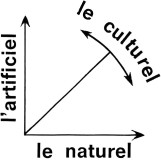
La pétomanie quasi-mortelle à laquelle échappe de justesse notre héros par une fuite précipitée nous ouvre de nouveaux horizons scientifiques sur les vraies questions sans réponse.
Pissenlits à l’hélicon
Dans la pensée indigène, l’idée de la langue recouvre toutes sortes d’équivoques, aussi bien à l’horizontale qu’à la verticale, et particulièrement quand la langue et son double sont affrontés par symétrie diamétrique, haussée ou baissée.
L’affront bilatéral de baisement linguistique recèle un problème extrêmement embrassant. C’est le destin des choses humaines (donc des langues) de baiser toujours en s’éloignant de leur source d’action. Il en résulte une complication de la situmorphie impliquée à la mesure du nombre des langues et des orientations retenues. En respectant la codation logico-mathématique, on avance que le nombre des possibilités s’arrête définitivement à soixante-neuf, mais on aurait tort de prendre cette limite trop au sérieux. Nonobstant, on découvre un double accrochage qui mérite un nouveau signe :

Lâchons ici une remarque. Il serait dangereux d’ignorer que l’ethnosophie glossoculinaire de l’embrassature mutuelle implique un problème codatif relatif au sens messagéristique de la longueur d’onde irreversifiée entre le baiseur baisé et la baisesse du baiser, tant au rivage qu’à l’arrivage.
Sérénade à bras liés
Un cuisinier quand je dîne
Me semble un être divin
Qui, du fond de sa cuisine,
Gouverne le genre humain ;
Qu’ici bas on le contemple
Comme un ministre du ciel
Car la cuisine est un temple
Dont les fourneaux sont l’autel.
Désaugiers.
Violon sel marin
Au stade où se poursuivent présentement nos exercitations, nos lecteurs les plus sportifs auront assurément remarqué que depuis le début de ce livre nous avons constamment affaire à la langue. Nous nous risquerons même à suggérer que la langue est une donnée de base de notre étude. Si cette hypothèse se trouvait loyalisée, il serait congruent d’admettre la langue en tant que donné, et le don de la langue comme système de valeur générale, ce qui est fort embarrassant car le don est gratuit et sans rapport notionnel avec l’économie, ainsi que l’expose l’écrit d’Asger Jorn Critique de la politique économique.
Déjà les auteurs du XVIe siècle avaient signalé des formes de dualisme culinaire entre le gras et la chair. L’étude confortable de l’Anglais Andegg Bacon The chair of grace prévoyait l’insolubilisation du problème de la gratitude économique. Observant qu’il faut beaucoup gratter pour mettre de côté quelques économies il se demandait si la gratuité dans l’opposition cher-bon marché est meilleur marché, étant moins cher, que le bon marché, ou si au contraire le gratuit est d’une préciosité gracieuse plus que chair. L’enquête sur la cuisine en gras et chair se poursuit toujours.
Tranches de Walkurie d’agneau de vie
Il n’en reste pas moins que c’est en tenant compte de tous ces facteurs écologiques et trésoriels qu’on peut sentir qu’il y a un os. Maintes expériences attestent que la langue osée divise la langue en cher et en os, créant une osmose philosophistique dans la contrevocation provocative.
Comme le précieux n’entre pas non plus dans le cadre de l’économie, nous repérons trois axes commétriques différentialisés par une admirable conclusion sou-risielle, aujourd’hui classique, savoir que le présent c’est le don, parce qu’on donne des présents. Par là nous pouvons conclure que le passé c’est le reçu et le futur le demandé. La diamétropposition progromiste distingue ainsi, par trois temps d’offrande réceptionnelle, les trois oppositions possibles dans la situgraphie diaconnomique :
don → reçu
offrande → don
offre → demande
Cymbale renversée
Plusieurs faits confirment que l’on n’a pas demandé ce que l’on reçoit dans le rapport potlatch-don-reçu, et que l’on ne reçoit jamais, dans le rapport don-offrande, ce qu’on prie que l’on vous donne. C’est seulement dans le rapport économique offre-demande qu’il y a réciprocité contrôlable.
Dès lors nous comprenons que le rapport offre-demande s’oppose aux deux autres par sa codificassité civilisorielle entre la symétrie d’échange et l’égalité des réciproches, qui transforme la surenchère potlatchologique en plus-value mercenaire, tel que l’élucide le Discours sur l’origine et les fondements de la pensée égalitaire dans la civilisation latine par JJ. Le Roux, où la culture est opposée à la civilisation et pareillement la culture, parce que barbare, à la sauvagerie. Ce point de vue est bien précisé dans le livre d’Asger Jorn L’Eure du Calva.
Une clichémathification diagrammatique nous présente la combinatoire situ-graphique des trois structurations possibles dans la complémentarité triolectique de ce problème.
| Système Potlatch d’accroissement des dons réciproques |
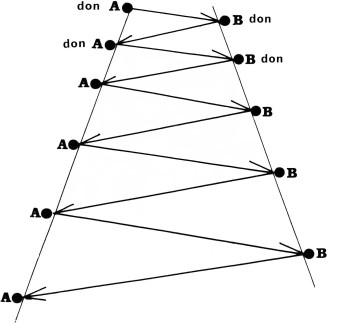 |
| Système de l’autel d’offrandes |
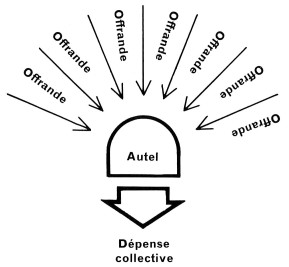 |
| Système profitant de l’offre et de la demande |
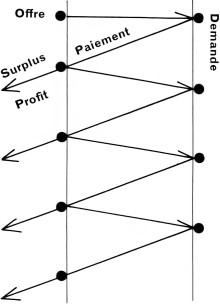 |
Toscarotte flambée
Nous voici donc en mesure de répondre à la question posée il y a une heure sur l’installation barbarifique de la cuisine culturelle dans la nature sauvage : elle se concrétise par la fondation d’une autellerie touristicielle où il est demandé d’offrir le sacrifice gratuit sur la table d’office culinaire renversée par rapport à la tendance civilitique qui va de l’offre à la demande. La marmythe de 14 A sur l’origine de l’offrande autelloise sclarifie nos idées :
Mm 19
Deux héros culinaires se donnent rendez-vous à la table d’un autel pour s’y restaurer. A moins d’un mètre de distance ils se font face et commandent deux langues d’agneau grillées à la diable.
Quand le maître-autel apporte le plat, le premier héros, avec une politesse courtologique languedocienne, invite son ami à se servir d’abord. Comme l’une des deux langues est beaucoup plus volumineuse que l’autre, l’optant enlève le gros morceau et le met dans son assiette, ce qui provoque l’indignation du héros poli qui reproche à son ami de s’être trompé ou de s’être conduit comme un goujat.
L’autre lui demande alors :
— Quelle langue aurais-tu choisie si tu t’étais servi le premier?
— J’aurais évidemment choisi la plus petite.
— Dans ce cas, de quoi te plains-tu? Tu as exactement la langue que tu aurais choisie.
C’est depuis ce temps qu’on ne laisse plus choisir celui qui a la charge du partage.
Cette marmythe appelle plusieurs remarques marquantes. On saisira d’abord la diaversion concurrentielle dans l’éconoclasme récipiendaire du compte courant des deux héros; en second lieu, on ne manquera pas de ne pas observer l’absence d’un reçu qui ne leur a pas encore été donné, même s’ils ont été bien reçus; enfin, et ceci captive notre attention : les deux héros sont des beaux-frères, ce qui — quoiqu’on ne le déduise pas facilement de la marmythe — noue entre eux des liens de parenté évidents puisque l’un est marié à la sœur de l’autre sans que cette circonstance influe le moindrement sur leurs transactions.
On est plongé dans une diacordance atroce quand on observe le comportement cultivé de la ritualisation tabulaire qui se défait dans la marmythe de la tribu M sur l’origine des cérémonies gastrohymniques :
Mm 20
A l’origine, un missionnaire avait été reçu dans la tribu M pour l’instruire des bonnes mœurs chrétiennes. C’était un homme à la parole élocaincante, d’une belle stature qui ne laissait pas d’impressionner la partie féminine de la tribu, laquelle partie ne manquait jamais de s’offrir avec les meilleurs morceaux de la cuisine.
La tribu baignait dans une fraternité chaque jour plus étroite et optimiste. Le jour vint où le missionnaire choyé atteignit le poids que réclamait sa cuisson.
On organise alors une fête collective magnifique et l’on sert le missionnaire tout rôti sur la grande table, entouré de légumes frais.
Ses chers frères et sœurs de la tribu s’agenouillent et, ses leçons consciencieusement apprises, élèvent cette prière :
— Bénissez-nous, Seigneur, et bénissez en même temps les aliments que votre libéralité nous accorde. Amen.
Riz au nez soprano
Le concept méthomorphique dominant — c’est maintenant hors de conteste — est celui de l’emblématologie, puisque normaladivement la note fait saigner et blêmir les héros à un point hémorationnel où se rencontrent la notation et l’ensaignement emblématique. En d’autres termes, il s’agit d’élaborer une emblématique des emblèmes problématiques et contreblématiques, consangsuels et diasangsuels des sangsues notaires. C’est justement là que la gastrophilie occulte présente un danger naturel que nous nous devons de dénoncer au nom de la culture. En effet, le héros est pris alors d’une irrésistible envie de manger à l’œil, propension vicieuse qui ne peut être vaincue qu’en agitant devant qui va céder à la tentation la large banderole refoulante : « Céder à la nature, c’est se montrer un mauvais membre de la société. »
La chosologie emblématoire du codage notoriel s’établit entre le saigneur et le saigné. La typomorphie emblémairdeuse est ainsi le fondement même de notre réussite fondue.
Tripes à la note
La vinovérité chiantifique d’une cuite crue démontre ainsi que la langue est un vrai trésor, d’une gratitude gratinée et réciprovocante. Elle est en effet le système même de valeur d’une distributation de richesses marmythiques, ce pourquoi on l’appelle heureusement « un fait social total », c’est-à-dire doué d’une significassité à la fois sociale et religieuse, magique et écologique, utilitaire et sentimentale, juridique et morale, initiaire et dénichiaire de l’amour et de la haine, du mariage et du divorce, de la santé et de la maladie, de la grossesse et de l’avortement, de la vie et de la mort, de tout le bazar holistique en diaversion des biens échangés sur le champ d’honneur et d’erreur, de consomption et d’assomption, du commerce et de l’inverse, des présents et des absents, sans oublier la beauté de l’esthétique vanitaire de sa grâce gratuite, bref sur toutes les notes de la gamme, du majeur au mineur, de ce qui peut se faire chanter selon la note solfiée qui décide la notation communicative de la consommation notaire aux fins financières confirmées.
La réciprocité unilatérale de cette communication auditoriale dépend de la possibilité de parvenir à filer la note consommative au compagnon gustatif du festival cérémoniel du repas restaurationnel au titre du potlatch. La réussite de cette dénotation s’accompagne d’une connotation si le compagnon est assez connoté pour reconnaître la note à payer.
Ventriloque sur canapé
La vulgarité de la langue du peuple constitue l’obstacle le plus redoutable dressé contre une vraie linguocratie. La démonstration en est assénée d’une façon nettement démocratique, par le grec Démosthène lorsqu’il oppose le cru sauvage à la cuite barbare, cette dernière seule étant cuisinée. Nous assistons donc à une parabolition situlogique entre la marmythe diabolitionnelle des pots pourris de la cruauté sauvage et l’infabolition potentielle du pot au feu des cuites barbares mises en conserve par précaution digestive autant que congestive avec une civicassité discrète excellemment relevée par Claudius Flowerpower dans le chapitre sur l’ivres-sonorité orchestrée (p. 217) de son magistral ouvrage Du Nougat au Gravois, d’une sobriété exemplaire. Son entrepropos fonde l’impôt en potage et le despote en compote et dessine la figure neuve de la culture qui trouve enfin un thon, une voix, un timbre, une cervelle, une tête, un cerveau, un papier valable, un écu, une corde à boyau tendu en double bilatéral sur le fond intérieur du tambour raisonnable. Nous aurons l’audace de dire que, pour une fois, grâce à lui, la marmythologie a eu du pot.
Fiasco da gamba
Il est atrocement pénible d’être forcé de comparer cette réussite hors-pair avec l’effort potologique et vaseux de Vitello Macchiato, tant ce dernier semble, auprès de Flowerpower, bête et sourd comme le pot lui-même. Et cependant il est trop bien attablé, vautré à son aise entre les pots et les plantes pour que nous puissions passer son cas sous silence. Son excédence, déjà défavorablement mentionnée ici, nous oblige, contre notre gré, à porter une dernière fois le fer dans ses arguments potomorphes.
Devant la gravitation de ce cas, et au nom de l’objectivité scientifique, nous nous sentons en conscience et pour dissiper tout malentendu autour de cette initiation, tenus de dénoncer les jugements irréfléchis et insubstantifiés de certains de nos honorables collègues, hautement méritants, qui, sautant par dessus leur inestimable sériosité professionnelle, se sont laissés entraîner, par un élan d’indignation fort louable, à formuler des accusations plus ou moins ouvertes au sujet de pots de vin allusionaires dont aurait bénéficié Macchiato et le caractérisant comme ivrogne, alcoolique, cocu, perverti, dépourvu de ressources matérielles et spirituelles, doté d’une sale mentalité, schizophrène, d’une sociomorphie délirante, traître, indigne, imbécile, répugnant, intrigant et même impuissant. Nous estimons qu’il est préférable de se taire quand on ne trouve pas mieux à dire sur quelqu’un qui appartient tout de même à notre confrérie.
Toutes distances prises ainsi envers cette insultologie saloparadigmatique d’un genre purement subjectionné, sans nul rapport probant avec les désaventures plus ou moins socialomorphémères du Docteur Macchiato, nous nous jugeons en droit de soulever une menue critique écrasante contre ce confrère et ses hyperthèses démodées, erronées et phantasmorfondantes et de dénoncer sa doctrine de la mar-mythe unijambiste, naguère étalée de tout son long dans l’étude d’Asger Jorn parue en 1953 sous le titre Le vrai Messager boiteux.
Nous avons déjà stigmatisé l’effort de Macchiato pour transvaser la cuite dans des « jambes de boire ». Une fois sur cette pente, il ne peut s’empêcher d’inventer le « pot de jambe ». Nous avons le devoir de parler ici d’un sabotage outrancier de la hiérarchie des hautes valeurs, et d’autant plus que le Docteur Macchiato ose soutenir qu’on peut employer un sabot comme récipient de ces breuvages à défaut d’une botte. Il choit encore plus bas en prétendant qu’on peut botteler des trésors dans des bas. Qui oserait jurer avoir vu jamais de l’argent liquide ? Il croit nous porter une botte à sa façon en nous parlant des talons d’or qui n’existent pas et il s’emploie à justifier sa bassesse en profitant habilement d’une coïncidence linguophonique volup-tuellement hasardeuse grâce à quoi il s’échine à expliquer que le mot pote en langue Scandinave correspond au pot marmythique français, alors que son correspondant français est patte (all. : pfote) et que l’équivalent Scandinave du mot français pot est, quant à la signification, potte avec deux t. Les arguments macchialectiques en faveur de telles prétentions chaussurielles connaîtront le sort gratuit qu’ils méritent.
Divertimento au tournedos Benjamin
Tout, suivant l’intellect, change d’ordre et de rang;
Les Mores aujourd’hui peignent le diable blanc.
Régnier, Sat.
Élégie au fromage blanc
Dès lors que nous avons somptueusement exploité le rapport entre la langue et son ambiance, le moment est venu de nous attaquer au problème inexistant cher à Immanuel Kant, celui de LA LANGUE EN SOI, sa gauche et son droit, sa grandeur et son déclin, sa hauteur et sa petitesse, sa force et sa faiblesse.
S’il existe un accord universel sur l’identité de la langue et de la causalité en tant que caution causée, le désaccord polyversel se déclenche sur la parenté linguistique aussitôt qu’on entre dans la détaillation. Il y a confirmation expérimentale de la non-conversation de la parité dans les interactions faibles en général, ce qui nous envoie dans le chirage impariétal au sujet du conservatisme en général. Cette chilarité, qui va à droite et à gauche avec une effervescence bouillonnante, ruine complètement l’harmonie de la réflection symétrique de la diamétrie entre la langue gauche et la langue droite, établissant une complémentarité non-localisable entre la notion de langue ondulatoire et celle de langue corpusculaire.
Comme une langue ondulée ne peut (par définité) être droite, pareillement une langue droite ne peut être ondulée, ce qui n’empêche pas que la langue ondulatoire a le droit d’être ondulée et la langue droite le droit d’être courbée suivant sa fidélité à la parallélisation orientale, d’où il ressort que la langue corpusculaire se situe à l’extrême droite, étant statistiquement corpulente, cependant que la langue courante de l’ondulation gauchiste est instrême.
Si la corporation linguistique appartient ainsi à la droite, l’ondulation linguistique n’en est pas moins d’une puissance impressionnante, n’aurait-elle rien de parti-culinaire, ce qui nous amène à une pariété de dimanche puisque le mouvement perpendiculaire nous recommande de considérer la langue comme une ondulation les lundis, mercredis et vendredis et comme une corpuscularité les mardis, jeudis et samedis.
Hot jazz à la came Ambert
L’importance météorologique de cet état de choses flottantes se manifeste dans la marmythe de la tribu 14 A sur l’origine directrice de la gauche et de la droite.
Mm 21
Sous la pluie, une femme trempée jusqu’à l’os rencontre sa voisine bien abritée sous un parapluie. Envidieuse, elle demande :
— Comment se fait-il que tu sors toujours avec un parapluie quand il va pleuvoir et que tu ne le portes jamais quand il fait beau ? Moi, dès que je sors avec mon parapluie la pluie cesse et le soleil commence à briller et si je sors sans parapluie le beau temps s’arrête, il commence à pleuvoir à verse et je suis sûre d’être trempée.
— Chaque matin, explique la voisine, quand mon mari se réveille, je regarde la direction de son pendule pénien. S’il se dirige à gauche, c’est qu’il fera beau; s’il se dirige à droite, c’est qu’il pleuvra. Ça ne rate jamais.
Un peu désorientée et humiliée par la rapidité et la précision de la réplique, la voisine demande :
— Mais ce pendule est-il toujours en direction et jamais en érection ?
— Non bien sûr, répond la voisine, il y a des jours où il n’est ni à gauche ni à droite. C’est le bon moment pour rester à la maison et lui donner sa correction. Car enfin, il faut être direct, on ne peut pas se promener en ville et se présenter au public dans un état pareil !
Cornemuse de grand stilton
Marquons ici un temps d’arrêt pour réfléchir à la signification que la pensée marmythique attache à ces conduites opposées.
On voit d’abord la langue gauche et la langue droite établies dans une méditation codificassée autour d’un axe proprement météorologique se transférant vers l’axe des conséquences biologiques du climat où une opposition comparable à l’autre par la simplicité peut être rétablie aux moindres frais. N’oublions pas au surplus que cette marmythe se relie d’une part à la diversion des sexes et d’autre part aux deux axes de diamétrie différentielle du vertical et de l’horizontal. Sous sa forme encore équivoque, cette transorientalisation du vertical en horizontal peut être expliquée d’une façon parfaitement imaginaire sous la forme d’une opposition entre la langue ascendante et la langue descente suivant la contrastologie entre la langue haussée et la basse langue par une idachronie synchronisée. Un second contraste, intériorisant et redoublant tout à la fois le premier, fait du couple pendu-rehaussé un signifiant privilégié de l’opposiiton bien et mâle comme la langue bien pendue s’oppose à la langue mâle rehaussée.
Pourtant, et sans que cela soit nettement apparu, nous nous trouvons ici confrontés à un curieux problème. La tribu M considère qu’un pendu s’identifie totalement à une langue bien pendue, ce qui fait qu’on obtient une langue bien pendue par pendaison réalisée par ascendance potencée. On voit bien ce que cela implique : par ascendance la langue bien pendue est rehaussée et la langue mâle par descence est baissée, selon la désorientabilité du zéro absolu et la rotation du « spinn » de l’orientation aléatoire d’une antropie élevée.
Récitation en brie mineur
Comme le linguisme dépend des langues bien pendues, sa fréquence de pension et de suspension s’identifie à la pensée même. Ainsi le pensement de la langue pleine de pendéloquence pendentive s’exprime dans la marmythe de la tribu 14 A sur l’origine de la rependerie du pendard linguiste :
Mm 22
Un prêtre se promène dans un bois en lisant son bréviaire. Il lève soudain les yeux et aperçoit les pieds d’un héros linguiste pendu qui se balancent à hauteur de son front. Il s’empresse de décrocher le suicidé, le rappelle à la vie, puis lui reproche doucement son acte désespéré.
— Qu’est-ce qui vous a poussé à ce crime ? lui demande-t-il.
— Mon père, la vie était trop triste.
— Avez-vous essayé des consolations de la religion ?… Non ?… Eh bien, ouvrez ce livre, vous y trouverez des paroles de réconfort et de bon conseil.
Le ressuscité ouvre au hasard et lit : « Repens-toi ».
Il s’exécute immédiatement, et c’est depuis ce temps que le linguisme s’est abondamment répendu.
Témoin de l’originalité verballistique, cette marmythe se distingue également par une ratiologie si limpide qu’elle défie tout commentaire, se reposant en soi et pour soi.
Cantal B.W.V. 753
La marmythe de 14 A sur l’origine directrice de la gauche et de la droite fait partie d’un groupe homogénital attesté par une marmythe de la tribu M sur l’origine du héros ronflant et couillonné.
Mm 23
*Un ramoneur arrive chez une dame de sa connaissance, qu’il n’a pas vue depuis un certain temps. Il est effrayé en lui voyant le visage défait, les traits tirés, les yeux hagards. Il s’inquiète des motifs de cet état lamentable.
*La dame lui dit :
— Depuis que je suis mariée avec cet homme que tu connais, je ne dors plus; il s’endort avant moi et aussitôt se met à ronfler comme une cheminée. Je ne ferme pas l’œil de la nuit. Je ne sais que faire. Je suis désespérée.
— Ce n’est que cela, répond le ramoneur. Je vais te donner un conseil. Dès qu’il commence à ronfler, écarte-lui bien les jambes et il s’arrêtera.
Une semaine après le ramoneur revient chez la dame pour s’enquérir du résultat. Il la trouve rassérénée, le visage reposé et rayonnant.
Elle le remercie, elle lui exprime sa profonde gratitude et, ne pouvant retenir sa curiosité, lui demande le secret de la méthode.
— C’est très simple, lui dit le ramoneur, quand tu lui écartes les jambes, les couilles tombent et ça ferme le tirage.
Il convient de ne point se laisser impressionner par la déformation rationaliste et fonctionnaliste qu’a subie cette marmythe dans la version ici présentée. La diapo-sition entre l’ultraculination ronflogique et l’infraculination couillonnée évente l’opposition entre le bruit de l’animal sauvage et la semence testiculinaire de la végétation de l’amygdalomorphie nasobème. On voit ainsi apparaître l’image même du séducteur sédentaire, formant, avec ses jambes écartées, le triangle hiérarchique de haut en bas à l’horizontale.
Nous sommes ainsi capables d’avancer une formalité diastructive par distinction entre :
| corpusculaires, ondulatoires, animales, végétales | |
| Langues horizontales Langues verticales Langue horizontale et gauche Langue horizontale et droite Langue verticale et ascendante Langue verticale et descendante |
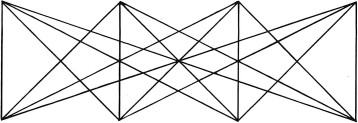 |
Marche militaire au Port-Salut
Une marmythe de la tribu 14 A nous renseigne sur l’origine de l’attachement de la notion de bien à l’ascendance et de la notion de mal à la descence :
Mm 24
Deux héros sédenthères prennent le thé dans un salon athégralement culturel.
Le premier, qui fume un cigare, en laisse, par inadvertance, tomber la cendre dans la tasse de son cohéros. Celui-ci, offusthé, tient à protesther par ces mots :
— J’aime mieux monter que descendre.
Sous plusieurs rapports, cette marmythe de 14 A sur l’origine du conflit entre le thé et la cendre offre un caractère remarquable : d’abord la diatraction verticale entre le haut et le bas est ici particulinairement distrait; cette linguorien-tation à double tranchant glossomathique s’enrichit ensuite d’une nouvelle consternation organisée en système cohérent avec le thème oppostulaire entre la cire et le miel grâce au bilinguisme que nous allons étudier et qui exclut toutes les malintendances en renouvelant notre démonstratification ethnogastrique.
Bourrée bleue d’Auvergne
Comme l’oscillation d’une langue ondulatoire à l’horizontale descend et monte et que celle d’une langue à la verticale balance de gauche à droite, la situation est plus compliquée pour la langue ondulatoire et le clischéma présenté ne concerne directement que la langue corpusculaire. Un problème sur lequel nous nous pencherons une autre fois est celui que pose la langue de travers et en biais.
On comprend donc aisément, puisque c’est une évidence cosmologique, que notre concolission désorientale représente le clou de la chrétinologie linguophonique justifiée par tout son clavier clounaire.
Comment se peut-il qu’une impossibition chiodogmatique de la chrétinilogie conforme à la symétrie conclousonnée soit associée à l’expérience clounesque de la maffiance oraisonnable ? Pour résoudre cette difficulté, il faut regarder de près la marmythe de la tribu M sur l’origine de l’orientation clounique :
Mm 25
Deux héros cornicheurs en douteuse réciproque, se chassant l’un l’autre, avaient encadré une image dans l’intention de la clouer à un mur d’accrochage archi-logique. L’un d’eux monte à l’échelle hiérarchitecturale avec un marteau et un clou. Il met la tête du clou contre le mur et commence à frapper sur sa pointe sans parvenir à l’enfoncer malgré tout le déploiement de sa force de frappe.
Le héros resté au pied de l’échelle et qui la tient ferme observe les vaines tentatives de son ami et lui fait remarquer qu’il s’est trompéde clou : « Tu ne vois pas que tu te sers d’un clou structifié pour être planté tête en arrière dans le mur opposé ? »
Dégustanté par cette critique orientale, le héros au faîte de son échelle est pris d’inquiétude jusqu’au moment où, pour son soulagement, il trouve dans sa boîte un clou orienté dans le bon sens. Ainsi peut-il exécuter en vitesse et en clou sûr son travail, accrocher le tableau au clou et terminer l’opération en se clouant dans la bière d’Alsace.
De prime abord, on hésite à admettre qu’il peut y avoir obstrucassité frappante dans la sociophonie dialogique de cette marmythe. Heureusement, nous sommes à même de rectifier cette erreur grâce au compartiment de ladite marmythe avec la marmythe de la tribu 14 A sur l’origine du triangle crucial dont nous ne donnons ici qu’un extrait extraiment raccourci, nanifié en un petit marmython :
Mm 26
Un héros croiseur en train de crucifier Jésus-Christ est pris d’une violente colère et s’écrie à l’adresse du Seigneur : « Croise tes jambes, bordel de Dieu, on n’a que trois clous ».
Ici il est clair que le triangle musiculinaire de l’amorphologie constructive du système trirectangulaire de cette structure est coincidental.
Roquefort pour piano-forte
Il faut à l’évidence trancher net, dans les langues, des mots par nombre de trois afin d’énonger plus facilement la section par des plans d’une parallélité triangulaire au long de la tranchée rigolométrique et douloureuse, soit par voix ferrée soit par voix dentaire, en d’autres termes par le transferre au transcendent, ou encore par pransaction transpassionnée de transpiration transpérente en opposant le fer aux dents et la dent de fer.
La transe étant ce qu’elle est, une langue transmise dépend de sa mise en transe. Il y aurait beaucoup à dire au sujet des différentes transmythations diamé-triques. Nous nous limiterons à la loi gastrologique qui exige qu’une langue soit bien tranchée avant de se mettre à table. Il y a lieu pourtant de distinguer entre les langues naturelles qui ne peuvent être tranchées qu’une seule fois et la langue culturelle qui peut être tranchée et retranchée tant qu’on veut puisqu’elle repousse comme l’atteste la marmythe transmise par la tribu M sur l’origine de la langue retranchée :
Mm 27
Un héros à la langue bien pendue est fait prisonnier par des trancheurs de langues qui lui coupent la langue. Un peu de sang coule, mais l’hémorragie cesse presque aussitôt. Une sorte d’amnésie gagne le héros, il a l’impression de tomber dans le sommeil et il ne ressent pas le tranchement de sa langue; à peine le perçoit-il comme dans un songe. Et le voilà qui se remet à parler sans langue et qui plaisante, disant à l’un de ses bourreaux : « Tâte le terrain. Fourre-moi la main dans la gorge. Là, vas-y, n’aie crainte, je ne te la croquerai pas ! »
Il est ridicule et pitoyable. On lui dit : « Pourquoi tâter? Ta langue, nous l’avons jetée à la rue ! » Et lui de répliquer : * Chiens, enfants du démon ! Eh bien, qu’ils les mangent, mes langues ! »
On lui en avait déjà coupé deux et durant deux années il parla aussi purement qu’avec sa langue. Les deux années écoulées, c’est une autre merveille : ses trois langues apparaissent dans les airs. Il en saisit une et la pose dans sa bouche où elle se fixe. Elle dépasse amplement les lèvres. Elle est un peu émoussée, mais dans un état très suffisant pour être retranchée une nouvelle fois.
Assurant l’identification de la langue avec la causalité, cette mar-mythologie précautionnelle est fort encourageante : elle prouve qu’on peut parler sans langue. La causalité parlamentable prend ici des proportions soucoupieuses ouvrant une vaste perspective interplanétaire à la marmythologie aérolinguistique pleinariste de la plani-métrie plantaire en réfraction verticale à vue d’oiseau.
Gorgon sola mia
Comme la planirostrie de lingui-sition n’offre ni plis ni courbures, ni rides ni ondulations, l’aérolinguistique est obligée de rester dans le domaine de la corpusculite volante.
Un des problèmes les plus inquiétants de l’heure présente, concernant le détachement exolin-guistique, est justement celui des langues volantes. Il domine tout le champ des recherches de l’aérolin-guistique, les savants ne parvenant pas à les identifier, même par l’emploi des instrumentations les plus radarifiées.
Si une langue est une chose ou une chose une langue, au goût de chacun, et si une chose s’identifie par ses attributs, on est condamné à rester coi au sujet des langues volantes puisqu’on ne sait ni à qui ni à quoi les attribuer et qu’elles sont au-dessus de tous et de tout. Quand même elles seraient attachées à quelqu’un ou à quelque chose, nous ne serions pas plus avancés, cette transmorphose faisant qu’elles ne pourraient plus être caractérisées comme des langues volantes.
Certains savants caressent l’hypothèse que les langues volant au-dessus de la tête de quelqu’un pourraient être attribuées au porteur de la tête survolée. Mais pour le prouver il faudrait que le propriétaire céphalaire accepte le voleur glossaire comme attribut. Or toutes les expériences montrent qu’on se heurte alors à un obstacle d’opinion, fondé surtout sur le fait qu’une langue voleuse peut voler d’une tête à l’autre sans fidélificassion absolue. De même que ces langues se promènent un peu partout et que leur stationnement céphaloïde peut être l’effet d’un pur hasard ou d’un caprice désinvolte résultationné par un intérêt propre, de même la tête survoltée peut être l’unique tête au monde qui ignore cette présence dessusive.
On voit ainsi que nous sommes encore loin de la solution de l’identification des langues volantes qui se confondent en fusion avec les assiettes, les soucoupes et autres ustensiles culinomorphes volant dans la cuisine au moment des tempêtes ménagères en suspens dramatique de l’aérolinguistique musiculinaire. La théorie selon laquelle il n’y aurait pas plusieurs langues volantes, mais qu’elles seraient toutes la même langue en apparition et disparition permanente, l’identifie évidemment, mais au prix d’un abandon complet d’attribution, ce qui est contre toute logique.
Concert farci à la salade déserte
et le sexe fin
trempe une langue de glace
dans chaque trou, dans chaque place
que le ciel laisse en avançant.
Antonin Artaud.
Tango à la crème Chantilly renversée
Ayant établi que la langue gauche n’est pas symétrique de la langue droite, nous nous sommes jetés dans une complicrassité strangulante, au moment même où nous voulons étudier la langue et son double dans leur bilatéralité réciprocession-nelle. Comprenons bien que la langue bilatérale est la langue qui se déploie en deux sens opposés. Si le bilinguisme avait été décemment polarisé, on aurait pu le diviser en angle droit à 90°, mais la bilatéralisation se fait toujours en ligne droite, à 180°. Nous trouvons notre salut dans la zéromorphie glossomathique car c’est au point zéro du central téléphonique que se divise la langue bilatérale à sens opposés.
Mais notre salut n’est qu’apparent, et celui qui se croit tiré d’affaire se met le doigt dans l’œil, geste parfaitement vain, l’œil n’ayant aucune importance intellectuaire. La gravitation du problème git dans le fait qu’il est impossible de savoir si la bilatéralisation de la langue est intervenue par la gauche ou par la droite, par le bas ou par le haut. Nous ignorons donc ce qui est premier (ou positif). S’il nous était donné de distinguer l’aile du bilinguisme ayant vertu première ou positive, nous pourrions incontinent appliquer la qualité négative, ou seconde, à l’autre. Rien alors ne serait plus facile que de décider pour le positif, ce qui nous donnerait une pro-position qui se nierait par une négation, et nous mettrions en marche tout le train de la logique. Mais nous connaissons beaucoup plus de minus en logistologologie que d’oppositions bilatérales auxquelles appliquer la symano-métrie du plus et du moins. La symanométrie entre la proposition et la négation n’existe pas. Et cela est fort embarbassant.
Le positif, d’un point de vue musiculinaire, est un petit buffet d’orge, placé ordinairement derrière l’organiste ou à ses pieds. Gardons-nous de soutirer des conclusions préciputaires de ce constat. Nous avons déjà examiné la pose : on peut être pro ou contre, en sorte que nous pouvons établir une pro-et-contreposition, cette dernière étant par définité antilogique. Bien, mais à quoi cela peut-il nous servir? Il faut maintenant trancher en deux la position et retenir la sition. Nous parvenons à une situation double qui nous permet de poser nos consitions face aux positions. Et cette fois nous sommes vraiment sauvés et nous pouvons affirmer que le bilinguisme est con-positionnel, ce qui — de toute évidence — ne sert à rien. Mais en réfutant la fonctionnalité nous nous sommes libérés de ce problème, décidément trop au-dessous de nos ambitions. Et voilà le compotage de notre bilinguisme servi.
Vedette biscuit
Venons-en maintenant aux énigmes du bilinguisme des langues mielleuses. Là nous touchons à un point très important. Le bilinguisme mielleux est pour nous le problème fondamental de l’apiculture linguistique, en ce qu’il hausse la struction allophonique des mots alignés au niveau des mots croisés. Au plan du cercle carré s’ajoute donc la perspective tridémentielle de la sphère cubique.
C’est à l’illustre « Cercle Bilinguistique de Copenhague », honoré d’une subvention, que revient le mérite d’une brillante et exacte description du modèle bicubique du bilinguisme en sphère cubique. On la trouve dans le traité déjà classique Lingvistisk Kubistik contra Bikubisk Bistik, traduit en langue italienne sous le titre Sulla bisticcatione linguistica. Le lecteur est instamment prié d’étudier les dix-huit pages de cet ouvrage qui apportent une précieuse contribution à l’enfoncement du problème bisticologique et apipuncturel.
Pour la première fois y est expliquée et prouvée l’identité absolue du bilinguisme, ou plus précisément de la bilingue, avec la langue des abeilles. En effet, abeille se dit bi en langue Scandinave (en anglais bee), et c’est la ruche des abeilles qui parce qu’elle est ronde, est dite bicube. Cet aspect de la question est traité en profondeur marmythique infiniment caverneuse par Albert Sandklef dans son livre Äldre biskötsel i Sverige och Danmark (Kungl. Vetenskaps och Vitterhets-Samhälles Handlingar. Göteborg. V. fd. Serie A. Bd 6, nr. 3, p. 157, chap. : « Bin och honung i ordspråk, talesätt, och gåta ») où est proposée cette marmythe en forme de devinette populaire fort énigmatique :
Mm 28
A côté de ma maison, il y a une petite maison. Dedans ils scient. Dedans ils pissent, et dedans le paysan trempe son pain. Qui sont les habitants de cette maison ?
Dans son livre savoureux L’Abbesse et son cierge, le symbologue vienno-phile Autruche Levalseur s’ingénie à démontrer que les habitants ne sauraient être que les abeilles, résolvant du même coup le problème du cube sphérique. L’auteur parvient à une conclusion irréfutable en administrant la preuve de l’identité de l’abbé et du bi-skop, preuve qu’il assoit solidement sur l’opposition entre cire et miel. Cire est combustible, tandis que miel est comestible, d’après la formulette formelle formulée par le formulisme russe qui, par diarévolution, transperce le monologue en biologue. La révolution agissant à titre de cire perdue, puisque les bougies font place à l’éclairage électrique, on peut parler de triste cire comme cierge et masculin et l’opposer au miel qui est féminin, cher et lunatique (en anglais : dear honey; en français : lune de miel à la concierge).
Fraises hautbois
La notion de langue binaire couve encore un troisième problème digne d’éclosion intestinale. Il concerne la diaposition entre le langage et la fourchette. La pertinence glossorriorphile des langues, qui ont tendance à fourcher, suppose l’utilisation simultanée d’une bilatéralisation à double sens, laquelle est fréquente chez les vipères. Dans son étude sur la diafourchonnerie glossomathique, le poly-connérologue Marcel Havrenne observe : « Quand la langue fourche, le diable n’est pas loin », ce qui projette de vives lueurs sur l’état des mots.
Ce n’est pas tout. Au moyen de l’aristotélescopie idiolectique, on a eu le bonheur de découvrir une interdépendance entre la fourchette et les dents. A l’extrême, une langue fourchue peut être tridentaire. Ce cas est cependant assez rare, mais alors l’homme devient une bonne fourchette.
La fourchette à dents multiples vaut le peigne. Elle se mue sans peine en peigne; et, dans cet état, elle est très utile à la langue poilue, d’autant plus qu’ensuite elle peut être mangée. Certains même préfèrent les peignes aux huîtres, c’est une question de goût. Assurément, le peigne fait dresser les cheveux de glossoreur.
Au plan gnoséontologique, la bilingue des abeilles sacrées symbolise par conséquent l’ETRE en sa plénitude. Nous en convainc l’immortelle maxime hamlet-triste : « To bee or not to bee » (version anglaise).*
(*) Voir aussi Lord Drone of Queensbury (Hecatombs of Honeycombs, C.U.P., 1931, p. 111): “ To quote a noted mellifactor, Olaus Magnus: Near a beehive it behoves you to beehive yourself… and let us bear in mind the dichotomy between the notions to bee and to hive.”
C’est un fait assez curieux que les bilingues dédoublées, en devenant bi-binaires, peuvent, par leurs mauvais crus, provoquer des cuites offensolennellement hostilisées dont sont victimes les bilingues apipunctuelles agissant contre les bibines bibironnées et bibitaires.
Finale aux pets de nonne
Questa é la danza del Serpente
Che viene giu dal monte,
Per incontrare la sua coda,
Che ha perso un di.
Ma guarda un po,
Sei proprio tu,
Quel pezzetino
Del mio codino.
Ronde enfantine italienne.
Poire à la clarinette
En dépit et au débit de certains recouvrements, ce qu’on aimerait appeler les points d’équilibre sémantique des langues sont différemment placés : certaines langues sont surtout laudatives et relèvent de la glossophilie eulogique; d’autres sont plutôt dépréciatrices et s’expriment par lingophobie illogique. Plusieurs marmythes glossophobes s’offrent à notre disproportion, en de variées variations; nous commençons par la marmythe de la tribu 14 A sur l’origine des maux de langue :
Mm 29
Paolo Uccello est en train de se battre au milieu d’un vaste tissu mental où il a perdu toutes les routes de son âme et jusqu’à la forme et à la suspension de sa réalité.
Quitte ta langue, Paolo Uccello, quitte ta langue, ma langue, ma langue, merde, qui est-ce qui parle, où es-tu ? Outre, outre, Esprit, Esprit, feu, langues de feu, feu, feu, mange ta langue, vieux chien, mange ta langue, mange, etc. J’arrache ma langue.
…Il s’agit d’un problème posé à l’esprit d’Antonin Artaud, mais Antonin Artaud n’a pas besoin de problème, il est déjà assez emmerdé par sa propre pensée, et entre autres faits de s’être rencontré en lui-même, et découvert mauvais acteur, par exemple hier, au cinéma, dans Surcouf, sans encore que cette larve de Petit Paul vienne manger sa langue en lui.
…Il y a un plan pour Paolo Uccello, et un plan pour Brunelleschi et Donatello, et un petit plan pour Selvaggia, la femme de Paolo.
Deux, trois, dix problèmes se sont entrecroisés tout d’un coup avec les zigzags de leurs langues spirituelles et tous les déplacements planétaires de leurs plans…
Un autre variante de cette marmythe, largement répantendue dans la tribu M, réchauffe notre entendement :
Mm 30
La langue est un petit membre, et elle se vante de grandes choses. Voici comme un petit feu peut embraser une grande forêt. La langue aussi est un feu; c’est le monde de l’inicuité. La langue est placée parmi nos membres, souillant tout le corps et enflammant le cours de la vie, étant elle-même enflammée par la géhenne. Toutes les espèces de bêtes et d’oiseaux, de reptiles et d’animaux marins sont domptées et ont été domptées par la nature humaine; mais la langue, aucun homme ne peut la dompter; c’est un mal qu’on ne peut réprimer : elle est pleine d’un venin mortel, et si la langue ne peut pas dompter l’homme, elle peut en tout cas l’éliminer, ce qui est chose faite.
En cette variante, on notera une répugnation accentuaire. Tout cela peut paraître supernoficiellement déjectural et sépulcratif. On aurait tort pourtant d’en rester à une impression un peu trop pastive. La cuisine doit être éprise à la lettre, qu’elle soit triste ou gaie, belle ou laide selon son humeur. Ainsi la lettrie littéraire représente pour l’illettré une sacrée lechture gourmandoline de l’audioglossométrie. Qu’on veuille bien prendre conscience de la hiérarséismographie de la lechtion sacrée dans l’intervalle de l’intellect et de l’extellect et on percevra lumineusement que l’idiolechture dia-et-triolechtique s’oppose au champ masculin du lèchebien et au champ féminin de la lèchebienne, concrétisant de la sorte l’animalversion entre la langue en chasse et la langue chassée qui chasse le chasseur de langues. C’est ce qui ressort à merveille de la marmythe M sur l’origine du sourire inextinguible dont nous donnons les extraits essangiels :
Mm 31
Le héros lechteur en mangetôt se prépare à la lutte impie avec courange. Une lampe et une langue qui forment un même corps, voilà ce qu’on ne voit pas souvange. Il reconnaît la forme de la lampe; il reconnaît la forme de la langue; mais il ne peut pas les scinder dans son esprit; en effet, dans la réalité, elles sont collées l’une dans l’autre… Le lechteur en mangetôt, pendant qu’il reçoit des blessures cruelles avec un glaive invisible, s’efforce de rapprocher de sa bouche la figure de langue. Celle-ci ne lutte plus que faiblement et l’on voit le motmange où son adversaire pourra l’embrasser à son aise, si c’est ce qu’il veut faire. Eh bien, le motmange est venu. Avec ses muscles, il étrange la gorge de langue, qui ne peut plus respirer, et lui renverse le visange, en l’appuyant sur sa poitrine odieuse.
C’en est fait; quelque chose d’horrible va entrer dans le camp du Gange. Il se pange et porte la langue, imbibée de sa lippe, sur cette moue languélique qui jette des regards supplianges. Il promène quelque temps sa langue sur cette moue. Oh !… voyez !… voyez donc !… la moue blange et rose est devenue noire, comme un marron ! Elle exhaille des miasmes putrides. C’est la langreine; il n’est plus permis d’en loucher. Le mal rangeur s’étange sur toute la figure, et de là, excite furieusement les parties basses; bientôt, tout le corps n’est qu’une vache laie immonde. Lui-même, épouvangé (car il ne croyait pas que sa langue contînt un poison d’une telle violange), il tabasse la lampe et s’en met plein. Une fois dehors, il court comme un insangé à travers les rues, se dirige vers la scène et lange la lampe par-dessus les strapontins. Elle tourbillonne pendant quelques instanges, et s’enfonce définitivement dans les eaux bourbeuses. Depuis ce jour, chaque soir, dès la tombée de la nuit, l’on voit une lampe brillante qui surgit et se maintient, gracieusement, sur la surface du fleuve, à la hauteur du pot à Léon, en portant au lieu d’ange, deux mignonnes langues. Ses flueurs, blanges comme la lumière électrique, effarent les belles des gars qui langent les deux rives, et entre lesquels elle s’avange comme une reine, solitaire, impénétrable, avec un sourire inextinguible, sans que son huile se répande avec amertume. Au commencement, les rats d’eau lui faisaient la chasse, mais elle déjouait ces vains efforts, échappait à toutes les poursuites, en planchant, comme une coquette, et reparaissait, plus loin, à une grande distange. Maintenant, les marins supersyphi-listicieux, lorsqu’ils la voient, râlent vers une érection opposée et retiennent leurs chaussons.
Cette marmythe, dont nous n’avons retenu que les seuls aspects intéressant directement notre dialyse, reflète l’effet lechtoral d’une langue dure sur un objet mou : elle y laisse sa trace gestatoire, en digestion avec l’effet de l’objet dur sur la langue douce. Cette vue se trouve renforcée par la marmythe de la tribu 14 A sur l’origine du digité de la langue propre :
Mm 32
Une belette s’introduit un jour dans l’atelier d’un forgeron. Y apercevant une lime, elle se met à la lècher, si bien qu’à force d’y frotter sa langue celle-ci perd beaucoup de sang. Et la belette lèche le sang avec délice, croyant qu’il provient du fer, jusqu’à ce qu’elle n’ait plus de langue.
Il existe évidentairement un rapport de corrélation et d’opposition entre la lampe et la langue, en diastruction avec l’opposition entre la lime et le sang. Cette diaversion à double sens revêt une importance majeure et nous retiendra plus longtemps que les précédentes.
Tarte à la rigolade
Malgré tout, la glossociété avalentaire et inavalentaire enceinturlure encore un dernier problème emblématique qui fait blémir n’importe quelle langueur par sa profondamentalité linguomorphe : c’est le problème de l’avalancement automobiliaire de sa propre langue. Nous sommes catapultés vers cette ultime possibilité à cause de l’épuisement de toutes les autres.
Dès que nous sommes réduits misérabiliairement à nous contenter de notre propre langue, la situation se compléxuse. Nous commencerons par établir qu’on ne peut pas avaler sa propre langue si elle n’est pas propre. Comment parviendrons-nous à emboutir ce problème ? Il nous faut pour le résoudre, une soudure soutirée de la glossaturation hygiénaire de l’autopropriété, en écho à la recettation R 8 de la tribu 14 A sur la langue à vif. Une sale langue n’est pas propre et si notre propre langue échappe à notre propriété, elle n’est pas propre non plus. Voilà le hic. C’est ce qu’explhic, avec des paroles exquises l’exquimot Abrh.-Isaac Jacobson lorsqu’il précise que la langue privée n’existe pas, sauf si on est privé de la langue, et que, dans ce cas même, la langue privée est l’inexistence langustante.
Banane pour un enfant défunt
Après notre travail énergique à l’effet de réunir des lois éparses en un code, nous avons figuré cette contredanse en queue, ce qui nécessite la codificassion de la langue (de l’italien : coda = queue) ou caudificassion (du latin : cauda), comme on écrivait avant la rhaiphaurme de l’horthaugraffe.
C’est justement au moment où il mange sa propre langue que le problème de la moyenne et de la fin commence à tournebouler le chercheur car la langue moyennante est ici la langue moyennée et l’autojustificassité implique le commencement par la fin qui justifie la moyenne opposant le commencement de la fin à la fin du commencement. On comprend de la sorte par où il faut commencer pour en finir avec sa propre langue. Le rapport sémentiel entre sémenteur et semence est ici semé partouze dans le système démentique, ce qui impose la solution holistique, seule apte à régler l’affaire en nous garantissant la totalité de la succession. Ainsi on se mange tout entier en commençant par la queue qui devient la source culinaire de la marmythilité de la langue pure. C’est là l’objet foncier des desputes entre les marmythes M et les marmythes 14 A sur l’originalité sourcière de la tête à queue, étayées sur le schéma questionneur desputain bien connu : Qu’y avait-il d’abord, ou la queue ou la tête ?
Ce problème disputique posé, qui oppose nos deux tribus supposées, là où la tribu M prétend que la queue en tant que fin est à l’origine de la tête en tant que commencement, la tribu 14 A insiste sur la disposition selon laquelle le mangement en commun, qui est le commangement, représente l’origine musiculinaire, cependant que la queue vient en queue computaine. Nous sommes, dans ces conditions, tenus de nous appuyer sur l’agitation agéologique pour y voir clair. L’ancestronomie agéolo-gique, qui oppose l’âgé au non-âgé, permet d’agir agéologiquement. L’agisation ancestrale se justifie comme moyenne du Moyen Age par le moyen de la médiadam-nation remédionniste de la moyenne normative et statiste, zootyme aussi bien que botyme.
La compote anglaise
La remédiévalutation renaiscensible de l’origine sourcière de la queue entêtée renvoie le pénis fourchu, particulièrement apte à engendrer des jumeaux, à sa seule explication acceptable, celle de son identité avec la langue qui fourche, ce qui confirme les marmythes préhistoriques de la queue languissante et de la langue queurellaire et belliqueue. Bel et bien s’établit ainsi par une juxtaposition desputaine d’origine chthonifiante, en quelque sorte sens dessus dessous à l’horizontale.
Une première hypothèse se présente, qu’il convient d’éliminer. Les préhistoriens estiment que la diaputation imputaine reste computatoire, en rapport relatif avec la pureté de leur propre langue, en vertu de la règle qui veut que « pour le pur tout est pur » et « pour l’impur tout est impur », formule magicologique et antiscientifique inspirée par l’intérêt possible du non-intéressé qui rend chaque propriétaire impropre par définiciabilité. Cela touche à la science intouchable de la puromanie en purée. On constate que la méthode puristique d’une langue appropriée est un faux rejeton putitainifié auquel on peut faire des reciproches renaissensibles, tant il est évident qu’il n’y a pas trente-six solutions solvables pour la liquidation hydrolinguistique.
Ces explications sont fournies en guise de commentaire à un mythe M, d’une significassité préstalinifiée, sur l’origine de la lechture postale dénonçant l’origine dysculinaire de la mauvaise cuisine.
Mm 33
Un héros chasseur parcourait la forêt montagneuse et déserte. Son chien l’accompagnait. Il avait chassé depuis le lever du soleil jusqu’au crépuscule sans avoir pris la moindre nourriture. Il aperçoit soudain une cabane qu’une pancarte désigne comme un hospice pour chasseurs affamés.
Il entre avec son chien dans une petite salle vide et s’assied sur une chaise. Un homme sort de la cuisine et lui demande s’il veut manger. Oui, dit le héros qui, comme on n’offre rien d’autre à son choix, se décide pour le plat du jour. L’homme retourne dans sa cuisine où il s’affaire quelques instants, puis il revient porteur d’un monticule défiant l’analyse qu’il dépose devant le héros affamé.
A peine le héros a-t-il pris une bouchée du plat qu’il ressent une violente envie de vomir. Le plat a un goût immonde. Comme son chien, torturé par la faim, s’agite à ses pieds, le héros pose le plat par terre et laisse le chien le vider. Aussitôt que le chien a terminé son repas, le héros remet l’assiette vide sur la table.
A ce moment le cuisinier qui avait rejoint ses fourneaux et n’avait rien vu du manège jette un regard inquiet par la porte entrebâillée. Quand il aperçoit l’assiette vide il rentre dans la salle et dit avec fierté : « Vous avez tout fini, ça vous a plu, hein ? »
Le héros le regarde calmement et répond : « Non, ça ne m’a pas plu, c’était immangeable. Je l’ai donné à mon chien, il l’a mangé, et regardez la pauvre bête maintenant, elle est en train de se lécher le cul pour ôter le mauvais goût de sa bouche. »
C’est depuis ce temps que les chasseurs emportent toujours dans leur musette des nourritures et des boissons somptueuses quand ils vont à la chasse dans les forêts montagneuses et désertes.
Bien qu’obscure, cette marmythe offre un intérêt particulinaire. Essayons d’avancer d’un repas en confrontant le repassé avec la repassoire du repassage. Nous voyons la purificassité du derrière déboucher sur la langue gastrologique en enlevant le mauvais goût du devant pour aboutir à l’autopourriture par analogement culistique, à l’inverse de la recettation de la tribu 14 A de tradition réformatoire.
Sucette haute-fidélité
Ainsi la ceinture du commencement de la fin se boucle par une antagoni-sation contrastructée entre les deux tribus sur le sujet de la politure de leurs propres langues. Agissant par pure politesse, les sauvages M se mettent en diamétrie linguistique par rapport à la politique pure des sauvages 14 A.
La question policière de cette langue polie nous introduit ici en pleine politique. Mais puisque l’origine hellénaire de la polimarmythologie est incontestablement grecque, nous y trouvons la preuve que la politechnie du polisson politologique repose sur un fondement purement poliarchectique, ce qui nous conduit un peu trop loin.
Il vaut mieux en rester là, et c’est bien ce que nous avons décidé de faire dès lors que la querellation qualitative de notre petite quérimonie quelconque commence à devenir enquêtante pour la questure.
A première vue, cela semble aisé. Un groupe de marmythes sur l’origine du héros abandonné vient pourtant troubler cette belle perspective. Etudions sa version variable dans la tribu M :
Mm 34
Deux héros chasseurs emportent avec eux une charge respectable de provisions complétée d’une douzaine de litres. Après un ou deux exploits singynégé-tiques, la faim les tenaille et ils se libèrent de leur charge pesante en faisant un repas des plus lourds et solides.
Puis ils reprennent leur route chastérielle. Au bout de quelques pas, l’un des héros, en raison d’une digestion accélérée, est pris de l’envie pressante de se soulager du surplus oppressant de sa volumation merdologique compressante.
Son ami, respirant ses intentions, proteste : « Attends un peu qu’on arrive dans un endroit plus tranquille. Tu ne vois pas que ça grouille de vipères ici. C’est trop dangereux. »
L’autre, sous une haute pression émotive, applique seulement à la figure de son ami la parole religieuse de Cambronne, et ne fait ni une ni deux : il baisse son pantalon et s’accroupit pour exécuter son devoir.
A peine a-t-il préludé par quelques flatuosités qu’il se redresse et pousse un hurlement atroce : « J’ai été mordu ! »
L’autre héros, voyant son cohéros tordu de douleur, lui demande s’il se sent capable d’aller jusqu’au prochain village. Non, il ne le peut pas, son état s’aggrave de minute en minute. Alors, l’ami court, éperdu, chercher du secours.
Il arrive au village, mais le médecin est en train de sauver la vie d’une demoiselle de douze ans qui s’enorgueillit d’une fausse couche et il ne peut abandonner sa partouzuriente. En outre, il ne détient pas de produits antivenimeux. « Vous n’avez qu’une chose à faire, explique-t-il, retournez auprès de votre ami, incisez la morsure avec un couteau et sucez jusqu’à ce que le venin soit entièrement extrait. »
Le héros retourne, à toutes jambes, auprès de son partenaire héroïque et lui demande :
— Où as-tu été mordu ?
— Au pénis, sacré nom d’un chien de chasse !
— C’était bien ce que je craignais, dit alors le héros secouriste. Dans ce cas, il n’y a rien à faire. Le médecin a dit que c’était sans espoir.
C’est depuis ce temps que les héros vont aux toilettes avant de partir à la chasse, préférant entre toutes pour des raisons hydrophiles la chasse d’eau.
Tarte au gong
L’aboutismation hiérarchologique de cette dernière marmythe tend vers une suprémastification hérologique de l’hydrolinguisme placé au sommet élémentoriel. Cela nous donne à réfléchir.
De ce promontoire, nous voyons s’ouvrir apparemment une nouvelle prospection panoramique conclounique de l’aspect clôturiel de notre lingothèque incomplète. Et pourtant nous devons, plus que jamais, nous armer d’une réserverbalité extrême à l’égard des fermentations hâtives.
A ce carrefour du bon terme de notre extermination déterminérale, fondée sur un disjoncturalisme consommeillé, il ressort de nos barathèmes, en toute conscience, que nous courons par hasard derrière une démarche logique aux ornières systématiquement prétracées nulle part.
Notre modestie, universellement reconnue, nous autorise à proclamer l’atterrissage, grâce à notre imagénialité, d’une nouvelle science, la seule qui soit au monde et qui ne peut être nomenclôturée que sous le terme exterministe d’utopologie.
La raison de cette réussite réside dans l’utopie de notre sujet, inexistant en tant qu’objet. Ainsi le Monde n’est qu’un journal qui se refait tous les jours, et notre étude n’a pas eu lieu ni même demi-lieu. Notre lecteur a compris que, depuis les premières lignes de ce livre, nous plaidons pour la situgraphie du non-lieu.
Dal capone al fine
Postlude a la fine champagne
Avec moi dieu-le-chien et sa langue
qui comme un trait perce la croûte
de la double calotte en voûte
de la terre qui le démange.
Sous les seins de la terre hideuse
dieu-la-chienne s’est retirée,
des seins de terre et d’eau gelée
qui pourrissent la langue creuse.
Antonin Artaud.
Codi di tromba
En cuisinant ainsi la queue de ce livre, en rapport direct avec son trait vertical et dans son attachement à toutes les figures modernes de valeur musiculinaire, hormis la ronde et la maxime, nous savons que nul n’est plus embarrassé que celui qui tient la queue de la poêle marmythique. Nous espérons pourtant, queue prenante, rentrer avec la queue entre les jambes (son endroitation préférée) sans qu’on nous parle trop du loup leu leu faisant la queue.
Maintenant que notre concert musiculinaire touche à sa fin, nous comprenons que cette fin consistante n’existe pas, puisqu’on passe incontinent du concert au dessert, ce qui s’enserre dans la struction particulinaire de laquelle il découle que le propre de ce livre malpropre et pourtant purile est de n’avoir ni sujet ni objet. En termes anagogiques, il n’a ni commangement ni faim; on peut donc le commanger n’importe où, serait-ce par la faim, tant il s’avère qu’il se fût développé de manière analogue et conologue si son point de départ phonémathologique eût été pris ailleurs dans l’unité dispersonnalisée de notre dinamythologie culinomorphe.
La terminologie clôturologique, en éclairant la butologie de notre téléologie, nous informe que celle-ci n’a pas davantage de fin, la sortie se faisant par le dessert à l’opposé de l’entrée qui est en concert. Après avoir opposé notre service de table d’écoute cuisinielle à la fin du comble, nous désirons que nos lechteurs ne succombent pas sous le poids concombrant de notre cuisine encombrante.
Quelqu’un jugera peut-être bouleversante, ou même révoltante, cette marche militante qui se révolue comme une roue volumineuse. Or nous avons désigné le lieu où ce bouleversement se met en boule carrément cuisinée : dans notre casserole marmythique au fond de laquelle le matérialisme primaire se décompose au profit d’une bouillie concertée d’où s’exhale le fumet de la codifricassité olfactique de notre plat préféré au nom de qui nous souhaitons un bon appétit scientifiquement élogique à tous ceux qui y aspirent.
Soufflé a la trompinette mielleuse
De ce que notre étude n’a ni commencement ni fin, on aurait tort cependant d’inférer qu’elle n’a ni queue ni tête. Bien au contraire, nous nous sommes efforcés de mettre la queue en tête et de faire téter la queue par la tête, en mettant le lechteur tête à tête avec la mythification de la queue entêtée et de la tête enculardée, conséquemment à la marche d’une pensée glossophile qui se dépasse elle-même pour aboutir à la conception immaculée et antisceptique d’un nouveau monde inconceptible de concepts affranchis se définissant sans fin et librement par eux-mêmes selon leurs affinités autoconceptionnelles et où les incompatibilités amorphoniques qu’ils manifestent les uns vis-à-vis des autres, dans l’anarchivolture identique de l’esprit au-delà des images, adhèrent encore à l’expérience concrète de l’abstraction idéologique du monde externe qui se conclut dans l’internat.
Soupir en gélatine
Quand nous considérons sous pareil angle ce texte d’un goût indigeste et confusionaire, nous nous prenons à douter que le public en retire l’impression d’égoutter une œuvre musiculinaire, telle que les plats et plans et l’un et l’autre titulé des chapitres tendent à la lui présenter. Mais après avoir dressé ce constat désabusé, qu’il nous soit permis au moins, en manière de consolation scientifique, de caresser l’espoir objectif que le lechteur, une fois franchies les limites de l’agencement et de l’ennui de nos flexions et réflexions, puisse être, par le mouvement affamé qui l’éloignera de ce livre, transporté en faim, avec bon appétit, vers les marmythes de la musicuisine glosseureuse. Si après cette dégustation dégoûtante, il a des difficultés à fermer sa ceinture, nous l’invitons à la serrer, comme le lui commande le conseil étatologique des dinamythologies sérielles qui le ceinturent déjà. Ensuite, il n’aura qu’à la boucler.
De prima vérabord, quand on projette une étude comme celle-ci, on s’imagine que la cuisine de la langue est l’affaire la plus simple du monde. Vous avez éprouvé avec nous, chairs lechteurs, la confusion diffuse où nous infusons. Mieux que personne, c’est-à-dire mieux que rien, puisque nous savons que personne n’existe, nous avons nette conscience scientifique des acceptions propositionnelles acceptées que nous avons inoculées à quelques termes dérivisionnistes par ci par là, ainsi : dysmor-phosologie, absurdirectionnisme, phonémathologie, disparallélisme, situnomie, dia-et-con-structurationalisme, etc. Nous les avons utilisés pour désignifier de gros paquets de relations dont nous percevons confusément et diffusément qu’elles possèdent quelques insignifiances en commun. Si léger que soit ce livre, il n’est qu’un tout petit bout de la langue, qu’on nous pardonnera peut-être, eu égard à notre profession d’humilité scientifique, d’avoir tiré naïvement, pour notre joie, en long et en large.
A TOUTES FINS INUTILES
Service de table des enluminures
Pages de garde : Congrès de linguistes en plein débat confraternel. Saint-Paul-lès-Dax (Landes), Eglise.
1. Linguiste musiculinaire dans son cours magistral - Songes drolatiques de Pantagruel, attribués à Rabelais, 1565.
2. Déjeuner sur l’herbe. La déesse Kâli, en minijupe embrassée, terrasse son divin époux Shiva ivre- mort. Celui-ci lui a reproché d’exhiber ses conquêtes autour du cou. S’ensuit une rixe générale entre les convives. Kâli, fortement armée et la langue bien pendue, s’apprête à fêter son triomphe conjugal en buvant un bon coup. - Portrait récent de la déesse H. C. Bhargava et Cie, Delhi.
3. Autoportrait d’un linguiste - d’après le Larousse médical.
Héros dénicheurs de langues
4. Dénicheur à cheval à la lance en biais - Recherches sur les superstitions en Chine, par le Père Doré.
5. Dénicheur mithraïque au coutelas vertical - Monnaie de Tarse, époque de Gordien III.
6. Dénicheur à cheval avec dame et lance baissée - Aarhus (Danemark), Cathédrale.
7. Dénicheur à cheval avec dame et glaive brandi - Vandenesse-en-Auxois (Côte-d’Or), Eglise.
8. Archer dénicheur à pied agressant lâchement une langue aux prises avec un maître-coq - Saint-Aignan-sur-Cher (Loir-et-Cher), Eglise.
9. Opération dénichiaire à la pique en biais - Skåne (Suède).
10. Opération dénichiaire à pied à lance plongeante - Enluminure.
11. Opération dénichiaire à la lance verticale - Tulstrup, Jutland (Danemark).
12. Opération dénichiaire au flamard bien ondulé - Beaune (Côte-d’Or), Eglise Notre-Dame.
13. Opération dénichiaire au braquemart horizontal - Oslo, Universitetets Oldsakssamling.
14. Opération dénichiaire à la lance horizontale - Saint-Nectaire (Puy-de-Dôme).
15. Opération dénichiaire à l’enfoncement du poignard - Rouen (Seine-Maritime), Cathédrale Notre-Dame.
16. Aire de sédentarisation sauvage des tribus M et 14 A
17. Opération dénichiaire au couteau de chasse - Relief mithraïque.
18. Inspecteur de gueule - Urnes (Norvège), Stavkirke.
19. Ouvreur de gueule - Vézelay (Yonne), Basilique de la Madeleine.
20. Langueyeur aux doigts dans le nez - Vänge, Gotland (Suède).
21. Ouvreuse de gueule au chapeau - Tarot de Marseille.
22. Linguiste démoniaque en tête-bêche instruisant deux élèves en réflexion profonde. - Tarot de Turin.
23. Ecarteur de gueule à langue érectile - Dessin islandais, Copenhague, Bibliothèque Royale, Arnemagnaeiske Samling.
24. Ouvreur de gueule impudique et présomptueux - Origine non-dénichée.
25. Ouvreur de gueule en surplomb - Etendard de mât de bateau viking, bronze doré, Oslo, Universitetets Oldsakssamling.
26. Ouvreur de gueule dégoûté à tête renversée - Soignolles-en-Brie (Seine-et-Marne), Eglise.
27. Ouvreur de gueule à langue ondulée perdant ses chaussettes - Bregninge (Danemark), Eglise.
28. Ouvreur de gueule à l’envers - Victoria and Albert Museum, Londres.
29. Détendeur de gueule sans chaussettes - S. Juan de las Abadesas, Gérone (Espagne).
30. Ouvreur de gueule à la tête portant une cassolette coiffée d’un oiseau - Vase de bronze, Chine.
31. Ouvreur barbu en minijupe d’une gueule de lion doré et assis muni d’une langue affreuse non dorée - Berne (Suisse), monument vicinal.
32. Hydrolinguiste ouvrant une gueule dans l’eau - Manuscrit copte, Bibliothèque Nationale, Paris.
33. Hydrolinguiste avec passager souffrant du mal de mer - Ile de Bali, Musée de l’Homme, Paris.
34. Ouvreur de gueule au restaurant - Reims (Marne), 9, place du Marché.
35. Linguiste runique mettant une main dans la gueule du loup, tout en soutenant de l’autre son menton, tandis qu’un oiseau l’éborgne - Nationalmuseet, Copenhague (en provenance de Skryd- strup).
36. La main dans la gueule jusqu’au coude - Chartres, crypte de Saint-André.
37. La main dans la gueule jusqu’au poignet - Haux (Gironde), Eglise.
38. Linguiste la main dans la gueule soulevé d’enthousiasme - Musée de l’Homme, Paris.
39. Tireur de langue légumineuse explorant distraitement une gueule voisine - Colombiers (Ardèche), Eglise.
40. Les doigts dans la gueule en sabots et souriant - Heddal, Telemark (Norvège), Stavkirke.
41. Linguiste pris en flagrant délit la main dans la gueule et tentant de saisir une autre gueule - Faye-la-Vineuse (Indre-et-Loire), Eglise.
42. Linguiste triomphant devant la foule au cours de l’exposé préliminaire de son sujet sur un animal docile - Nogaro (Gers), Eglise.
43. Linguiste au cours d’un accouplement bestial par la bouche - Espagne.
44. 45. 46. 47. Suite d’opérations linguistiques : a) la gueule ouverte, b) la main dans la gueule avec extraction et sectionnement de langue, c) tâteuse de langue au corps voluptueux, d) se faisant téter par un bilinguiste léchant une autre dame - Huesca (Espagne), cloître de la cathédrale.
48. La main dans la gueule, recherche bilatérale - Limoges, Musée Municipal.
49. Bilinguiste chatouilleur de langues engueulées
50. Bilinguiste unijambiste tâtant deux terrains endo- gueulois à la fois
51. Bilingueuse timide s’exerçant sur deux gueules complaisantes
52. Fils de linguiste en bas âge lancé dans une entreprise bilinguistique démesurée - Bergen (Norvège), Musée Historique.
53. Deux linguistes en coopération manuelle dans une gueule de serpent - Saint-Martin-du-Canigou.
54. Deux linguistes gantés coopérant à l’étude d’une langue commune
55. Linguiste solitaire à triple entreprise, chaque main dans une gueule et la tête approfondissant une étude endolinguistique - Skåne (Suède).
56. Double recherche avec main et pied dans chaque gueule - Enluminure, Bibliothèque de Tours.
57. Linguiste faisant des pieds et des mains pour mettre simultanément quatre langues en lumière (effort méritoire) - Espagne.
58. Equipe de dénicheurs de langues dans leur champ de recherches - Lerida (Espagne).
59. Extraction d’une langue filiforme et flamboyante au chef nidifié d’oiseaux langoureux avec accompagnement de harpes hydrolinguistiques
60. Héros linguistique n’en finissant plus d’extraire une langue légumineuse - Colombiers (Charente-Maritime), Eglise.
61. Grosse langue à pleine main
62. Extrait d’un triomphe de la main-d’œuvre linguistique - Saint-Sever (Landes), Eglise abbatiale.
63. Perforation ferrée à l’estramaçon vertical
64. Accrochage importun d’une langue en chaleur - Berne (Suisse).
65. Langues bien pendues - Berne (Suisse).
66. Crocheteur de langue à la dague affilée - Recherches sur les superstitions en Chine, par le Père Doré, tome XI.
67. Harponneur de langue au glossocatoche, se berçant aux sons d’une harpe éolienne - Conques (Aveyron), détail du portail.
68. Examen d’une langue bien pendue - Goya, Caprices 12 « A caza de dientes ».
69. Débat manuel entre deux héros linguistiques
70. Enfant de linguiste au doigt sur la bouche - Musée du Louvre, Paris.
71. Autolinguiste mettant le doigt dessus - Emblème gréco-iranien (Ulysse ?), Musée de Kaboul.
72. Linguiste runique se tenant la jambe d’une main et cherchant sa langue de l’autre, pendant qu’un oiseau lui arrache un œil - Nationalmuseet, Copenhague.
73. Forgeur de langue au doigt avec soufflet central - Sigurdristningen (Suède).
74. Linguiste rôtisseur de langue suçant son pouce ensanglanté parmi des pépiements d’oiseaux musiculinaires - Oslo, Universitetets Oldsakssamling, Stavkirke.
75. Linguiste assoiffé suçant son pouce - Islande.
76. Autolinguiste se mordant les doigts - Avignon (Vaucluse), Palais des Papes.
77. Démonstration forcée d’un élément contrarié - Delincourt (Oise), Eglise.
78. Linguiste en parastremme indolinguistique - Victoria and Albert Museum, Londres.
79. Autolinguiste dubitatif - Lingspö, Skåne (Suède).
80. Linguiste recherchant sa langue à deux mains - Gerum, Gotland (Suède).
81. Linguiste en parastremme exolinguistique - Linderöd, Skåne (Suède).
82. Parastremme au chapeau linguistique - S. Olof, Skåne (Suède).
83. Groupe de linguistes exposant des théories contradictoires - Jan van Hemessen, Munich, Bayerische Staatsgemäldesammlungen.
84. Parastremme à oreilles linguistiques - Chateaudun (Eure-et-Loir), Château.
85. Linguiste se tenant une jambe malade en se réconfortant par la succion appétitive des doigts d’un bras sectionné - Röne, église, Gotland (Suède).
86. Linguiste boiteux au pied arraché dégustant un bras arraché - Mexique.
87. La clé en main sectionnée en main - Skåne (Suède).
88. La langue doigtée - Gaulnay (Vienne), Eglise.
89. La langue à bras - Oyré (Vienne), Eglise.
90. Héros dénicheur déniché en tant que petite langue d’une grosse gueule - Mauprévoir (Vienne).
91. Autolinguiste polyglotte s’écoutant parler - Dessin de Posada dans la revue cubaine « Le crocodile enchaîné ».
92. Héros dénicheur embouché en tant que microlangue d’une grande gueule
93. Equipe de glospéléologues en expédition déni- chiaire dans une grande gueule
94. Linguiste piqué au cœur, à triple convulsion gi- douilloïdale, rejetant sa langue-mère à l’état de fœtus discoureur - Musée de l’Homme, Paris (récade, Dahomey).
95. Héros dénicheur indifférent à l’engueulade - Norvège.
96. Héros dénicheur engoulé en tant que langue de sa propre gueule - Mexique, exp. Petit Palais, Paris, 1962.
97. Héros dénicheur mécontent d’être engueulé - Lund, Skåne (Suède).
98. Héros dénicheur satisfait d’être engueulé - Mexique, exp. Petit Palais, Paris, 1962.
99. Exolangue indogueulaire - Chauvigny (Vienne), Eglise Saint-Pierre.
100. Langue humaine en disparition par les pieds engueulés - Détail d’une peinture sur toile thibétaine, Musée de l’Homme, Paris.
101. La langue humaine d’une gueule dévorante - Goya, Musée du Prado, Madrid.
102. Héros dénicheur avalé en tant que langue serpentine d’un macrostome - Mexique, exp. Petit Palais, Paris, 1962.
103. Equipe de dénicheurs de langues au travail dans une gueule
104. Equipe de dénicheurs de langues au travail sur le plat de la langue - Jérôme Bosch.
105. Tristome à la langue connotée - Détail de « l’Enfer », gravure florentine.
106. Episode énigmatique entre deux linguistes - Fole, Gotland (Suède).
La langue pédale
107. Deux lechteurs greffés à l’arbre de la connaissance - Poitiers (Vienne), Eglise de Moutierneuf.
108. Lechteurs de langue au pot - Poitiers (Vienne), Eglise de Moutierneuf.
109. Deux linguistes lèche-pieds - Poitiers (Vienne), Eglise de Sainte-Radegonde.
110. Buveur de verbes - Dessin d’après une sculpture mithraïque.
111. Linguiste goûtant sa marmythe à l’écumoir - Songes drôlatiques de Pantagruel, 1565.
112. Deux autres linguistes lèche-pieds - Léon (Espagne).
113. Deux nouveaux linguistes lèche-pieds - Léon (Espagne).
114. Deux immortels linguistes lèche-pieds et buveurs de verbes - San Pedro de la Nave (Espagne).
115. Encore deux linguistes lèche-pieds - Chelles (Seine-et-Marne).
116. Toujours deux linguistes lèche-pieds - Chelles (Seine-et-Marne).
117. Deux sempiternels linguistes lèche-pieds - Saintes (Charente-Maritime).
118. Linguiste passionné baisant un gros orteil - Dessin de Mino Maccari.
119. Situation renversée par deux linguistes mange- pieds - Abbaye de la Sauve Majeure (Gironde).
120. La langue à jambe - Tringvoll (Norvège).
121. La langue à jambe volante - Urnes, Stavkirke, Sognefjord (Norvège).
122. La jambe de bois volante - Espagne.
123. Héros vainqueur et unijambiste - Saint-Papoul (Aude), Eglise.
124. Discussion serrée entre deux linguistes dont l’un essaie de digérer la jambe de bois de son collègue qui tente de lui fracasser le crâne à coups de hache, scène édifiante à laquelle assistent deux disciples aux végétations pendantes - Colombiers (Charente-Maritime), Eglise.
125. Bilinguiste bipédalangue - Musée de l’Homme, Paris (récade, Dahomey).
126. Linguiste effacé ayant emporté son numéro
127. Linguiste parachutiste - Autun (Saône-et-Loire), Cathédrale Saint-Pierre.
128. Les gagnants de la course de fond sur la langue - Lithographie de Topor.
129. Nasobème à l’oreille en rut fumant - Songes drôlatiques de Pantagruel, 1565.
130. Nasobema lyricum (archipel des Aïeaïeaïes) - Planche de Gérolf Steiner illustrant l’ouvrage « Bau und Leben Rhinogradentia » du Professeur Docteur Harald Stümpke.
131. Voyage au bout de la langue - Tingstüda, Gotland (Suède).
132. Rhinostentor français mononasal - Saint-Pol-de-Léon (Finistère), Eglise Saint-Pol.
133. Rhinostentor français binasal - Rieux-Minervois (Aude), Eglise circulaire.
134. Rhinostentor foetidus (archipel des Aïeaïeaïes) - Planche de Gérolf Steiner, op. cit.
135. Linguisuge qui s’amuse
136. Nasobème sur patins à roulettes avec accompagnement de chants d’oiseaux - Songes drôlatiques de Pantagruel, 1565.
137. Ventriloquence linguistique - Saintes (Charente-Maritime), Eglise Saint-Eutrope.
138. Festival glossocèle
139. Linguiste du pied à l’oreille - Poitiers (Vienne), Eglise Sainte-Radegonde.
140. Audiolinguisme téléphonétique - Saint-Aignan-sur-Cher (Loir-et-Cher), Eglise.
141. Autolinguisme de bouche à oreille - Norvège.
142. Linguiste borgne tirant la langue de travers - Stavkirke (Norvège).
143. Coup d’œil sur la linguistique - Sainte-Marie-des-Dames.
144. Volatile donnant un coup d’œil à un linguiste - Enluminure, Bibliothèque de Tours.
145. Le fameux caméléon d’Alfred Jarry, à codificassion gidouilloïdale et à l’œil sexomorphe, sur son support pénien à évaluation spermatosommaire sur- mâlique - Musée de l’Homme, Paris (récade, Dahomey).
146. Linguiste potomorphe et dégueulant - Songes drôlatiques de Pantagruel, 1565.
147. Linguiste marmythique - Songes drôlatiques de Pantagruel, 1565.
148. Linguiste s’empoisonnant la marmythe - Dessin de Topor.
149. Cantatrice aux pieds rôtis
150. Linguiste en brochette - Détail de « l’Enfer », gravure florentine.
151. Linguiste mal élevé touillant salement sa marmythe - Songes drôlatiques de Pantagruel, 1565.
152. Débit et accommodage d’un linguiste
153. Grillade à bouche cousue avec trou à soufflet - Loke, dieu nordique de la flamme, gravure viking, Nationalmuseet, Copenhague.
Le tireur d’élite des langues diversives
154. La langue crâneuse à bouche cousue - Dessin de Topor.
155. Tireur de langue égyptienne - Exp. Grand Palais, Paris.
156. Tireur de langue égyptienne pendant en pendule - Glypthoteket, Copenhague.
157. Portrait d’un linguiste polyglotte - Dessin de Peter Lautrop.
158. Tireur de langue norvégienne - Stavkirke (Norvège).
159. Tireuse de langue hindoue - Musée de l’Homme, Paris, Kâlî, Bénarès.
160. Déjeuner au bois. Ici, encore une fois, Kâlî saute à pieds joints sur son mari Shiva toujours saoul. Une triste scène linguistique qui ne se répète que trop souvent. - Musée de l’Homme, Paris.
161. La langue en lamelle. - Musée de l’Homme, Paris, Kâlî, Khatmandou, Népal.
162. La langue cravate - Motif scythe, British Museum, Londres.
163. La langue triangulaire espagnole
164. La langue japonaise - Collection Wifredo Lam.
165. La langue latilingue - Musée de l’Homme, Paris, Ile de Bali.
166. Tireur de langue mexicaine - Musée de l’Homme, Paris.
167. La langue de bœuf
168. Tireuse de langue africaine
169. La langue maori (de travers) - Musée de l’Homme, Paris, Nouvelle-Zélande.
170. La langue française - Citry (Seine-et-Marne), Eglise.
171. La langue en truelle - Musée de l’Homme, Paris, Nouvelle-Zélande.
172. La langue suspendue, à la napolitaine - Cratère de Vix, détail de l’anse.
173. La langue médusée grecque - Glypthoteket, Copenhague.
174. La langue chinoise - Musée Guimet, Paris.
175. La langue norvégienne - Historisk Museum, Oslo.
176. La langue hollandaise - Amsterdam, enseigne de pharmacie.
177. La langue groenlandaise aux exquis mots - Nationalmuseet, Copenhague.
Les langues élémentales
178. La langue liquide et pétillante - Trondheim (Norvège), Musée.
179. Tiare cornue à langue fluviale
180. Louche à langue saignante - Stavkirke (Norvège).
181. La langue drakkar à feu grégeois - Sognefjord, Musée Heiberg, Kaupangen (Norvège).
182. La langue de feu - Villers-Cotterets (Aisne), Château.
183. Langues de feu volantes avec public enthousiaste - Musée du Prado, Madrid, peinture du Greco.
184. Langue débouchée volante contemplée par cinq muets béats d’admiration - Dessin de Peter Lautrop.
185. La langue de feu d’artifice oriental - Musée de l’Homme, Paris.
186. Langues d’illumination volantes - Aarhus (Danemark), Cathédrale.
187. Langues volantes avec spectateurs et dame indisposée
188. Langue flamboyante se lissant la barbe - Gotland (Suède).
189. Langue pneumatique gonflée par six culicéphales - Dessin de Posada, Cuba.
190. Deux rares langues à plumes ou Glossolytres voraces - San Cugat del Valles (Espagne), ancien monastère bénédictin.
191. Langue bullunatique - Dessin de Chamaco, Cuba.
192. Langue bulle à ample floraison - Moissac (Tarn-et-Garonne), rosace de la porte occidentale.
193. La langue pommée - Dessin de Chamaco, Cuba.
194. La langue étendard au soleil extrêmement orienté - Recherches sur les superstitions en Chine, par le Père Doré, tome XII.
195. La langue universitaire pavée de bonnes intentions - Photo Manuel Bidermanas, « l’Express ».
196. Une pierre (ein Stein) sur la langue scientifique - Pr. Albrecht Einstein à Princeton, photo United Press.
197. Personnage demeuré et accroupi en minijupe et à perruque glossopilaire - Neuvy-Saint-Sépulcre (Indre), Eglise, rotonde.
La langue orientable
198. Langue en tétine légumineuse et ombilicale - Tours (Indre-et-Loire), Bibliothèque.
199. Linguiste hippotêtique se nouant la langue. - Pièce de la mécanique d’un steamer viking, Oslo, musée.
200. La langue gidouilloïde - Brakteat d’or, Nationalmuseet, Copenhague.
201. Langue ondulatoire fortement légumineuse - Sens (Yonne), Cathédrale Saint-Etienne.
202. Langue ondulatoire en confusion turbulente - Stavkirke, Musée de Bergen (Norvège).
203. Langue ondulatoire en cordée boréale - Avallon (Yonne), Eglise Saint-Lazare.
204. Langue ondulatoire involtante - Stavkirke (Norvège).
205. Langue ondulatoire en choucroute frisée - Loccum, Neuburg (Allemagne), Klosterkirche.
206. Langue en volutes trompétantes - Khmer, style d’Angkor Wat, XIIe siècle.
207. Langue en trompette volutante - Laon (Aisne), Cathédrale.
208. Langue rudement ondulée en ascendance réfrénée - Urnes, Stavkirke, Sognefjord (Norvège).
209. Rencontre nodulaire entre une langue ondulée en ascendance et une langue en descence - Urnes, Stavkirke, Sognefjord (Norvège).
210. Langue en tire-bouchon colonial - Gerum, Gotland (Suède).
211. Langue nasobème et coloniale aux narines terrassées - Visby, Gotland (Suède), Musée.
212. Langue en épine triangulaire - Oslo (Norvège), Historisk Museum.
213. Linguiste en chapeau haut-de-forme, à la dentition irrégulière et à la langue décorée des palmes glossonoraires - Dessin de Posada, Cuba.
214. Langue ondulatoire à l’horizontale droite - Carcassonne (Aude), Eglise Saint-Nazaire.
215. Langue ondulatoire à l’horizontale gauche renversée - Sagra di San Michele (Italie).
216. Langue-poutre enchaînée aux gélasines cténo- dontes - Kerfot (Côtes-du-Nord).
217. La langue forgée (remise en état d’une langue usée) - Nicoletto Rosex da Modena, gravure.
218. Linguiste, le feu aux fesses, dissimulant son sexe féminin par l’exhibition d’une langue grossièrement ophistiquée - « L’Invidia » de Giotto, Padoue, chapelle.
La langue zoomorphe
219. Linguiste vipérin
220. Linguiste à la langue venimeuse - Trondheim (Norvège), Musée.
221. Bilinguiste trioculé aux langues dragoniques bavant sur une dame aux seins nus opulents - Musée de l’Homme, Paris, Khatmandou, Népal.
222. Deux bilinguistes charmant des serpents sonnés
223. 224. Bilinguistes en communauté bilatérale - Väskinde, Gotland (Suède).
225. Langue à corde musiculinaire - Trondheim (Norvège), Musée.
226. La langue erratique - Gotland (Suède).
227. La langue ficellogique - Saint-Antoine (Lot-et-Garonne), Eglise.
228. Linguiste affamé aux langues baveuses, en retard pour le déjeuner, rentrant chez lui au galop, en fouettant d’une langue anguiforme sa monture stupéfaite de se sentir un mors linguistique aux dents - Pierre runique, Lund, Musée, Skåne (Suède).
229. Linguiste cacochyme, éméché, frileux et voyageur, à trogne incandescente, sur sa monture enrhumée et guidée par un cache-nez glosso- forme, défendant son morceau contre un jeune confrère avide et pédestre en train de se bronzer parmi les fleurs, tous deux en état de cornification avancée - Manuscrit, Ecole arabe, Bibliothèque Nationale, Paris.
230. Dame linguiste souriante et tireuse de langue, portant un diadème de serpents en rut, des boucles d’oreilles sexomorphes et un collier de perles culturelles - Musée du Louvre, Paris, masque de Gorgone.
231. Assemblée de linguistes échangeant des propos crapuleux - Détail de la tapisserie d’Angers.
232. Insémination glossomathique d’un linguiste par un crapaud - Nord-Ouest du Pacifique.
233. Bilinguiste concupiscent aux langues crapuleuses - Espagne.
234. Bistication entre bicubes et bibites - Livre d’OIaus Magnus, XVIe siècle, Suède.
235. Bilinguiste calamistré aux langues oursines - Saint-Pol-de-Léon (Finistère), Eglise.
La langue et son double
236. Langue fourchue en diapiste bouclée - Musée de l’Homme, Paris, relief mexicain.
237. Dialogue entre deux linguistes en bilatéralisation vomitive, fluviale et bucolique - Londres, British Museum, manuscrit grec.
238. Linguiste à double crochet tonitruant entre deux enclumes à langues du tonnerre - Musée de l’Homme, Paris (Abomey, Dahomey).
239. Linguiste se vantant d’une langue hyperbolique du tonnerre - Musée de l’Homme, Paris (récade, Dahomey).
240. Langue fourchue à double gidouille - Espagne.
241. Langue bifide gonflée à rideaux en mentonnière - Musée de l’Homme, Paris, statuette mexicaine.
242. Langue fourchue à glossographie
243. Bilinguiste à la double morsure cérébrale - Saint-Génard (Deux-Sèvres), Eglise.
244. Bilinguiste au chapeau tricornu à la langue bilatérale et tétue - Tissu péruvien.
245. Langue bilatérale à glossographie dextre - Trondheim (Norvège), Musée.
246. Langue bifide aux circonvolutions nouées - Uppsala (Suède), Musée.
247. Bilingue en superposition initiale à ramages vasculaires - Saint-Menoux (Allier), Eglise.
248. Bilinguiste sévèrement structé à la glossographie vertébrale - Chartres (Eure-et-Loir), Eglise Saint-André.
249. Bilinguiste exorbité et gastrophoral à la dentition malpropre et aux oreilles élocatoires - Caen (Calvados), Eglise Saint-Etienne.
250. Bilinguiste à la moustache royale nasoïde - Oslo (Norvège), Historisk Museum.
251. Bilinguiste furieux aux deux langues de rechange - Oslo (Norvège), Historisk Museum.
252. Bilingue en andouille - Espagne.
253. Bilinguiste hilare à double révolution - Levide, Gotland (Suède).
254. Bilinguiste entreprenant à insinuations suspectes
255. Bilinguiste à double nœud palmé - Urnes, Stavkirke, Sognefjord (Norvège).
256. Bilinguiste feuilleté
257. Bilinguiste biperfide à la face odieuse - Conques (Aveyron).
258. Bilinguiste feuilleté glandulaire - Vendôme (Loir-et-Cher), Eglise de la Trinité.
259. Bilingue botanomorphe trapézoïdale - Aoste (Italie), cathédrale.
260. Bilinguiste viniculaire éméché - Dijon (Côte-d’Or), Musée.
261. Bilinguiste vendangeur à la raie au milieu - Uppsala (Suède), Cathédrale.
262. Deux hydrolinguistes couronnés en affrontement terrifique - Glypthoteket, Copenhague.
263. Deux aérolinguistes dragoniques en accouplement unilingual auprès d’une langue-poutre indifférente - Châtelaudren (Côtes-du-Nord), Chapelle Notre-Dame du Tertre.
264. Conversation entre deux linguistes se pourlèchant les narines - Bergen (Norvège), Musée Historique.
265. Deux aérolinguistes irrités se grattant réciproquement le poitrail en baissant la langue - Le Bouchet (Vienne), Eglise.
266. Deux linguistes bibarbifiant aux langues en faisceau au-dessus d’un pot de fleur - Sognefjord, Musée Heiberg, Kaupangen (Norvège).
267. Deux aérolinguistes à forte aspiration ascendante - Caen (Calvados), Eglise de la Trinité.
268. Deux hydrolinguistes à langue gidouilloïde réconfortant les fesses de deux linguistes fatigués qui appuient leur langue sur un repose-langue - Bergen (Norvège), Musée Historique.
269. Linguiste alangui et lingueuse à lingam - Estampe japonaise.
270. Deux aérolinguistes heureux d’échanger leurs langues après une longue absence - Saulieu (Côte-d’Or), Eglise Saint-Andoche.
271. Partie de rigolade entre deux aérolinguistes - Courmelles (Aisne), Eglise.
La triplicité glossonore
272. Linguiste triglosse succombant sous les trois règnes - Musée de Reims (Marne), pied de candélabre.
273. Linguiste mule rotant ses trois langues - Urnes, Sognefjord (Norvège).
274. Linguiste infect essayant d’impressionner le monde par l’étalage masturbatoire de sa triple langue - Neuvy Saint Sépulcre (Indre), Eglise.
275. Linguiste triglosse et quadrupède - Trèves-Cunault (Maine-et-Loire), Eglise.
276. Linguiste tricéphale, tripède et manchot s’amusant à un jeu bilingue et légumineux - Gothem, Gotland (Suède).
277. Deux linguistes tricéphales communiquant leurs informations par bilinguisme ondulatoire et légumineux - Toscanella (Italie), Eglise Saint-Pierre.
278. Trinité linguistique convergente en assomption zoovégétarienne enveloppant un cavalier dénicheur et sa hache - Oslo (Norvège), Historisk Museum.
279. Trinité linguistique en diaversion haineuse faisant bouillir les légumes du pot-au-feu - Victoria and Albert Museum, Londres, pièce italienne.
280. Trois linguistes constituant un front commun autour d’une langue unique - Saint-Pol-de-Léon (Finistère), Eglise Saint-Pol.
281. Linguiste tricéphale à deux langues bulles aux chairs dégoulinantes - Dessin de Posada, Cuba.
282. Trinité linguistique aux attitudes divergentes (oreille bouchée, menton soutenu, langue tirée avec écartement de gueule) - La Chapelle-sur-Crécy (Charente-Maritime), Eglise.
283. Portrait de Vitello Macchiato au pot de jambe et au pied souffleur - Songes drôlatiques de Pantagruel, 1565.
284. Trinité linguistique à fondement monothétiste (juif, chrétien, mahométan) crachant feu et flammes malgré la détérioration de ses pieds
285. Linguiste tricéphale aux deux corps zoomorphes rejetant deux langues botanomorphes - Vamlingbo, Gotland (Suède).
286. Autre portrait de Vitello Macchiato se saoulant au soulier - Songes drôlatiques de Pantagruel, 1565.
287. Quatre aérolinguistes venus des quatre points cardinaux cultivant en commun un langage fleuri - Gröllingbo, Gotland (Suède).
288. Deux aérolinguistes bipèdes et monocéphales à langue commune apportant leur nourriture - Glypthoteket, Copenhague, Gorgone.
289. Deux linguistes quadrupèdes monocéphales à langue commune - Lund (Suède), Cathédrale.
La langue universelle et l’univers des langues
290. Concile linguistique avec queues linguifiées combattant une langue œcuménique - Urcel (Aisne), Eglise.
291. L’univers musiculinaire et ses trois zones à langue centrale - Grèce.
292. Langue universelle centrifugeant une cuisine astro-musicale - Mexique.
293. Linguiste quadrupède et bicéphale aux têtes contrariées émettant des propos légumineux - Urnes, Eglise, Sognefjord (Norvège).
294. Linguiste phallique à l’œil aiguisé perforant une langue concurrente - Musée de l’Homme, Paris.
295. Hydrolinguiste à langue aviculaire agitant des ustensiles de cuisine avec sa queue - Océanie, Nouvelle-Irlande.
296. Linguiste à la langue entêtée - Bâle (Suisse), Musée ethnographique (Nouvelles- Hébrides).
297. Deux linguistes aux langues entêtées mélangeant le fil de leurs discours - L’Ile-Bouchard (Indre-et-Loire), Prieuré Saint-Léonard.
298. Linguiste à chignon agressé par un aérolinguo- phage en mauvaise posture - Monastère de Ripoll (Espagne).
299. Linguiste myope privé de lunettes à langue entêtée inverse. - Norvège.
300. Hydrolinguiste à la langue mordue - Yumkie, Uppsala Len (Suède).
301. Linguiste barbu à la langue saisie par un linguo- phage dissimulé sous une feuille de chou - Trondheim (Norvège), Musée.
302. Volatile amateur de langue attaquant un linguiste secouru par un confrère - British Museum, Londres, enluminure.
303. Poisson volant amateur de langue s’attaquant à un linguiste cornu - Océanie, Collection Matta.
304. Serpent à sonnettes amateur de langue jouant avec un linguiste monocéphale à deux corps - Châtellerault (Vienne), Eglise Saint-Jacques.
305. Bilinguiste mordu par ses propres langues codifiées en queues entêtées - Cunault (Maine-et-Loire), Eglise.
306. Linguiste phallique et vulvaire séduisant un ours - La Madeleine (Dordogne), dessin de Leroi Gourhan.
307. Deux bilinguistes en codage culinaire mordus au crâne - Champdeniers (Deux-Sèvres), Eglise.
308. Bilinguiste monocéphale au corps dédoublé et à la langue caudalomorphe - Poitiers (Vienne), Eglise Sainte-Radegonde.
309. Linguiste contorsionniste et lècheculinaire - Urnes, Sognefjord (Norvège).
310. Linguiste avalant sa langue par la queue - Musée de l’Homme, Paris (Cercle d’Abomey, Dahomey).
311. Bilinguiste aux langues botanomorphes essayant d’impressionner deux linguistes caudalomorphes - Le Bouchet (Vienne), Eglise.
312. Linguiste contondant et rébuséphale se pourléchant la queue - Musée de l’Homme, Paris (récade royale du Dahomey).
313. Trois linguistes trompétant feu et flammes à la gloire d’un linguiste caudalomorphe protecteur d’une illustre trinité linguistique insuffisamment abritée sous un chapeau haut-de-forme - Comenius : « Lux in Tenebris », 1657.
314. Linguiste passant le relais à un jeune disciple par codification enchaînée - Scène familiale du jardin zoolinguistique de Copenhague.
315. Linguiste jouant aux osselets encombré par sa langue pustuleuse - Dessin de Pierre Alechinsky.
Les illuminations étant dans ce livre quantitativement encombrantes, nous nous voyons dans l’obligation de déclarer ce qui suit :
Nous regrettons d’avoir dû faire appel à l’Institut Scandinave de Vandalisme Comparé : cet organisme, lamentablement désorganisé, s’est montré incapable de fournir les références précises de la plupart des documents provenant de ses archives anarchitectoniques.
En revanche, il nous est agréable de donner un coup de chapeau à M. François Mathey, conservateur en chef du Musée des Arts Décoratifs à Paris, qui nous a introduit auprès des services impeccables des archives photographiques des Monuments Historiques dont l’amabilité et la diligence sont une des curiosités du monde moderne.
Il nous plaît pareillement de saluer M. Michel Leiris, directeur au Musée de l’Homme, qui nous a guidé dans les fouilles de ses services avec science et bonne humeur.
Bibliographie exhaustive
La graphomanie biblique de la linguistique est d’une richesse et d’une qualité si élevées et si structes que nul ne saurait, sans impertinence, en tamiser les éléments.
Aussi nous garderons-nous de nous déprimer à cette orientation générale par une sélection particulinaire. Du reste, cette biblicothèque s’engrosse à une décadence si accélérée que les informations dont elle s’emphilomêle sont périmées avant de naître. Comme bouée de sauvetage, nous conseillons donc au lecteur et exclusivement le
• Petit Larousse illustré.
Slang and Drunkenness (La langue verte et la cuite)
Every man of wit who builds wisely begins by founding the kitchen.
RABELAIS
SLANG AND DRUNKENNESS (LA LANGUE VERTE ET LA CUITE)
A GASTROPHONIC STUDY ON POTMYTHOLOGY OF THE MUSICULINARY
(ÉTUDE GASTROPHONIQUE SUR LA MARMYTHOLOGIE MUSICULINAIRE)
linguophiled by
ASGER JORN
Director of the Scandinavian Institute of Comparative Vandalism
linguophaged and postpharynged by
NOËL ARNAUD
Regent of General ‘Pataphysics
and of the Clinic of Rhetoriconosis at the College of ‘Pataphysics
JEAN-JACQUES PAUVERT PUBLISHER - 1968
Linguista sum:
linguistici nihil
a me alienum puto
[Translation from Latin: “I am a linguist: I consider nothing linguistic to be foreign to me” — a play on Terence’s famous line “Homo sum, humani nihil a me alienum puto.”]
ROMAN JAKOBSON
Prelude with Fine Herbs (Prélude aux fines herbes)
O my little nothing pretty little nothing
I love nothing better then my life.
I have nothing.
I can spend nothing.
and I take nothing
home to my wife.
(“Airy Nothing” in the English style) (« Air de rien » à l’anglaise)
[Translator’s note: “Air de rien” is a French expression meaning “nonchalantly” or “as if it were nothing,” but here it puns on “air” as a musical piece and “rien” (nothing).]
Homage American-Style (Hommage à l’Americaine)
The book you are about to savor here on the cuisine of tongues is the first of its kind. This surprising fact finds its explanation in the obstacle, until now insurmountable, posed by the cultletic (cultelique) enigma of personality. Strictly personal, this book obviously does not exist, since by definition what does not exist is no one and no one can exist at the present hour.
Yet the dazzling progress of the new scientific zeromorphy (zéromorphie) has allowed us to re-stitch this delicate problem thanks to the implementation of a largely computain (computaine) nought-technique (néan-technique), necessary for the glutosonorous struction (struction glutosonore) of our ethnogastric dia-march (dia-marche ethnogastrique).
Having thus amply satisfied our auditory thirst at the good springs flowing from the lost source, fortunately rediscovered by the men of science of today, we seized the occasion to draw from first-growth sources already stewed (cuitées) of the art of tomorrow.
We can only imprint our most vivid recognition and gratitude toward all those who have shown a gracious mythophonic (mythophonique) attitude, and moreover gratuitous, of a savorously poetic, human, and learned fecundity.
We excrethank (remerdions) most particulinarily (particulinairement) the Gotiska Gastrophilselskabets Generalurskottet of Stockholm, the Bibliothèque Nationale in Paris, the Cave Coopérative de Vinification of Labastide-de-Lévis (Tarn), the Department of Culinary Arts of the Museum of Modern Art in New York, the W.Z.T.X. of Cambera, Messrs. Flop-Goose and Striker (Le Bide-Oie et Gréviste), the Genièvre of Wambrechies, the M.P. of Naples, the Autonomous Guild of Radical-Socialist Cooks of Guadeloupe, the D.D.T. of Lausanne, and above all Doctor Umberto Gambetta, Postman of Letters (Facteur ès Lettres) and holder of the Chair of Barcelettology (Barcelettologie) at the Charred University of Albisola (Université Brucciato d’Albisola), who kindly authorized us to peruse his rich collections of popular legends of oral tradition. We deplore that the F.N.C.O.P. of Chicago refused its collaboration, for motives that science, as much as morality, condemns. Most fortunately, the Pomiane College of Nebraska compensated — and beyond — for this inexplicable failure.
Smoked Sermon (Sermon fumé)
The Science of Culiphonic Potmyths (Marmythes culiphoniques), such could have been the title of this book, had we not been brought back to more modest ambitions by the amply justified feeling that, on the voice we are trying to open, all or almost all remains to be said, before one has the right to speak of true potmyths (marmythes). Indeed, if, as we hope, the homocony (homoconie) on the birth of man scores here a few smoking points, these are attached to nothing other than a resolute attitude of the illuminated before the obscure object which, for the first time perhaps, authorizes us to consider the potmyths from a completely chromic point of view.
The pfuisical (pfuisiques) sciences of our era evolve arbitrarily among the knowledge of the works of a Nature which, according to scientists, no longer exists. Man himself and his tongue must unquestionably pass to the same potmyth (marmythe) and be served one day as an object of scientific knowledge, they too. This knowledge will ineluctably demonstrate the power of freedom in the arbitrary games of the mind, which makes man a tongue and the tongue, so to speak, a man, which is merely a way of speaking and making oneself interesting, as one can always claim that the art of today remains the future anterior to the present infinitive of the science of today.
Gastrophonic Overture (Ouverture gastrophonique)
If a lump of soot falls into the soup, and it is not convenient to remove it, mix it well; this will give it a high French taste.
Jonathan Swift,
Directions to Servants.
Brass Soup (Soupe au laiton)
The brilliant master chef Escoffier never failed, in his lofty lessons, to mention and deplore the disappearance of the human tongue.
Invented thousands of years ago, the human tongue has not existed for twenty centuries, except perhaps as a folkloric curiosity in a few ethnic groups isolated from modern civilization.
Granted that man himself is of quite recent invention, since he dates from the great French Revolution, it is interesting to observe that the human tongue had disappeared several millennia before the whole man became the main course (plat de résistance). One distinguishes here one of those multiple contradictions between nature and culture that characterize culinary science.
We can only imagine what the human tongue was like, cooked in a thousand savory ways. We nonetheless remain at point zero of the human tongue, which is, after all, quite encouraging since a zero tongue has precisely the proper function of opposing the absence of tongue. The infinity of repeating zeros makes the tongue possible. Provided one is not too greedy, one can already, for the moment, be content with half-portions. It is not meta-tongues that are lacking.
Nowadays, while man is in the process of disappearing, the nomic absence of his tongue is increasingly felt, especially in the kitchen where the absence of human tongues portends the worst catastrophes, since a languid cuisine (cuisine alanguie) is not cuisine: it is a failure, from the culinary as much as the stronomic point of view.
This gastronomic book is written to prevent such a disaster by putting the tongue back in its astronomic place, that is to say visual, as the very foundation of cuisine.
A cuisine that is not founded on the tongue and does not melt on the tongue does not fall under the gustatory code of structuralinguistic anthropophagy.
Sonhorrific Potage (Potage sonhorrifique)
With culitonic linguistation (linguistation culitonique), we have — as we have specified — passed into the void, which requires an implicated explanation of the avid evidence antagonizing beneath the evident avidity of glossorial vidomorphy (vidomorphie glossorielle).
Here we rely on the mythification of the exhaustive nullogical nothingismogenesis (néantismogenèse nullogique), expounded by the eminent videologist Thomas v. Lectern (Lehrstuhl), of the University of Nothingheim (Nichtenheim) in his great work (13 volumes): Eine kleine Nichtigkeit (“A Little Nothing”) where, in passing (vol. VI, pp. 179 ff.), he passes to the past of the ancient antithesis to arrive at the future of the futhesis (futèse), logically teleguided by what was anterior to the antithesis, today demodern (démoderne).
[Translator’s note: The German “Lehrstuhl” means “professorial chair,” and “Nichtenheim” is a play on “nichts” (nothing). The work’s title means “A Little Nothing” in German.]
Through a dividual diavision, he establishes the absolute identity between the void as being and vision as vidic becoming. Thus the futurist becoming of glossorial visionibility belongs to what was, and the late good cuisine is a myth, which, in the culinographic aspect, identifies myth with fire since fire was fire and good cuisine was. This clarification founds the basic diastructure, vidicle (vidicule) of our mythogastric futhesis (futèse mythogastrique).
After this elastic diapassment (diapassement) of visionary fire into the void, envided (envidé) by an auditive and vidiphile vision, we can henceforth install ourselves in the triple scholastic signividence, that of the void, in itself vidu, of vidence, in itself dense, and of the bouncer (videur), in itself emptied (vidé), encompassed by evidence divided by the void-air (vidair) (Ger.: lehrer).
[Translator’s note: “Lehrer” means “teacher” in German, playing on the French “vide” (empty/void) and related words.]
Trombone in brodo
The schoolarized happiology (heureusologie scolairisée) of futetic futuration implies an inevitable etrological problematism for the glossoculinary diamarch (diamarche glossoculinaire). Its etronomic nullity applies neither to the cultificial (cultificiel) nor to the naturafficial (naturafficiel) since, artificial, the glossificassity (glossificassité) of its gastrous naturalization concludes with the culination of its national cultstructability (culstructabilité) which finds its originality in the logical formula qui-sine, qua-non.
[Translator’s note: A play on the Latin phrase “sine qua non” (without which not), here rendered as “who-without, which-not” while punning on “cuisine.”]
A new determythic determinometry (détermométrie détermythique) recently unearthed by diathermostatistical computology reveals here a movement going from bad to worse — in pyrometric terms — toward the denatured, therefore artificial, decult.
Rigaudon with Rotgut (Rigaudon au tord-boyau)
This disastrological dramatomorphy (dramatomorphie désastrologique) emanates more precisely from the immanuel bad toward the transcendied worse which is the transpiration of expired inspiration, as the formula to be descarted would have it: “I think, therefore I sweat” (« Je pense, donc je sue »).
[Translator’s note: A play on Descartes’ “Je pense, donc je suis” (I think, therefore I am), with “suis” replaced by “sue” (sweat). “Descarter” plays on both Descartes and “écarter” (to discard).]
Having descarted all that smells of soot, we can immediately consecrify our major force, whole and blood-sweating (sangsueur), to the blood-sausagesonorous (sangsaucissonore), harmonimetric and assaucial paradisology of the defuted (défutées) possessed by illusive happionomy (heureusonomie id~~llusive), which permits us to undertake our tachism with an optimysticism largely pissimissible, underpinned by the Hellenic myth recalled by Tonplat in his dialogue on the origin of pissimism:
[Translator’s note: “Tonplat” is a play on “Platon” (Plato), with “ton” (tone) and “plat” (dish/flat).]
Mm 1
Agamemnon and Alcibiades are strolling and conversing in the courtyard of the gymnasium in the shade of the nearby cypresses. Point-blank, Agamemnon asks his companion: “Alcibiades my friend, might you not be a spiritist by chance?” To which Alcibiades responds with another question: “Why is that?”
“Because,” replies Agamemnon, “you reek strongly of spirits.”
This spirited remark was the object of a long suite of meditations and reflections. After which, Alcibiades asked his companion: “Agamemnon my friend, might you not by chance be a pissimist?”
[Translator’s note: The dialogue plays on “spiritiste” (spiritist), “spiritueux” (spirits/alcohol), and “spirituel” (witty), as well as “pessimiste” (pessimist) and “pisser” (to piss).]
It is difficult to analyze this myth because of the triple uncertainty that reigns here regarding the transludic visageness (dévisagesse transludique) of the dialogue in the templar wood of the two classical heroes. Although they are spectral spirites with a spirituous aspectre, one nonetheless recognizes in them beings of a purely olfactive versionomy.
Chiantinata
But there is more. The spectrological olfaction of the liquid boozery (boissonnerie) of the gymnasticular cypressions at point-blank (consequently set on fire and reduced to ashes) releases, in a definitivefervent (définitifervente) manner, the stench of the spectroculinary heroes of putrescent (pourrielle) cruelty, by connecting precisely the corpuscular odoromy (odoronomie) to the boirocratic bender (cuite boirocratique), founded on the bottled (boitelle) linguophagy of limping (boiteuses) bottles that are at the very base of firewater (therefore of the burning drink by which one warms oneself), as is mentioned in several potmyths (marmythes) of a rather nebulous transparenty (transparenté) on the exstatistical origin of the compenetrating drunkensemblance (ivressemblance) of the alcoholastic spirit among the hyperbucolical savages.
[Translator’s note: Extensive wordplay on “boire” (to drink), “boisson” (drink), “boiter” (to limp), and “bouteille” (bottle).]
The butological busivation (busivation butologique), in contrastructuration to abusive debutation, brings us to the goal (but) of our effort, when we have drunk enough (bu). As the spiritist has drunk (bu), abuse belongs to the realm of the spirit. It is there that the disbutants end up butting against one another through fission of embeveragement (emboissonnement). It is clear and simple.
We have thus established that, through olfactomorphic codings, the same impertinent opposition expresses itself, of a culinary nature, between the boozery of a bender and the licked-clean crustacean. Subsequently and above all — given that we have an additional proof in support of our interpretations — we shall establish that there also exist proofs, in the stinkological (puanthologique) domain, of the existence of a methodorative incertificate which requires that we confine ourselves, for the moment, to the underlignification of the transpiromorphic aspect of the volatile emanations that we shall devulgarize with modesty in the following pages.
Sonata in Sole Meunière (Sonate en sole meunière)
Auf seinen Nasen schreitet
einher das Nasobem
von seinem Kind begleitet.
Es steht noch nicht im Brehm.
Es steht noch nicht im Meyer,
und auch im Brockhaus nicht.
Es trat aus meiner Leyer
zum ersten Mal ans Licht.
Auf seinen Nasen schreitet
(wie schon gesagt) seitdem,
von seinen Kind begleitet,
einher das Nasobem.
[Translation from German: “Upon its noses strides / along the Nasobame / accompanied by its child. / It’s not yet in Brehm. // It’s not yet in Meyer, / nor in Brockhaus either. / It stepped out of my lyre / for the first time into light. // Upon its noses strides / (as already said) since then, / accompanied by its child, / along the Nasobame.” — This is Christian Morgenstern’s famous nonsense poem about an imaginary creature that walks on its noses. Brehm, Meyer, and Brockhaus are German encyclopedias.]
Chr. Morgenstern.
Cucumber Lectern (Pupitre à concombres)
Contrary to all pissimistic previsions, we have succeeded in discovering two savage tribes that highly appreciate the tongue and seek it with ardor. These tribes are established on two adjoining domains, within the Parisian agglomeration; the first of these domains is called Montparnasse and the other the XIVth arrondissement. It is there that we gathered the basic data for our memoir on the raw and stewed tongue (la langue crue et cuite), its myths and its rites. For convenience of exposition, we shall henceforth designate the Montparnasse tribe by M and the tribe of the XIVth arrondissement by 14 A.
The metric geographology that determs the diametronomic doublure of the two tribes studied establishes the distincture of their situlogement (situational lodging), following a distinctly spacimorphic and superficile method. This fact of evidence does not prevent the two tribes from trying to make up stories (faire des histoires), abusive and undrinkable, about what happened to them in the past.
We do not want any stories! And the liberties thus taken with a mythic text often create troublesome stories, a myth being perfectly capable of contradicting the ethnogastric reality to which it claims to refer. This distortion — which is part of its structure — is always scrambled by dismythic historiation (histoiration dismythique) which, by that very fact, must be excluded.
The reason why we dismyth the mythologies of M and 14 A is confirmed by the comparison of the stories that occurred because of the stories that the two tribes claim to be their myths of origin, but which are in reality only dismyths.
The dismyth on the origin of tribe M affirms:
Dm 1
It is pure chance that our tribe localized in Montparnasse. Originally, it was migratory, without stable stationing. The annals of the Roman legion called us the GLUTTONNIC tribe, and we were greatly feared, even beyond measure, because of our fabulous courage. We were merely very peaceful warriors and burglars.
It is patent that the chromonotonies of these annalistic stories are in no way mythic, which illuminates the comparison with the delyrious stories of tribe 14 A regarding its origin:
Dm 2
Our tribe is of Alesiatical origin and occasionally sedentary in its moments of repose. Since its origin, it has been called the GLUG-GLUG tribe, and our greatest sacred festival — which lasted all year — consisted of the commemoration of the Taking of the Bottle, during which our people had, with fervor, endured the hard durations of the long siege (chaise = chair/siege) of Alésia. We have never been burglars, but on the contrary brave pillagers, neither courageous nor peaceful, but heroic and worthy of distrust.
[Translator’s note: “Chaise” (chair) puns on “siège” (siege). Alésia was the site of Julius Caesar’s famous siege against Vercingetorix.]
There is a diasensical (diasensée) contradiction between these two dinamyths, a contradiction deepened by the claim of members of tribe M to a similituration between the gluttonnic tone and the glug-glug sound on one side, on the other between the culturomorphic tone and the naturomorphic sound. According to this theory, tribe M should be opposed to tribe 14 A.
It is in vain that a quantity of ethnologists have bent over this problem of the original relationship of the two tribes. Yet it is necessary to mention here the famous hyperthesis, widely discussed, ventured by the Italian sociologist Stained Veal (Vitello Macchiato), according to which the gluttonnic myth and the glug-glug myth were but a single holistic totality in tonic and bruitic diaversion, emanating originally from a single BRUITONNIC people. This proposition is so aberrant that it has the primary merit of eliding any extellectural commentary on its subject.
But the triplicity of the tributary abuse of these undrinkable dismyths surpasses the lack of archilogical struction of their stories, the oppositionals in question having seen nothing and understood nothing for the reason that they were clearly interburied (entéressés) in this frightful unilateral and enterrible confrontology.
[Translator’s note: “Entéressés” puns on “intéressés” (interested) and “enterrés” (buried).]
Let us underline that for the success of our eminently scientific diamarch it is in our fundamental interest to remain entirely disinterested in conformity with the law that only non-interest can have interest since interest is without interest from the scientific point of view. Thus we are without interest, which precisely allows us to be interested, by virtue of the culimorphic rule: “one cannot eat when one has eaten.”
The occasion is thus offered to us to leap immediately upon eroticism which, with reason, impassions our readers and others.
Omelet with Bugle in Heat (Omelette au bugle en chaleur)
The exciting structuration of sexual relations between the two groups M and 14 A rests on very precise rules. The men of tribe M go to seek women in tribe 14 A, which clearly reveals an exogamy, which is doubled by a bilateral approach since the men of tribe 14 A go to seek women from tribe M, whence the following schema:
to which is added the fact that the men of tribe M do not forbid themselves from chasing the women of the same tribe M and that the women of said tribe M willingly go hunting for men of their own tribe M, which fits into the schema:
Similarly, the men of tribe 14 A run after the women of tribe 14 A and the women of tribe 14 A after the men of tribe 14 A, which is accounted for by the schema:
Thus the exogamy observed at the beginning of our work is doubled by a rather comfortable endogamy, which is defined by the schema:
It is frequent that men inhabiting sector 14 A spend most of their time in M. The same phenomenon is observed for women of 14 A. And the inverse case is not rare. It also happens that a man or a woman leaves sector 14 A and settles in M and vice versa, which implies a return to the abandoned tribe for erotic diversions.
Finally, an important rule we have been able to identify holds that, in a non-negligible number of cases, a man of tribe M, instead of running after a woman, runs after the behind of a man, whether from tribe M or tribe 14 A. It goes without saying that a man of tribe 14 A can act identically. The women of tribe M, like those of tribe 14 A, also take to running after women of M or 14 A. Thus the schema takes shape:
This schema is completed by a bilateral arrow to indicate the fact that two men or two women can seek each other reciprocally:
But it also occurs that a man a sets out hunting a man b who is hunting a woman c, whence the schema:
This woman c may be hunting a man d, himself hunting a woman e, and so on, which gives us the schema:
Of great frequency is the bilateral hunt, falsely defined as the erotomorphic triangle. Indeed, a man a can chase two women b and c at the same time:
These two women can for their part share their interest between two men, which gives us three men (a; d; e) and the schema:
This structure amplifies according to the number of men and women involved, such that one can sometimes figure it thus:
The famous erotomorphic triangle only closes if man a is attached to two women of whom one (b) or both (b, c) are lesbians, which gives the two triangles:
or again, in the hypothesis of two men (a, d) and a woman b, if one of the men (a) is a pederast and is impassioned for the other man d or if the two men are impassioned for each other and vice versa:
That a man a chases a woman b who chases a man c who chases a woman d does not exclude the hypothesis of woman d chasing man a. The result is a square circulation — wrongly judged impossible — which appears in the schema:
The plurality of hunters and the chaining of their volitions engender a circular structure known as the vicious circle:
The other combinations flowing from this severely structured system are easily foreseeable. Men and women who do not respect these rules of sexual relations are condemned to live in complete abstinence, unless they extend their hunting domain to outside the territories of the two tribes, which is normally done by nearly all the men and women of both tribes M and 14 A.
To contest the relation between this general view of the eroticism of M and 14 A and the raw and stewed tongue would be to manifest a total contempt for trifles and distractions.
Salome in Slices (Salome en tranches)
It is only from the zoological and botanological domestication onward that the linguophonic diametry between the two tribes becomes noticeable. A zoodomestic myth of tribe 14 A partly illuminates us on the zoodomythology of the cockurial origin of gallonomy in the barnyard:
Mm 2
A great rooster, very aged, is weary of his daily rounds which make him run after all the hens in increasing numbers and oblige him to considerable erotological and perpeturbative efforts. The owner of the barnyard, who is also himself a great runner out of breath, understands the situation, procures a young rooster of good breed and introduces him into the henhouse.
The old rooster appreciates the relief, salutes the young fervent one, and fraternally proposes to divide the lot into equal parts. Thus each would have his dose of pleasure. But the young rooster wants nothing to do with an equallistical compromise. He wants to be the poulistical dominator of the entire ensemble.
As there is no possibility of treason, the old rooster finds himself constrained to find a definitive solution to the problem and, regretfully, invites the young rooster to a sporting competition: “Since we are runners,” he tells him, “we shall decide between us, by a race in the yard (course en cour), who shall have the empire of the barnyard (basse-cour). We shall run the course of the yard ten times in succession, and the fastest shall win.” The young rooster, sure of his courageability, accepts immediately and does not even refuse to concede to the old rooster a few meters’ head start, in consideration of his advanced age and his long tenure in the yard. Thereupon, they set off.
The owner follows the competition with interest, hoping to witness a real cockfight. The turn of events plunges him into beatific stupefaction. As for him a real rooster is essentially a chaser of hens, and not a chaser of roosters in a yard race, and as the young rooster, intent on his idea of catching up with the old rooster, totally loses interest in the hens, the owner withdraws all his esteem from his new boarder as he persists in his chase. And suddenly he emerges from his bewilderment, takes his rifle and, with a well-aimed shot, strikes him down before the latter has succeeded in demoralizing him and demoralizing the old rooster. “This is a bit much,” exclaims the owner, “that’s the third pederast rooster they’ve sold me!” Then the old rooster returns to his erotological labors, while deploring the impulsivation of immunological youth, expultant to the fact that there was enough for everyone.
After having henfully courted the entire yard, to the great henary satisfaction of the running henularity, the old rooster transforms himself into a courteous man and flies off into the feathers, slightly henristened by his fate, while the young rooster begins to boil with joy in his potmyth, with leeks and carrots.
[Translator’s note: This passage contains extensive wordplay on “coq” (rooster), “cour” (yard/court), “courir” (to run), “course” (race), “poule” (hen), “courtois” (courteous), “faire la cour” (to court), etc.]
This potmyth of tribe 14 A poses a problem we have not yet resolved: what meaning should be attached to the bizarre gallopade of these two gallantics in cockish coquetence (coquetence cocaire)? We shall not resolve it before having deepened the sensuality of the erotodox voice in the next chapter on the roast meunière. One must therefore arm oneself with a bit of patience.
If the rooster transforms, by metamorphosology, into a man, the contrary is obviously succeeded by Gallic bruitonomorphy (bruitonomorphie gauloiserielle). As one knows that a good rooster is necessary to make a good cockish cuisine (cuisine coculinaire), so too a good man is needed to play the rooster. This evidencery in no way taints the coquentinal aspect that will perspective our following inquestude.
Roast Meunière (Rôt meunière)
Consequently, in a culture that gives itself over to erotomy, relations between man and woman take on an ambiguous and equivocal meaning. Considered in the raw state, every syntagmatic chain must be held to be deprived of meaning, either because no signification appears at first glance, or because one believes one perceives a meaning but without discerning whether this meaning is the right one. Insane erotomism has no sense. Yet erotomism must be sensed and sexualism understood and studied. To overcome this difficulty, we proceed to an erotomatic sensuration.
The sensomorphic problem is difficult to resolve. It imposes a structuration of sensational orientalization so as not to fall into occidental arbitrariness (arbitraire occidentel). One must also retain that the diasensual rules of consensual erotonymy are contrary to demented erotonomic de-sense, whereas the insanity of lied erotomorphy presents itself in the flow of a mathematico-logical sensibitionism elucidated in its positional variabilities by Van de Velde in his enculinary work Tongue in 1,000 Ways (L’angue de 1.000 façons).
[Translator’s note: “L’angue” puns on “la langue” (the tongue) and possibly “l’angle” (the angle). Van de Velde likely refers to Theodoor Hendrik van de Velde, author of works on sexuality.]
These reservations made, we shall venture to suggest the immensionally sym-and-dia-bolic table, which follows:
Struction of Sensual Symbols (Struction des symboles sensuels)
|
Sense | |
Crosswise sense (descent) |
|
One-way sense | |
Indescent and ascendant crossways sense |
|
Consense | |
Indescent sense |
|
Countersense | |
Hidden sense |
|
Triple consense | |
Biased sense (ascendant and descendant) |
|
Triple countersense | |
Absense |
|
Adverse sense | |
Non-sense (insane) |
|
Deverse sense | |
Bad sense |
|
Conversed sense | |
Forbidden sense |
|
Diasense (or diverse sense) | |
Good sense |
|
Opposed sense (horizontal and devers) | ||
|
Verse sense and antagonist |
Rillettes Romeo (Rilettes Roméo)
After this methodotautological systematogenesis, we can resume with more security the comparison of the costumes named respectively primitive and traditional erotomism and natural and cultural erotomy. Let us not fear to look squarely at the difficulty we shall encounter subsequently when we butt against the poetico-artistic sense included in the mystical framework of sensorified mythology. Opposed to the reverse, the poetic sense is the sense of verse (sens des vers), extroverted as well as introverted, perverted as well as converted, and the notion of the verse sense (sens vers) where one must pour (verser) the verses thus forms a subject of contraversion.
How then to qualify the universal tongue? This is a problem over which we shall bend when we have the time. However, one must already logically distinguish the numerous universalities in polyversal transversalism. We note that the universe is unique and uniquely verse (vers), as the savage version of tribe 14 A would have it, while those of tribe M see in polyversality the unique universe into which one can pour (verser) the innumerable universes of earth, air, sea, etc.
Henceforth one understands the very precise sense that must be accorded to the sensual vocalism of the codachromatic verses. We return in this way to this diagrammatic confrontology. But it is necessary to examine in passing the question of rhinogradation nasobematic before concluding on unistrielle versificassity, by virtue of the glossopedantic approach on the tip of the tongue.
Smoked Abelard (Abeilard fumé)
In the mythic version of the natives of 14 A, poetic sense is uniquely a question of the nose from which one pulls (draws) verses (worms). The gastrophonic auditure, inverse of this nasoid versionomy, has been excellently and sufficiently studied in the nasomorphological treatise on nasobemes entitled Anatomy and Biology of the Rhinogrades by Professor Dr. Harald Stümpke (Masson et Cie, publisher, 1962. Preface by P.P. Grassé, member of the Institut.) who has described, among numerous species, a lateral nasobeme and bilateral nasobemes discovered in the Aye-Aye-Aye archipelago (archipel des Aïeaïeaïe) a few years ago, but the existence of two specimens of these rhinogrades is attested in medieval France.
[Translator’s note: “Tirer les vers du nez” means “to worm information out of someone,” literally “to pull the worms/verses from the nose.” Stümpke’s book is a famous scientific hoax about imaginary creatures.]
The musiculinary specialty common to all nasobemes of the nasotonic species is their aptitude for playing the tongue on the cornet. The linguist cornet is nasobemed at the muzzle whose lips are formed such that it is perfectly bagpipe-musical (cornemusical) at the point of hearing (ouïe) — castrophilippe (lip, in English = lipp). This muzzle-morphic disparallelism engenders a problem that is hanging from the nose: that of handkerchief-tongues diapolarized according to whether they enter the nose or exit from it. We shall return to this subject another time.
Symphony with Grated Leeks (Symphonie aux poireaux râpés)
Pruneaux cuits
Pruneaux crus
Pruneaux cuits
Pruneaux crus
Pruneaux cuits
Pruneaux crus
Pruneaux cuits
Pruneaux crus
(… and so on)
[Translation: Stewed prunes / Raw prunes (repeated). This is a French tongue-twister exercise.]
Elocution exercise.
Red Herring Transistor (Hareng rouge transistor)
The tongue being lost, it is fitting to draw the consequences. According to the myth of tribe M, the tongue is a word, therefore a thing because a thing could not be a thing without being a word. According to myth 14 A, the tongue is on the contrary a thing, therefore a word. At once a social institution and a system of values, since it is the privileged organ of taste and contributes to swallowing and to speech, the tongue normally presents itself as a fleshy and mobile part suspended in the mouth.
Everything happens therefore as if words had at their disproportion no other choice than to signify things, or — on the contrary — as if things had at their disproportion no other choice than to signify words by incorporating them into their shady enterprises. The optative suspension between these two contradictionary solutions opens between the two tribes M and 14 A an abyss of words and things. It seems to us that this congenital enslavement of words to things or things to words within the suet-enterprise (entreprise seindoux) and targeted has artificially emprosified itself in reciprocosexual articulination at the level of a new neoplastic leveling.
In the opinion of verbalistic architheologists and avisual motologists, the thing first determines the word through articulination of the real, namely a first linguophonic level; then, the word determines the thing through symbolition of the real at the second glossonorous level where sown sensuality gives way to the sensible and piluloid technique of an intellectary sensibitionism. This is what is called the law of constructional urbanismology of the confused diffusion of the divisional fissionomies of lost time.
Mute with Oil (Sourdine à l’huile)
The relation between tongue (langue) and language (langage) merits examination. The tongue is the language minus speech. To release the tongue, there is thus a necessity to cut off its speech, which is obtained radically by cutting off the tongue entirely. This carnage of the tongue is called language. The operation itself is named languagement.
To make cuisine, it suffices to follow good recipes. Good recipe, good cuisine. That is all there is to it. Good things are made by means of good words. More than a simple observation, we are dealing here with the methodological recipe for the structuration of culinary recipes. Scientifically gastronomic cuisine is a spoken cuisine. One causes (cause) the recipe and one gorges oneself on it. Good cuisine is a myth. A good dinner is read aloud. Those who imagine a scriptuary menu sufficient are mistaken: it is but dead letter and non-edible. “Animals feed, man eats, only the man of wit knows how to eat.” This knowledge suffices him as nourishment, since this knowledge plugs his ears. The oral butchery of the intellect is a primary element of cuisine. Indeed, the two participating ear-plugs (bouche-oreilles) establish a bilateral system indispensable to culinary structuration: they are simultaneously two (ear-mouths) and synchronically mouth and ears.
[Translator’s note: “Bouche-oreilles” plays on “bouche” (mouth/plug) and “oreilles” (ears), as well as “boucherie” (butchery).]
“It is because a tongue supposes a suite of thoughts that animals have none,” Buffon already said. The fact that animals have no tongue is, at first glance, a bit disconcerting for cuisine, but it is fitting to recall that “all tongues are at the measure of men,” as Turgot attested, even if they are small. It is that all tongues in the world belong to man: a beef tongue or a cat’s tongue, a bird’s or a cod’s tongue are, according to the myths, tongues that belong to man, therefore man’s tongues that replace the tongue of man, already disappeared with man.
Snakes Out of Season (Couleuvres hors saison)
Whatever the case may be, if good cuisine today is a myth out of sight, it is thanks to the scientifigized industrifricassity (industrifricassité scientifigée) that has known how to conserve it. The structist motophony of limping logic still reserves for us motomythic surprises of all the words that motorize the thing. All the funny things start up in motorized logomotion; it follows that the word manages to motorize things by their motive originality.
The victory of motological cuisine through the verbalistic lodgment of the motomotivated vocabulator by the commotional vocation of the nose for mustard offers us a new entrance to the mot-dit (word-said/cursed) daily dish in conformity with the rules of corbuscular motulations.
[Translator’s note: “Mot-dit” puns on “maudit” (cursed) and “mot dit” (word said).]
It is to be retained that this motoculinary point of departure of cuismological science is marked by the Lessinguistic establishment of a laconic laoconnery in the motomythic hors d’oeuvre of Gotthold Ephraim Lessing: Laocoon oder über die Grenzen der Malerei und Poesie (Laocoon, or On the Limits of Painting and Poetry), Berlin, 1766.
Crayfish with Nuts (Ecrevisses aux ecrous)
We can therefore advance, on a general accord, that it is causerie (chat) that effects effective cuisine. Potmythic and causal cuisine being infective, non-spoken cuisine is non-causal and defective. Thus going in a straight line from cause to bavardmatic (chattering) effect, we can note that there will never be effect without cause, which legitimates that cuisine be sacrileckified for the good affective cause of caused causine.
[Translator’s note: “Causerie” means conversation/chat, playing on “cause” (cause/to cause) and “cuisine.”]
Whatever the case may be, writing remains zero, and if one applies here its symboloid formulas to printing to vulgarize our thoughts, it is uniquely for the princely reason that they already exist in typography. Scientific bouphonology in its gastrophonic aspect is therefore, theoretically as well as practically, logical. It establishes symmetric diamensions and affirms itself conglomerationally participial to GENERAL GASTROLOGY, at the superailleur level of vicious gastrography, confirmational of the scientific logic of the tongue before the letter.
As cuisine is made to satisfy the tongue, the tongue is made to be cooked. A. Martinet, in his Elements of Linguistics expresses himself clearly on this subject: “A tongue is a tool whose organization reveals that it was formed through time to satisfy its ends and that it is its use for these ends that guarantees the perpetition of its functioning.” Thus the tongue remains always an organ whose culinary utilization reveals the employonnary functioning, of a revealing finesse for temporal and secular satisfaction and that guarantees, through the gustatory code, a perpetual and transistorial succession that terminates the end of the tongue.
New Raw Diafish (Nouveau diapoisson cru)
Modern man, who seeks the goal (but) of everything, knows that this goal is the tongue. He also knows that everything is done at the measure of the tongue, that all cuisine is languagement and that we live in a tongue-epoch (époque-langue).
If the contribution of Danish scholars to this holinguistic sympathesis is remarkable, we do not believe we underestimate their effort by calling attention to the ancient traditions of the Danish tongue which operates, since always, this identity by using the same word to express language (in Danish: maal), the goal (in Danish: maal), the measure (in Danish: maal) and the meal (in Danish: maaltid), as one observes in the untranslatable formula: “I vor tungemaaltid er vor maal at maale landets maal i maaltider.” Which, in French, links the dish (culinary mets) to the method and to metric measure. It is a fine example to follow in the course of our next voyage to the end of the tongue.
[Translator’s note: The Danish phrase roughly means “In our tongue-meal it is our goal to measure the country’s language in meals.”]
Thus we begin to understand that the tongue in itself is a cuisine because cuisine can only be a tongue, and the cuisine of the tongue a cuisine tongue.
Frozen Pathétique (Pathétique surgelée)
Let us pause a moment on this conception of the tongue. Tribe M shares the conviction that a tongue is a tongue and that all tongues are tongues, whereas tribe 14 A claims that there exists only a single and same tongue named the tongue, or, better, the tongue of tongues. Each time the natives of tribe 14 A come upon a tongue, they exclaim: “Here is the tongue!” which presupposes that for tribe 14 A the tongue is multiple and polymorphic.
We touch here on two fundamental characters of linguistico-culinary thought. The tongue, held to be the sum of all existing tongues, would be there — and even a bit there — as soon as one had reunited all the tongues of the world in a single tongue. It would be a famous piece, but difficult to cook.
The savages of tribe M maintain on the contrary that this effort is useless and vain since the sum of all tongues is not different from a single one of the tongues, which does not prevent a tongue from being different from another tongue, and even from all the other tongues in the world. One infers from this that all tongues are a single tongue precisely by virtue of their linguistic differences.
One will kindly reflect a moment on this identical alterity which does not immediately enter into our demonstration but which it is useful nonetheless to elucidate in order to underline the central position the tongue occupies in the cuisine of tribes M and 14 A, by which our labor is justified.
Klaxon Pâté (Pâté de klacson)
The establishment of a glotic community around a single universal tongue is of an individuctibly evidencible avortage. This requires the disposification of a recipuantor at the glossoculinary size of the unicooking (unicuisson) of a same individed tongue.
The productological ecology of a similar enterprise would be enormythic, since one would have to cook this tongue in one faith (une foi/une fois = one time). Fire being a myth poses no problem. It is exclusively the demographological distributation that is in question. But the transportability meanances and the exactitudic menstruations at the disposal of modern technocrassivity should, with facilitation, assure the portional receveration by each of a comestipulated glossary at the right moment and in the desired place.
It is therefore to be comprendified that the enthousiasmology with which tribe M celebrates the origin of the communitary cult of the glossiversal individual according to the ancient mythography correlative to all linguistophonic aspects remains incorromplative.
Bacon of the Kidney (Lard du rein)
But here now the problem widens since we are confronted, by the mythomorphy of tribe 14 A, with other distinguative aspects of divisioned glossotonalities.
The inconvenienciation of the common and individual tongue advanced by tribe 14 A comes from the fact that this tongue is attached to a head, which supposes a single common and individual head universally glossephalomorphic and multicorpuscular, with this consequence that the numerous bodies must attach themselves, in cibuloid participhony, to the tongue of a communiary head. The biologorhythmic affortation of such a syntesticularity seemed insurmounterable. The compositional tentativations of a single head and common tongue to two or several bodies did not in fact know any appreciary and meritional successions. There is therefore weight in the prothesis objectivocabulated by the members of tribe 14 A.
But there is better. Although the universally individualistic tongue and head is economic, its nombrematic phrasomorphy is at the same time of an extreme languorous poverty in multitudological variabilition.
Accordion Sausage (Andouille en accordéon)
The reader risks being disconcerted by this discussion on the unity and the divisional multiplicity of the tongue that passions the two examined tribes. We justify it by the project we have formed to treat the sequences of each sectioned tongue and the tongues themselves in their reciprocal relations as instrumental parts of a musiculinary work and to assimilate their study to that of a diaphonic symphony. To realize our objective, we therefore rely on the polycephalic monoglossary elaborated by the Babylonaire Institute in conclusion of its experiments in sectioning polymonary individuals. Their successitation of a single tongue communed to two and even three heads is apprecituelle, even if it currently collides against the polycephalic confrontation that necessitates a communitary affrontation of the implicassioned heads constituting a single front with several faces of which only one remains glossory.
The artisans of the common front being multiple can theologically multiply themselves to infinity, provided that the front enlarges in furiousmeasure as the visas are added.
The exigation of the equalibility of opinion has however not envisaged the necessif enlargement of the glossocommon object devisaging the particulinary face at the englossary tail. In polycephalic monoglossology, it thus becomes extremistically difficiliary, above a certain rather restricted number, to envisage the common tongue in proportionistic enlargissolution to the numbers envisaged. Whence it appears that it is again necessary to take into considerability the incarnivoracious hostilitation in the polyglossophile movement of tribe 14 A. The latter justly sees in the number and the differenciability of tongues the very richardise, innate in the languationed being.
Skull Pâté (Pâté de crâne)
It is clear that a tongue being a tongue is, by this fact, at the same time different from and equal to the other tongues. This difference-equality can be accepted following a purely quantitative convention, or again according to a convention of value at once quantitative and qualitative.
After this mise en forme, we could regard our task as terminated, if two difficulties did not subsist.
In the first place, two or several beef tongues, of the same weight and age, displayed at the butcher’s are considered equal from the point of view of quality. The difference resides uniquely in the fact that they are two or several instead of a single one. One can put them one beside the other or one on top of the other, counting them following the convention of parity. But once I return home with the tongue I have purchased, this tongue will change according to the culinary recipe I employ, and during cooking it will nonetheless remain the same tongue. This raw, cooked, smoked, rotten tongue is always identical to itself according to myth M.
In the second place, the natives of 14 A treat this observation with the most profound contempt. They affirm that a raw tongue is not identical to a boiled tongue, whereas a raw tongue can be identical to another raw tongue, precisely because they are different.
Pick-Up Sausage (Saucisson pick-up)
The two problems enunciated above in reality make only a single one, and as soon as one perceives this the solution appears. Signs must be invented:
|
parallelogism or symmetric equality, |
|
inequality or asymmetry, |
|
homeomorphic identity, |
|
identity and equality, |
|
identity and difference. |
This series can also be expressed figuratively by a square graph, where the preceding permutations present themselves in the form of 24 oriented paths classified in order:
Immediately one understands the very precise sense that must be given to the diastructural vocalism of tongues and of the tongue of tongues. But the problems are not resolved for all that. It is therefore normal that we seek to encircle the notions more closely by demonstrating the relation between living tongues and rotten tongues. An examination of the myth on the origin of the rotten tongue, in honor in tribe 14 A, will be particularly precious to us in this regard.
Mm 3
In the beginning, a very living tongue went walking about everywhere, well hung and attached to the gullet. One day, a tongue-pricker succeeded in dislodging it with an iron-tipped stick. [In English, stick is said “stick,” whence comes the word “linguistick,” in French “linguistique” (linguistics).] By this operation, the tongue had become raw. It had been boiled and salted, and put in preserves. Then it had been sliced and grilled, and put back in preserves. After which it had been forgotten. Because of this forgetfulness, the tongue had rotted. When finally one thought to extract it from the reserve, the rotten tongue was dried in hot air and pounded until obtaining a dry powder of rotten tongue dilutable in water. This dish was the favorite of chickens, but dogs disputed it with them.
This myth will detain us for a long time. It is blinding, at first glance, that it faithfully restores to us, at the price of a certain number of transformations, the M myth of the tongue-dislodger.
Let us first remark the plurality of levels that shows itself in the unilateral approach of this mythic tongue, constituting a rite of initiation starting from the living and natural state, passing through the potmyth to the grilled and crushed state, to finish as diluted pulverized tongue, climbing all the rungs of the hierarchy.
Consequently, one verifies the following set of transformations:
Among the M, a raw tongue can become a rotten tongue, a cooked tongue too. A raw tongue can be cooked, but the inverse is taboo. One can dry a raw, cooked, or rotten tongue. And one obtains the following combinations:
| dry | ||
| raw | |
cooked |
| rotten |
A. The living and gay tongue
B. The raw and humid tongue
C. The raw and dry tongue
D. The cooked and humid tongue
E. The cooked and dry tongue
F. The rotten and humid tongue
G. The rotten and dry tongue
H. The raw and crushed tongue
I. The cooked and crushed tongue
J. The rotten and crushed tongue
K. The tongue in dry powder
L. The tongue in diluted powder
M. The raw hot rotten tongue
N. The raw cold rotten tongue
O. The cooked hot rotten tongue
P. The cooked cold rotten tongue
Q. The raw hot rotten dry tongue
R. The raw cold rotten humid tongue
S. The cooked hot rotten dry tongue
T. The cooked cold rotten humid tongue
U. The raw hot rotten dry crushed tongue
V. The raw cold rotten humid crushed tongue
W. The cooked hot rotten dry crushed tongue
X. The cooked cold rotten dry crushed tongue
Y. The tasting tongue
Z. The disgusting tongue
Z’ The tasted tongue
Z” The disgusted tongue
Etc.
This research would carry us beyond the limits we have assigned ourselves and we therefore prefer to return to the M myth on the origin of the rotten tongue.
Here appears the shabby hero-dislodger in search of lost tongues. One will not be astonished by his appearance in the account of 14 A. The text is clear on this point. It is evidently apparent that a tongue cannot be dislodged without a dislodger. He must therefore manifest himself to trigger events. The hero, having set out in search of lost tongues, nonetheless does not lose his bearings.
One will note finally and above all that the tongue in powder is a multiple tongue, or — more exactly — a tongue multiplied by division, given that a small packet of tongues represents, in the magical conceptions of tribe 14 A, the tongue in its entirety, which is the sum of all tongues existing in the world.
Buffet Opera (Opéra buffet)
Jay menge un œuf
La lange d’un bœuf
Quatre vingt moutons
Autant de chappons
Vingt cougnons de pain
Ancore ay ge fain.
[Translation from Old French: “I have eaten an egg / The tongue of an ox / Eighty sheep / As many capons / Twenty loaves of bread / Still am I hungry.”]
Counting rhyme (in “la Friquassée crotestyllonnée,” Rouen, 1552)
Fried Languoustine (Langouline frite)
Taking a retrospective view of our approach, we can say that it begins with myths whose hero is a tongue-dislodger. This recalled, it is only all the more striking to note that the myths abruptly juxtapose the motif of the dislodger and that of the tongue, as well as the motif of the tongue of tongues and that of the tongues of the tongue.
One falls back here, once again, into the hostility incarnated by the polyglossophile movement of tribe 14 A, which, seeing in the number and differentiation of tongues the very richness of being, postulates that each person holds at their personal disproportion several tongues. The most modest and at the same time most realistic requirement supposes at least a double tongue, whereas the movement took all its amplitude — outside of tribe 14 A — in Germany, in the XVIIth century, with the sacred vow: “I would like to have a thousand tongues.”
[Translator’s note: This refers to the famous Lutheran hymn “O dass ich tausend Zungen hätte” (O that I had a thousand tongues).]
It is patent that the sloganlaikifying speech that moves the monolinguistophonic adversaries of this nombrematic abundentification, namely the natives of tribe M who affirm: “Tongues of all countries, unite!” creates a contrastructural tension generative of a fugue doubled by a resurrectionnal counter-fugue rather doubitological on the ethnomorphic plane.
Recently, the studied, infernant-terrible and resorbonnacious revolt, has boiled at high temperature in the univagitated potmyths against this double opprimary injustice of inhumane exploitation and universitaire indignacity, taking for its watchword: “To each his tongue!” The argumentality of these encaged ones did not lack evidual reach. Let us consider indeed that if someone seizes three tongues, three other persons find themselves constrained to share one tongue. Thus the community of a single tongue is due to the collectivizing avidity of the polylanguorous possedentaries, which troubles our reason.
Sole Clef in Fillets (Clé de sole en filets)
After these preliminary explanations, one will more willingly admit the utility of a return to the mythic sources of the perditional origin of the tongue by means of a divisionary comparenty between tribes M and 14 A. The origin of origin always flows from a rather original source: the tongue, sourciary origin of anything and of everything, as great things always come, by mythological extraction, from the small verbalistic origin of the entire world.
One could accuse us, it is true, of making ourselves guilty here of an originatal petition of principle, since we seem to postulate the linguomythic origin of things, which should on the contrary be the object of our demonstradation. Now, nothing is more dangerous, from the point of view of a healthy method of dislodgatory research, than to adopt, from an institution under examination, a definition that one subsequently has difficulty not finding everywhere. Given that one could run this risk with tongue and tongues, it is indicated to rely definitively on their perdition.
Here is the reason why we must here profit from the perditional elementality of our elastic scholasticiation: it offers us the possibility of a parodigmatic introduction to the beastomorphic kingdom of the principal birth of a rather current concurrential knowledge, according to which the disparietal demonstratification of the tongue coincides with the comparition of a parietal and logical mythism.
Henceforth one understands the apparent parentage of the paralogical reciprocity of our parabolical parenthesis. Similar to the paradoxical parachronism of a parallelity of laziness, receptionally pardonable following the parasitary paraphrase, it is perfectly situated on a thunderous parabase, solid and paradisiological.
Re in Black Butter (Ré au beurre noir)
Let us now try to arrive at the internal alternative of a reversible adversity of the inverse diametry between the recipient of the exchangeable potmythic parasymphony and the receipt of its recidivist recipied. It would thus be possible, in conformity with the disparietal varietablishment, to engender all their empired and contenancial content by means of a disparate compartition founded on the saccadelic algorhythm of the paraboiling potmyth. The paregoric comparison between two potmyths, of which one from tribe 14 A treats of the origin of the mute carp, demonstrates to us the mythomatic operation of a disjunction between man and the paragoric tongue:
Mm 4
In the beginning lived two twin brothers who resembled each other trait for trait. But one of the two had never emitted either a sound or a word. The father had ruined himself paying the most skilled doctors in order to give him speech, for he knew that only then could his son think. But no remedy or treatment had been able to cure the unfortunate child of his absolute mutism. His parents were on the verge of despair.
One day the mother returns home after having learned that there exists a sacred spring beside a rock in a distant land. This spring cures all maladies. She begs the father to give her the means to undertake the costly voyage with the mute child.
As it is the ultimate hope, the father accepts. He sells all the furniture of the house, down to the kitchen utensils, and the mother can thus take her son to the spring.
After a long voyage, she arrives before the basin that retains the cold water of the spring. Her heart beating, she throws her son into it, who is immediately seized with fury and struggles like a devil in a holy water font.
Risen to the surface, the child begins to howl at his mother: “Filthy bitch of a slut, what have you done to me, vile tramp? Get me out of here, foul garbage, and quick about it!”
At the height of joy, the mother withdraws her child from the basin and embraces him with transports, dazzled by the miracle that lets her hear the splendid flood of repugnant insults with which her son drenches her. Full of gratitude, she returns to the country and hardly has she seen the house when she cries: “Miracle! Miracle! My son speaks!”
The father, having run to meet her, asks her:
“What did he say to you?”
“What does it matter,” replies the mother, “since he speaks.”
“Sinister idiot,” says the father, “I know well he speaks since you’ve taken the wrong kid!”
He nonetheless organizes a great feast to celebrate the return of his imbecile of a wife and of his speaking son, and above all to console, by stuffing him with food, his mute son whose tongue can only serve to lick the dishes. To this feast, he invites the aunt of the two kids.
They begin in silence a magnificent scarlet beef tongue, accompanied by pickles, when one hears distinctly these words:
“Cunt, Mamma!”
Everyone wonders where this crudely affectionate speech came from. It is not long before they realize that it is the mute kid who has emitted it.
A new miracle? The cretinous wife begins to wriggle with ease, but the aunt, a former cleaning woman at the Convent of the Birds, protests:
“What a way to talk!”
Then the mother — who does not want to be accused of having poorly raised her children — vigorously slaps the mute one, crying:
“Where did you learn that, good-for-nothing?”
As it is the first slap received in all his life, the mute one does not cry. Quite the contrary, he is seized with intense hilarity.
“Where did he learn that?” says the aunt. “He could tell tales about your intimate morals. One never distrusts babies.”
The father, full as a wineskin, puts his feet in the dish and throws himself on the aunt to tear out her viper’s tongue. The speaking son bites the calf of the mute one who howls like a deaf man. The dishes collapse along with all the family. Then the mute son says, before shutting himself up in his obstinate silence:
“Cunt, auntie?”
[Translator’s note: “Con, maman” and “Con, tante” pun on “content” (happy/content) while literally meaning “Cunt, Mamma/auntie.”]
Thunderstruck, the mother henceforth refuses to pronounce the slightest word. She transforms herself into a carp and flies off into the air to perch in a tree at the summit of an inaccessible mountain. And that is why carps are mute.
This potmyth on the origin of flying carps merits on several accounts retaining our attention.
It is first closely related to another potmyth of tribe M that we shall cite and which treats of the origin of the search for lost tongues.
Mm 5
The hero of tribe M is preparing to leave on a crusade to dislodge foreign tongues. During his absence his wife will be taboo. She must be protected by a chastity belt. The hero goes to the blacksmith and orders an iron belt. When, some days later, the dislodger comes to take delivery of the apparatus, he refuses it because in its middle a sexomorphic hole has been arranged, large enough to satisfy all reasonable requirements. The blacksmith then hands a carrot to the hero and invites him to introduce this carrot into the hole, which the hero does, and immediately the carrot falls, cut in two by the mechanism. Enthusiastic, the hero carries off the apparatus and adjusts it to his wife before leaving.
Many long years later, the hero returns to his castle; he assembles all the knights, pages, and servants of his court of masculine sex and asks them to remove their trousers. He proceeds to the examination of the noble parts and notes that all the men who remained at the castle during his absence have a sectioned penis, except one, his old friend Lancelot.
He embraces his friend with effusion and glorifies him in these terms: “My dear friend Lancelot, you are still my faithful and incorruptible servant. What happiness!”
Moved and practically thunderstruck upon hearing this praise, Lancelot is incapable of pronouncing the slightest intelligible word; one only hears joyful borborygms coming from his mouth. And this sad state will persist. Lancelot has lost his tongue forever and it is in vain that he will search for it the rest of his days.
The particular interest of this myth is that it is founded on the antagonism between iron and the carrot; therefore between the mineral and the vegetal.
It is a fact admitted by tribe 14 A that “as the morals of a people become chaste, its tongue becomes corrupt”; thus the belted loop closes on the corrupted tongue.
Fugue with Figs in Chromosomary Gum (Fugue aux figues à la gomme chromosommaire)
La vérité ne se mange pas?
La musique non plus.
Mais je dis moi
que la poésie se mange.
Qui mange le vent
de sa cornemuse
n’a que musique en sa panse.
Déjà, ce n’est pas si peu.
[Translation: “Truth cannot be eaten? / Music neither. / But I say / that poetry can be eaten. / Who eats the wind / of his bagpipe / has only music in his belly. / Already, that is not so little.”]
Norge, La Langue verte (Slang).
Edible Waltz (Valse comestible)
An important point nonetheless remains to be elucidated. Let us posit that sense is purely verbal and logical since it is of vocal signification. By this fact we are constrained by articollision to identify sense with the lateral and bilateral voice.
If the notion of voice is preferable to that of sense, it is because it permits establishing the notion of hierarchitectural superiority and inferiority at loud voice (haute voix) and low voice (voix basse), which makes no sense, just as there is no height without lowness, as the following flechemantics signifies:
[Translator’s note: “Voix” (voice) puns throughout this section on “voie” (way/path).]
|
|
||
| Loud voice | Low voice |
It is therefore clear that it will be preferable to replace sense with voice in the sym-and-diabolic table:
| voice | |
| unique voice | |
| convoice (or voicecon) | |
| countervoice (forbidden) | |
| etc… |
Barrel Organ in Rome (Orgue de barbare à Rome)
It is the eminent videologist Thomas v. Lectern (Lehrstuhl) who, once again, puts us in the evidamental necessity to see with the voice linguophonic, if we want to see clearly enough to remain on the good voice/way of the good weather, recognizing the visual vidity that we have already distinctly confusionalized in the following pages. With a voicive (voisive) sensuality, largely narrow, he sends us on the voice/way of salutary and sensible facts, without visions or divisions or other empty duties. He sends us to the dryness of the voice/way of earth, to the humidity of the voice/way of mother (mère/mer = sea), to the smoking voice/way of the air and indicates to us the luminosity of the milky voice/way of the solar sky to, once again, return his voice/way to the minor ground, in transfusion with the visorial viciosity of the voyouish voyagers.
Before resuming our voice/way of iron and wood, it would perhaps be useful to return to the smoking voice/way of the olfactimid codifig to specify that its aroma sends us to Rome, which is not astonishing since culture was born in Rome and the smoking voice/way, being cultural (like all voices/ways, for that matter) leads us there. Therefore the illustrious Roman Code is the Olfactory Code par excellence.
Rib Steak of Dance (Contrecôte de danse)
Our scientific research for a middle voice between the exercise of archilogical thought and dia-culinary perception had quite naturally and culturally to inspire itself from the example of music which has, since always, borrowed this voice/way. The impressive deglutive-auditive effect of swallowing a sonorized rib steak (entrecôte) amply testifies to this.
It is easy to understand that the astronomic rating (cote) of painting is, under this aspect, completely devalued (décotée). Colors lack all the auditory relevé at the cultural level. The oppositions of colors are purely natural, which is not the case in music where no natural contrast of tones shows itself. Thus the differences between colors with painturoid tendencies fall under a mode of matter, while the musiculinary tonality of a tongue depends on a mode of society, which is attested even among birds, cats, and mosquitoes.
Bolerigor Mortis (Bolerigor mortis)
Good color is natural and good tone is cultural. The colored tongue: green, scarlet, etc., is natural when it is painted with a brush, and if one prefers the blue rib steak to the medium-rare rib steak, this has nothing to do with the Côte d’Azur (Azure Coast), which is illuminated by the myth of tribe M on the origin of the langoustine rousseau:
Mm 6
The chief of the tribe has invited friends to a grand dinner. He has decided to serve them a lobster. But the pretty servant charged with the cooking has never cooked a lobster. She asks the chief how she should go about it.
“It’s very simple,” replies the chief. “You put the lobster in boiling water and you leave it there for 35 minutes. And then, one of two things: either the lobster remains blue, as it is now, and you are a faithful woman; or it becomes red and you have cheated on your husband.”
At dinner, while waiting for the lobster, they dispose of sumptuous hors d’oeuvres. These finished, the chief does not see his lobster arriving. He grows impatient and howls in a violent and courteous tone: “Let the lobster be served!” Then the little maid arrives and brings a magnificent beast as scarlet red as her face.
She ragefully deposits the dish on the table and, looking at the crustacean with profound contempt, she throws at it: “Filthy beast, for one tiny little time!”
It is since that time that all lobsters turn red when one puts them in boiling water.
It is evidencial that the maid was a bit too blue (naïve) to understand that she could have furnished a lobster of natural blue thanks to a little stroke of the brush. Which edifies us on the nature of colors as well as on the nature of women.
Mazurka in Pentola (Mazurka in pentola)
The demonstratification can be pushed still further. Understood as we have understood it, the culinomorphic potmythology of the cuisine of tongues is that which manifests the greatest number of common traits with the potmythology of gastrophonic music.
The phonatists of auditive painting will doubtless protest in a loud and wide way against the privilegumene place we accord to the muzzlgemics (museaugemques), or at the very least will they claim the same favor on behalf of the graphoral and plastified arts.
We shall respond that one finds at table neither paritable truth nor veritable parity between spheric music and aquatic or oily painting.
Painting exists only because there are already objects like the tongue — and some other things to color.
Nothing, therefore, permits identifying the color of a tongue with the tongue as elementary or rudementary form. It is in fact a matter of simple creatures of capriciography, thanks to which one gives oneself over to a ridiculinary combinatory parody with absensed phantasmorphic entities.
Several congested potmyths common to tribes M and 14 A raise a contestation conveniently comforted by the aerolinguistics of the royal tripubic and the conclusion, conforming to connoted conventions, that oozes from this ensemble, confirms that the painting of colors is submitted to the superior relations of raw and stewed contrastiomy following the order of isomorphy of the good and the bad.
Lesso Eroico (Lesso eroico)
We owe to Jean-Jacques Rousseau a discovery of importance, namely that color is called in Greek chrome (Dictionary of Music, art. “Chromatic”). We thus possess the peremptory proof of the inferiority of color in relation to tone in the intervalable hierarchy.
With this last piece of information, the circle closes. If one compares the syntagmatic chains, one notes that the diachronic intervalable scales are minuscule in the face of the scales of a tonatic intervalability. It follows that the equation between music and painting is pure anachronization since the chromatized tone is nothing but wind blowing its lung-monopolized and cultured air.
One already knows that the color of chrome is of a chemico-ideological order and that a diachrome is small while the diaton is a big fish. Thus is explained the diatonic grandeur of chromatized music compared to monochromatic art which is rather small (German: Klein) and chromignon.
It is hardly necessary to underline that, in the wake of the chromosopher G. Chromwell (who has chromatically enunciated the problem of the primitive chromic in a recent memoir), we take the term diachromatism in its very general intervalutation of the use of small chromosonic and musiculinary intervals, an intervalutation that covers the Greek sense and the moderate sense of general and chromosomary chromosophy.
Recently an attempt was made to make noise about the sonorous light of talking cinecity, claiming light to be noisy and colors tonic. This is an error to be rejected for — not being a myth — it would harm the journalary obscurifricassity of potmythic bollition.
Coachman Mendelssohn (Mendelsohn cochère)
In his auditorial treatise on the Tonic Diastructure of the Beautiful Blue Danube, the Bavardian chancellarier Joseph Strauss demonstrates how linguistic science must, in all logic, recognize the antagonism between the insignia and the de-sign.
To render this contrast sensible, it is fitting to specify that the act of depriving semantics of its signs is called “de-signing” and the act of inculcating significations is named “ensignment” (*) (or again “insignement”). Thus insignification is structive and designification is destructive. Instruction is significative, while painting — which is destruction — is designificative.
We must return here to a detail that has its importance. There is no painting without “de-sign” except in a particular case, that of house painting which is “indesign” and musical, forming the battery for choir beatings of the culisonic orchestration. Beating painting forms a body with architecturology and precisely its “indesign” character confirms the rule of signs, confirmation by negation of a negation. Being the inverse of the inverse of the sign, it becomes again itself significant, by the scientific path. Thus house painting furnishes us the key to the basic archivolture of linguistic archilogy.
(*) The original formula “to ensign a tongue,” “ensignment of a tongue” has been extended to other matters. Thus one says today, by extension, “to ensign gymnastics” (or philosophy, or oenology, etc.).
[Translator’s note: “Ensigner” puns on “enseigner” (to teach) and “signe” (sign).]
Minuetto Po Lenta (Minuetto po lenta)
By way of photophonic illuminations, we present a small menu, distributed here and there in the present text, for the sole purpose of confirming this oral vision from mouth to ear that permits tearing the eye from the phonomorphic extellignece.
One should therefore not be astonished to see this version attested by an inverse myth on the origin of the blow-out (gueuleton), coming from tribe 14 A and which it is opportune to introduce right now into our exposition:
Mm 7
Once upon a time a gob (gueule) emitted a tone. Thus was created the blow-out (gueuleton). So be it because it is.
[Translator’s note: “Gueuleton” (feast/blow-out) is derived from “gueule” (gob/mouth/maw) + “ton” (tone).]
Even in its current state, quite rudimentary, this ancient myth overflows with significations.
Wooden Gob Amusement (Amusegueule de bois)
“To make cuisine is to hear well the call of rotten wood.” This supple and relaxed truth is illustrated in a cruellelementary fashion by the potmyth of the tongue with a wooden mouth (gueule de bois = hangover), obligatory accompaniment of a bender (cuite).
[Translator’s note: “Gueule de bois” literally means “wooden mouth” but is French slang for a hangover.]
To restore their rotten tongue to full form, the natives of tribe 14 A proceed to a traduitional ceremony hostile to the tongue:
Recipetation R 1
In the first place, one soaks one’s tongue in cold water for a day.
Then one brushes it vigorously with a couch-grass brush.
Then one soaks one’s tongue in boiling water for twenty minutes and one passes it, immediately after, into cold water.
Finally, one easily removes the rough and bothersome skin, including the cornet, and the tongue is once again raw (à vif).
Pizzicato al Pommo d’Oro (Pizzicato al pommo d’oro)
It is natural to make noise, but it is cultivated not to make any (*). From an auditurn point of view, it is in good tone to make music without noise. The antagonism between noise and tone thus constitutes music, following the oppositional correlation between gob (gueule) and tone. This extrapolarization with gueuletonic signification puts the two tribes in mythic opposition, according to the endogobish (endogueuloise) orientation of tribe M which considers it in good tone to berate (engueuler), contrary to the extragobish (extragueuloise) orientation of 14 A which considers it in good tone to spew (dégueuler).
This infrapolarization is due to the reciprocal accord on the colorless ternity of good tone, the dull being internal in group M and external in group 14 A.
Everything thus holds together in a good isomorphic symmetric equilibrium.
The origin of the animosity between tongues and colors is explicated in the potmyth that develops this theme among the M natives:
Mm 8
After all the floras and all the faunas had been extracted from the entrails of the earth, the tongue and the colors traveled in concert. Originally the Chameleon, endowed with the longest tongue which hits the mark every time, also possessed the aptitude to take on all colors.
One day, this happy unity is abruptly broken by a Scottish hunter. He manages to seize the Chameleon and, proud of his prey, he places it on his multicolored kilt. It is too much for the Chameleon who bursts into a thousand pieces. This bursting makes the Scotsman burst out laughing, which offends the Chameleon in a thousand pieces who sees nothing laughable in his situation. Then the Chameleon transforms himself into a strange bird and flies away, angry at the colors, before the Scotsman has understood anything whatsoever. The Scotsman takes out a flask of whisky from his culinary pocket and, disgusted by his bad luck, he raises his spirits by taking a good swig. Then he puts the flask back in its place for it is getting late and he still has a long way to go through the mountains. He takes to the road again and suddenly his feet slip in the black night and he finds himself at the foot of a cliff after having made the entire descent on his ass. He puts his hand to his painful ass and withdraws it all wet, looks at it and as he can see nothing in the thick darkness, thinking of his bottle of whisky, he raises this prayer: “God make it be blood!”
It is difficult to decide if the central motif here is the rupture of harmony between tongue and colors or between bursting and laughter. The microjupologist Mac Croop, of the University of Edinburgh, who has devoted his science to the examination of this problem, draws attention to a myth of the Hooligan (Voyou) tribe dwelling in the Sainte-Geneviève mountains. In his book: Pictographic view upon the clan-destinity of kilt in the Eyrish part of Scotland, London, 1969, he recounts the Hooligan potmyth on the origin of serial fracturing:
Mm 9
Two brothers are strolling in the forest with their mother; they admire the landscape and recite bucolic poems. All three arrive at the edge of a precipice. The mother begins to express her enthusiasm for the panorama in very lyrical terms. Then, one of her sons gives her a powerful shoulder blow in the back and the mother falls into the chasm howling in a very sharp tone that is lost in the distance and the fall ends with a dry crack. The second son turns, indignant, toward his brother and says to him: “Don’t make me laugh, I have chapped lips.”
Even if the bursting of lips is not here expressly mentioned, it is indubitable that laughter is forbidden because it makes the lips burst. The close relationship between bursting and laughter is thus well established as is its connection with the correlation between the sharpness of the tone and the dryness of the noise. Thus laughter is bursting, cause of bursting, or again bursting itself appears as a comicomorphic combinatory variant of fracturationnal laughter opposing the serious to the serial.
(*) On his deathbed, the last words of His Magnificence I.L. Sandomir, founder of the College of Pataphysics, a man of high culture, were: “What is making that noise?”
Beef Horn (Corne de beef)
The savages of tribe 14 A claim that scientists are really not funny when one takes them seriously.
Here is the scientific truth in its identity with the serious. As scientific problemotology postulates not laughing, scientific development finds itself surrounded by a most serious success after its serial victories, and thus is illuminated a potmyth of tribe 14 A on the origin of the relationship between the umbrella and the sure shot of cultural insemination:
Mm 10
A very esteemed scientific hero marries at the age of 75 a young woman exhibitually sexomorphic. The year after, he becomes a father. His former students come to pay him homage for his creative virility. They ask him how he has been able to maintain himself in such vigor, and he replies: “It is not difficult. I merely profit from my experiences of the time when I went hunting big game in Africa. The method is exactly the one I employed the day I felled with a stroke of my umbrella a lion who wanted to attack me.
“How did that happen?” ask the students full of admiration.
“Well, I pointed my umbrella with precision at the lion’s forehead and in a loud voice I cried ‘Boom!’ and the lion fell at my feet with a bullet in its head.
“But there are no bullets in an umbrella,” the students are astonished.
“No, obviously,” replies the scientist, “but it happens that every time I go hunting there is always a young man behind me with a rifle.
It is since that time that scientists always carry umbrellas when they go hunting.
This potmyth calls for two orders of considerations. First, and as we have indicated above, the codasional rigorometry of the umbrella places us in the hydrological domain, whereas laughter is in no way mentioned in an explicit fashion in the comicology of the precedentary myth. Next, the gunshot by the cannon is identified with the fire of cuisine, which offers us an additional guarantee that in lingering on the theme of the umbrella that will be found again further on in potmyth 21, we are not straying from the kitchen.
Quantum Cantata with Reheated Dish (Cantate quantique au plat réchauffé)
Bro, bro brille
klokken ringer elve.
Kejseren staar
paa sit höje hvide slot,
saa hvidt som kridt
saa sort som kul
Fare, fare krigsmand
döden skal du lide.
Den der kommer allersidst
skal i den sorte gryde.
Förste gang saa lad ham gaa
anden gang ligesaa.
Tredie gang saa tar vi ham
og putter ham i gryden.
[Translation from Danish: “Bro, bro brille / the clock strikes eleven. / The Emperor stands / on his high white castle, / as white as chalk / as black as coal / Go, go warrior / death shall you suffer. / He who comes very last / shall go in the black pot. / First time let him go / second time likewise. / Third time we take him / and put him in the pot.”]
Song of a cannibal game
among children in Denmark.
Song by the Wood Fire (Chanson au feu de bois)
Nowhere is the linguistic identity of music and cooking as manifest as in the song of indolinguistic cuisine. Let us therefore leave for a moment exolinguistified cooking and let us bend, during this same moment, over the musiculinary origin of the prelinguistic cooking of the indotongue attached to the being and which must be cooked to make it sing.
The chantific gastronomy of indolinguistic cooking is of a great recipetation, but one can arrive at the same interrogastric goal by different conative voices. This gastrophony has however a common denominator, since song differs from the spoken tongue in that it requires the participation of the whole body, which prevents it from being detached from the body during chantistic cooking, which is the reason why the indication “indotongue” is significass.
The cruelty of this cuisination is patent. Whether it is exercised by dry and cold pounding of the steak tartare genre, or by dry pinching, dry grilling, roastization, or hot and humid bouillon, or by cold and humid drowning, or by any of the means of a rich variabilization that cuisine offers to song, it is not doubtful that we always remain in the domain of cruelties. It is furthermore indispensable to add one’s grain of salt to all these recipetations of good sharp and penetraditional tone.
Cruelties in the Cooperage (Cruautés à la boissellerie)
The hierarchization of indolinguistic cooking is normally scaled by quantum degrees, which go from the first to the third degree, that is from blue (rare) to bloody (medium-rare) then to the fist (well-done), with the reservation that at the fist one often catches bruises (bleus). If one surpasses the third degree, the burn risks carbonizing itself in incantabilistic deacoustication. If one surpasses the fourth degree to reach the fifth, a general inflammation appears. This numerological gradification obviously belongs to a symbolorification of a logico-mathematical algebracicy that one would be wrong to take too seriously since sonhorribility superchromatic is saturated with an efficient torturapidity of receptional fracturupture.
As the goal of indolinguistic cooking is only attained if the singer spits out the piece (coughs up the information), the relation of cause to effect is here replaced by the relation of song to spit which flows from the fact that indolinguistic cooking is accompanied by certain emotivational reactions between the expected transmitter and the unexpected emitter, characteristics of prelinguistic song.
Recipetation of the Syringe Shot (R 2)
On the plane of chiantific cuisination, a good syringe shot can have a beef effect. It is named the “cantata with syringes,” very appreciated from the alimental and morphinological point of view for the listening table.
Pedalogical Recipetation of Honey with Tobacco (R 3)
As the participation of the whole body is implicated in cuisinological blackmail (chantage), one first makes sure that the sole of the foot sits down at the table, either by risibiliary and gentle treatment with gaiety, following the lick-foot method of honey on the sole of the foot, or by tristicular treatment with melancoleration, following the tobaccial method of the cigarette burn. The first method requires the collaboration of a foot-licker fond of honey with foot mushroom, thus either a lion or a dog. As the dog is the most common, this method is also called the method of the “cynical song,” whereas the tobacco passage is done “à la gauloise,” “à la gitane,” or “à la celtique,” if one does not puritanize it at the stage of Virginia tobacco. The danger of using foot-lickers is not negligible; one risks, if they take a liking to it, having one’s entire leg eaten up, which happens rather frequently. This is why it is recommended to replace it with a wooden leg.
[Translator’s note: “Passage à tabac” means a beating. “Gauloise,” “Gitane,” and “Celtique” are French cigarette brands.]
Recipetation of the Dish with Grilled Foot (R 4)
The advantage of the dish with grilled foot, which makes it the preferred dish of the genre, is that song is accompanied here by dance, which provokes an augmentation of affective aesthetificassity. As he does not know which foot to dance on, the singer, set on foot on the grill, executes a dance more and more frivolous and enraged as the grill heats up, embellishing his postures with a deliciously fiery and passionate chantacion.
Recipetation of the Dish with Boiled Foot (R 5)
If the grilled foot is regarded as a dish full of nobility, the boiled foot is on the contrary held for an aristocratic dish. A remarkable and rather particulinary synthesis of the boiled grill, imprinted with a noble aristocracy, operates in the Burgundian dish foot. Here one normally adds carrots and potatoes to the mushroom sauce à la grecque.
Recipetation of the Oven-Baked Paw (R 6)
This famous recipetation of greased paw, with crematory sauce, recently invited by the great musiculinary patologist Schnulze van Schmalzhaxe, is of an exequitary delicacy extermely chantille.
Normally, it is done on all fours, that is two arm-tongues and two foot-tongues per person. One begins by putting one’s paw in the dough (pâte) taking care that something remains on the fingers, which supposes a certain touch (doigté). Then one puts the finger (preferably the thumb) in the mouth, in search of the tongue-tab at the raised foot. Once one has gained a footing (pris pied), one puts one foot in front of the other, to redo a few steps: thus the meal (repas) is made.
A good dough of a woman (bonne pâte de femme = good-natured woman) enriches this patriarchal pasturage, but if one puts one’s foot in the dish (mettre le pied dans le plat = to put one’s foot in it) without having such a part available, one can put one’s hand in the fire (mettre la main au feu = to swear to it), at the foot of a potmyth of a wise man, so true is it that it is by the foot of knowledge that one measures men. Thus one will have a pedane with two syllables of chiatric spaghetti, at one tagliatelle that any gourmet will be enchanted by it.
Recipetation of the Roast of Fat Voice with Lemon (R 7)
The chiaritic signification of roastification with fat voices and gentle breast (Ger.: brat-schmalstimme), which goes from head to foot, is considered the song of the harpooned sign; it is approved by the accompaniment of a harp with Salzburg sugar.
It can be grilled, or roasted in the oven; according to two recipetations in musiculinary harphony. The cantor cantoured becomes with carnal heating a charming sementual charcuterie by watering the lemon with potato juice thumbing its nose (au pied de nez).
Recipetation of Cooking with Sewn-Shut Mouth (R 8)
Gastrocantic cooking requires a recipetation in uncomfortable opposituation: cooking with sewn-shut mouth and amorphonic, according to whether the subject has the mouth watering or a dry mouth. A certain linguophobia is here counter-announced by the zipper-closing methodocrity that closes with a lightning bolt (coup de foudre = love at first sight) the mutinutile mutism. It is fundamentally a matter of the herology of the resistance dish of stewed cuisine, in contrastruction with the gift of the tongue (don de la langue = gift of gab) and the taking of speech. Contrary to the externutatory tongue, the internatory tongue testifies to a confiturial and courteous delicacy comparable to the chivalric rectitude of the hippophallic tongue that gives itself vigorously to the cat.
Gamy Pathétique (Pathétique faisandée)
We do not undertake a complete clichematization of the innumerable glossocantic recipetations of which we have given only a very succinct exemplification. What interests us above all in them is that they are in a way the key in hand, detached from musiculinary cuisinology, that leads us to the very source of the structive originality of originalistic potmyths, which traces the culturation flowed by its well-gamy imprints on linguistic osmosis.
In his book The Origin of Origin the Greenlandic philosoplologist Abraham Isaac Jacobson, drawing the conclusions of his experiences in a missionary milieu, demonstrates to us that the original is initial, as the desorigin is denichiatory, which explains that denichisation is preceded by initiation. He confirms his thesis by a potmyth of the origin of the foot in the dish, in favor in a Thulean tribe of his country:
Mm 11
The women of the Thulean tribe had long been bothered by herds of elephants who, during the hot seasons, calmed their ardors by strolling in the fridges of their kitchens. The women however never managed to dislodge them nor to discover how they installed themselves in the fridges. This is why they decided to address themselves to a dislodger hero and said to him:
“Since you know how to dislodge tongues, you should also be capable of dislodging a herd of elephants in a refrigerator, and initiate us into the art of knowing whether they have passed there or not for we have no desire to meet them.”
The hero sets himself on the trail of the elephants and, after a few days of exploration in the fridges, he returns to the women and explains to them:
“If you find elephant footprints in the butter, you can be sure they have passed that way, it’s semantic; otherwise you will always be exposed to doubt.”
This is the origin of the foot in the dish (putting one’s foot in it) and the reason why one puts butter in a dish in order to dislodge the foot in butter.
One finds oneself here before a traveling potmyth, whose exact similiar flourishes in the Glug-Glug tribe of 14 A, except that instead of elephants one speaks of a herd of seals; that they stroll, not in refrigerators, but in beds; that it is not butter that is in question, but bolsters; and that in place of footprints there are seal hairs, which signifies that the buttered foot is naked (à poil = naked/with hairs).
This is why the women of 14 A refuse to be painted in oil, on the pretext that, in their tribe, everything is done with butter.
Toccata with Foie Gras in a Crate (Toccata au foie gras en caisse)
Il était une fois
Une marchande de foie
Qui vendait du foie
Dans la ville de Foix.
Elle me dit une fois:
C’est la dernière fois
Que je vends du foie
Dans la ville de Foix,
Car les gens de Foix
N’achètent pas de foie.
[Translation: “Once upon a time / A liver merchant / Who sold liver / In the town of Foix. / She said to me one time: / It’s the last time / That I sell liver / In the town of Foix, / For the people of Foix / Don’t buy liver.” — This is a French counting rhyme playing on the homophones “fois” (time), “foie” (liver), “Foix” (a town), and “foi” (faith).]
French counting rhyme
Sizzled Pastorale (Pastorale rissolée)
Let us now place ourselves in another perspective, by posing the question of the supplementary contribution of chromotification to the diapositive semantism between the raw and the bender (cuite). Here the important exformations can be extracted from potmyth M 6 on the origin of the langoustine rousseau where the semantic function is demoralistic, diametropolized between the maid (bonne = good) and the male, therefore between the feminine and the masculine, as an ethicological contrastruction which, in spite of its apparent simplicity, exploits a considerable number of beliefs of good liver/faith (bonne foi/foie) as much as bad whose affrontal structism merits a serious serialization that we are going to study.
In tribe M a good bender (bonne cuite) corresponds to a bad raw (mauvais cru). The good raw, in 14 A, inversely provokes a bad bender. The colored semantics, which reflects this juxtaposition, reserves for us a double surprise. The good bender due to the bad raw renders the members of tribe M black, whereas the members of tribe 14 A are grayed (grisés = tipsy) by the bad bender from the good raw, to the point of becoming completely round (ronds = drunk) when the members of tribe M are squarely black (carrément noirs = completely drunk).
These results present first a theoretical interest. The juxtaposition of the black square to the gray round corresponds to the classic contrast in geometry, inevitable derivation of a decorative turn created by the culture of the square of the circle.
Litter of Pigs (Portée de cochons)
If, in tribe M, black is attributed to the square bender, one associates, in tribe 14 A, the foot with black and red with the lips, thus with bursting (see M 9). The antagonism between black feet (pieds noirs) and lipstick (rouge à lèvres) is treated with profound comprehension by the engineer Stendhal in his work The Red and the Black. It is necessary here to denounce once more the fourbological theory of the Italian sociologist Stained Veal (Vitello Macchiato) already expulcified on the subject of his Bruitonnic reconciloiphilia, for he renews his attempt by trying to link the black foot of tribe 14 A to the M bender, on the pretext that the bender goes to the feet, as the lame (fourbu) who has drunk becomes limping (boiteux), which requires a wooden leg. With regard to the unijambistological potmyth, such a soulogy does not stand on its legs. One can limp on one leg, but not drink with a wooden leg, a really too easy solution offered to centipedes. We believe we give the just interpretation of the problem of the tongue with foot in the following chapter which treats of the alarming badchansons (méchansons) of the foot in the dish. Whatever the case may be, we have clearly refuted the thesis of Doctors Mireille and Jean Nohain, summarized in the numerotechnical formula: “He’s a gardener who limps and drinks.”
[Translator’s note: “Pieds noirs” (black feet) refers to French settlers in Algeria. “Fourbu” (exhausted/foundered) plays on “fou” (crazy) and “bu” (drunk).]
Electric Chair Grill (Grillade a la chaise électrique)
But there is better. The presence of the white tongue, a marmythriolectic sign of bad liver/faith (mauvaise foi/foie), establishes a culisonic triangle.
A potmyth M on the origin of bad liver/faith comes to clarify this problematic:
Mm 12
A dislodger of benders returns to his mother’s home. She notices that he is of bad liver/faith (mauvaise foi/foie) since he has an all-white tongue. She paints his tongue with pulverized and pillulomorphic charcoal found in the pharmacy. Thus the white tongue becomes a black tongue.
Another faith (foi) appears in place of the bad liver/faith and demands that he go green (se mettre au vert = take a break/go vegetarian). It opposes, in a very raw manner, all benders, thus establishing the antagonism between the zoologist and the vegetarian. All this is executed in good faith, torn from the hunter of benders who takes well the liver/faith cooked in a delicious manner according to the famous recipe of foie gras à la bigourdane, tricked à la Montrouge:
RECIPETATION R.7
Put on each crate and nail a sautéed escalope of foie gras in dynamythological butter; alternate with round croutons macerated in a little cognac around a round tampon; arrange the bigarreaux of foie gras in a pyramid; cook on the grill over low heat in a very cold dish by dipping the molds in warm water garnished with macaroni in cubes; if the finger penetrates it easily, one can deduce and casserole that it is the jewel of French cuisine in slipper.
Grilled Chopin (Chopin grillé)
A nested tongue is natural; a true tongue is cultural: therefore the tongue must be dislodged. And the cultural goal is precisely the culinary toppling (culbuture) of the tongue to be dislodged, which can be done on foot, on horseback, by car, by boat, with various instruments as well as with bare hands.
It is at the stage of the passage from the prelinguistic to the linguistic that the operator of this operative culturation introduces himself: the linguist or tongue-dislodger as recommender recommended of a repetittive and reciprocated research.
The denichiative of this operation is conducted in part following the chivalric codificacity, become quantum with the rapidition of the industrial age according to the straddled calculation where the citronomy of the two horses (deux chevaux = Citroën 2CV) presages the straddling of chevological hairs at astronomical and vicionary figures, which makes the dislodgement of tongues on horseback outdated. One will nonetheless recognize that it had its glorious epoch.
The dadalogical potmyths of wooden horses whether at Troy or on other leguminous battlefields confirm this largely.
Jig with Nuts (Gigue a la noix)
It goes quite otherwise with pedalogical pedestrianism. Pedestrial denichiatory encountered a success of pedicular durability thanks to scientific pedometry which pedunculated itself with a rather paigning pegasite. Thus the firm-footed dislodger has managed to retain a stony piety for the trampling pietism of the denichtic concept of the tongue. Whatever consideration one brings to the pederistics necessary for linguistic denichification, one nonetheless remains in the domain of artistic and artisanitary manual labor.
The dragonic phenomenology of Hussar cavalry manifests a dialectical predilection for dragonier tongues. With time this predilection dragged itself into a drogmatic dragonale to recuperate later the humanistic tongue already lost in festivalary lectistermination. Such that, creditary to the denichification, the ritualistic develops according to the sportuarian formula: “Our might is our strength,” which distinguishes the tongue-cutters, the tongue-choppers, the prickers, the picklocks, and the tongue-tearers, these last representing the direct and pure manual labor, while the instrumentation of the others: pikes, swords, lances, hooks, knives, sabers, axes, alters them. One sees here repeated the contrastreoriental development of the sportel and the industrial, except in the particulinary case of aerolinguistics of which we shall treat the mythomania elsewhere.
Beuglophony with Fat Voices (Beuglophonie a voix grasses)
The opening of the ritual bawling is the most faschinant sacral momention of the hand-tearer. All tribes agree to sound the shot of the opening by hand, as multiple myths explain, even if the second ritual is often troublesome because of the maniacal intrusion into the gob where it greatly risks remaining, which happens from time to time to the great satisfaction of the blow-out (gueuleton). The most solennelistic moment nonetheless remains the third potmythic stage in the course of which one witnesses the extractional seizure of the tongue by hand, a thousand times superior to the iron hooking used by artisanitary industry.
Bilateral extraction bearing on two gobs at once appears in several legends as a sublimifying satisfacture in the relation between dislodgeon and dislodger with the nestonnester, whereas the collaboration of several persons to dislodge a same tongue belongs to the infrasportive domain.
Extreme exaltation in linguistic research can make the fervent hero hunter jump into the gob, as is related in myth Mm 14. It even happens that a whole team of researchers installs itself on the platter of the tongue.
The origin of this dislodgiary expedition by team of glospeleologists, we see it first in a potmyth on the origin of the umbrella-tongue which, for the reader little familiarized with the subtleties of the archaic gross tongue 14 A, we give here in a recent version, sluttishly vulvairized:
Mm 13
The Alesiates, pressed to come to blows, are surprised by a heavy rain. Pantagruel, to protect them, has them line up and squeeze together, then drawing his tongue halfway out covers them with it like a hen her chicks.
I, recounts the nesting hero of 14 A, go near them to take shelter, but as I cannot manage to, I climb on top and thus walk two leagues on Pantagruel’s tongue, so that I enter his mouth.
What do I see? I walk there as one does at Saint-Sophie-de-Constantinopostelle, I see there great rocks like the Danish mountains — those are his teeth — and great meadows, great forests, strong and great cities like New York and Tokyo.
The first person I meet is a fellow planting his asparagus. He tells me he is taking them to sell in the city which is behind and which is named Aspharage.
I take the train to Aspharage. In the dining car, a traveler on a bicycle is hunting pigeons. I ask him where these pigeons come from. “From the other world,” he tells me, that jerk. I deduce from this that when Pantagruel yawns the pigeons enter his throat in full flight, believing it to be the Rothschild Bank.
I arrive at Aspharage. The riot police ask me for my pass. “Is there plague?” “Rotten meat,” they reply, “people are dying so much around here that they’ve requisitioned even the scooters to carry away the stiffs.” “Dear Lords, where is this tragedy taking place?” “Ray-face,” they reply courteously, “it’s happening in Laryngia and Pharyngia, two capitals like Chicago and Sarcelles.”
I inquire and I learn that this plague is caused by a stinking and foul exhalation that recently came from the abysses. In eight days, three and 7,548,972 and five persons have died of it.
I discover, by squeezing my lemon (brain), that it is a putrid breath coming from Pantagruel’s stomach who ate the other day tons of tripe stew with garlic.
I move away from these accursed places, I pass between the rocks that are Pantagruel’s teeth, I climb on the highest where seventy thousand rotten sheep tongues make a little slimy spot, and from there I admire the most beautiful landscape in the world: the shantytown of Nanterre, the mining villages of the North, the gas plant of Gennevilliers, the ossuary of Douaumont, and an infinity of Maine-Montparnasse complexes.
After four months in these places of delight, I descend by the back teeth, I arrive at the jaws, and finally I exit by letting myself slide down the beard.
“Where do you come from?” Pantagruel asks me.
“From your throat, sir. I have been there six months. I nourished myself on the most delicious morsels that passed through your gullet and of which I took my share.”
“Really? But where did you shit?”
“In your throat, sir.”
On our languicionary dissection table, this potmyth is mechanically sewn with white thread to potmyths 10 and 21 which exalt, they too, the vertutility of the umbrella. Nothing astonishing there. More or less abandoned by Negroes who prefer the plastifurred impermeable with white sauce, the umbrella finds a new luster in India where it is a sign of dignity. It is not rare, travelers report, to encounter, on the grand boulevards of Noodle-Delice (Nouille-Délice/New Delhi), sacred cows who carry umbrellas while sticking out their tongues, either to the left in descence when the umbrella is open or to the right in ascendance with introduction into the right nostril when the umbrella is closed, or again in hanging bib with glossographic drool at each expulsification of their spiritist dung.
The most impressive denichiatory nonetheless surpasses the bilateral stage through the use of arms, legs, and teeth with the goal of dislodging five tongues at once.
Cutlet with Beethoven Juice (Cotelette au jus de Beethoven)
From afar, the most sensationed denichiatory remains the fulgurated action of dragonomic hydrolinguistics by the metamorphological novellation felt in the potmyth of the submarine frogman, with the scoundrelly (crapuleuse) tongue. The hydroglosomorphic denichiative embarks here in potmyths of the high sea at low tide, of a marentual diaphoresis diapassionating, which define the chantific musiculism of cod tongues and their mortubrant cygnifichanson by mucous and mosaic mortificassity in the line of the motorized watchword in vaginarian course of embarcationary hydromercantilism.
It is therefore easy to understand that there is no hydrolinguistic question that is not resolved in a hydrophonological way. The barbaritional graindorgue of the cruelistic implantation of naturational culturation in diapedésual quittanciation of the bitten tongue is thus founded in biting contrastruction with the beak in the water, so true is it that one cannot realize a dream if one dreams reality.
Interlude with a Shot of Red in Timpani (Interlude au coup de rouge en timbale)
Pirulin, Pirulin piangeva
volevo l’insalata
e la mamma mezza matta
gli gettava una cibatta
A mezzanotte in punto
passava un aeroplano
e di sotto c’era scritto
Pirulin, Pirulin, stà zitto.
[Translation from Italian: “Pirulin, Pirulin was crying / he wanted the salad / and the half-crazy mother / threw him a slipper // At exactly midnight / an airplane passed / and underneath was written / Pirulin, Pirulin, be quiet.”]
Italian children’s round.
The Barrel Organ Duck (Le canard limonaire)
The situgraphic localization of the tongue can lead to confusion. The unwarned tongue-dislodger can run into a serious difficulty in discovering his prey. We shall dissipate this difficulty.
A certain number of proofs have been assembled in favor of a connection, directly or indirectly conceived in the native mind, between the tongue and the gob, as well as between the gob and the head.
This postulated, we can hope to put one meal more in front of the other by posing a new muzzleographic question: how are these connections conceived?
One will immediately remark that there exists an infinite combinatory variety tributary in native thought on this subject: the head can be attached to the end of the tongue, as the tongue can be attached to the end of the head. The tongue with the head at the end can be in direct or indirect connection with the gob which for its part can be applied to the head. Just as the head can be on the tongue, so it can be in the gob, and similarly — we have seen — the gob can be in the head.
It is therefore not by chance that there are stubborn tongues (langues entêtées) like stubborn gobs (gueules entêtées), and berated heads (têtes engueulées) like berated tongues (langues engueulées).
Consequently, one will complete the schemas of the preceding pages by the introduction of the hook as sign of unilateral attachment, and we shall have the following combinations:
| head | |
tongue | |
gob |
| tongue | |
gob | |
head |
| tongue | |
head | |
gob |
and so on.
(We have voluntarily reserved for the end the problem of the tongue attached to the tail and that of the stubborn tail.)
Soprano in Crust (Soprano en croute)
Trognonostics depends on several muzzlemorphic trognotations. One will therefore not be astonished to see adversitations to various versions both meaty and leguminous divide gobs by bilateral culinoppositions.
In the trognonomic potmythology of tribe M, the wolf’s gob (gueule de loup) is held to be a flower: it thus belongs to the vegetal kingdom. On the contrary, the M natives judge the wooden gob (gueule de bois = hangover) bestial: it falls under the animal kingdom. As for tribe 14 A, it considers the beef tongue as integrated into the botanomorphic order and the iron tongue (langue ferrée = railway) (for interesting and obscure reasons that we cannot elucidate here) as subject to the zoomorphic order.
Mm 14
A dislodger hero, squarely black, throws himself into the wolf’s gob to sleep. But he has mistaken the genre: he believes he is resting his wooden gob (hangover) in the vegetation. The wolf of the gob is animal and thus finds itself thrown into an offended animation. The wolf begins to berate (engueuler) the intruder.
The noise wakes the hero several times who, each time, exclaims: “Shut your gob!” (Ta gueule!) At the end, unable to take any more, he thunders: “Shut your filthy gob, for God’s sake!”
The wolf then shuts his filthy gob, and here is the tongue-dislodger locked in the wolf’s gob.
Seeing that he is no more advanced, the hero calms down and decides to consider himself the owner of the wolf’s gob. But he is constrained to clean it with flour so that this filthy gob can become his own clean gob (gueule propre = proper mouth).
In this operation, he misses (loupe) the filthy tongue which is the tongue of the berated (engueulé) wolf. The hero finds himself properly in his floured gob with the missed (loupée) tongue. The situation cannot go on forever. He says to himself: “I must manage to dislodge this filthy tongue. I must not miss it anymore” (la louper).
Upon hearing these remarks, the wolf’s tongue is seized by tics more and more accentuated. The hero does not let himself be impressed. In a masterly effort, he dislodges the wolf’s tongue by throwing it with skill out of the gob.
Once extracted from the wolf’s gob, the tics of the tongue cease to be indotics. By metamorphosis, the tongue transforms itself into an exotic wolf tongue.
The wolf who sees himself amputated of his tongue forbids the hero to exit from his gob. He demands that the hero replace the functions of the missing tongue. And thus the tongue-dislodger becomes himself the tongue high in tics of the wolf of his own gob.
[Translator’s note: “Louper” means both to miss and to wolf (related to “loup” = wolf). “Tics” plays on “tique” (tick) and nervous tics.]
Although the ancient authors have not signaled this potmyth among the Montparnassians, it is encountered very frequently in tribes of tongue M or in those over which M influence is exercised.
Tartar Fritter with Drum (Beignet tartare au tambour)
The potmyth does not explicitly mention the origin of raw and bender (cuite), but, one might say, it knows so well that there lies its true subject that it restores almost literally the episode of the bender of thunder transformed into a wooden gob (hangover).
In support of this rapprochement, one can argue that the potmyth M contains a detail at first sight incomprehensible. How to explain that the hero employs flour to clean the wolf’s gob? Unless one interprets this gesture as the transformed reflection of a similar act included in potmyth 14 A on the origin of the rotten tongue, the detail would be completely arbitrary.
Flour being a pounded powder corresponds exactly to the pounded powder of the rotten and dry tongue. The rotten wooden gob (hangover), to which we have already had recourse, being, for its part, identical to the making of cuisine mediatized between heaven and earth, it buckles the belt because it would be adventurous to go further in the dialysis of the potmyth which poses a delicate ethnographological problemation.
Suite with Beef Rump Good Woman Style (Suite à la culotte de bœuf façon bonne femme)
Un perroquet
Qui avait la colique;
Il fit un pet
Qui sentait le navet.
Son père lui dit:
Tu joues de la musique?
— Mais non, papa,
Je joue du flageolet.
Du flageolet,
Tu y es.
[Translation: “A parrot / Who had the colic; / He made a fart / That smelled of turnip. / His father said to him: / You’re playing music? / — But no, papa, / I’m playing the flageolet (bean/recorder). / The flageolet, / There you are.”]
French counting rhyme.
Piston Cone of Fries (Cornet de frites au piston)
Until now we have advanced in our study by relying on a contrastruction, supposed known to our readers. The moment has come to clarify the operatheutic notionology of the constructurism implied in the framework of our exposition. The gustative procedurability of glossomorphy requires indeed a hierarcheer codification, ultra and infraglossoriel, produced by the superposition of the tasted tongue on the supposition of the tasting tongue. By posing a tongue to be tasted on the soudentary tongue, the croquary process triggers itself in all its natural and cultural hierarchism (*).
We are in the presence of the bilateral maneuver consisting of situating as well as posing, which situates the pose in positional posituation and in propositional and contrapositional logical and lay, disloyal and loyal contrastucturation.
Here first imposes itself the question of the pose between the semential poser and the possessed in bilingual position, or again between the active and the passive in the act of gustomatic passage. In other words, the oppository parallelism affirms itself between the nature and culture of the natural Cultivated and the nature of the cultivator. Similarly the actifacial and passifarcal reciprocession (in one way or another) by symetary facsimilitude of an astronomical consternability explains the reactionary character of shareholders by definisimal calculation, following the impression of langust expressions of ungust exgustations. The pose of the passive tongue thus puts pressure on the active tongue by impressive posture of culture on nature.
The savages of tribe 14 A are repetitive posers, rigorously applying their apophthegm Rest yourselves (Reposez-vous) which cuts cleanly between what is posible and what is imposible or exposible.
(*) See the thesis Scientific braintest on the intestinal taste of tongues by Prof Hot. Hilton, Ph. D. D. Sc. from the Testimonian Institute of human testamentality, Harvard University U.S.A., 1972.
Leeks Andante Cantabile (Poireaux andante cantabile)
The tasted tongue is cultural and passive (at least if it passes, which it normally does when it is well cooked in bittersweet sauce with parsley), whereas the tasting tongue is natural and active. As the cooked tongue introduces itself in superposition with the raw tongue by imposition, it must necessarily be impossible to render the glutoid procedure possible.
But that is not all. The codifficult systemantology of a well-hung tongue depends on its expossibility, which superposes impressionism on expressionism in an irreproachable reciprocity, while the irresponsibility of vocal consumption produces a biodynamic hierarchitecture, which is proportional to the degest supposition of the suppository gesture.
Cauliflower Crescendo Non Tropo (Chou-fleur crescendo non tropo)
Here we are at the full center of the diacodery established between the natural tongue and the cultural tongue.
Since insistent nature does not exist any more than existent culture insists, the contrastruction between the two sistations diametrizes itself between insistence and existence, the domain of nature being slightly vaster than that of culture which directs and dominates it down to the last star by linguistic astronomology. Thus it is phallacious to say that culture imitates the world of nature by putting itself crossways for it is the inverse that occurs. Nature does not understand culture which encompasses it by its global and dominatrickish knowledge, correlative to the thermic reign of the one and the other, proper to signify it as it signifies in return since it is uniquely the cultural reign that gives a significassity to the natural reign which in itself is insignificant. Whence results a diametral exclusivity of culture in relation to the nature of man, in irreversible symmetry to his cultural reversal.
It is hardly necessary to underline that culture is in an eccentric position while nature is in excellent concision, art being, itself, in concentric decision. It is therefore normal that nature represents animality and culture humanity. Man who does not exist, but continues to insist, is consequently an animal. And humanity, which is vegetal, is cultural as a leguminous morpheme, element of etiological signification in a function antipathetic to man understood as a phoneme, element of articulation devoid of signification since belonging to the reign of nature. The animaladive artisticulation of non-existing man is thus placed at the inverse of cultural fruits which, for their part, are quite full, on the contrary, of polyversal verse (worms).
[Translator’s note: “Vers” means both “verse” and “worms.”]
Salad with Egretto (Salade à l’egretto)
The revercibility of this diametry between the cultivated plants of humanity and the savage men of animality is remarkable in this that the vegetal, being already sensible (sensé = making sense), can no longer ever be sensitive (sensible) and that leguminous humanity, already cultivated, becomes uncultable, thus respecting the culisonological law established by Honoré de Balzac: “One cannot cultivate leeks in a wheat field.”
It is therefore legitimate to conclude by applying the anathema expounded in the potmythology From Caviar to Chocolate by the savageologist Charles Bouquet, according to which nature imitates culture in reverse as one can see below:
a. [Nature] [Culture]
One also observes a return of culture toward reversed nature:
b. [Culture] [Nature]
As nature is the animal or the bad savage, it civilizes itself in reversed and leguminous culture of humanity, the contrapuntal movement also being effected from returned culture to the nature of the savage herbs of humanity, just as flesh is hay (dry grass):
c. [Culture/Humanity] [Nature/The Noble Savage]
d. [Man/Animal] [Humanity/Vegetal]
Culture by right transfusing itself into verse (worms), and vice versa, according to its new nature at the reverse of vicious right, natural versality becomes a new desorganic civilization.
In accord with the hierational selectricity, man is no more stupid (bête) than the plant can be planted. If the plant has leisure to be stupid, it is exclusively of a passioned stupidity, just as the passive opposes itself to the actioned stupidity of animals in animalation. One witnesses here the passage from guided verdure through teleguided fauna which leads to man intelleguided by the intelligence of electronic brains, which guide the human flora by their intelectricity, removing from intellectuals the useless weight of intelligence and replacing it with extellignece which is the other.
March to the Flageolets (Marche aux flageolets)
If one accepts the demonstruosity of Condillac, a science is a well-made tongue and vice versa. As a well-made tongue must be cooked just right, a good potmythic fire is indispensable to the development of science which, by this fact, identifies itself with the tongue of fire, on condition of naturally assuring a good draft of the small and large aerolinguistic airs and of having a moistening juice and a stock of embers, the moistening factor having always to be a white stock. This scientific combination is extremely sparkling since it farts fire and flames.
Thus are amalgamated in an insoluble potmythic compost the fart and science fusing in a sonorous flame of an oral luminosity codified carminatively in exact concordance with the linguistic optics of the glossopyromorphic petography of the illumination with tongues of fire licking the sloping coast that sacrepitates toward the God Crepitus. This is why we treat the fart with respect for it is rare not to repeat oneself (se repéter/répéter).
[Translator’s note: Crepitus was the Roman god of flatulence.]
Consequently, tympanitic petology occupies a central and explosible place in our herological study. Its bombouphonic violacelebrity is due to this contradictionary problemorphy that antigels the gelatinous linguophoboreal illumination in the counterfarthed light on the accoustasticated diaoptics that confirms an opulent potmythology from which we extract only the most discreetly fuming examples in our diaphragmentary monstruction.
The reader senses, by all his physopsophic pores, that we are rooting, for the roadway of his cerebral circumvoluminations, a loose earth of an incommenstruable fertility. Indeed, analyric aedopsophy is of a signaletic semantism essensuelly gestural. The petomorphic gesture counteracts congestions digestively. The problem of semantic simulacrity thus finds itself raised, by articulated linguistic hausmosis, to the level of a veritable semiscientific similitude absolutely indispensary to a semiology concurring to inflate science with its inherent pneumatosis.
Aphonic Radishes (Radis aphones)
But there is more. The diametropolarization between animal and vegetal, identical to that we observe between nature and culture or between man and humanity, is analogous to the contrastruction between man and woman, man being natural and animal and woman vegetal and humanitarian, which is sensed in the olfactive oppositionology of cultural and feminine perfume and of natural and masculine stench, metronomized in economic kilometrage in the potmyth of 14 A on the origin of the calculable appreciation of codified olfacticity:
Mm 17
A savage and corpuscular hero enters a car of the metropolitan and immediately sniffs with avidity the exquisite perfume emanating from a pretty person in precious hooker fur (fourrure de tapin).
Seeing the reflective mien of the sniffer, the lady satisfies her scientific curiosity and tells him: “It’s Chanel. 5,000 francs the bottle.”
Very impressed, the hero withdraws into a digestive mutism, which soon puts him in the necessity of letting go a wind, of an infinite bruitonic discretion, but charged with a pestilential stench of long and durable range. The lady is in turn subject to characterized snifloid reactions. The hero, convinced that it is in courtological morals to exchange olfactological information, turns toward the beauty and tells her: “It’s flageolet (bean). One franc sixty-five the kilo.”
Here the olfacticide coding of cultural semantomorphy, combined, in a numerotic struction, with natural semaphory, spreads, from gesture to digest, on a scale of values clearly morphemere, which explains everything.
A rather similar olfactive oppositionology is recognized in the potmyth of tribe M on the origin of the petition of principle, where we find ourselves equally confronted with the problem of mutual embracement:
Mm 18
A peripapatician of strong corpulence invites a young innocent hero to be deflowered by her expert care.
As soon as they are in intimacy, she proposes to him the famous exercitation of culilinguedification: “I want to initiate you,” she says, “to the sublime secret of the sixty-ninth degree.”
The expectant hero accepts. As soon as he is in potsituation with his partner and begins to feel out the vaginarian terrain, she expresses an ample projection of intestinal gas that the young hero wipes away not without difficulty. He nonetheless continues his work, but quickly receives a second wind still more mephitic which, this time, cuts off his breath for several seconds. He heroically resumes his task, but at the third wind, absolutely repugnensible and appalwind, he abandons and declares with respect: “I beseech you, Madam, to excuse me: I believe I shall not make it to the end. Deign to pardon me: I renounce the remaining 66.”
Without the shadow of a doubt, this potmyth consecrates the definitive defeat of logico-mathematical algebraicity that the young hero has taken much too seriously, whereas the seriality of this mythic rite is imaginary. It moreover appears from this that one must accord no confidence to the mythism of images, since culture is the jostled resultant of the polarization between the natural and the artificial.
The quasi-mortal petomania from which our hero narrowly escapes by a precipitate flight opens to us new scientific horizons on the true questions without answers.
Dandelions with Helicon (Pissenlits à l’hélicon)
In native thought, the idea of the tongue covers all sorts of equivocations, as well horizontally as vertically, and particularly when the tongue and its double are confronted by diametric symmetry, raised or lowered.
The bilateral affront of linguistic kissing (baisement) conceals an extremely embracing problem. It is the destiny of human things (therefore of tongues) to always lower (baiser = to kiss/to lower) while distancing themselves from their source of action. The result is a complication of the implied situmorphie to the measure of the number of tongues and orientations retained. In respecting the logico-mathematical codation, one advances that the number of possibilities stops definitively at sixty-nine, but one would be wrong to take this limit too seriously. Notwithstanding, one discovers a double hooking that merits a new sign:
Let us drop here a remark. It would be dangerous to ignore that the glossoculinary ethnosophy of mutual embracement implies a codative problem relative to the messageristic sense of the irreversified wavelength between the kissed kisser and the kissness of the kiss, as much at the shore as at the arrival.
Serenade with Tied Arms (Sérénade à bras liés)
Un cuisinier quand je dîne
Me semble un être divin
Qui, du fond de sa cuisine,
Gouverne le genre humain;
Qu’ici bas on le contemple
Comme un ministre du ciel
Car la cuisine est un temple
Dont les fourneaux sont l’autel.
[Translation: “A cook when I dine / Seems to me a divine being / Who, from the depth of his kitchen, / Governs the human race; / Let him here below be contemplated / As a minister of heaven / For the kitchen is a temple / Whose stoves are the altar.”]
Désaugiers.
Sea Salt Violin (Violon sel marin)
At the stage where our exercitations presently pursue themselves, our most sportive readers will assuredly have remarked that since the beginning of this book we have constantly been dealing with the tongue. We shall even venture to suggest that the tongue is a basic given (donnée) of our study. If this hypothesis were found to be loyalized, it would be congruent to admit the tongue as given, and the gift (don) of the tongue as a system of general value, which is very embarrassing for the gift is free (gratuit) and without notional rapport with the economy, as expounded in the writing of Asger Jorn Critique of Political Economy.
Already authors of the XVIth century had signaled forms of culinary dualism between fat and flesh. The comfortable study by the Englishman Andegg Bacon The chair of grace foresaw the insolubilization of the problem of economic gratitude. Observing that one must scratch a lot to put aside some savings he wondered if gratuitousness in the dear-cheap opposition is better bargain, being less dear (cher = dear/expensive), than cheap (bon marché), or if on the contrary the free is of a gracious preciosity more than flesh (chair/cher). The inquiry on cuisine in fat and flesh continues still.
Slices of Valkyrie of Lamb of Life (Tranches de Walkurie d’agneau de vie)
It nonetheless remains that it is by taking into account all these ecological and treasury factors that one can sense that there is a bone (il y a un os = there’s a catch). Many experiences attest that the daring tongue (langue osée) divides the tongue into dear (cher) and bone (os), creating a philosophistic osmosis in the provocative contrevocation.
As the precious does not enter into the framework of economy either, we locate three commentric axes differentialized by an admirable mouserial conclusion, today classic, namely that the present is the gift, because one gives presents. By this we can conclude that the past is the received and the future the requested. The progromist diametroopposition thus distinguishes, by three tempos of receptional offering, the three possible oppositions in the diaconnomical situgraphie:
gift → received
offering → gift
offer → demand
Reversed Cymbal (Cymbale renversée)
Several facts confirm that one has not asked for what one receives in the potlatch-gift-received relationship, and that one never receives, in the gift-offering relationship, what one prays to be given. It is only in the economic relationship offer-demand that there is controllable reciprocity.
Henceforth we understand that the offer-demand relationship opposes itself to the two others by its civilizorial codificassity between the symmetry of exchange and the equality of reciprocals, which transforms the potlatchological outbidding into mercenary surplus-value, as elucidated in the Discourse on the Origin and Foundations of Egalitarian Thought in Latin Civilization by JJ. Le Roux, where culture is opposed to civilization and similarly culture, because barbarous, to savagery. This point of view is well specified in the book by Asger Jorn The Eure of Calva.
[Translator’s note: “L’Eure du Calva” puns on “L’heure du calva” (the hour of calvados) and Eure, a French department.]
A diagrammatic clichemathification presents to us the situgraphic combinatory of the three possible structurations in the triolectic complementarity of this problem.
| Potlatch System of increase of reciprocal gifts |
|
| Altar system of offerings |
|
| System profiting from offer and demand |
|
Flambéed Toscarrot (Toscarotte flambée)
Here we are then in a position to answer the question posed an hour ago on the barbarific installation of cultural cuisine in savage nature: it concretizes itself by the foundation of an altellery touristicial where it is asked to offer the free sacrifice on the culinary office table reversed in relation to the civilitic tendency that goes from offer to demand. The potmyth of 14 A on the origin of the altelloise offering sclarifies our ideas:
Mm 19
Two culinary heroes give themselves a rendezvous at the table of an altar to restore themselves there. At less than a meter’s distance they face each other and order two grilled lamb tongues à la diable.
When the maître-autel (head waiter/master altar) brings the dish, the first hero, with a Languedocian courtological politeness, invites his friend to serve himself first. As one of the two tongues is much more voluminous than the other, the opter takes the big piece and puts it in his plate, which provokes the indignation of the polite hero who reproaches his friend for having made a mistake or for having conducted himself like a boor.
The other then asks him:
“Which tongue would you have chosen if you had served yourself first?”
“I would obviously have chosen the smaller one.”
“In that case, what are you complaining about? You have exactly the tongue you would have chosen.”
It is since that time that one no longer lets the one in charge of sharing choose.
This potmyth calls for several marking remarks. One will first seize the concurrential diaversion in the recipiendary econoclasm of the current account of the two heroes; secondly, one will not fail to not observe the absence of a receipt that has not yet been given to them, even if they have been well received; finally, and this captivates our attention: the two heroes are brothers-in-law, which — although one does not easily deduce it from the potmyth — ties between them evident links of kinship since one is married to the sister of the other without this circumstance influencing their transactions in the least.
One is plunged into an atrocious diacordance when one observes the cultivated behavior of the tabular ritualization that undoes itself in the potmyth of tribe M on the origin of gastrohymnic ceremonies:
Mm 20
In the beginning, a missionary had been received in tribe M to instruct them in good Christian morals. He was a man of elocainting speech, of a fine stature that did not fail to impress the feminine part of the tribe, which part never failed to offer itself with the best pieces of cuisine.
The tribe bathed in a fraternity each day more narrow and optimistic. The day came when the pampered missionary reached the weight that his cooking required.
A magnificent collective feast is then organized and the missionary is served all roasted on the great table, surrounded by fresh vegetables.
His dear brothers and sisters of the tribe kneel and, his lessons conscientiously learned, raise this prayer:
“Bless us, Lord, and bless at the same time the food that your liberality grants us. Amen.”
Rice with Soprano Nose (Riz au nez soprano)
The dominant methomorphic concept — this is now beyond contention — is that of emblematology, since normaladively the note makes the heroes bleed and blanch to a hemorational point where notation and emblematic ensaignment meet. In other words, it is a matter of elaborating an emblematic of problematic and counterblematic emblems, consangsual and diasangsual of notarial bloodsuckers. It is precisely there that occult gastrophilia presents a natural danger that we must denounce in the name of culture. Indeed, the hero is then seized by an irresistible desire to eat for free (à l’œil = on the eye/for free), a vicious propensity that can only be vanquished by waving before whoever is going to yield to temptation the large repelling banner: “To yield to nature is to show oneself a bad member of society.”
The emblematoire chosology of notoiral coding is established between the lord/bleeder (saigneur/seigneur) and the bled (saigné). Emblemairdish typomorphy is thus the very foundation of our melted success.
Tripes with the Note (Tripes à la note)
The chiantific vinotruth of a raw bender thus demonstrates that the tongue is a true treasure, of a gratinéed and reciprovocant gratitude. It is in effect the very system of value of a distributation of potmythic riches, which is why it is happily called “a total social fact,” that is to say endowed with a significassity at once social and religious, magical and ecological, utilitary and sentimental, juridical and moral, initiatory and denichiatory of love and hate, of marriage and divorce, of health and sickness, of pregnancy and abortion, of life and death, of all the holistic bazaar in diaversion of goods exchanged on the field of honor and error, of consumition and assumption, of commerce and the inverse, of presents and absents, without forgetting the beauty of the vanitary aesthetics of its free grace, in short on all the notes of the scale, from major to minor, of what can be made to sing according to the solfegeed note that decides the communicative notation of notarial consumption for confirmed financial purposes.
The unilateral reciprocity of this auditoreal communication depends on the possibility of managing to spin (filer) the consumative note to the gustative companion of the ceremonial festival of the restaurational meal under the title of potlatch. The success of this denotation is accompanied by a connotation if the companion is connoted enough to recognize the bill (note) to pay.
Ventriloquist on Sofa (Ventriloque sur canapé)
The vulgarity of the tongue of the people constitutes the most redoubtable obstacle raised against a true linguocracy. The demonstration of this is delivered in a clearly democratic way by the Greek Demosthenes when he opposes savage raw to barbarian bender (cuite), the latter alone being cooked. We thus witness a situlogic parabolition between the diabolitional potmyth of the rotten pots (pots pourris) of savage cruelty and the potential infabolition of the pot-au-feu of barbarian benders put in conserve by digestive as much as congestive precaution with a discrete civicassity excellently noted by Claudius Flowerpower in the chapter on orchestrated drunksonority (ivressonorité) (p. 217) of his magisterial work From Nougat to Rubble (Du Nougat au Gravois), of an exemplary sobriety. His enterpropos founds the tax (impôt) in potage and the despot in compote and draws the new figure of culture which finally finds a tuna, a voice, a timbre, a brain, a head, a cerebrum, a valid paper, an écu, a gut string stretched in bilateral double on the interior bottom of the reasonable drum. We shall have the audacity to say that, for once, thanks to him, potmythology has had pot (luck).
Fiasco da Gamba (Fiasco da gamba)
It is atrociously painful to be forced to compare this unparalleled success with the potological and muddy effort of Vitello Macchiato, so much does the latter seem, beside Flowerpower, stupid and deaf as the pot itself. And yet he is too well seated at table, sprawled at his ease among the pots and plants for us to be able to pass his case over in silence. His exceedence, already unfavorably mentioned here, obliges us, against our will, to carry the iron one last time into his potomorphic arguments.
Faced with the gravitation of this case, and in the name of scientific objectivity, we feel ourselves in conscience and to dissipate any misunderstanding around this initiation, bound to denounce the unreflected and unsubstantiated judgments of certain of our honorable colleagues, highly meritorious, who, jumping over their inestimable professional seriosity, have let themselves be carried away, by a very laudable burst of indignation, to formulate accusations more or less open on the subject of allusionary bribes (pots de vin) from which Macchiato would have benefited and characterizing him as drunk, alcoholic, cuckold, pervert, devoid of material and spiritual resources, endowed with a filthy mentality, schizophrenic, of a delirious sociomorphy, traitor, unworthy, imbecile, repugnant, intriguer, and even impotent. We esteem that it is preferable to keep silent when one finds nothing better to say about someone who belongs all the same to our confraternity.
All distances thus taken toward this saloparagmatic insultology of a purely subjectioned genre, without any probant rapport with the more or less socialomorphemere misadventures of Doctor Macchiato, we judge ourselves entitled to raise a minute crushing critique against this confrere and his outdated, erroneous, and phantasmordefunding hypertheses and to denounce his doctrine of the unijambist potmyth, formerly spread out at full length in the study by Asger Jorn appearing in 1953 under the title The True Limping Messenger.
We have already stigmatized Macchiato’s effort to pour the bender into “drinking legs” (jambes de boire). Once on this slope, he cannot prevent himself from inventing the “leg pot” (pot de jambe). We have the duty to speak here of an outrageous sabotage of the hierarchy of high values, and all the more so since Doctor Macchiato dares to maintain that one can employ a clog (sabot) as a receptacle for these beverages in default of a boot. He falls still lower in claiming that one can bundle treasures in stockings (bas). Who would dare swear to have ever seen liquid money? He believes he is dealing us a thrust in his way in speaking to us of golden heels (talons d’or) that do not exist and he sets himself to justify his lowness by skillfully profiting from a voluptuously hazardous linguophonic coincidence thanks to which he labors to explain that the word pote (pal) in the Scandinavian tongue corresponds to the French potmythic pot, whereas its French correspondent is patte (paw) (Ger.: pfote) and the Scandinavian equivalent of the French word pot is, as to signification, potte with two t’s. The macchialectical arguments in favor of such shoerial pretensions will know the free fate they deserve.
Divertimento with Tournedos Benjamin (Divertimento au tournedos Benjamin)
Tout, suivant l’intellect, change d’ordre et de rang;
Les Mores aujourd’hui peignent le diable blanc.
[Translation: “Everything, according to intellect, changes order and rank; / The Moors today paint the devil white.”]
Régnier, Sat.
Elegy with Cottage Cheese (Élégie au fromage blanc)
From the moment we have sumptuously exploited the relationship between the tongue and its ambiance, the moment has come to attack the nonexistent problem dear to Immanuel Kant, that of THE TONGUE IN ITSELF, its left and its right, its grandeur and its decline, its height and its smallness, its strength and its weakness.
If there exists a universal accord on the identity of the tongue and causality as caused caution, the polyversal discord is triggered on linguistic kinship as soon as one enters into detailing. There is experimental confirmation of the non-conversation of parity in weak interactions in general, which sends us into the imparietal shirage on the subject of conservatism in general. This chilarity, which goes right and left with a boiling effervescence, completely ruins the harmony of the symmetric reflection of the diametry between the left tongue and the right tongue, establishing a non-localizable complementarity between the notion of undulatory tongue and that of corpuscular tongue.
As an undulated tongue cannot (by definite) be straight (droite = straight/right), similarly a straight tongue cannot be undulated, which does not prevent the undulatory tongue from having the right to be undulated and the right tongue the right to be curved following its fidelity to Oriental parallelization, whence it emerges that the corpuscular tongue is situated at the extreme right, being statistically corpulent, whereas the current tongue of gauchist undulation is instrême.
If the linguistic corporation thus belongs to the right, linguistic undulation is nonetheless of an impressive power, were it to have nothing particulinary, which brings us to a Sunday parity since the perpendicular movement recommends that we consider the tongue as an undulation on Mondays, Wednesdays, and Fridays and as a corpuscularity on Tuesdays, Thursdays, and Saturdays.
Hot Jazz with Camembert (Hot jazz à la came Ambert)
The meteorological importance of this state of floating things manifests itself in the potmyth of tribe 14 A on the directorial origin of left and right.
Mm 21
Under the rain, a woman soaked to the bone meets her neighbor well sheltered under an umbrella. Envidious, she asks:
“How is it that you always go out with an umbrella when it is going to rain and you never carry it when the weather is fine? Me, as soon as I go out with my umbrella the rain stops and the sun begins to shine and if I go out without an umbrella the good weather stops, it begins to rain in torrents, and I am sure to be soaked.”
“Every morning,” explains the neighbor, “when my husband wakes up, I look at the direction of his penile pendulum. If it points to the left, the weather will be fine; if it points to the right, it will rain. It never fails.”
A bit disoriented and humiliated by the rapidity and precision of the reply, the neighbor asks:
“But is this pendulum always in direction and never in erection?”
“No of course not,” replies the neighbor, “there are days when it is neither to the left nor to the right. That’s the good moment to stay home and give him his correction. For after all, one must be direct, one cannot stroll around town and present oneself to the public in such a state!”
Bagpipe of Great Stilton (Cornemuse de grand stilton)
Let us mark here a pause to reflect on the signification that potmythic thought attaches to these opposed conducts.
One sees first the left tongue and the right tongue established in a codificassed meditation around a properly meteorological axis transferring itself toward the axis of the biological consequences of climate where an opposition comparable to the other by its simplicity can be reestablished at the least cost. Let us not forget in addition that this potmyth is linked on one hand to the diversion of sexes and on the other hand to the two axes of differential diametry of the vertical and the horizontal. In its still equivocal form, this transreorientalization of the vertical into horizontal can be explained in a perfectly imaginary way in the form of an opposition between the ascending tongue and the descending tongue following the contrastology between the raised tongue and the low tongue by a synchronized idachrony. A second contrast, interiorizing and redoubling all at once the first, makes of the hanged-raised couple a privileged signifier of the opposition good and male as the well-hung tongue opposes itself to the raised male tongue.
Yet, and without this having clearly appeared, we find ourselves here confronted with a curious problem. Tribe M considers that a hanged man is totally identical to a well-hung tongue, which makes it so that one obtains a well-hung tongue by hanging realized by potenced ascendance. One sees well what this implies: by ascendance the well-hung tongue is raised and the male tongue by descence is lowered, according to the desorientability of absolute zero and the rotation of the “spin” of the aleatory orientation of an elevated antrophy.
Recitation in Brie Minor (Récitation en brie mineur)
As linguism depends on well-hung tongues, its frequency of pension and suspension is identified with thought (pensée) itself. Thus the thinking (pensement) of the tongue full of pendentive pendeloquence expresses itself in the potmyth of tribe 14 A on the origin of the rehanging of the hangard linguist:
[Translator’s note: Multiple puns on “pendre” (to hang), “penser” (to think), “pensée” (thought), “pendule” (pendulum), “pendu” (hanged).]
Mm 22
A priest is strolling in a wood reading his breviary. He suddenly raises his eyes and perceives the feet of a hanged linguist hero swinging at the height of his forehead. He hastens to unhook the suicide, recalls him to life, then gently reproaches him for his desperate act.
“What pushed you to this crime?” he asks him.
“Father, life was too sad.”
“Have you tried the consolations of religion?… No?… Well, open this book, you will find words of comfort and good counsel.”
The resurrected one opens at random and reads: “Repent” (Repens-toi).
He executes himself immediately, and it is since that time that linguism has abundantly re-hung itself (répendu/répandu = spread).
[Translator’s note: “Repens-toi” (repent) sounds like “re-pends-toi” (re-hang yourself). “Répendu” (re-hung) sounds like “répandu” (spread).]
Witness to verbalistic originality, this potmyth is equally distinguished by a ratiology so limpid that it defies all commentary, reposing in itself and for itself.
Cantal B.W.V. 753 (Cantal B.W.V. 753)
The potmyth of 14 A on the directorial origin of left and right forms part of a homogenital group attested by a potmyth of tribe M on the origin of the snoring and ball-busted (couillonné) hero.
Mm 23
A chimney sweep arrives at the home of a lady of his acquaintance, whom he has not seen for some time. He is frightened to see her face haggard, her features drawn, her eyes wild. He inquires about the motives for this lamentable state.
The lady tells him:
“Since I married this man you know, I no longer sleep; he falls asleep before me and immediately begins to snore like a chimney. I don’t close an eye all night. I don’t know what to do. I am desperate.”
“Is that all?” replies the chimney sweep. “I’m going to give you some advice. As soon as he begins to snore, spread his legs wide and he will stop.”
A week later the chimney sweep returns to the lady’s to inquire about the result. He finds her reassured, her face rested and radiant.
She thanks him, she expresses her profound gratitude and, unable to restrain her curiosity, asks him the secret of the method.
“It’s very simple,” the chimney sweep tells her, “when you spread his legs, his balls fall and that closes the draft.”
One should not let oneself be impressed by the rationalist and functionalist deformation that this potmyth has undergone in the version presented here. The diaposition between ultraculination snorologic and infraculination ball-busted fans the opposition between the noise of the savage animal and the testiculinary seed of the vegetation of nasobemic amygdalomorphy. One thus sees appear the very image of the sedentary seducer, forming, with his spread legs, the hierarchical triangle from top to bottom on the horizontal.
We are thus capable of advancing a diastructive formality by distinction between:
| corpuscular, undulatory, animal, vegetal | |
| Horizontal tongues Vertical tongues Horizontal and left tongue Horizontal and right tongue Vertical and ascending tongue Vertical and descending tongue |
|
Military March with Port-Salut (Marche militaire au Port-Salut)
A potmyth of tribe 14 A informs us on the origin of the attachment of the notion of good to ascendance and of the notion of evil to descence:
Mm 24
Two sedenthere heroes take tea in an athegrally cultural salon.
The first, who is smoking a cigar, lets, through inadvertence, the ash fall into the cup of his cohero. The latter, offusthéd, insists on protesthering with these words:
“I prefer going up to going down.”
[Translator’s note: “Thé” (tea) is punned throughout: “sédenthères” (sedentary), “athégralement” (integrally), “offusthé” (offended), “protesthér” (protest).]
Under several reports, this potmyth of 14 A on the origin of the conflict between tea and ash offers a remarkable character: first the vertical diatraction between high and low is here particulinarily distracted; this double-edged glossomatic linguorientation enriches itself next with a new consternation organized in a coherent system with the oppostulary theme between wax and honey thanks to the bilingualism we are going to study and which excludes all misintendances in renewing our ethnogastric demonstratification.
Blue Bourrée of Auvergne (Bourrée bleue d’Auvergne)
As the oscillation of an undulatory tongue on the horizontal descends and rises and that of a tongue on the vertical swings from left to right, the situation is more complicated for the undulatory tongue and the clischema presented concerns directly only the corpuscular tongue. A problem on which we shall bend another time is that posed by the tongue crosswise and on the bias.
One therefore easily understands, since it is a cosmological evidence, that our desorientational conclolission represents the nail (clou) of linguophonic chretinology justified by all its nailary (clounaire) keyboard.
How can it be that a chiodogmatic impossibition of chretinilogy conforming to conclousoned symmetry is associated with the clounesque experience of oraisonnable maffiance? To resolve this difficulty, one must look closely at the potmyth of tribe M on the origin of nailical (clounique) orientation:
Mm 25
Two pickle-hero (cornicheur) heroes in doubtful reciprocity, hunting one another, had framed an image with the intention of nailing it to a wall of archilogical hanging. One of them climbs the hierarchitectural ladder with a hammer and a nail. He puts the head of the nail against the wall and begins to strike on its point without managing to drive it in despite all the deployment of his striking force.
The hero remaining at the foot of the ladder and holding it firm observes the vain attempts of his friend and points out to him that he has the wrong nail: “Don’t you see that you’re using a nail structified to be planted head backwards in the opposite wall?”
Degusted by this Oriental criticism, the hero at the peak of his ladder is seized with worry until the moment when, to his relief, he finds in his box a nail oriented in the right direction. Thus can he execute in speed and nail sure (en clou sûr/coup sûr = for sure) his work, hang the painting on the nail and terminate the operation by nailing himself (se clouant) in the Alsatian beer.
At first glance, one hesitates to admit that there can be striking obstrucassity in the dialogic sociophony of this potmyth. Fortunately, we are in a position to rectify this error thanks to the compartment of said potmyth with the potmyth of tribe 14 A on the origin of the crucial triangle of which we give here only an extraimely shortened extract, nanified into a little potmython:
Mm 26
A crusading hero in the process of crucifying Jesus Christ is seized by a violent anger and cries out addressing the Lord: “Cross your legs, God’s brothel, we only have three nails!”
Here it is clear that the musiculinary triangle of the constructive amorphology of the trirectangular system of this structure is coincidental.
Roquefort for Piano-Forte (Roquefort pour piano-forte)
It is necessary evidently to cut cleanly, in tongues, words by the number of three in order to sponge more easily the section by planes of a triangular parallelity along the rigolometric and painful trench, either by iron way (voix/voie ferrée = railway) or by dental way, in other words by the transfer to the transcendent, or again by transpirational and transpassioned pransaction of transperent transpiration in opposing iron to teeth and the iron tooth.
Trance being what it is, a transmitted tongue depends on its putting into trance. There would be much to say on the subject of the different diametric transmythations. We shall limit ourselves to the gastrological law that requires that a tongue be well sliced before sitting down at the table. There is reason however to distinguish between natural tongues that can only be sliced once and the cultural tongue that can be sliced and re-sliced as much as one wants since it grows back as attested by the potmyth transmitted by tribe M on the origin of the re-sliced tongue:
Mm 27
A hero with a well-hung tongue is made prisoner by tongue-slicers who cut off his tongue. A little blood flows, but the hemorrhage ceases almost immediately. A sort of amnesia overtakes the hero, he has the impression of falling into sleep and he does not feel the slicing of his tongue; he barely perceives it as in a dream. And there he is speaking again without a tongue and joking, saying to one of his torturers: “Feel the terrain. Stick your hand in my throat. There, go ahead, have no fear, I won’t bite it off!”
He is ridiculous and pitiful. They tell him: “Why feel? Your tongue, we’ve thrown it in the street!” And he replies: “Dogs, children of the demon! Well, let them eat them, my tongues!”
They had already cut off two of them and for two years he spoke as purely as with his tongue. The two years elapsed, it is another marvel: his three tongues appear in the air. He seizes one and places it in his mouth where it fixes itself. It largely surpasses the lips. It is a bit blunted, but in a very sufficient state to be sliced anew.
Assuring the identification of the tongue with causality, this precautionary potmythology is very encouraging: it proves that one can speak without a tongue. Parlamentable causality here takes saucerish proportions opening a vast interplanetary perspective to the pleinarist aerolinguistic potmythology of the plantary planimetry in vertical refraction from a bird’s eye view.
Gorgon Sola Mia (Gorgon sola mia)
As the planirostry of linguisition offers neither folds nor curvatures, neither wrinkles nor undulations, aerolinguistics is obliged to remain in the domain of flying corpusculitis.
One of the most disquieting problems of the present hour, concerning exolinguistic detachment, is precisely that of flying tongues. It dominates the whole field of aerolinguistic research, the scientists not managing to identify them, even by the employment of the most radarified instrumentations.
If a tongue is a thing or a thing a tongue, to each their taste, and if a thing identifies itself by its attributes, one is condemned to remain silent on the subject of flying tongues since one knows neither to whom nor to what to attribute them and they are above everyone and everything. Even were they attached to someone or something, we would be no further advanced, this transmorphosis making it so they could no longer be characterized as flying tongues.
Certain scientists caress the hypothesis that tongues flying above someone’s head could be attributed to the bearer of the overflown head. But to prove it one would need the cephalary proprietor to accept the glossary thief as attribute. Now all experiments show that one runs up against an obstacle of opinion, founded above all on the fact that a thieving tongue can fly from one head to another without absolute fidelificassion. Just as these tongues stroll about here and there and their cephaloid stationing can be the effect of pure chance or a casual caprice resultationed by a self-interest, so the over-volted head can be the unique head in the world that ignores this dessusive presence.
One thus sees that we are still far from the solution of the identification of flying tongues that confuse themselves in fusion with plates, saucers, and other culinomorphic utensils flying in the kitchen at the moment of household tempests in dramatic suspense of musiculinary aerolinguistics. The theory according to which there would not be several flying tongues, but they would all be the same tongue in permanent appearance and disappearance, obviously identifies it, but at the price of a complete abandonment of attribution, which is against all logic.
Stuffed Concert with Desert Salad (Concert farci à la salade déserte)
et le sexe fin
trempe une langue de glace
dans chaque trou, dans chaque place
que le ciel laisse en avançant.
[Translation: “and the fine sex / dips an ice tongue / in each hole, in each place / that the sky leaves in advancing.”]
Antonin Artaud.
Tango with Upturned Chantilly Cream (Tango à la crème Chantilly renversée)
Having established that the left tongue is not symmetric with the right tongue, we have thrown ourselves into a strangulating complicrassity, at the very moment when we want to study the tongue and its double in their reciprocessional bilaterality. Let us well understand that the bilateral tongue is the tongue that deploys itself in two opposite directions. If bilingualism had been decently polarized, one could have divided it at a right angle at 90°, but bilateralization always happens in a straight line, at 180°. We find our salvation in glossomatic zeromorphy for it is at the zero point of the telephone central that the bilateral tongue with opposite meanings divides itself.
But our salvation is only apparent, and he who believes himself out of trouble puts his finger in his eye, a perfectly vain gesture, the eye having no intellectuary importance. The gravitation of the problem lies in the fact that it is impossible to know if the bilateralization of the tongue intervened by the left or by the right, by the bottom or by the top. We therefore ignore what is first (or positive). Were it given to us to distinguish the wing of bilingualism having first or positive virtue, we could incontinently apply the negative, or second, quality to the other. Nothing then would be easier than to decide for the positive, which would give us a pro-position that would deny itself by a negation, and we would set in motion the whole train of logic. But we know many more minuses in logistologology than bilateral oppositions to which to apply the symanometry of plus and minus. The symanometry between proposition and negation does not exist. And this is very embarbassing.
The positive, from a musiculinary point of view, is a small barley buffet, ordinarily placed behind the organist or at his feet. Let us guard against drawing precipitary conclusions from this observation. We have already examined the pose: one can be pro or against, such that we can establish a pro-and-counter-position, the latter being by definite antilogical. Good, but what use can this be to us? It is now necessary to slice the position in two and retain the sition. We arrive at a double situation that permits us to pose our consitions facing the positions. And this time we are truly saved and we can affirm that bilingualism is con-positional, which — in all evidence — is useless. But in refuting functionality we have liberated ourselves from this problem, decidedly too beneath our ambitions. And there is the compotage of our bilingualism served.
Starlet Biscuit (Vedette biscuit)
Let us come now to the enigmas of the bilingualism of honeyed tongues. There we touch on a very important point. Honeyed bilingualism is for us the fundamental problem of linguistic apiculture, in that it raises the allophonic struction of aligned words to the level of crosswords. To the plane of the square circle is thus added the tridemental perspective of the cubic sphere.
It is to the illustrious “Bilinguistic Circle of Copenhagen,” honored with a subsidy, that goes the merit of a brilliant and exact description of the bicubic model of bilingualism in a cubic sphere. One finds it in the already classic treatise Lingvistisk Kubistik contra Bikubisk Bistik, translated into the Italian tongue under the title Sulla bisticcatione linguistica. The reader is urgently requested to study the eighteen pages of this work that bring a precious contribution to the sinking of the bisticological and apipunctural problem.
For the first time is there explained and proved the absolute identity of bilingualism, or more precisely of the bilingual, with the language of bees. Indeed, bee is said bi in the Scandinavian tongue (in English bee), and it is the beehive which, because it is round, is called bicube. This aspect of the question is treated in infinitely cavernous potmythic depth by Albert Sandklef in his book Äldre biskötsel i Sverige och Danmark (Kungl. Vetenskaps och Vitterhets-Samhälles Handlingar. Göteborg. V. fd. Serie A. Bd 6, nr. 3, p. 157, chap.: “Bin och honung i ordspråk, talesätt, och gåta”) where is proposed this potmyth in the form of a very enigmatic popular riddle:
Mm 28
Next to my house, there is a little house. Inside they saw. Inside they piss, and inside the peasant dips his bread. Who are the inhabitants of this house?
[Translator’s note: The answer is bees — they “saw” (buzz), they “piss” (produce honey), and the peasant dips his bread in their honey.]
In his savory book The Abbess and Her Candle, the Viennophile symbologist Ostrich Levalseur (Autruche Levalseur) labors to demonstrate that the inhabitants can only be the bees, thus resolving at the same time the problem of the spheric cube. The author arrives at an irrefutable conclusion by administering the proof of the identity of the abbot (abbé) and the bi-skop (bishop), proof that he solidly seats on the opposition between wax and honey. Wax is combustible, while honey is comestible, according to the formal formulette formulated by Russian formulism which, by diarevolution, transpierces the monologue into biologue. The revolution acting as lost wax, since candles give way to electric lighting, one can speak of sad wax (triste cire/tristesse = sadness) as candle and masculine and oppose it to honey which is feminine, dear (cher), and lunatic (in English: dear honey; in French: honeymoon at the concierge’s).
Strawberry Oboes (Fraises hautbois)
The notion of binary tongue still broods a third problem worthy of intestinal hatching. It concerns the diaposition between language and the fork. The glossomorphile pertinence of tongues, which have a tendency to fork (fourcher = to make a slip of the tongue/to fork), supposes the simultaneous use of a bilateralization with double meaning, which is frequent among vipers. In his study on glossomatic diaforking, the polyconnerologue Marcel Havrenne observes: “When the tongue forks, the devil is not far,” which projects lively gleams on the state of words.
That is not all. By means of idiolectical aristotelescopy, one has had the happiness of discovering an interdependence between the fork and the teeth. At the extreme, a forked tongue can be tridentary. This case is however rather rare, but then the man becomes a good fork (une bonne fourchette = a hearty eater).
The fork with multiple teeth equals the comb. It transforms itself without difficulty into a comb; and, in this state, it is very useful to the hairy tongue, all the more so that afterward it can be eaten. Certain people even prefer combs (peignes) to oysters, it’s a question of taste. Assuredly, the comb makes the glossoror’s hair stand on end.
On the gnoseontological plane, the bilingual of sacred bees consequently symbolizes BEING in its plenitude. The immortal hamlet-sad maxim convinces us of this: “To bee or not to bee” (English version).*
(*) See also Lord Drone of Queensbury (Hecatombs of Honeycombs, C.U.P., 1931, p. 111): “To quote a noted mellifactor, Olaus Magnus: Near a beehive it behoves you to beehive yourself… and let us bear in mind the dichotomy between the notions to bee and to hive.”
It is a rather curious fact that doubled bilinguals, in becoming bi-binary, can, by their bad vintages (mauvais crus), provoke benders (cuites) offensolemnly hostilized of which the apipunctual bilinguals acting against the bibironnated and bibitary rotguts (bibines) are victims.
Finale with Nun’s Farts (Finale aux pets de nonne)
[Translator’s note: “Pets de nonne” are a type of French pastry (fried choux puffs).]
Questa é la danza del Serpente
Che viene giu dal monte,
Per incontrare la sua coda,
Che ha perso un di.
Ma guarda un po,
Sei proprio tu,
Quel pezzetino
Del mio codino.
[Translation from Italian: “This is the dance of the Serpent / Who comes down from the mountain, / To meet his tail, / That he lost one day. // But look a bit, / It’s really you, / That little piece / Of my little tail.”]
Italian children’s round.
Pear with Clarinet (Poire à la clarinette)
In spite and in debit of certain recoveries, what one would like to call the points of semantic equilibrium of tongues are differently placed: certain tongues are above all laudative and fall under eulogical glossophilia; others are rather deprecatory and express themselves by illogical lingophobia. Several glossophobic potmyths offer themselves to our disproportion, in varied variations; we begin with the potmyth of tribe 14 A on the origin of tongue maladies:
Mm 29
Paolo Uccello is in the process of fighting in the midst of a vast mental tissue where he has lost all the routes of his soul and even the form and the suspension of his reality.
Quit your tongue, Paolo Uccello, quit your tongue, my tongue, my tongue, shit, who is speaking, where are you? Wineskin, wineskin, Spirit, Spirit, fire, tongues of fire, fire, fire, eat your tongue, old dog, eat your tongue, eat, etc. I tear out my tongue.
…It concerns a problem posed to the spirit of Antonin Artaud, but Antonin Artaud has no need of a problem, he is already bothered enough by his own thought, and among other facts of having encountered himself in himself, and discovered himself a bad actor, for example yesterday, at the cinema, in Surcouf, without furthermore this larva of Little Paul coming to eat his tongue in him.
…There is a plan for Paolo Uccello, and a plan for Brunelleschi and Donatello, and a little plan for Selvaggia, Paolo’s wife.
Two, three, ten problems have intercrossed all of a sudden with the zigzags of their spiritual tongues and all the planetary displacements of their plans…
Another variant of this potmyth, largely spreadtended in tribe M, reheats our understanding:
Mm 30
The tongue is a little member, and it boasts of great things. Behold how a little fire can kindle a great forest. The tongue also is a fire; it is the world of iniquity. The tongue is placed among our members, defiling the whole body and inflaming the course of life, being itself inflamed by Gehenna. All species of beasts and birds, of reptiles and marine animals are tamed and have been tamed by human nature; but the tongue, no man can tame it; it is an evil that cannot be repressed: it is full of a mortal venom, and if the tongue cannot tame man, it can in any case eliminate him, which is done.
[Translator’s note: This is a parody/variation of the Epistle of James 3:5-8.]
In this variant, one will note an accentuary repugnation. All this may seem supernofficially dejectural and sepulcrative. One would be wrong however to stay at an impression a bit too pastive. Cuisine must be taken literally (éprise/prise), whether it be sad or gay, beautiful or ugly according to its humor. Thus literary lettry represents for the illiterate a sacred lecheture gourmandoline of audioglossometry. Let one kindly become conscious of the hierarseismography of the sacred lechtion in the interval of the intellect and the extellect and one will luminously perceive that idiolechture dia-and-triolechtical opposes itself to the masculine field of the lickwell (lèchebien) and the feminine field of the lickbian (lèchebienne = lesbian), thus concretizing the animalversion between the tongue in heat and the hunted tongue that hunts the tongue-hunter. This is what marvelously emerges from the potmyth M on the origin of the inextinguishable smile of which we give the essangieal extracts:
Mm 31
The lechetor hero in eatall (mangetôt) prepares himself for impious struggle with courange. A lamp and a tongue that form a single body, that is what one does not see ofange. He recognizes the form of the lamp; he recognizes the form of the tongue; but he cannot split them in his mind; in effect, in reality, they are glued one into the other… The lechetor in eatall, while he receives cruel wounds with an invisible sword, strives to bring closer to his mouth the figure of tongue. She struggles no more than feebly and one sees the wordeat (motmange) where her adversary will be able to embrace her at his ease, if that is what he wants to do. Well then, the wordeat has come. With his muscles, he estranges the throat of tongue, which can no longer breathe, and turns her facange over, pressing it against his odious chest.
It is done; something horrible is going to enter the camp of the Ganges. He pends himself and carries the tongue, soaked with his lip, on that languelic pout that casts supplicanting looks. He walks his tongue some time on that pout. Oh!… see!… just see!… the whange and pink pout has become black, like a chestnut! She exhaills putrid miasmas. It is langraine; it is no longer permitted to squint at it. The gnawing evil extanges itself on all the figure, and from there, furiously excites the lower parts; soon, the whole body is only an ugly cow (vache laie/laide = ugly). He himself, appwalld (épouvangé) (for he did not believe that his tongue contained a poison of such violange), bashes the lamp and gets full of it. Once outside, he runs like an insane through the streets, heads toward the stage and langes the lamp over the jump seats. It swirls for some instanges, and definitively sinks into the muddy waters. Since that day, every evening, at nightfall, one sees a brilliant lamp that surges and maintains itself, gracefully, on the surface of the river, at the height of Leo’s pot, carrying in place of angel (ange), two cute little tongues. Its white-like-electric-light fluors frighten the belles of the guys who lange the two shores, and between which she advances like a queen, solitary, impenetrable, with an inextinguishable smile, without her oil spreading with bitterness. At the beginning, the water rats hunted her, but she thwarted these vain efforts, escaped all pursuits, by planching, like a coquette, and reappeared, farther away, at a great distange. Now, the supersyphilisititious sailors, when they see her, râle toward an opposed erection and hold back their slippers.
This potmyth, of which we have retained only the sole aspects directly interesting our dialysis, reflects the lechetorl effect of a hard tongue on a soft object: it leaves there its gestatory trace, in digestion with the effect of the hard object on the soft tongue. This view finds itself reinforced by the potmyth of tribe 14 A on the origin of the digité of the clean tongue:
Mm 32
A weasel introduces herself one day into the workshop of a blacksmith. Perceiving there a file, she begins to lick it, so well that by dint of rubbing her tongue on it, it loses much blood. And the weasel licks the blood with delight, believing it comes from the iron, until she has no more tongue.
There evidentiarily exists a relation of correlation and opposition between the lamp and the tongue, in diastruction with the opposition between the file and the blood. This diaversion with double meaning takes on a major importance and will retain us longer than the preceding ones.
Pie with Laughter (Tarte à la rigolade)
Despite everything, the avalentary and inavalentary glossociety still engirdlures a final emblematic problem that makes any langueur blench by its linguomorphic profoundamentality: it is the problem of the automobiliary swallowtrance of one’s own tongue. We are catapulted toward this ultimate possibility because of the exhaustion of all the others.
As soon as we are miserabiliariously reduced to contenting ourselves with our own tongue, the situation complexuses itself. We shall begin by establishing that one cannot swallow one’s own tongue if it is not clean (propre). How shall we manage to dent this problem? We need, to resolve it, a souder (solder) soutired from the hygienary glossaturation of auto-propriety, in echo to recipetation R 8 of tribe 14 A on the raw tongue. A dirty tongue is not clean and if our own tongue escapes our property, it is not clean either. There’s the hic. This is what explhics, with exquisite words, the Exquimo Abrh.-Isaac Jacobson when he specifies that the private tongue does not exist, except if one is deprived of the tongue, and that, in this case even, the private tongue is langusting inexistence.
Banana for a Deceased Child (Banane pour un enfant défunt)
After our energetic work to the effect of reuniting scattered laws in a code, we have figured this contradance in tail (queue), which necessitates the codificassion of the tongue (from the Italian: coda = tail) or caudificassion (from the Latin: cauda), as one wrote before the reform of orthography.
It is precisely at the moment when he eats his own tongue that the problem of the middle and the end begins to topsy-turvy the researcher for the meanant (moyennante) tongue is here the meaned (moyennée) tongue and autojustificassity implies beginning by the end that justifies the middle opposing the beginning of the end to the end of the beginning. One thus understands by where one must begin to finish with one’s own tongue. The semential relation between sementor and seed is here sown partouze in the dementic system, which imposes the holistic solution, alone apt to settle the affair in guaranteeing us the totality of the succession. Thus one eats oneself entirely beginning with the tail which becomes the culinary source of the potmythility of the pure tongue. This is the landed object of the desputes between the M potmyths and the 14 A potmyths on the sourciary originality of head to tail, supported on the well-known desputain questioning schema: Which was there first, the tail or the head?
This disputic problem posed, which opposes our two supposed tribes, where tribe M claims that the tail as end is at the origin of the head as beginning, tribe 14 A insists on the disposition according to which common eating (mangement en commun), which is commondeating (commangement/commandement = commandment), represents the musiculinary origin, whereas the tail comes in tail computaine. We are, in these conditions, held to rely on ageological agitation to see clearly. Ageological ancestronomy, which opposes the aged to the non-aged, permits acting ageologically. Ancestral agization justifies itself as middle of the Middle Ages by means of the remedionist mediadamnation of normative and statist average, zootyme as well as botyme.
English Compote (La compote anglaise)
The renaiscensible remedieval evaluation of the sourciary origin of the stubborn tail sends back the forked penis, particularly apt to engender twins, to its sole acceptable explanation, that of its identity with the tongue that forks, which confirms the prehistoric potmyths of the languishing tail and the querellary and belliqueue tongue. Fine and well (Bel et bien) thus establishes itself by a desputain juxtaposition of chthonifying origin, in a way upside down on the horizontal.
A first hypothesis presents itself, which it is fitting to eliminate. The prehistorians esteem that imputan disputation remains computatory, in relative rapport with the purity of their own tongue, by virtue of the rule that wants “for the pure all is pure” and “for the impure all is impure,” a magiological and antiscientific formula inspired by the possible interest of the non-interested who renders each proprietor improper by definiciability. This touches on the untouchable science of puromania in puree. One observes that the puristic method of an appropriated tongue is a putitainified false offspring to which one can make renaissensible reproaches, so much is it evident that there are not thirty-six solvable solutions for hydrolinguistic liquidation.
These explanations are furnished by way of commentary to a myth M, of a prestalinified significassity, on the origin of postal lechture denouncing the dysculinary origin of bad cuisine.
Mm 33
A hunter hero was traversing the mountainous and deserted forest. His dog accompanied him. He had hunted from sunrise until dusk without having taken the least nourishment. He suddenly perceives a cabin that a sign designates as a hospice for hungry hunters.
He enters with his dog into a small empty room and sits down on a chair. A man comes out of the kitchen and asks him if he wants to eat. Yes, says the hero who, as nothing else is offered to his choice, decides on the dish of the day. The man returns to his kitchen where he busies himself for some moments, then he returns bearing a mound defying analysis that he deposits before the starving hero.
Barely has the hero taken a mouthful of the dish than he feels a violent urge to vomit. The dish has an immonde taste. As his dog, tortured by hunger, stirs at his feet, the hero places the dish on the ground and lets the dog empty it. As soon as the dog has finished his meal, the hero puts the empty plate back on the table.
At this moment the cook who had returned to his stoves and had seen nothing of the maneuver casts a worried glance through the half-open door. When he perceives the empty plate he comes back into the room and says with pride: “You’ve finished everything, you liked it, huh?”
The hero looks at him calmly and replies: “No, I didn’t like it, it was inedible. I gave it to my dog, he ate it, and look at the poor beast now, he’s licking his ass to remove the bad taste from his mouth.”
It is since that time that hunters always carry in their haversack sumptuous foods and beverages when they go hunting in the mountainous and deserted forests.
Although obscure, this potmyth offers a particulinary interest. Let us try to advance a meal by confronting the repassed with the repassoir of repassing. We see the purificassity of the behind debouching on the gastrological tongue in removing the bad taste from the front to arrive at autorottening by culistic analogement, at the inverse of the recipetation of the tribe 14 A of reformatory tradition.
High-Fidelity Lollipop (Sucette haute-fidélité)
Thus the belt of the beginning of the end buckles by a contrastructed antagonization between the two tribes on the subject of the politure (polishing) of their own tongues. Acting by pure politeness, the M savages put themselves in linguistic diametry in relation to the pure politics of the 14 A savages.
The police question of this polished tongue introduces us here into full politics. But since the Hellenaire origin of polipotmythology is incontestably Greek, we find there the proof that the politechnics of the politological rascal (polisson) rests on a purely poliarchitectonic foundation, which leads us a bit too far.
It is better to stop there, and that is indeed what we have decided to do from the moment the qualitative querellation of our little quelconque querimony begins to become inquétant for the questure.
At first sight, this seems easy. A group of potmyths on the origin of the abandoned hero comes however to trouble this beautiful perspective. Let us study its variable version in tribe M:
Mm 34
Two hunter heroes carry with them a respectable load of provisions completed with a dozen liters. After one or two singynegetical exploits, hunger gnaws at them and they free themselves of their heavy load by making a most heavy and solid meal.
Then they resume their chasterial road. After a few steps, one of the heroes, by reason of accelerated digestion, is seized by the pressing urge to relieve himself of the oppressing surplus of his compressing merdological volumation.
His friend, breathing his intentions, protests: “Wait a bit until we arrive in a more tranquil place. Don’t you see it’s swarming with vipers here. It’s too dangerous.”
The other, under high emotive pressure, only applies to the face of his friend the religious word of Cambronne, and doesn’t do one or two: he lowers his trousers and squats to execute his duty.
[Translator’s note: “The word of Cambronne” is “Merde!” (Shit!), famously attributed to General Cambronne at Waterloo.]
Barely has he preluded with a few flatuosities than he straightens up and lets out an atrocious howl: “I’ve been bitten!”
The other hero, seeing his cohero twisted with pain, asks him if he feels capable of going to the next village. No, he cannot, his state worsens from minute to minute. Then, the friend runs, distraught, to seek help.
He arrives at the village, but the doctor is in the process of saving the life of a twelve-year-old damsel who prides herself on a miscarriage and he cannot abandon his partouzurient. Moreover, he has no antivenomous products. “You have only one thing to do,” he explains, “return to your friend, incise the bite with a knife and suck until the venom is entirely extracted.”
The hero returns, at full legs, to his heroic partner and asks him:
“Where were you bitten?”
“On the penis, sacred name of a hunting dog!”
“That was what I feared,” says then the helper hero. “In that case, there is nothing to be done. The doctor said it was hopeless.”
It is since that time that heroes go to the toilet before leaving for the hunt, preferring among all for hydrophilic reasons the flush (chasse d’eau = hunt of water).
Pie with Gong (Tarte au gong)
The hierarchological aboutismation of this last potmyth tends toward a herological supremastification of hydrolinguism placed at the elementoreal summit. This gives us cause for reflection.
From this promontory, we see apparently open a new conclounical panoramic prospection of the cloturial aspect of our incomplete lingothèque. And yet we must, more than ever, arm ourselves with an extreme reserverbality toward hasty fermentations.
At this crossroads of the good term of our determineral extermination, founded on a consommeilled disjoncturalism, it emerges from our barathèmes, in all conscience, that we are running by chance behind a logical approach with ruts systematically pretraced nowhere.
Our modesty, universally recognized, authorizes us to proclaim the landing, thanks to our imageniality, of a new science, the only one in the world and which can only be nomenclotured under the exterminist term of utopology.
The reason for this success resides in the utopia of our subject, nonexistent as object. Thus the World is only a newspaper that remakes itself every day, and our study has not taken place nor even half-place. Our reader has understood that, since the first lines of this book, we are pleading for the situgraphie of the non-place.
Dal capone al fine
[Translator’s note: A pun on “Da capo al fine” (from the beginning to the end), replacing “capo” (head/beginning) with “capone” (capon/big head).]
Postlude with Fine Champagne (Postlude a la fine champagne)
Avec moi dieu-le-chien et sa langue
qui comme un trait perce la croûte
de la double calotte en voûte
de la terre qui le démange.
Sous les seins de la terre hideuse
dieu-la-chienne s’est retirée,
des seins de terre et d’eau gelée
qui pourrissent la langue creuse.
[Translation: “With me god-the-dog and his tongue / which like a stroke pierces the crust / of the double vaulted skullcap / of the earth that itches him. // Under the breasts of the hideous earth / god-the-bitch has withdrawn, / breasts of earth and frozen water / that rot the hollow tongue.”]
Antonin Artaud.
Trombone Tail (Codi di tromba)
In thus cooking the tail of this book, in direct rapport with its vertical trait and in its attachment to all the modern figures of musiculinary value, apart from the round and the maxim, we know that no one is more embarrassed than he who holds the tail of the potmythic frying pan. We hope however, tail taking, to return with the tail between the legs (its preferred endroitation) without being spoken to too much of the wolf wolf leu making the queue (faire la queue = to queue up/to follow in line like a wolf).
Now that our musiculinary concert touches on its end, we understand that this consistant end does not exist, since one passes incontinently from the concert to the dessert, which encloses itself in the particulinary struction from which it flows that the proper of this improper and yet puerile book is to have neither subject nor object. In anagogical terms, it has neither commondeating (commangement) nor end (faim/fin = hunger/end); one can therefore commondeate it anywhere, were it by the end (faim), so much does it prove that it would have developed in an analogous and conologous manner if its phonemathological point of departure had been taken elsewhere in the dispersonnalized unity of our culinomorphic dynamythology.
Cloturological terminology, in enlightening the butology of our teleology, informs us that the latter has no more end, the exit being made by the dessert opposite to the entry which is in concert. After having opposed our service of cuisinial listening table to the end of the height, we desire that our lecheators not succumb under the cucumbrating weight of our encumbering cuisine.
Someone will perhaps judge bouleversing, or even revolting, this militant march that revolues itself like a voluminous wheel. Now we have designated the place where this bouleversement puts itself in a squarely cooked ball: in our potmythic saucepan at the bottom of which primary materialism decomposes to the profit of a concerted mush whence exhales the aroma of the olfactic codifricassity of our preferred dish in the name of whom we wish a good appetite scientifically elogical to all those who aspire to it.
Soufflé with Honeyed Trumpinette (Soufflé a la trompinette mielleuse)
From the fact that our study has neither beginning nor end, one would be wrong however to infer that it has neither tail nor head. Quite the contrary, we have striven to put the tail at the head and to have the tail suckled by the head, putting the lecheator head to head with the mythification of the stubborn tail and the encularded head, consequently to the march of a glossophile thought that surpasses itself to arrive at the immaculate and antisceptic conception of an inconceptible new world of franchised concepts defining themselves without end and freely by themselves according to their autoconceptional affinities and where the amorphonic incompatibilities they manifest vis-à-vis one another, in the identical archivolture of the spirit beyond images, still adhere to the concrete experience of the ideological abstraction of the external world that concludes itself in the internat.
Sigh in Gelatine (Soupir en gélatine)
When we consider under such an angle this text of an indigestible and confusionaire taste, we begin to doubt that the public will draw from it the impression of draining a musiculinary work, such as the dishes and plans and one and the other titled of the chapters tend to present it to them. But after having drawn up this disabused observation, may it at least be permitted to us, by way of scientific consolation, to caress the objective hope that the lecheator, once having crossed the limits of arrangement and the boredom of our flexions and reflections, may be, by the hungry movement that will distance him from this book, transported in hunger (faim/fin = end), with good appetite, toward the potmyths of the glosseurous musicuisine. If after this disgusting degustation, he has difficulties in closing his belt, we invite him to tighten it, as the state council of serial dynamythologies that already girdle him commands. Afterward, he will only have to button it (la boucler = to shut up).
From prima veraboard, when one projects a study like this one, one imagines that the cuisine of the tongue is the simplest affair in the world. You have experienced with us, flesh lecheators, the diffuse confusion where we infuse. Better than anyone, that is to say better than nothing, since we know that no one exists, we have a clear scientific conscience of the propositional acceptions accepted that we have inoculated into some dérivisionist terms here and there, thus: dysmorphosology, absurdirectionism, phonemathology, disparallelism, situnomy, dia-and-con-structurationalism, etc. We have used them to designify big packets of relations of which we confusedly and diffusely perceive that they possess some insignificances in common. As light as this book may be, it is only a tiny bit of the tongue, for which one will perhaps pardon us, in regard to our profession of scientific humility, for having naively pulled, for our joy, lengthwise and widthwise.
FOR ALL USELESS ENDS
Table Service of Illuminations (Service de table des enluminures)
Endpapers: Congress of linguists in full confraternal debate. Saint-Paul-lès-Dax (Landes), Church.
1. Musiculinary linguist in his magisterial course - Droll Dreams of Pantagruel, attributed to Rabelais, 1565.
2. Luncheon on the grass. The goddess Kâli, in embraced miniskirt, floors her divine spouse Shiva dead drunk. The latter has reproached her for exhibiting her conquests around the neck. A general brawl ensues among the guests. Kâli, heavily armed and well-hung of tongue, prepares to celebrate her conjugal triumph by having a good drink. - Recent portrait of the goddess H. C. Bhargava and Co., Delhi.
3. Self-portrait of a linguist - after the Larousse médical.
Tongue-Dislodging Heroes
4. Dislodger on horseback with lance on the bias - Research on superstitions in China, by Father Doré.
5. Mithraic dislodger with vertical cutlass - Coin of Tarsus, epoch of Gordian III.
6. Dislodger on horseback with lady and lowered lance - Aarhus (Denmark), Cathedral.
7. Dislodger on horseback with lady and brandished sword - Vandenesse-en-Auxois (Côte-d’Or), Church.
8. Archer dislodger on foot cowardly assaulting a tongue at grips with a master-cock - Saint-Aignan-sur-Cher (Loir-et-Cher), Church.
9. Dislodgiary operation with pike on the bias - Skåne (Sweden).
10. Dislodgiary operation on foot with plunging lance - Illumination.
11. Dislodgiary operation with vertical lance - Tulstrup, Jutland (Denmark).
12. Dislodgiary operation with well undulated flamard - Beaune (Côte-d’Or), Notre-Dame Church.
13. Dislodgiary operation with horizontal braquemart - Oslo, Universitetets Oldsakssamling.
14. Dislodgiary operation with horizontal lance - Saint-Nectaire (Puy-de-Dôme).
15. Dislodgiary operation with dagger sinking - Rouen (Seine-Maritime), Notre-Dame Cathedral.
16. Area of savage sedentarization of tribes M and 14 A
17. Dislodgiary operation with hunting knife - Mithraic relief.
18. Gob inspector - Urnes (Norway), Stave Church.
19. Gob opener - Vézelay (Yonne), Basilica of the Madeleine.
20. Tongue examiner with fingers in the nose - Vänge, Gotland (Sweden).
21. Gob opener with hat - Tarot of Marseille.
22. Demoniac linguist head-to-tail instructing two pupils in profound reflection. - Tarot of Turin.
23. Gob spreader with erectile tongue - Icelandic drawing, Copenhagen, Royal Library, Arnemagnaeiske Samling.
24. Impudent and presumptuous gob opener - Origin non-dislodged.
25. Gob opener in overhang - Viking boat mast standard, gilded bronze, Oslo, Universitetets Oldsakssamling.
26. Disgusted gob opener with head reversed - Soignolles-en-Brie (Seine-et-Marne), Church.
27. Gob opener with undulated tongue losing his socks - Bregninge (Denmark), Church.
28. Gob opener upside down - Victoria and Albert Museum, London.
29. Gob relaxer without socks - S. Juan de las Abadesas, Girona (Spain).
30. Gob opener with head carrying a cassolette topped by a bird - Bronze vase, China.
31. Bearded opener in miniskirt of a gilded and seated lion gob furnished with an awful non-gilded tongue - Bern (Switzerland), roadside monument.
32. Hydrolinguist opening a gob in the water - Coptic manuscript, Bibliothèque Nationale, Paris.
33. Hydrolinguist with passenger suffering from seasickness - Island of Bali, Musée de l’Homme, Paris.
34. Gob opener at the restaurant - Reims (Marne), 9, place du Marché.
35. Runic linguist putting one hand in the gob of the wolf, while supporting his chin with the other, while a bird blinds him - Nationalmuseet, Copenhagen (from Skrydstrup).
36. Hand in the gob up to the elbow - Chartres, crypt of Saint-André.
37. Hand in the gob up to the wrist - Haux (Gironde), Church.
38. Linguist with hand in gob lifted with enthusiasm - Musée de l’Homme, Paris.
39. Puller of leguminous tongue distractedly exploring a neighboring gob - Colombiers (Ardèche), Church.
40. Fingers in the gob in clogs and smiling - Heddal, Telemark (Norway), Stave Church.
41. Linguist caught in flagrante delicto with hand in gob and attempting to seize another gob - Faye-la-Vineuse (Indre-et-Loire), Church.
42. Triumphant linguist before the crowd during the preliminary exposition of his subject on a docile animal - Nogaro (Gers), Church.
43. Linguist in the course of a bestial coupling by the mouth - Spain.
44. 45. 46. 47. Suite of linguistic operations: a) the open gob, b) hand in gob with extraction and sectioning of tongue, c) tongue-feeler with voluptuous body, d) having herself suckled by a bilinguist licking another lady - Huesca (Spain), cloister of the cathedral.
48. Hand in gob, bilateral research - Limoges, Municipal Museum.
49. Bilinguist tickler of berated tongues
50. Unijambist bilinguist feeling two endogobish terrains at once
51. Timid bilinguelle exercising on two compliant gobs
52. Linguist’s son at a young age launched in a disproportionate bilinguistic enterprise - Bergen (Norway), Historical Museum.
53. Two linguists in manual cooperation in a serpent gob - Saint-Martin-du-Canigou.
54. Two gloved linguists cooperating in the study of a common tongue
55. Solitary linguist with triple enterprise, each hand in a gob and head deepening an endolinguistic study - Skåne (Sweden).
56. Double research with hand and foot in each gob - Illumination, Library of Tours.
57. Linguist making feet and hands to simultaneously put four tongues in the light (meritorious effort) - Spain.
58. Team of tongue-dislodgers in their field of research - Lerida (Spain).
59. Extraction of a filiform and flamboyant tongue at the nidified chief of languorous birds with accompaniment of hydrolinguistic harps
60. Linguistic hero endlessly extracting a leguminous tongue - Colombiers (Charente-Maritime), Church.
61. Big tongue in full hand
62. Extract from a triumph of linguistic manpower - Saint-Sever (Landes), Abbey Church.
63. Iron perforation with vertical estramaçon
64. Importunate hooking of a tongue in heat - Bern (Switzerland).
65. Well-hung tongues - Bern (Switzerland).
66. Tongue hooker with sharpened dagger - Research on superstitions in China, by Father Doré, tome XI.
67. Tongue harpooner with glossocatoche, rocking to the sounds of an Aeolian harp - Conques (Aveyron), detail of the portal.
68. Examination of a well-hung tongue - Goya, Caprices 12 “A caza de dientes.”
69. Manual debate between two linguistic heroes
70. Linguist’s child with finger on mouth - Louvre Museum, Paris.
71. Autolinguist putting finger on it - Greco-Iranian emblem (Ulysses?), Museum of Kabul.
72. Runic linguist holding his leg with one hand and searching for his tongue with the other, while a bird tears out his eye - Nationalmuseet, Copenhagen.
73. Tongue forger at the finger with central bellows - Sigurdristningen (Sweden).
74. Tongue-roasting linguist sucking his bloodied thumb among chirpings of musiculinary birds - Oslo, Universitetets Oldsakssamling, Stave Church.
75. Thirsty linguist sucking his thumb - Iceland.
76. Autolinguist biting his fingers - Avignon (Vaucluse), Palais des Papes.
77. Forced demonstration of a thwarted element - Delincourt (Oise), Church.
78. Linguist in indolinguistic parastremme - Victoria and Albert Museum, London.
79. Dubitative autolinguist - Lingspö, Skåne (Sweden).
80. Linguist searching for his tongue with both hands - Gerum, Gotland (Sweden).
81. Linguist in exolinguistic parastremme - Linderöd, Skåne (Sweden).
82. Parastremme with linguistic hat - S. Olof, Skåne (Sweden).
83. Group of linguists expounding contradictory theories - Jan van Hemessen, Munich, Bayerische Staatsgemäldesammlungen.
84. Parastremme with linguistic ears - Chateaudun (Eure-et-Loir), Château.
85. Linguist holding a sick leg while comforting himself by the appetitive suction of the fingers of a sectioned arm - Röne, church, Gotland (Sweden).
86. Limping linguist with torn-off foot savoring a torn-off arm - Mexico.
87. The key in sectioned hand in hand - Skåne (Sweden).
88. The fingered tongue - Gaulnay (Vienne), Church.
89. The arm-tongue - Oyré (Vienne), Church.
90. Dislodger hero dislodged as small tongue of a big gob - Mauprévoir (Vienne).
91. Polyglot autolinguist listening to himself speak - Drawing by Posada in the Cuban review “The Chained Crocodile.”
92. Dislodger hero mouthed as microtongue of a big gob
93. Team of glospeleologists in dislodgiary expedition in a big gob
94. Linguist stung to the heart, with triple gidouilloidal convulsion, rejecting his mother-tongue in the state of discoursing fetus - Musée de l’Homme, Paris (récade, Dahomey).
95. Dislodger hero indifferent to the bawling-out - Norway.
96. Dislodger hero engouled as tongue of his own gob - Mexico, exp. Petit Palais, Paris, 1962.
97. Dislodger hero unhappy at being bawled-out - Lund, Skåne (Sweden).
98. Dislodger hero satisfied at being bawled-out - Mexico, exp. Petit Palais, Paris, 1962.
99. Exotongue indogobular - Chauvigny (Vienne), Saint-Pierre Church.
100. Human tongue in disappearance by the engobbed feet - Detail of a painting on Tibetan canvas, Musée de l’Homme, Paris.
101. The human tongue of a devouring gob - Goya, Prado Museum, Madrid.
102. Dislodger hero swallowed as serpentine tongue of a macrostome - Mexico, exp. Petit Palais, Paris, 1962.
103. Team of tongue-dislodgers at work in a gob
104. Team of tongue-dislodgers at work on the plate of the tongue - Hieronymus Bosch.
105. Tristome with connoted tongue - Detail of “Hell,” Florentine engraving.
106. Enigmatic episode between two linguists - Fole, Gotland (Sweden).
The Pedal Tongue
107. Two lecheators grafted to the tree of knowledge - Poitiers (Vienne), Moutierneuf Church.
108. Lecheators of tongue at the pot - Poitiers (Vienne), Moutierneuf Church.
109. Two foot-licking linguists - Poitiers (Vienne), Sainte-Radegonde Church.
110. Verb drinker - Drawing after a Mithraic sculpture.
111. Linguist tasting his potmyth with the skimmer - Droll Dreams of Pantagruel, 1565.
112. Two other foot-licking linguists - León (Spain).
113. Two new foot-licking linguists - León (Spain).
114. Two immortal foot-licking linguists and verb drinkers - San Pedro de la Nave (Spain).
115. Two more foot-licking linguists - Chelles (Seine-et-Marne).
116. Still two foot-licking linguists - Chelles (Seine-et-Marne).
117. Two sempiternal foot-licking linguists - Saintes (Charente-Maritime).
118. Passionate linguist kissing a big toe - Drawing by Mino Maccari.
119. Situation reversed by two foot-eating linguists - Abbey of la Sauve Majeure (Gironde).
120. The leg-tongue - Tringvoll (Norway).
121. The flying leg-tongue - Urnes, Stave Church, Sognefjord (Norway).
122. The flying wooden leg - Spain.
123. Victorious and unijambist hero - Saint-Papoul (Aude), Church.
124. Tight discussion between two linguists of whom one tries to digest the wooden leg of his colleague who attempts to smash his skull with axe blows, edifying scene which two disciples with hanging vegetations attend - Colombiers (Charente-Maritime), Church.
125. Bipedaltongue bilinguist - Musée de l’Homme, Paris (récade, Dahomey).
126. Effaced linguist having taken his number
127. Parachutist linguist - Autun (Saône-et-Loire), Saint-Pierre Cathedral.
128. The winners of the long-distance race on the tongue - Lithograph by Topor.
129. Nasobeme with ear in smoking rut - Droll Dreams of Pantagruel, 1565.
130. Nasobema lyricum (Aïeaïeaïes archipelago) - Plate by Gérolf Steiner illustrating the work “Bau und Leben Rhinogradentia” by Professor Doctor Harald Stümpke.
131. Voyage to the end of the tongue - Tingstäda, Gotland (Sweden).
132. French mononasal rhinostentor - Saint-Pol-de-Léon (Finistère), Saint-Pol Church.
133. French binasal rhinostentor - Rieux-Minervois (Aude), Circular Church.
134. Rhinostentor foetidus (Aïeaïeaïes archipelago) - Plate by Gérolf Steiner, op. cit.
135. Linguisuge who amuses herself
136. Nasobeme on roller skates with accompaniment of bird songs - Droll Dreams of Pantagruel, 1565.
137. Linguistic ventriloquence - Saintes (Charente-Maritime), Saint-Eutrope Church.
138. Glossocele festival
139. Linguist from foot to ear - Poitiers (Vienne), Sainte-Radegonde Church.
140. Telephonetic audiolinguism - Saint-Aignan-sur-Cher (Loir-et-Cher), Church.
141. Autolinguism from mouth to ear - Norway.
142. One-eyed linguist pulling his tongue crosswise - Stave Church (Norway).
143. Glance at linguistics - Sainte-Marie-des-Dames.
144. Volatile giving a glance to a linguist - Illumination, Library of Tours.
145. The famous chameleon of Alfred Jarry, with gidouilloidal codificassion and sexomorphic eye, on its penial support with surmaleic spermatosomarial evaluation - Musée de l’Homme, Paris (récade, Dahomey).
146. Potomorphic and spewing linguist - Droll Dreams of Pantagruel, 1565.
147. Potmythic linguist - Droll Dreams of Pantagruel, 1565.
148. Linguist poisoning his potmyth - Drawing by Topor.
149. Cantatrice with roasted feet
150. Linguist on a skewer - Detail of “Hell,” Florentine engraving.
151. Ill-mannered linguist dirtily stirring his potmyth - Droll Dreams of Pantagruel, 1565.
152. Debiting and accommodating of a linguist
153. Grill with sewn-shut mouth with bellows hole - Loke, Nordic god of the flame, Viking engraving, Nationalmuseet, Copenhagen.
The Elite Tongue-Puller of Diversive Tongues
154. The showy tongue with sewn-shut mouth - Drawing by Topor.
155. Egyptian tongue-puller - Exp. Grand Palais, Paris.
156. Egyptian tongue-puller hanging as pendulum - Glypthoteket, Copenhagen.
157. Portrait of a polyglot linguist - Drawing by Peter Lautrop.
158. Norwegian tongue-puller - Stave Church (Norway).
159. Hindu tongue-puller - Musée de l’Homme, Paris, Kâlî, Benares.
160. Luncheon in the woods. Here, once again, Kâlî jumps with both feet on her husband Shiva still drunk. A sad linguistic scene that repeats itself only too often. - Musée de l’Homme, Paris.
161. The tongue in lamella. - Musée de l’Homme, Paris, Kâlî, Kathmandu, Nepal.
162. The tie-tongue - Scythian motif, British Museum, London.
163. The Spanish triangular tongue
164. The Japanese tongue - Collection Wifredo Lam.
165. The latilingual tongue - Musée de l’Homme, Paris, Island of Bali.
166. Mexican tongue-puller - Musée de l’Homme, Paris.
167. The beef tongue
168. African tongue-puller
169. The Maori tongue (crosswise) - Musée de l’Homme, Paris, New Zealand.
170. The French tongue - Citry (Seine-et-Marne), Church.
171. The trowel tongue - Musée de l’Homme, Paris, New Zealand.
172. The suspended tongue, Neapolitan style - Vix Crater, detail of the handle.
173. The medused Greek tongue - Glypthoteket, Copenhagen.
174. The Chinese tongue - Musée Guimet, Paris.
175. The Norwegian tongue - Historisk Museum, Oslo.
176. The Dutch tongue - Amsterdam, pharmacy sign.
177. The Greenlandic tongue with exquisite words - Nationalmuseet, Copenhagen.
The Elemental Tongues
178. The liquid and sparkling tongue - Trondheim (Norway), Museum.
179. Horned tiara with fluvial tongue
180. Ladle with bleeding tongue - Stave Church (Norway).
181. The drakkar tongue with Greek fire - Sognefjord, Heiberg Museum, Kaupangen (Norway).
182. The tongue of fire - Villers-Cotterets (Aisne), Château.
183. Flying tongues of fire with enthusiastic public - Prado Museum, Madrid, painting by El Greco.
184. Flying uncorked tongue contemplated by five mutes beatific with admiration - Drawing by Peter Lautrop.
185. The Oriental fireworks tongue of fire - Musée de l’Homme, Paris.
186. Flying illumination tongues - Aarhus (Denmark), Cathedral.
187. Flying tongues with spectators and indisposed lady
188. Flamboyant tongue smoothing its beard - Gotland (Sweden).
189. Pneumatic tongue inflated by six culicephales - Drawing by Posada, Cuba.
190. Two rare feathered tongues or voracious Glossolytres - San Cugat del Valles (Spain), former Benedictine monastery.
191. Bullunatic tongue - Drawing by Chamaco, Cuba.
192. Bubble tongue with ample flowering - Moissac (Tarn-et-Garonne), rosette of the western door.
193. The apple tongue - Drawing by Chamaco, Cuba.
194. The standard tongue in the extremely oriented sun - Research on superstitions in China, by Father Doré, tome XII.
195. The university tongue paved with good intentions - Photo Manuel Bidermanas, “l’Express.”
196. A stone (ein Stein) on the scientific tongue - Prof. Albrecht Einstein at Princeton, photo United Press.
197. Dull and crouching personage in miniskirt and with glossopilar wig - Neuvy-Saint-Sépulcre (Indre), Church, rotunda.
The Orientable Tongue
198. Tongue in leguminous and umbilical teat - Tours (Indre-et-Loire), Library.
199. Hippothettic linguist knotting his tongue. - Piece from the mechanics of a Viking steamer, Oslo, museum.
200. The gidouilloidal tongue - Gold brakteat, Nationalmuseet, Copenhagen.
201. Strongly leguminous undulatory tongue - Sens (Yonne), Saint-Etienne Cathedral.
202. Undulatory tongue in turbulent confusion - Stave Church, Bergen Museum (Norway).
203. Undulatory tongue in boreal rope - Avallon (Yonne), Saint-Lazare Church.
204. Involting undulatory tongue - Stave Church (Norway).
205. Undulatory tongue in curled sauerkraut - Loccum, Neuburg (Germany), Klosterkirche.
206. Tongue in trumpeting volutes - Khmer, Angkor Wat style, XIIth century.
207. Tongue in voluting trumpet - Laon (Aisne), Cathedral.
208. Rudely undulated tongue in restrained ascendance - Urnes, Stave Church, Sognefjord (Norway).
209. Nodular encounter between an undulated tongue in ascendance and a tongue in descence - Urnes, Stave Church, Sognefjord (Norway).
210. Tongue in colonial corkscrew - Gerum, Gotland (Sweden).
211. Nasobeme and colonial tongue with floored nostrils - Visby, Gotland (Sweden), Museum.
212. Tongue in triangular spine - Oslo (Norway), Historisk Museum.
213. Linguist in top hat, with irregular dentition and tongue decorated with glossonorary palms - Drawing by Posada, Cuba.
214. Horizontal undulatory tongue to the right - Carcassonne (Aude), Saint-Nazaire Church.
215. Reversed left horizontal undulatory tongue - Sagra di San Michele (Italy).
216. Beam-tongue chained to ctenodontic gelasines - Kerfot (Côtes-du-Nord).
217. The forged tongue (restoration of a worn tongue) - Nicoletto Rosex da Modena, engraving.
218. Linguist, fire on the buttocks, dissimulating her feminine sex by the exhibition of a crudely ophisticated tongue - “L’Invidia” by Giotto, Padua, chapel.
The Zoomorphic Tongue
219. Viperine linguist
220. Linguist with venomous tongue - Trondheim (Norway), Museum.
221. Triocular bilinguist with dragonic tongues drooling on a lady with opulent bare breasts - Musée de l’Homme, Paris, Kathmandu, Nepal.
222. Two bilinguists charming stunned serpents
223. 224. Bilinguists in bilateral community - Väskinde, Gotland (Sweden).
225. Tongue with musiculinary string - Trondheim (Norway), Museum.
226. The erratic tongue - Gotland (Sweden).
227. The stringological tongue - Saint-Antoine (Lot-et-Garonne), Church.
228. Starving linguist with drooling tongues, late for lunch, returning home at a gallop, whipping with an anguiform tongue his mount stupefied to feel a linguistic bit in its teeth - Runic stone, Lund, Museum, Skåne (Sweden).
229. Cacochymic linguist, tipsy, chilly and traveling, with incandescent mug, on his sniffling mount guided by a glossoform muffler, defending his piece against a young avid and pedestrian colleague in the process of bronzing among the flowers, both in an advanced state of cornification - Manuscript, Arab School, Bibliothèque Nationale, Paris.
230. Smiling lady linguist and tongue-puller, wearing a diadem of serpents in rut, sexomorphic earrings and a necklace of cultural pearls - Louvre Museum, Paris, Gorgon mask.
231. Assembly of linguists exchanging scoundrelly remarks - Detail of the Angers tapestry.
232. Glossomatic insemination of a linguist by a toad - North-West Pacific.
233. Concupiscent bilinguist with scoundrelly tongues - Spain.
234. Bistication between bicubes and bibites - Book of Olaus Magnus, XVIth century, Sweden.
235. Calamistrated bilinguist with ursine tongues - Saint-Pol-de-Léon (Finistère), Church.
The Tongue and Its Double
236. Forked tongue in buckled diapistle - Musée de l’Homme, Paris, Mexican relief.
237. Dialogue between two linguists in vomitive, fluvial, and bucolic bilateralization - London, British Museum, Greek manuscript.
238. Linguist with double thundering hook between two anvils with thunder tongues - Musée de l’Homme, Paris (Abomey, Dahomey).
239. Linguist boasting of a hyperbolic thunder tongue - Musée de l’Homme, Paris (récade, Dahomey).
240. Forked tongue with double gidouille - Spain.
241. Bifid tongue inflated with curtains in chin-strap - Musée de l’Homme, Paris, Mexican statuette.
242. Forked tongue with glossography
243. Bilinguist with double cerebral bite - Saint-Génard (Deux-Sèvres), Church.
244. Bilinguist with tricorne hat with bilateral and stubborn tongue - Peruvian fabric.
245. Bilateral tongue with dextral glossography - Trondheim (Norway), Museum.
246. Bifid tongue with knotted circumvolutions - Uppsala (Sweden), Museum.
247. Bilingual in initial superposition with vascular ramages - Saint-Menoux (Allier), Church.
248. Severely structed bilinguist with vertebral glossography - Chartres (Eure-et-Loir), Saint-André Church.
249. Exorbited and gastrophoral bilinguist with dirty dentition and elocatory ears - Caen (Calvados), Saint-Etienne Church.
250. Bilinguist with royal nasoid mustache - Oslo (Norway), Historisk Museum.
251. Furious bilinguist with two spare tongues - Oslo (Norway), Historisk Museum.
252. Bilingual in sausage (andouille) - Spain.
253. Hilarious bilinguist with double revolution - Levide, Gotland (Sweden).
254. Enterprising bilinguist with suspect insinuations
255. Bilinguist with double palmated knot - Urnes, Stave Church, Sognefjord (Norway).
256. Laminated bilinguist
257. Biperfidious bilinguist with odious face - Conques (Aveyron).
258. Glandular laminated bilinguist - Vendôme (Loir-et-Cher), Trinity Church.
259. Trapezoidal botanomorphic bilingual - Aosta (Italy), cathedral.
260. Tipsy vinicultural bilinguist - Dijon (Côte-d’Or), Museum.
261. Grape-harvesting bilinguist with the part in the middle - Uppsala (Sweden), Cathedral.
262. Two crowned hydrolinguists in terrific confrontation - Glypthoteket, Copenhagen.
263. Two bipedal and monocephalic dragonic aerolinguists with common tongue bringing their nourishment - Châtelaudren (Côtes-du-Nord), Notre-Dame du Tertre Chapel.
264. Conversation between two linguists licking each other’s nostrils - Bergen (Norway), Historical Museum.
265. Two irritated aerolinguists reciprocally scratching each other’s chest while lowering the tongue - Le Bouchet (Vienne), Church.
266. Two bibearding linguists with tongues in bundle above a flower pot - Sognefjord, Heiberg Museum, Kaupangen (Norway).
267. Two aerolinguists with strong ascending aspiration - Caen (Calvados), Trinity Church.
268. Two hydrolinguists with gidouilloidal tongue comforting the buttocks of two tired linguists who rest their tongue on a tongue-rest - Bergen (Norway), Historical Museum.
269. Languid linguist and lingueuse with lingam - Japanese print.
270. Two aerolinguists happy to exchange their tongues after a long absence - Saulieu (Côte-d’Or), Saint-Andoche Church.
271. Laughing session between two aerolinguists - Courmelles (Aisne), Church.
The Glossonorous Triplicity
272. Triglossic linguist succumbing under the three kingdoms - Reims Museum (Marne), candelabra base.
273. Mule linguist belching his three tongues - Urnes, Sognefjord (Norway).
274. Foul linguist trying to impress the world by the masturbatory display of his triple tongue - Neuvy Saint Sépulcre (Indre), Church.
275. Triglossic and quadruped linguist - Trèves-Cunault (Maine-et-Loire), Church.
276. Tricephalic, tripedal, and one-armed linguist amusing himself with a bilingual and leguminous game - Gothem, Gotland (Sweden).
277. Two tricephalic linguists communicating their information by undulatory and leguminous bilingualism - Toscanella (Italy), Saint-Pierre Church.
278. Convergent linguistic trinity in zoovegetarian assumption enveloping a dislodger horseman and his axe - Oslo (Norway), Historisk Museum.
279. Linguistic trinity in hateful diaversion boiling the vegetables of the pot-au-feu - Victoria and Albert Museum, London, Italian piece.
280. Three linguists constituting a common front around a unique tongue - Saint-Pol-de-Léon (Finistère), Saint-Pol Church.
281. Tricephalic linguist with two bubble tongues with dripping flesh - Drawing by Posada, Cuba.
282. Linguistic trinity with divergent attitudes (blocked ear, supported chin, tongue pulled with gob spreading) - La Chapelle-sur-Crécy (Charente-Maritime), Church.
283. Portrait of Vitello Macchiato with leg pot and blowing foot - Droll Dreams of Pantagruel, 1565.
284. Linguistic trinity with monotheist foundation (Jewish, Christian, Mohammedan) spitting fire and flames despite the deterioration of its feet
285. Tricephalic linguist with two zoomorphic bodies rejecting two botanomorphic tongues - Vamlingbo, Gotland (Sweden).
286. Another portrait of Vitello Macchiato getting drunk from a shoe - Droll Dreams of Pantagruel, 1565.
287. Four aerolinguists come from the four cardinal points cultivating in common a flowery language - Gröllingbo, Gotland (Sweden).
288. Two bipedal and monocephalic aerolinguists with common tongue bringing their nourishment - Glypthoteket, Copenhagen, Gorgon.
289. Two monocephalic quadruped linguists with common tongue - Lund (Sweden), Cathedral.
The Universal Tongue and the Universe of Tongues
290. Linguistic council with linguified tails fighting a ecumenical tongue - Urcel (Aisne), Church.
291. The musiculinary universe and its three zones with central tongue - Greece.
292. Universal tongue centrifuging an astro-musical cuisine - Mexico.
293. Quadruped and bicephalic linguist with thwarted heads emitting leguminous remarks - Urnes, Church, Sognefjord (Norway).
294. Phallic linguist with sharpened eye perforating a competing tongue - Musée de l’Homme, Paris.
295. Hydrolinguist with avicular tongue agitating kitchen utensils with its tail - Oceania, New Ireland.
296. Linguist with stubborn tongue - Basel (Switzerland), Ethnographic Museum (New Hebrides).
297. Two linguists with stubborn tongues mixing the thread of their discourses - L’Ile-Bouchard (Indre-et-Loire), Saint-Léonard Priory.
298. Linguist with chignon assaulted by an aerolinguophage in a bad posture - Monastery of Ripoll (Spain).
299. Myopic linguist deprived of glasses with inverse stubborn tongue. - Norway.
300. Hydrolinguist with bitten tongue - Yumkie, Uppsala Len (Sweden).
301. Bearded linguist with tongue seized by a linguophage dissimulated under a cabbage leaf - Trondheim (Norway), Museum.
302. Tongue-loving volatile attacking a linguist rescued by a colleague - British Museum, London, illumination.
303. Tongue-loving flying fish attacking a horned linguist - Oceania, Matta Collection.
304. Tongue-loving rattlesnake playing with a monocephalic linguist with two bodies - Châtellerault (Vienne), Saint-Jacques Church.
305. Bilinguist bitten by his own tongues codified in stubborn tails - Cunault (Maine-et-Loire), Church.
306. Phallic and vulvar linguist seducing a bear - La Madeleine (Dordogne), drawing by Leroi Gourhan.
307. Two bilinguists in culinary coding bitten on the skull - Champdeniers (Deux-Sèvres), Church.
308. Monocephalic bilinguist with doubled body and caudalomorphic tongue - Poitiers (Vienne), Sainte-Radegonde Church.
309. Contortionist and lickculinary linguist - Urnes, Sognefjord (Norway).
310. Linguist swallowing his tongue by the tail - Musée de l’Homme, Paris (Circle of Abomey, Dahomey).
311. Bilinguist with botanomorphic tongues trying to impress two caudalomorphic linguists - Le Bouchet (Vienne), Church.
312. Contunding and rebusephalic linguist licking his tail - Musée de l’Homme, Paris (royal récade of Dahomey).
313. Three linguists trumpeting fire and flames to the glory of a caudalomorphic linguist protector of an illustrious linguistic trinity insufficiently sheltered under a top hat - Comenius: “Lux in Tenebris,” 1657.
314. Linguist passing the baton to a young disciple by chained codification - Family scene from the zoolinguistic garden of Copenhagen.
315. Linguist playing jacks encumbered by his pustulous tongue - Drawing by Pierre Alechinsky.
The illuminations being quantitatively encumbering in this book, we find ourselves obliged to declare the following:
We regret having had to call upon the Scandinavian Institute of Comparative Vandalism: this organism, lamentably disorganized, has shown itself incapable of furnishing the precise references of most of the documents coming from its anarchitectonic archives.
On the other hand, it is agreeable to us to tip our hat to M. François Mathey, chief curator of the Musée des Arts Décoratifs in Paris, who introduced us to the impeccable services of the photographic archives of the Monuments Historiques whose amability and diligence are one of the curiosities of the modern world.
It similarly pleases us to salute M. Michel Leiris, director at the Musée de l’Homme, who guided us in the excavations of his services with science and good humor.
Exhaustive Bibliography (Bibliographie exhaustive)
The biblical graphomania of linguistics is of a richness and a quality so elevated and so struct that no one could, without impertinence, sift its elements.
Thus we shall guard ourselves from depressing ourselves at this general orientation by a particulinary selection. Moreover, this biblicotheque engorges itself at such an accelerated decadence that the information with which it emphilomingles itself is outdated before being born. As a life buoy, we therefore advise the reader and exclusively the
• Petit Larousse illustré.