|
|
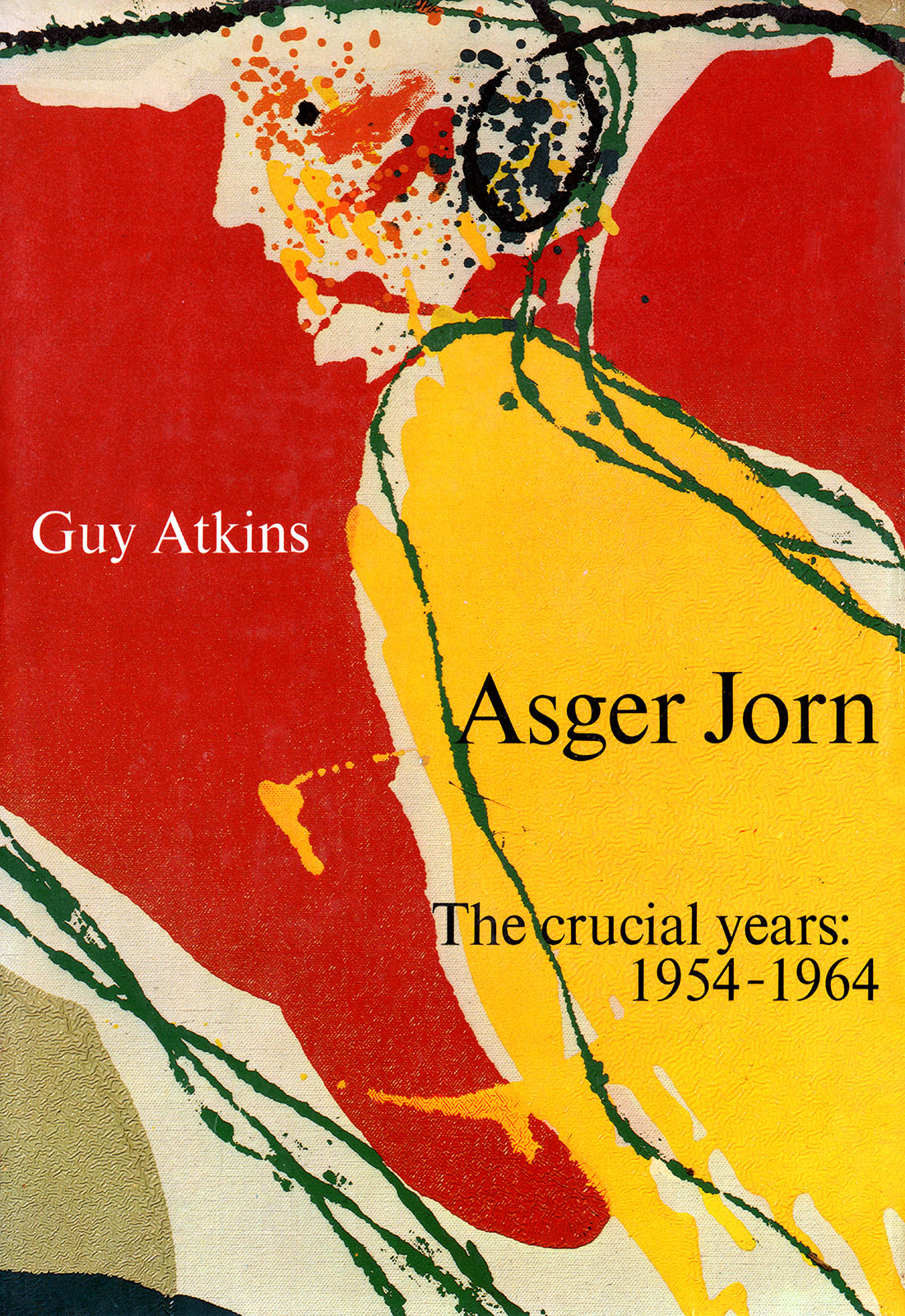
| Asger Jorn: The Crucial Years 1954-1964 | |
| Read · English | |
| Authors | Guy Atkins & Troels Andersen |
|---|---|
| Publisher | Lund Humphries Publishers Ltd. |
| Publishing date | 1977 |
| Series | Asger Jorn Catalogue raisonné |
| Followed by | Asger Jorn - The Final Years 1965-1973 |
Asger Jorn - The Crucial Years 1954-1964 is the second book in a five-volume catalogue raisonné series on the Danish painter Asger Jorn by Guy Atkins and Troels Andersen. Documenting 751 paintings from the decade of Jorn’s international breakthrough, it covers the period in which he “reached the full maturity of his artistic powers and gained recognition as a major European artist.”
Background
The years 1954 to 1964 were “crucial years” because they encompass Jorn’s emergence as a major figure in European art. As Atkins explains in his introduction:
The year 1954, as readers of Jorn in Scandinavia will remember, marked the beginning of Jorn’s career outside Denmark. His name until then was hardly known abroad, except through his participation in the COBRA movement. The period of the present book ends with the year of Jorn’s first big international retrospective exhibition (shown in Switzerland, Holland, and Denmark) in 1964. This exhibition completed a decade during which he reached the full maturity of his artistic powers and gained recognition as a major European artist.
- Guy Atkins, Introduction to The Crucial Years
When Jorn left Denmark in 1953, he did so hoping to establish himself as a painter in Italy or France. With no private means, he risked the humiliating possibility of having to return home if the experiment failed. His decision to emigrate was caused mainly by disillusionment with the Danish art establishment-never having been offered a public commission, the most recognition he received was inclusion in an exhibition of “Three young painters” in 1953.
The volume was published posthumously in 1977, four years after Jorn’s death. Most of the catalogue illustrations had been collected and shown to Jorn for authentication before his fatal illness in 1973, but Atkins had barely begun the text. As he wrote: “This text, as it now stands, is therefore obviously much the poorer for the lack of guidance and criticism which Jorn would certainly have provided (as he did for the first volume), if he had lived long enough to see the book into print.”
The Decade of Breakthrough
The book chronicles several distinct phases in Jorn’s development during this pivotal decade:
1954-55: Italy and Ceramics - Jorn travelled to Albisola, Italy, where he made ceramics with Karel Appel, Enrico Baj, Corneille, Lucio Fontana, and Roberto Matta. He painted the “Dream pictures” and “frivolous pictures” that would fund his move to Paris.
1956-58: Paris Breakthrough - Pierre Alechinsky found Jorn a flat at 28 rue du Tage. His 1957 exhibition at Galerie Rive Gauche, with a catalogue preface by Jacques Prévert, consolidated his position. In 1958, his painting Letter to my son was shown alongside works by Willem de Kooning at the Brussels Expo, marking his “arrival” on the international scene.
1959-62: Defensive Phase - Following sudden success, Jorn took “protective measures against the powerful commercial pressures.” First came the Modifications-sentimental old canvases bought in junk shops and overpainted. Then the Luxury paintings, produced by dribbling and splashing paint. As Atkins notes: “The un-Jornlike appearance of these latter canvases, combined with the use of the already outmoded ‘action’ technique, should have ensured their rejection by the public. But in fact the London exhibition of Luxury paintings in 1961 was a sell-out.”
1964: International Recognition - The decade culminated in Jorn’s first major international retrospective, shown in Basel, Amsterdam, and Humlebæk, Denmark.
The Modifications
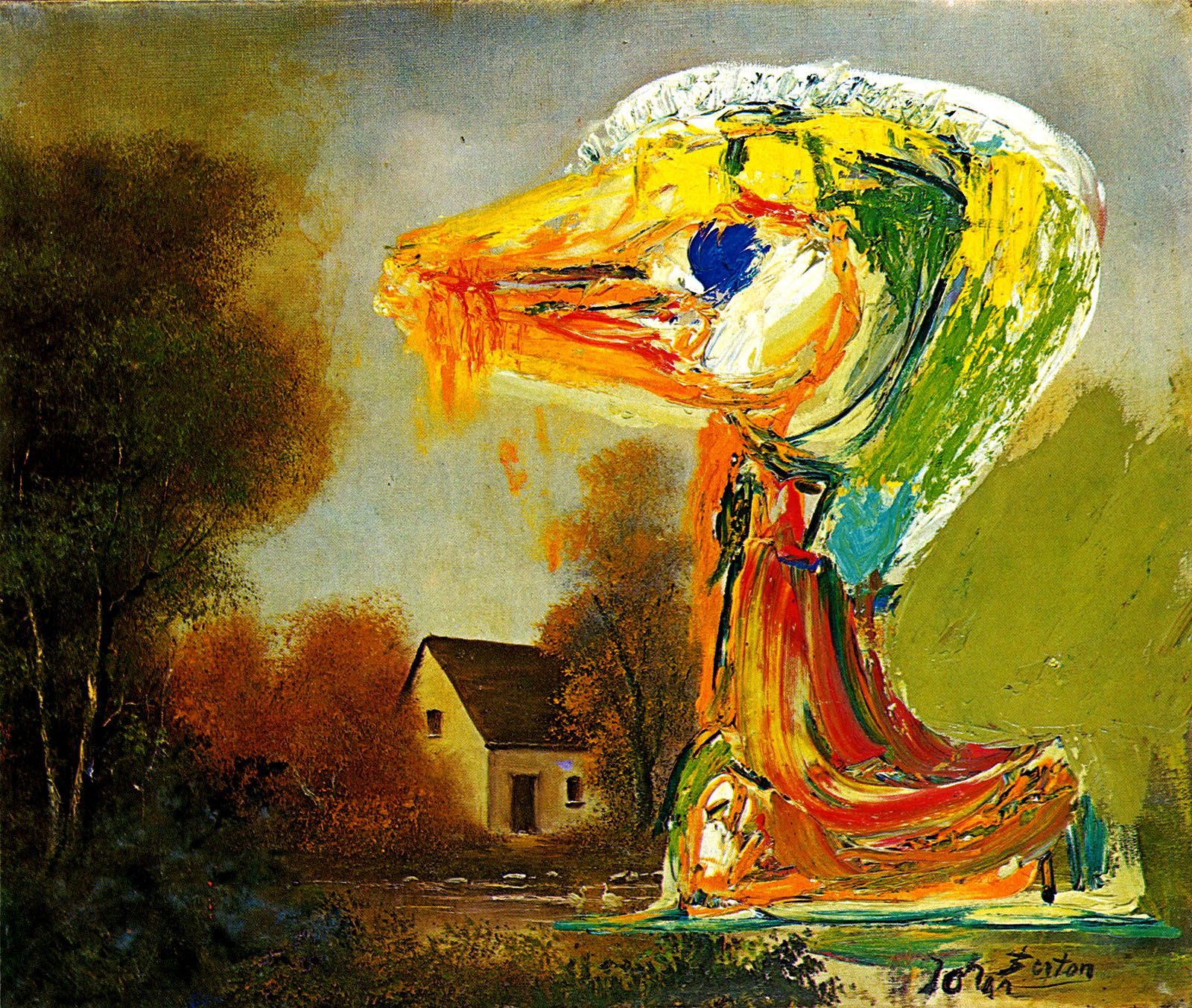
The book includes detailed analysis of Jorn’s famous Modifications series-sentimental old canvases bought in junk shops and overpainted or “modernized.” The first group was exhibited at Galerie Rive Gauche in 1959, with a double preface by the artist. The first preface was addressed to the general public:
Be modern,
collectors, museums!
If you’ve got old pictures,
don’t despair.
Keep your memories
but modify them
and bring them up to date.
Why reject the old
if it can be modernized
with a few strokes of the brush?
- Asger Jorn, preface to Modifications exhibition, 1959
In a second preface “intended for connoisseurs,” Jorn referred back to an article he had written twenty years earlier, In Praise of Kitsch Art, where he maintained that “the greatest artistic masterpieces are completely banal” and spoke with affection of those gilt-framed “lakes in forests” that hang in thousands of homes. Now, in the preface to the Modifications, he declared: “I am erecting a monument in honour of bad painting. Personally I prefer it to good painting.”
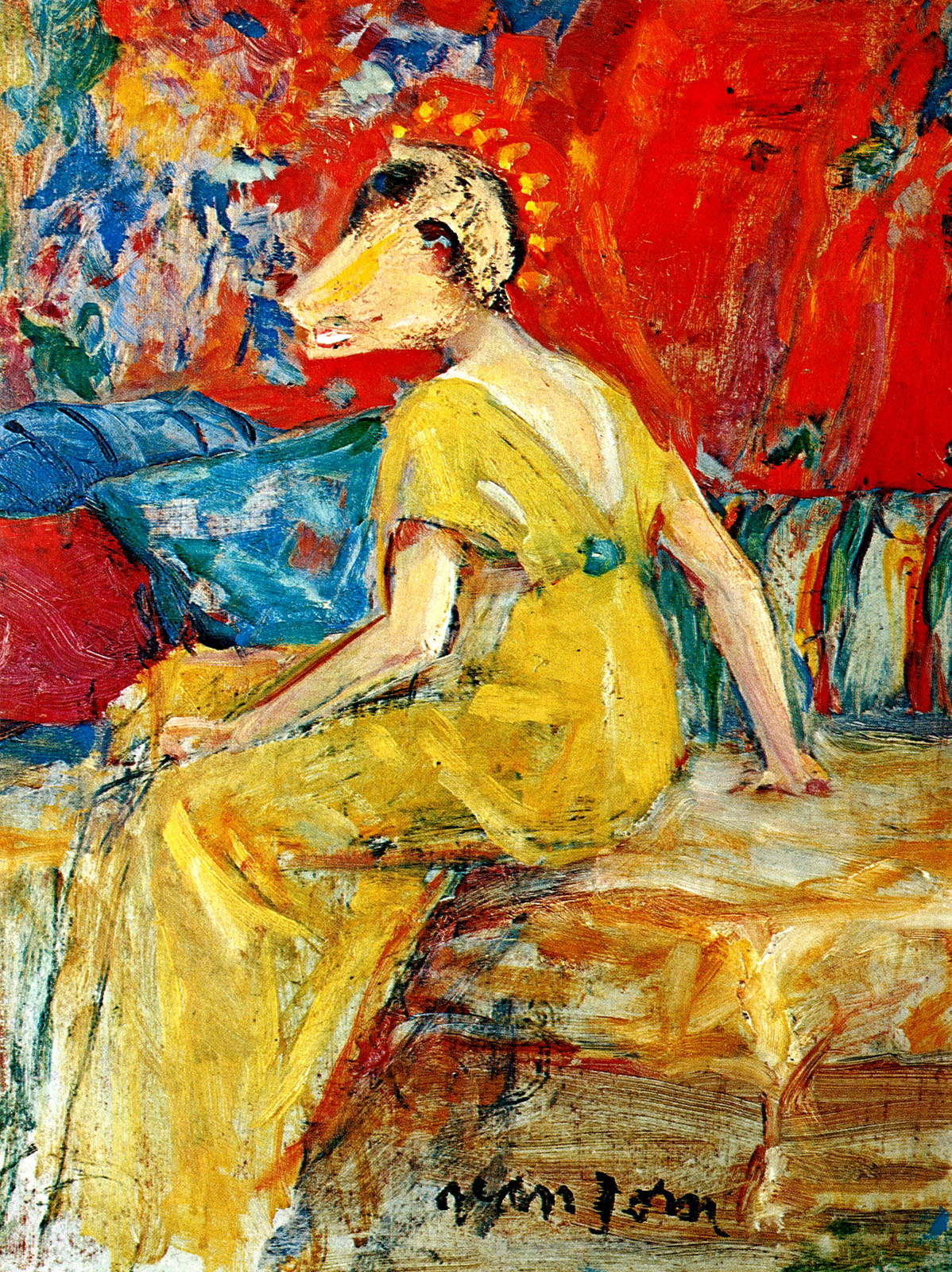
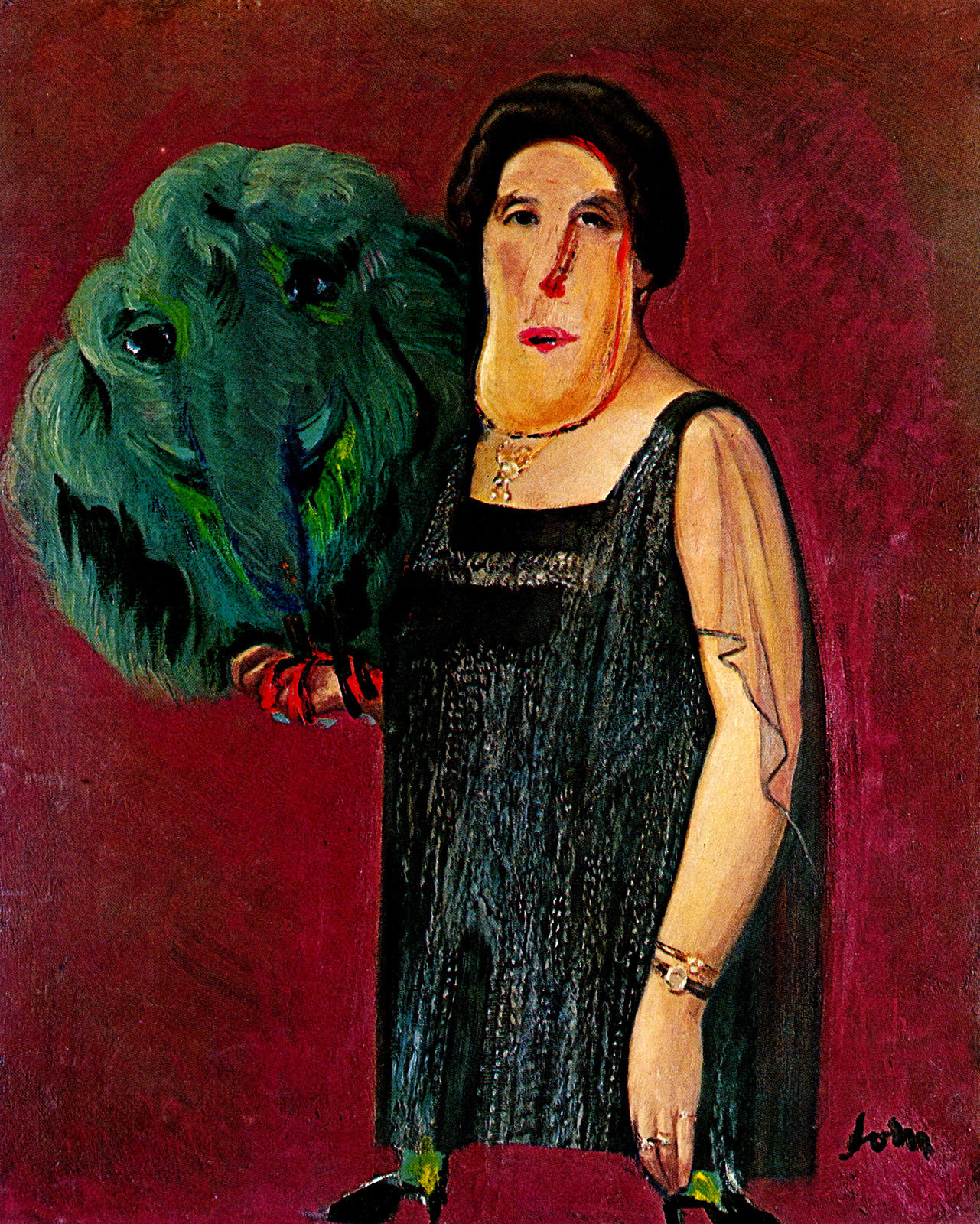
As Atkins explains, Jorn spoke of “sacrificing” the pictures he chose to overpaint. The landscapes bought in junk shops were treated as “found objects,” which became theatrical scenery for what critic Lawrence Alloway called Jorn’s “landing parties.” Yet the transformations were usually kept on an innocuous, even idyllic plane-whenever the rural scene contained people, Jorn made a point of isolating these innocent folk from his invading forces. In The Good Shepherd, the shepherd continues to tend his flock; in Paris by Night, the solitary tourist leans over the railings, unconscious of the strange portents in the sky. “It is as if Jorn wants to protect the peaceful world of shepherds and fishermen from the rampaging hordes that he unleashes on the scene.”
The New Disfigurations of 1962 had a more serious intention. Landscapes were replaced by portraits and battle scenes, which lent themselves to sometimes sinister psychological adaptations. The exhibition at Galerie Rive Gauche was divided into three groups: Beauty and the Human Beast (featuring transformed female portraits), battle scenes with military men in uniform, and Anecdotal Imagery from Daily Life. As Atkins notes: “To this day Jorn’s overpainted pictures have not been widely understood or appreciated. Yet the best of them have a startling and surrealist clarity of vision. Their impact on the viewer is increased through the double layers of imagery, which may either be brought into harmony or allowed to coexist in a state of tension.”
Contents
Part One
- Switzerland and Italy (1953-5)
- Breakthrough (1956-8)
- Stalingrad: No Man’s Land (1956-72)
- Situationists (1957–61)
- Modifications and Disfigurations (1959-62)
- Luxury paintings and after (1961-4)
- Ceramics by Erik Nyholm
- Graphics by Ursula Lehmann-Brockhaus née Schmitt
- Tapestries by Pierre Wemaëre
- Writings
Part Two
- Dealers and collectors
- Titles of paintings
- Forgeries
Part Three
- Bibliography (513 entries)
- Illustrated œuvre catalogue of 751 paintings
Explore the Book
This is a preview only - view fullsize on archive.org
The Catalogue Raisonné Series
This volume is the second in a five-volume catalogue raisonné of Asger Jorn’s oil paintings by Guy Atkins and Troels Andersen. The series documents over 2,000 paintings spanning Jorn’s entire career from 1930 to 1973, representing 45 years of research. Other volumes in the series include:
- Jorn in Scandinavia 1930-1953 (1968) - 855 paintings from Jorn’s early career in Denmark
- Asger Jorn: The Final Years 1965-1973 (1980) - The concluding volume of the main trilogy
- Asger Jorn: Supplement - Paintings 1930-1973 (1986) - 100 additional paintings discovered after the main volumes
- Asger Jorn: Revised Supplement (2006) - A further 123 paintings, concluding the registration of Jorn’s œuvre
Unlike the first volume, which Jorn was able to review before publication, The Crucial Years appeared posthumously. Atkins credited Troels Andersen with persuading him to complete the book after Jorn’s death: “That it nevertheless came to be written is due largely to the persuasion of my Danish colleague Troels Andersen who felt, as did others, that the book would provide a tribute to Jorn’s memory.”