|
|
| The Bird, the Animal and the Human in Nordic Iron Age Art | |
| Authors | Bente Magnus (text), Gérard Franceschi (photography), Asger Jorn (composition) |
|---|---|
| Publisher | Borgens Forlag in collaboration with Silkeborg Kunstmuseum |
| Publishing date | 2005 |
| Series | 10,000 Years of Nordic Folk Art, Nordic Iron Age Volume 2 |
| ISBN | 87-21-02601-7 |
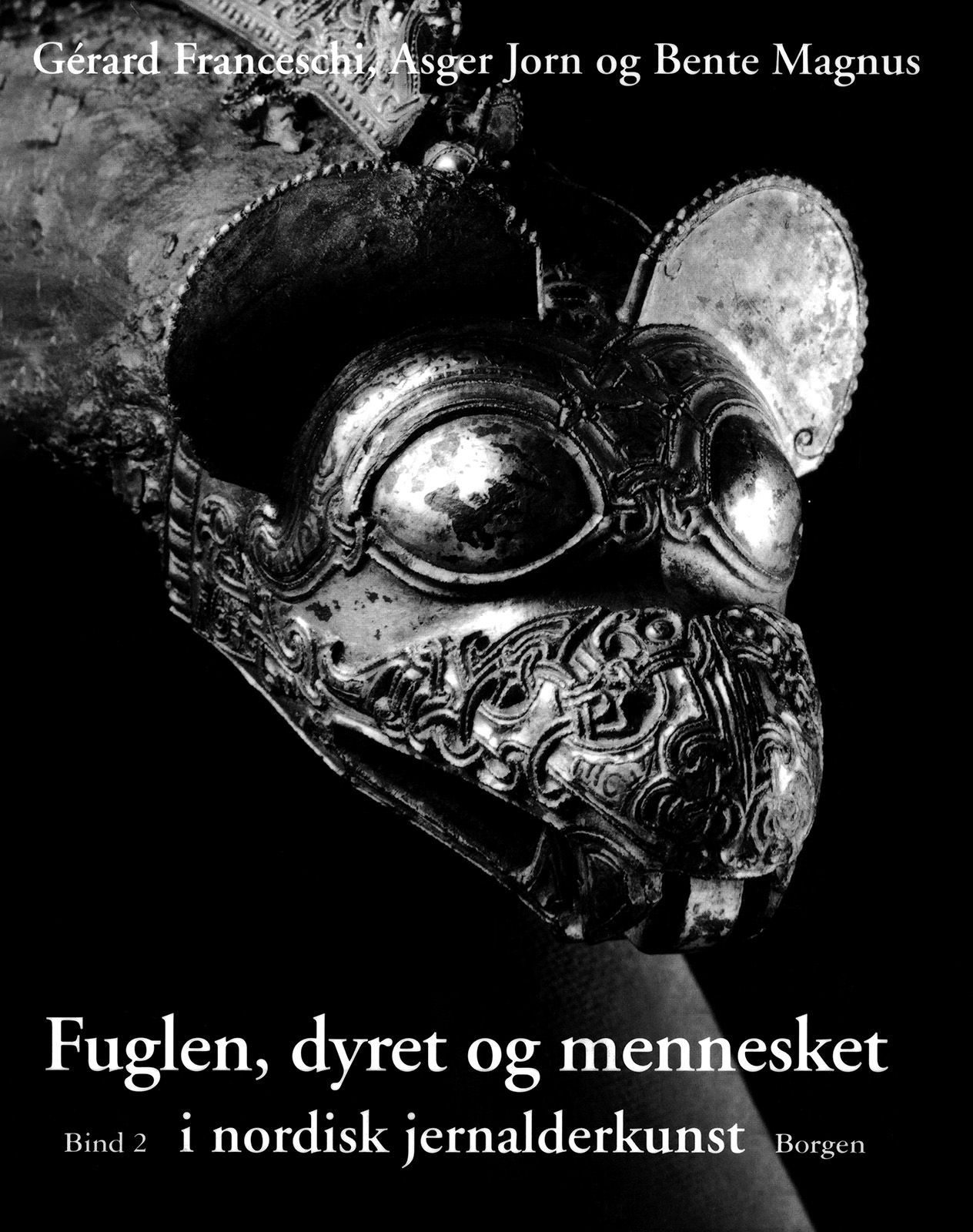
The Bird, the Animal and the Human in Nordic Iron Age Art (Danish: Fuglen, dyret og mennesket i nordisk jernalderkunst) is the second volume in Asger Jorn’s posthumous series 10,000 Years of Nordic Folk Art, featuring photographs by Gérard Franceschi and text by Norwegian archaeologist Bente Magnus examining animal symbolism in Nordic Iron Age art. The book was originally planned by Asger Jorn in 1964–65 as part of his ambitious project to document the visual history of Scandinavian art. Though Jorn died in 1973, his image layouts were compiled by Tove Nyholm for this posthumous publication over three decades later.
Background
The book is part of Jorn’s long-gestating project 10,000 Years of Nordic Folk Art, which he conceived through his Scandinavian Institute for Comparative Vandalism founded in 1962. Jorn’s vision was to create a comprehensive visual survey of Nordic art from prehistory to the Middle Ages, with the images taking precedence over the text-a reversal of conventional art historical practice.
As Guy Atkins noted in Asger Jorn: The Final Years, Jorn had been “trying, in vain, to persuade various art foundations, ministries, and art scholars in Scandinavia to collaborate with him-on his own terms-in a series of publications under the general heading ‘10,000 years of Nordic folk art’. The idea of documenting the history of early Scandinavian art had haunted him… for the last 25 years.”Guy Atkins and Troels Andersen, Asger Jorn: The Final Years 1965–1973, Borgens Forlag, Copenhagen.
Jorn’s approach to the project was distinctive: “Previous studies of Viking art had failed in one vital respect: the pictures were treated as a minor appendage to the text, whereas Jorn insisted that the images should take precedence over anything that might be written about them.”Guy Atkins and Troels Andersen, Asger Jorn: The Final Years 1965–1973, Borgens Forlag, Copenhagen.
Contents
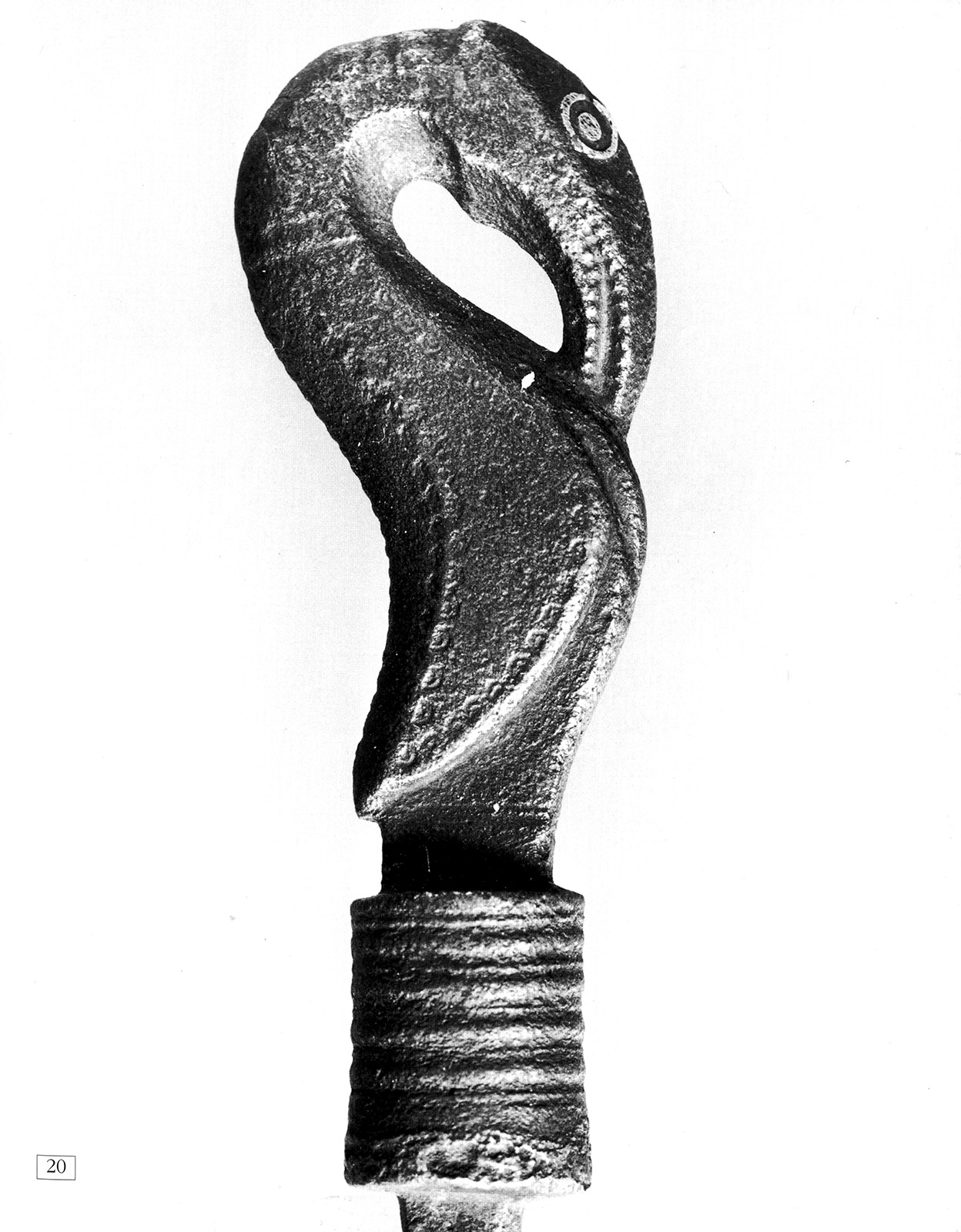
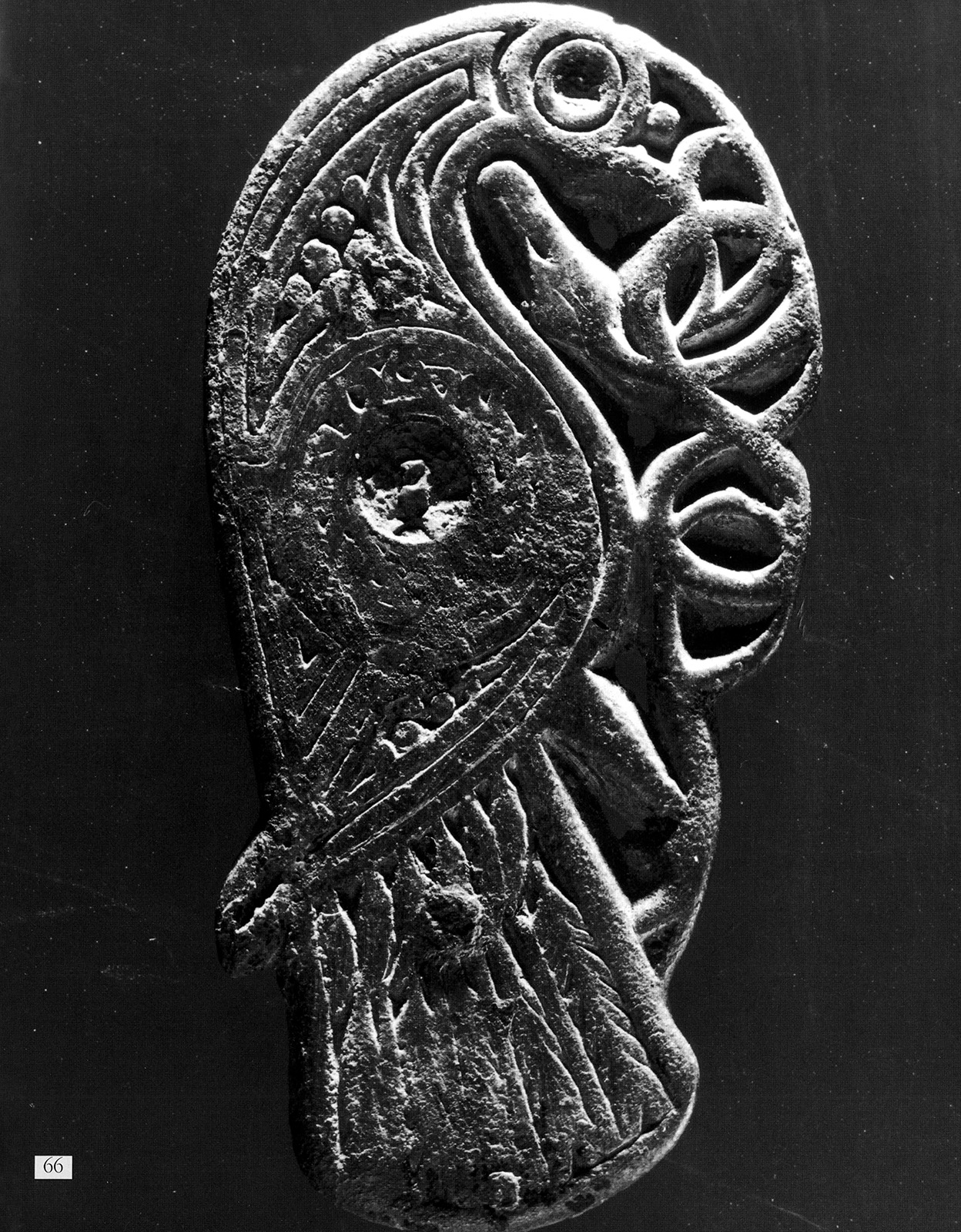
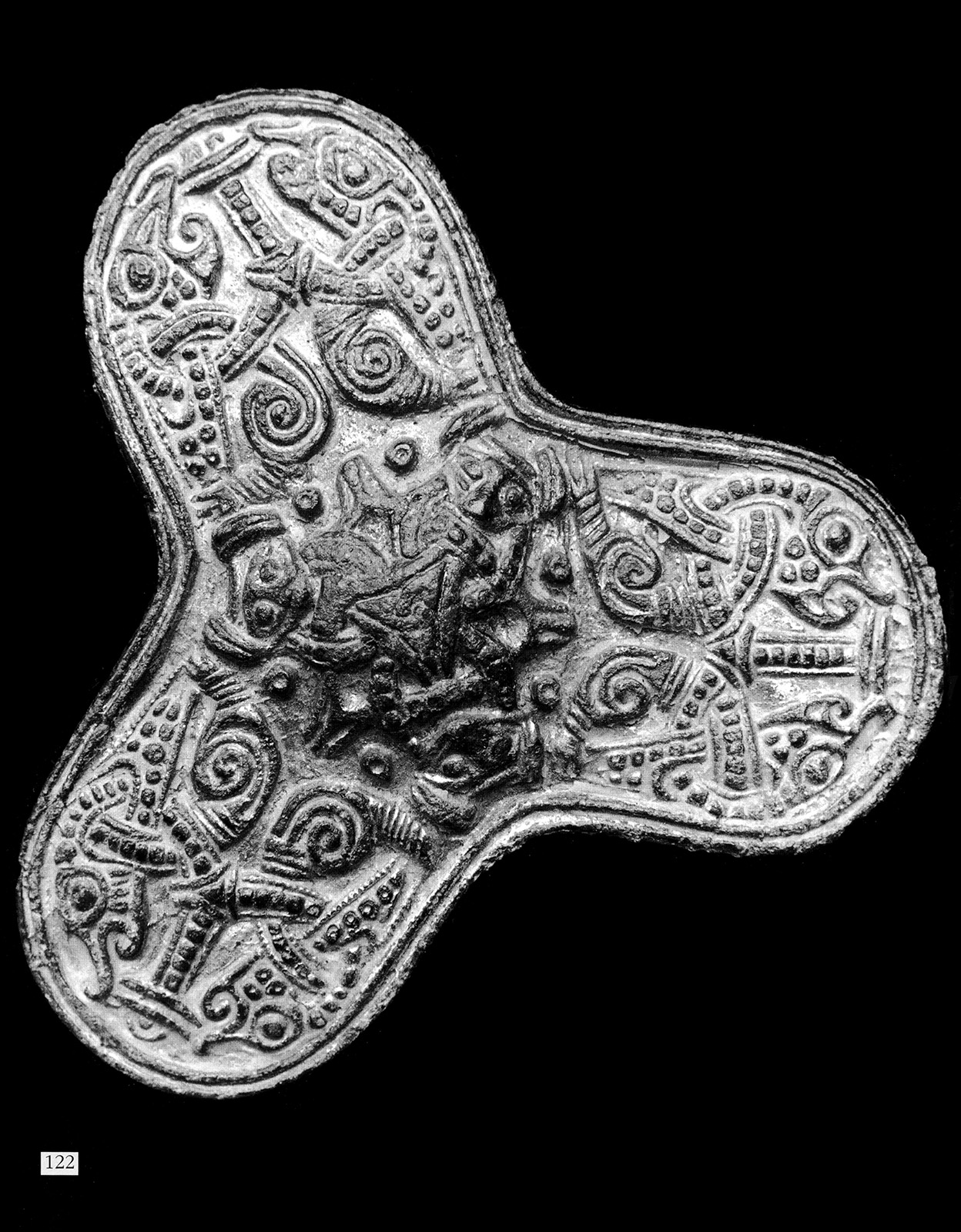
The book examines the symbolic significance of animals and birds in Nordic Iron Age art from approximately 450–1100 AD. Bente Magnus’s text explores the relationship between humans, animals, and the divine in pre-Christian Scandinavian society, drawing on Old Norse literature, runic inscriptions, and archaeological evidence.
Key themes include:
- The raven, eagle, hawk, wolf, bear, serpent, wild boar, and horse as symbolic animals associated with the god Odin and the warrior aristocracy
- The concept of the fylgja (follower)-an animal alter ego accompanying each human through life
- Animal ornamentation styles (Styles I, II, and III/D/E/F) and their development through the Migration Period, Vendel Period, and Viking Age
- The gripping beast motif and its emergence in Viking Age art
- Women’s and men’s ornaments and their symbolic significance
- The relationship between Norse religious beliefs and artistic expression
The Book’s Introduction
In the introduction to the series, archaeologist P. V. Glob wrote:
There is no shortage of major works and smaller essays concerning Nordic prehistoric and medieval art, but often the presentation of this world of images is merely an account of stylistic development, connections with contemporary European art, chronology and technique. Here we wish to take a different path, letting the images speak for themselves, accompanied only by an introduction and by the necessary facts about the depicted artworks.
This path is passable because the artist and the scholar have joined forces. Thus, the artist selects and compiles the internal connections between the images in the group to be treated, gathering these images into a continuous collage, so that they can be seen both individually and in context, while the scholar provides them with the necessary documentation.
- P. V. Glob, Introduction to 10,000 Years of Nordic Folk Art
Explore the Book
The Bird, the Animal and the Human in Nordic Iron Age Art
Read the book in English and Norwegian.
Read the full text →This is a preview only - view fullsize on archive.org
Contributors
Bente Magnus
Bente Magnus (born 1939 in Oslo) is a Norwegian archaeologist specialising in the Late Roman Iron Age and the Migration Period (c. AD 200–550). She studied in Oslo, Athens, and Bergen, earning her master’s degree in Nordic archaeology with Classical Greek and Classical archaeology as minor subjects. She worked at Stavanger Museum’s archaeological department and for nearly twenty years at the University of Bergen’s Historical Museum, where she conducted cultural heritage management, research, and public outreach. She later worked at the Directorate for Cultural Heritage in Oslo before moving to Stockholm to continue her research as a freelancer. Magnus has published extensively on the Migration Period, including a monograph and contributions to volumes on Norway’s prehistory.
Gérard Franceschi
Gérard Franceschi (1915–2001) was a French photographer born in Bordeaux who became one of the world’s foremost specialists in photographing works of art. During his twenty years with the French museum service, he produced numerous acclaimed publications including L’histoire commence à Sumer, Les Etrusques, L’art Gaulois, Auvergne romane, and Poitou romane. His documentation of the sculptor Gislebertus’s work at Autun is considered particularly significant. From 1962–65, he collaborated with Asger Jorn on the planned 32-volume series on Nordic art in antiquity and the Middle Ages, travelling extensively through Europe to collect the vast photographic archive. Franceschi died on 4 March 2001.
The 10,000 Years of Nordic Folk Art Series
The publication notes that other volumes in the series include:
- Skåne’s Stone Sculpture During the 12th Century [Skånes stenskulptur i 1100-tallet] by Erik Cinthio, Gérard Franceschi, and Asger Jorn
- The Golden Images of the North from the Early Middle Ages [Nordens guldbilleder fra den tidlige middelalder] by Poul Grinder Hansen, Gérard Franceschi, and Asger Jorn
- Folk Art in Greenland [Folkekunst i Grønland] by Tinna Møbjerg, Jens Rosing, Gérard Franceschi, and Asger Jorn
- The Stave Churches and Norwegian Medieval Society [Stavkirkerne og norsk middelaldersamfund] by Oddgeir Hoftun, Gérard Franceschi, and Asger Jorn
The Nordic Iron Age volumes were published with support from Augustinusfonden and Ny Carlsbergfondet.
Gallery