|
|
| Asger Jorn og 10.000 års nordisk folkekunst | |
| Authors | Troels Andersen & Tove Nyholm (editors), Asger Jorn (texts), Gérard Franceschi (photography) |
|---|---|
| Publisher | Silkeborg Art Museum Publishing (SISV) |
| Publishing date | 1995 |
| ISBN | 87-8793255-5 |
| Dimensions | Exhibition catalogue |
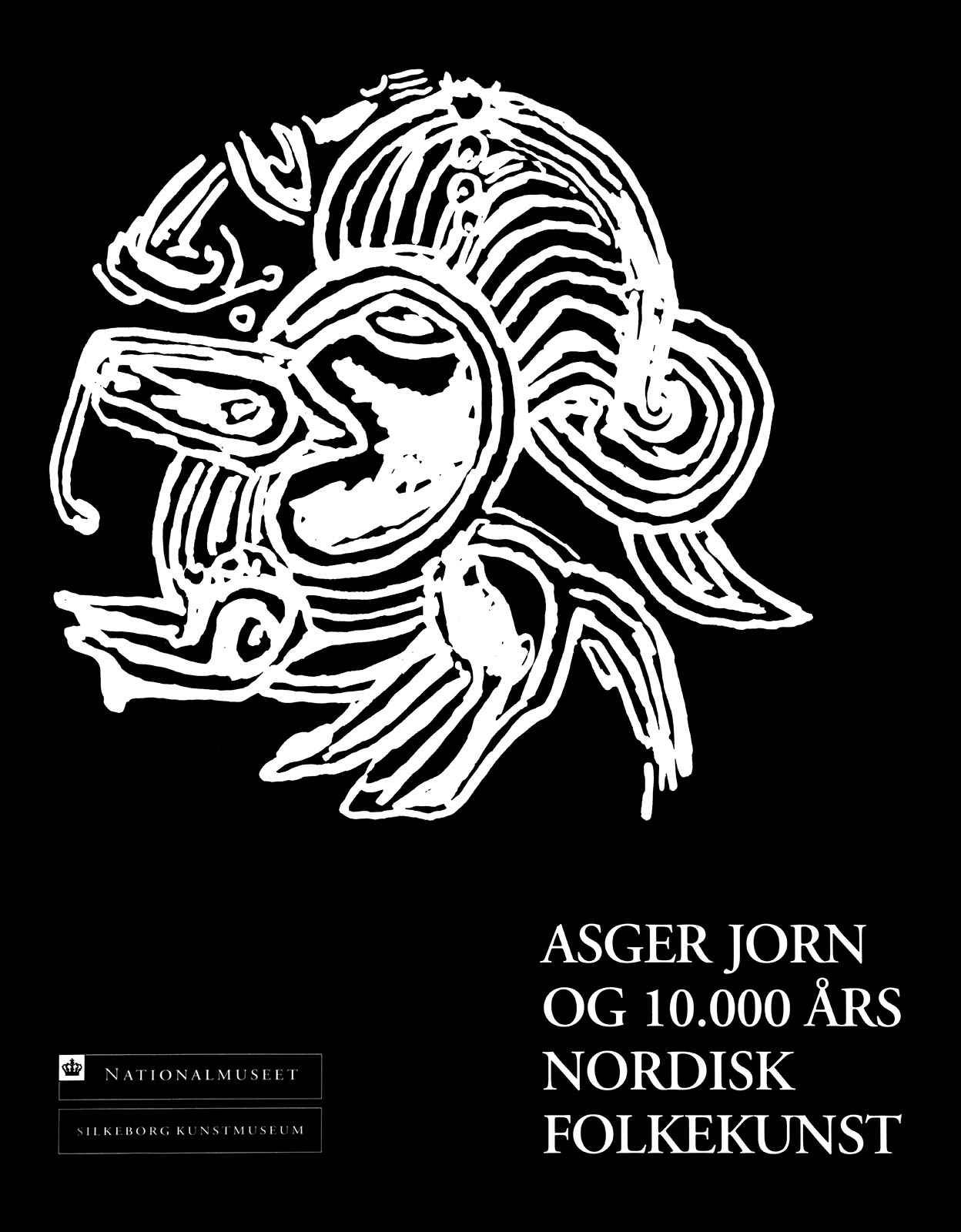
Asger Jorn and 10,000 Years of Nordic Folk Art (Asger Jorn og 10.000 års nordisk folkekunst) is an exhibition catalogue and documentation of Asger Jorn’s ambitious but unfinished project to create a 32-volume encyclopedic visual survey of Nordic art from prehistory through the Middle Ages, published in conjunction with exhibitions at the National Museum in Copenhagen and Silkeborg Art Museum in 1995-96. The catalogue documents both the realized and unrealized aspects of Jorn’s project initiated through his Scandinavian Institute for Comparative Vandalism, founded in 1961, presenting texts by Jorn alongside photographs by Gérard Franceschi and contextual essays about the project’s vision and legacy.
Background
The 10,000 Years of Nordic Folk Art project emerged from Asger Jorn’s long-standing fascination with pre-Christian Nordic art and his conviction that Scandinavian visual culture had been systematically undervalued by conventional art history. As Jorn wrote in his foreword to the series, the project addressed a critical absence: “there exists no comprehensive work on the art of the Nordic past, and this absence has given the outside world the impression that we Northerners are an unartistic people.”
Shortly after resigning from the Situationist International in 1961, Jorn founded the Scandinavian Institute for Comparative Vandalism (Skandinavisk Institut for Sammenlignende Vandalisme, or SISV) together with Danish archaeologist P.V. Glob, Werner Jacobsen from the National Museum of Denmark, and Holger Arbman of the University of Lund, Sweden. The institute’s stated purpose was to illuminate Scandinavian culture during the age of migrations and Vikings, but Jorn’s ambitions extended far beyond conventional archaeological documentation.
Jorn had been inspired by André Malraux’s Musée imaginaire project, which used photography to create a new universal art history. However, where Malraux sought universality, Jorn strategically emphasized the particularly Scandinavian as a form of resistance against dominant classical-Latin artistic traditions. He hired Gérard Franceschi, who had been the chief photographer at the Louvre for Malraux’s project, to lead the photographic documentation work.
The Concept and Working Method
The project was conceived as a series of 24 to 32 volumes documenting Nordic folk art from prehistory to the medieval period. In his May 1964 working plan for the series, Jorn outlined his distinctive approach:
As has been emphasized from the first time this project was discussed, this concerns the production of a series of picture books with a brief orienting text. The purpose is, through the best possible reproduction technique, to produce a series of art books in this word’s most elementary meaning, books that can bring joy to any person who is interested in art. They have absolutely no didactic or educational purpose.
- Asger Jorn, Plan for the Working Process, May 1964
Jorn insisted on complete artistic control over the arrangement and presentation of images. His method, which he called “comparative vandalism,” involved separating artworks from their original contexts through photography, allowing them to be compared and juxtaposed in new configurations. The term “vandalism” was deliberately provocative, positioning Nordic artistic traditions-which he associated with the Germanic tribes including the Vandals-as a non-canonical, anti-classical alternative to established European art history.
As archaeologist P.V. Glob explained in his introduction to the series:
There is no shortage of major works and smaller essays concerning Nordic prehistoric and medieval art, but often the presentation of this world of images is merely an account of stylistic development, connections with contemporary European art, chronology and technique. Here we wish to take a different path, letting the images speak for themselves, accompanied only by an introduction and by the necessary facts about the depicted artworks.
This path is passable because the artist and the scholar have joined forces. Thus, the artist selects and compiles the internal connections between the images in the group to be treated, gathering these images into a continuous collage, so that they can be seen both individually and in context, while the scholar provides them with the necessary documentation.
- P.V. Glob, Introduction to 10,000 Years of Nordic Folk Art
Jorn reserved the right to arrange images “absolutely undidactically according to purely artistic requirements to make the book as such into a unified artwork.” Authors could suggest essential images but could not exclude images that belonged to the subject area. The layout fell entirely under Jorn’s control, representing his artistic contribution to the collaborative project.
Photographic Archive and Research
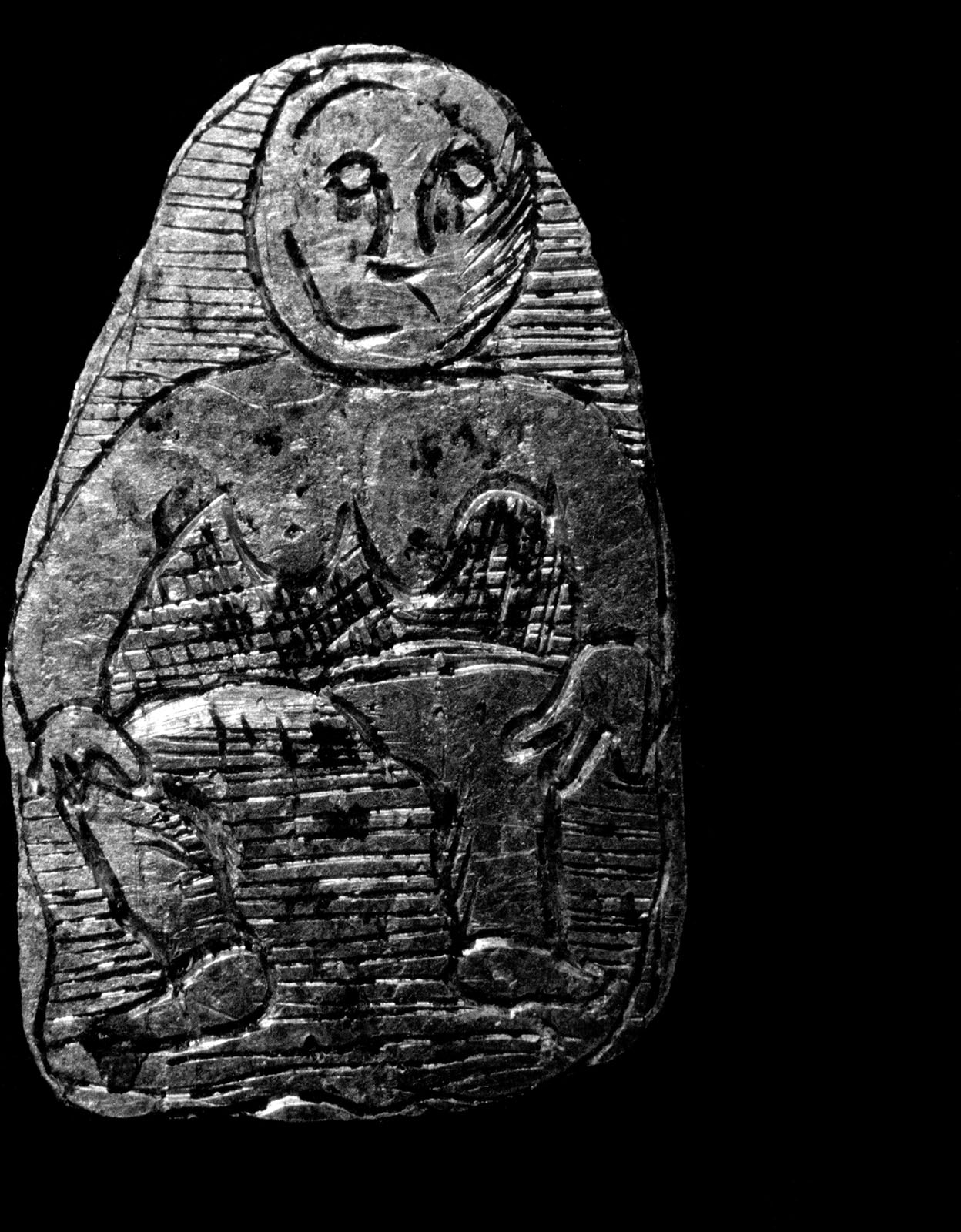
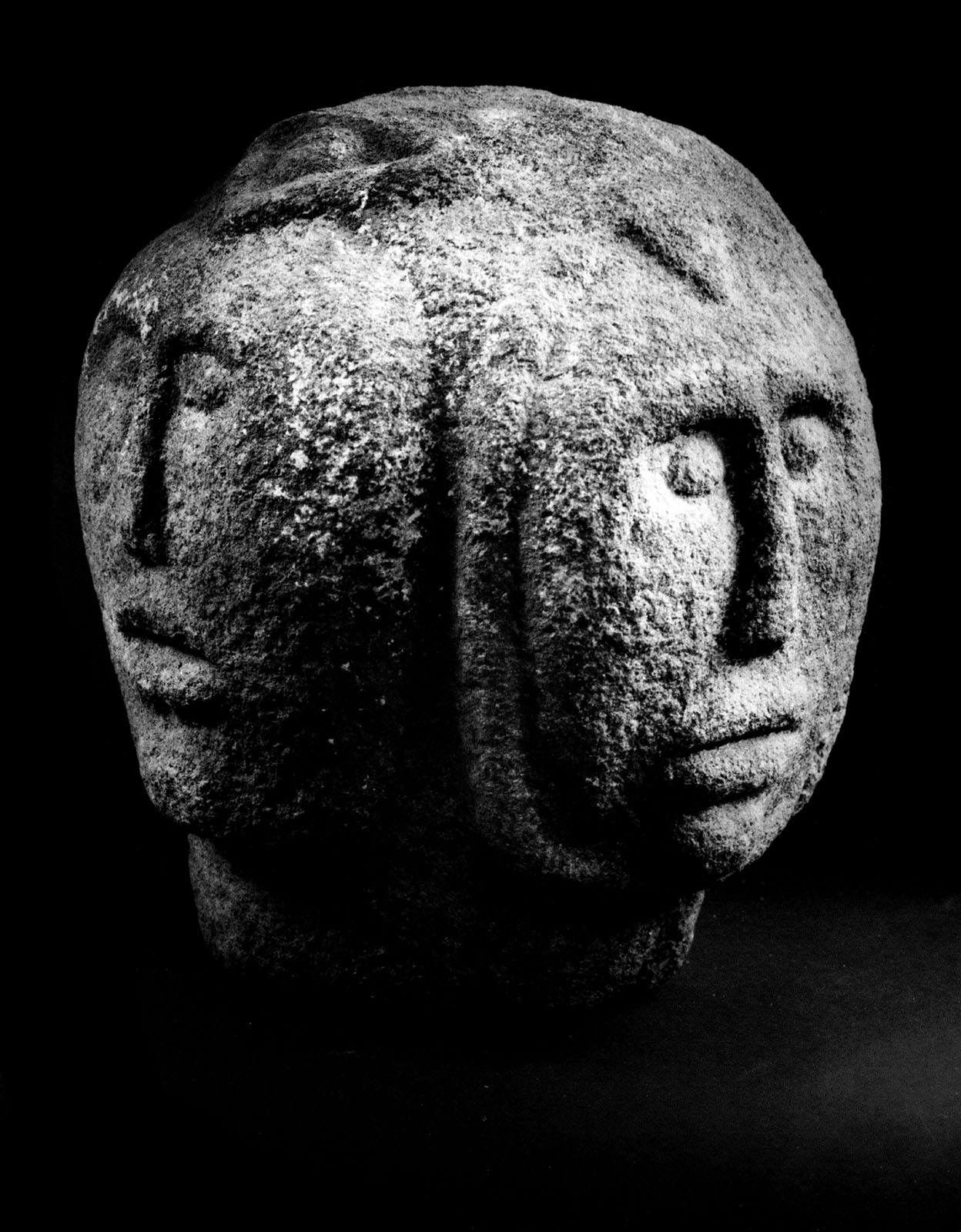
Between 1962 and 1965, Jorn and Franceschi conducted extensive research trips throughout Scandinavia and Europe, systematically photographing ancient, Romanesque, and Gothic figurative and decorative motifs. The photographer Ulrik Ross also contributed to the documentation. The archive eventually comprised approximately 25,000 photographic negatives documenting churches, stone sculptures, rock carvings, stave churches, runestones, and medieval artifacts across the Nordic countries.
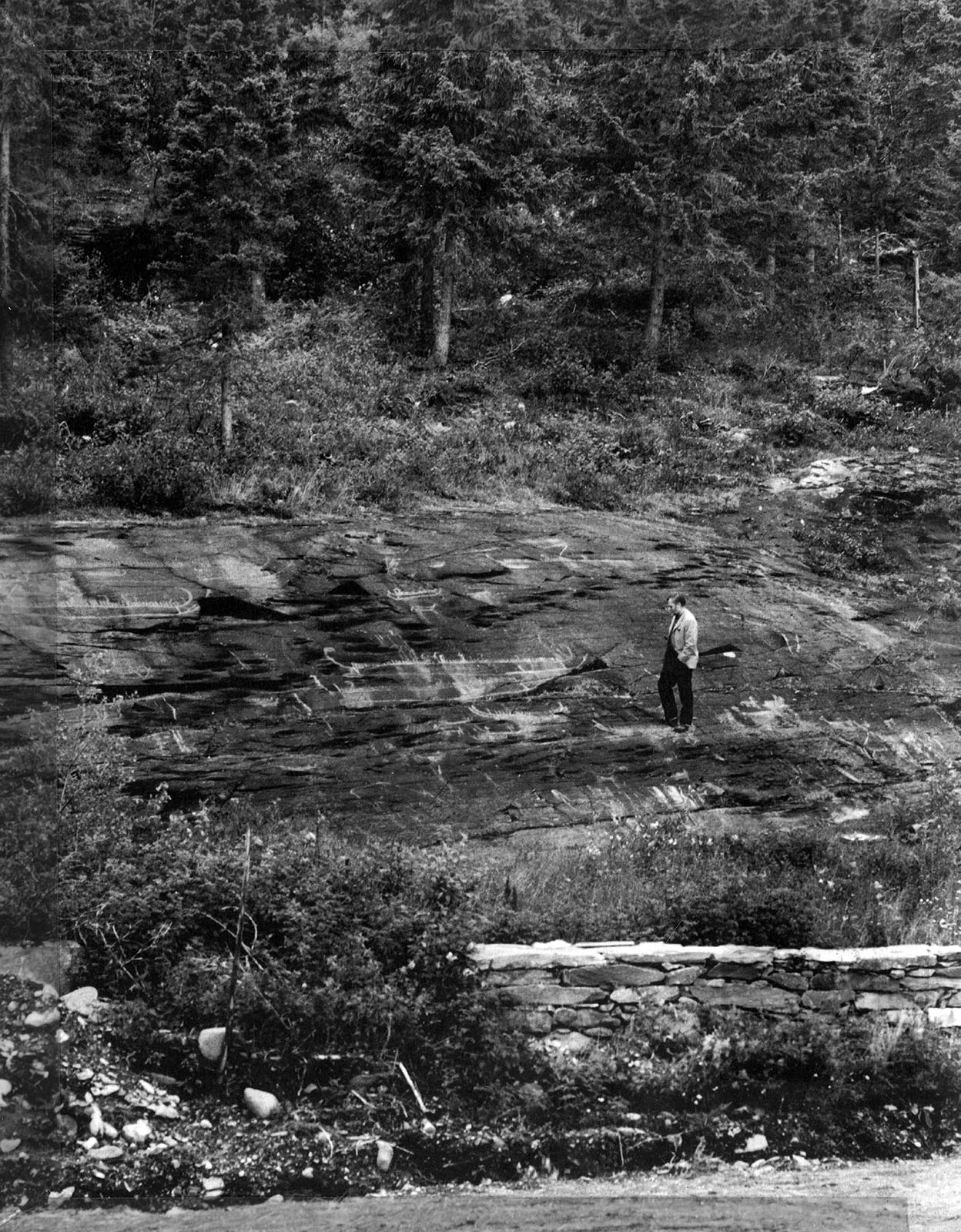
Jorn spent the summer of 1964 on Gotland, photographing around one hundred stone churches and historic sites. He traveled through Norway in May-June 1963 with particular focus on stave churches around Bergen and Kaupanger. His documentation extended beyond Scandinavia to include Norman churches in France, where he discovered numerous carvings that showed striking similarities to Nordic Bronze Age rock carvings-observations that became central to his comparative methodology.
Many more photographs were taken than could ever be accommodated in the projected 256-page volumes. Jorn envisioned that after publication, authors would have access to this expanded archive for deeper scientific work, hoping “that the invested money in the project could be directly used for publishing such works that would give the folk works deeper perspectives, and give the specialist a more personal interest in working with the new image material.”
Published Volumes
Despite Jorn’s ambitious plans, funding difficulties severely limited the project’s realization. He was working with the publisher Skandinavisk Forlag in Odense but abandoned the project in 1965 when the press demanded that it be run by a committee of scholars, with Jorn having only one vote. He insisted on maintaining total control over each volume’s subject and artistic direction.
Only one volume was published during Jorn’s lifetime:
- Skånes stenskulptur under 1100-talet (1965) - Text by Erik Cinthio, photography by Gérard Franceschi, composition by Asger Jorn. Published by Jorn’s own private press as a 300-copy edition. The volume examined 12th-century stone sculpture in the Skåne region and was republished in 1995 by Borgens Forlag.
Several volumes were completed posthumously based on Jorn’s image layouts and notes:
- The Golden Images of the North from the Early Middle Ages - Text by Poul Grinder Hansen
- Folk Art in Greenland - Text by Tinna Møbjerg and Jens Rosing
- The Stave Churches and Norwegian Medieval Society - Text by Oddgeir Hoftun
- The Bird, the Animal and the Human in Nordic Iron Age Art (2005) - Text by Bente Magnus. Published by Borgens Forlag in collaboration with Silkeborg Kunstmuseum, compiled by Tove Nyholm based on Jorn’s image layouts from 1964-65
The Nordic Iron Age volumes were published with support from Augustinusfonden and Ny Carlsbergfondet.
The Exhibition and Catalogue
The 1995-96 exhibition “Asger Jorn and 10,000 Years of Nordic Folk Art” at the National Museum in Copenhagen (November 15, 1995 - February 9, 1996) and Silkeborg Art Museum (March 3 - May 27, 1996) represented the first major survey of the project and its archival legacy. Organized by Troels Andersen and Tove Nyholm, the exhibition was supported by the Nordic Culture Fund, the National Museum Council, Cultural Capital 96, and Silkeborg Municipality.
The catalogue presents Jorn’s essays on Nordic folk art, including his foreword to the series, his discussion of Swedish Dalarna painting, his essay on “Gjessing’s Rule” (a principle about cultural traditions in transplantation formulated by Norwegian archaeologist Gutorm Gjessing), and excerpts from his afterword to Folk Art’s Didrek. These texts reveal Jorn’s theoretical framework for understanding folk art as an international yet locally rooted visual language that resisted classical European naturalism.
In discussing Swedish peasant painting, Jorn wrote:
Europe’s folk art has in the individual countries until now only been treated from a purely chauvinistic attitude. If one examines it from a universally human and international conception, then all of Europe’s folk art shows a wonderful connection and inner unity across borders and stands in a common opposition to the classical art traditions.
- Asger Jorn, on Swedish Dalarna painting
Legacy and Archive
Following Jorn’s death in 1973, the Scandinavian Institute for Comparative Vandalism became a sort of “imaginary museum,” with its photographic archive housed at Museum Jorn in Silkeborg. The archive represents one of the most comprehensive photographic documentations of Nordic medieval and ancient art ever assembled, though the vast majority of the 25,000 images remain unpublished.
The archive has become a subject of scholarly interest and artistic reinterpretation in its own right. In 2001, Pontus Hultén curated an exhibition at Vandalorum in Värnamo titled “The True History of the Vandals,” dedicated to Jorn and the SISV. The Moderna Museet in Stockholm presented “Comparative Vandalism” (based on Jorn’s photographic contact sheets from his 1964 Gotland journey), and various researchers have examined the archive as an alternative model for art-historical practice.
As art historian Karen Kurczynski noted, the SISV archive represents more than failed ambition:
The institute planned to compile its photographs into a series of publications entitled 10,000 Years of Nordic Folk Art, which would demonstrate the persistence of folk forms and their influence on fine art throughout European history. Though the photographic documentation process was eventually completed by 1965, the institute was only able to complete a few of the projected publications before Jorn’s death, due to lack of funding.
- Karen Kurczynski, Expression as vandalism: Asger Jorn's 'Modifications'
The project’s incompletion paradoxically reinforces Jorn’s anti-authoritarian approach to knowledge production. The massive archive of decontextualized images, freed from definitive scholarly interpretation, remains open to continual reordering and reinterpretation-a “vandalist” approach to art history that privileges visual comparison and morphological study over fixed narratives.
Explore the Book
Asger Jorn and 10,000 Years of Nordic Folk Art
Read the exhibition catalogue in English or Danish.
Read the full text →This is a preview only - view fullsize on archive.org
Related Works
The following volumes were published as part of the 10,000 Years of Nordic Folk Art series:
- Signes gravés sur les églises de l’Eure et du Calvados (1964) - Published by SISV as part of the Bibliothèque d’Alexandrie series
Gallery